Every year around April, millions of people in China observe Qingming (清明), or Tomb-Sweeping Day. But few remember the older festival that once stood beside it. That is Han Shi Jie (寒食节), the Cold Food Festival. According to the historical text Tang Hui Yao (唐会要), a decree in 732 AD stated: “Tomb sweeping during the Cold Food Festival is not found in the classic rites, but it has become a common practice in recent generations. Since ordinary people cannot hold temple ceremonies, how else can they express filial piety? It should be permitted at graves.”
This shows that by the Tang Dynasty, tomb sweeping on Han Shi Jie had already been codified into the national rites. Because it falls just two or three days before Qingming, many of its customs—like banning fire and eating cold food—were gradually absorbed into what we now know as the Qingming Festival.
1. Fire Prohibition
The Cold Food Festival is also called the “No-Smoke Festival” or the “Hundred-Five Festival” (referring to the 105th day after the winter solstice). It originated from the ancient practice of renewing fire. In prehistoric times, people would extinguish all old fires and then kindle new ones through a ritual ceremony. This renewal was often accompanied by sacrifices, including burning an effigy of the grain god as a symbolic offering. Over time, this evolved into a fixed period without fire—usually three, five, or even seven days, according to different historical records.
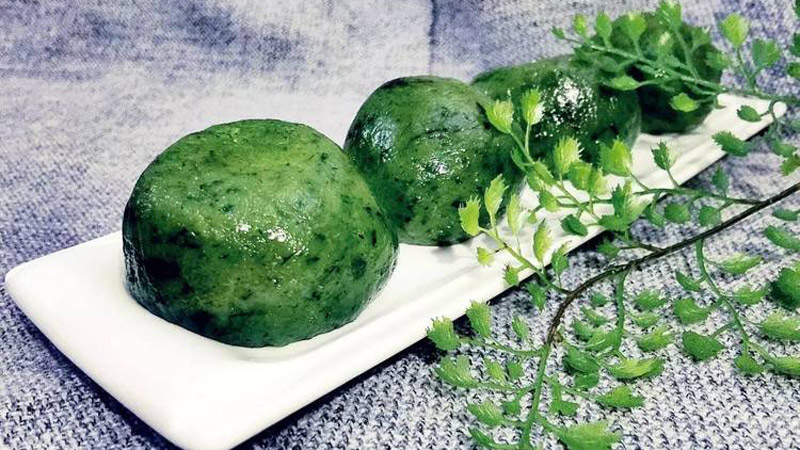
During this fireless interval, families had to prepare enough cooked food in advance. They ate it cold, hence the name “cold food.” For more than two thousand years, Han Shi Jie was regarded as the most important folk memorial day in China. Imagine a spring when no stove or kitchen fire was lit across the land. People would dine on pre-made cakes, cold noodles, and leftover porridge. This practice slowly merged into Qingming celebrations, where today people still eat Qingming Bing (清明饼), a kind of cold rice cake wrapped in bamboo leaves.
Why did this ancient ban on fire last so long? It reflected a deep respect for nature’s cycles. Fire was not just a tool but a living element that needed rest and renewal. By extinguishing the old flame, communities symbolically cleansed their homes before inviting a new, purer fire back. The custom was eventually lost in most regions, but its echo remains in the cold dishes of early April.
2. Tomb Sweeping
Ancestor worship lies at the heart of the Cold Food Festival. Tomb sweeping is more than just cleaning graves. It represents the Chinese value of “revering the departed and preserving family bonds.” For thousands of years, people have used this day to visit cemeteries, remove weeds, offer food and incense, and burn paper money. The belief is simple: the dead still need care and respect from the living. Unlike grand temple ceremonies reserved for nobles, tomb sweeping was open to everyone—peasants, merchants, and officials alike.
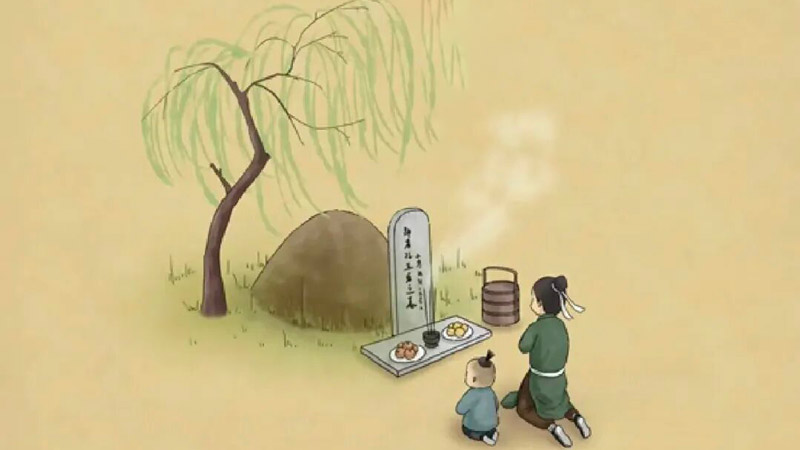
By the Tang Dynasty, as the decree in Tang Hui Yao confirms, the state officially recognized the practice. It became a national rite under the Wu Li (五礼), or the Five Rituals. But it did not stop at honoring one’s own ancestors. People also paid tribute to historical figures who had served the public good—heroes, scholars, and officials who fought for justice. Today, during Qingming, schoolchildren and veterans alike visit revolutionary martyrs’ monuments. This tradition of remembering both family and national heroes grew directly from the old Cold Food Festival practices.
What makes this custom so enduring? It answers a basic human need: to feel connected to those who came before. When you stand before a grave, you are not just looking at a stone. You are speaking across time. The act of bowing and offering cold food is a quiet conversation with memory. No grand words are needed. That is why, even as the festival name faded, the ritual of tomb sweeping survived and thrived.
3. Kite Flying
On a breezy spring day, look up. You might see a kite dancing high above the fields. In ancient times, people believed that flying a kite could carry away their bad luck. This was especially popular during the Cold Food Festival and later Qingming. Here is how it worked: a person would write down all the illnesses, misfortunes, and negative energies they knew of—on paper shaped like a kite. Sometimes they would list specific fears: “cough,” “bad harvest,” “family quarrel.” Then they would fly the kite as high as possible.
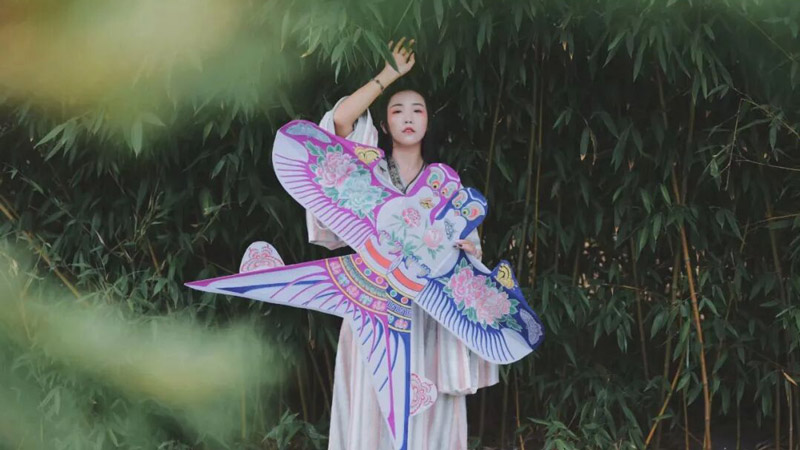
At the peak of its flight, when the string was taut and the kite seemed to touch the clouds, the flyer would cut the string. Letting go completely. The kite would drift away with the wind, carrying those written troubles into the distance. People watched it disappear, feeling lighter. It was a physical and symbolic act of release. No prayers, no priests—just a kite, a string, and the courage to let go.
Today, kite flying during Qingming is mostly for fun. Children run with colorful diamond-shaped kites, and adults join competitions. But the old belief still whispers beneath the laughter. Every time someone cuts a kite loose, they are tapping into a ritual that is thousands of years old. It reminds us that spring is not just about new growth—it is also about shedding old burdens.
4. Spring Outing
Finally, the Cold Food Festival and Qingming share a joyful side: going out into nature. The custom of Ta Qing (踏青), or “treading on green grass,” has a long history in China. Its roots lie in ancient farming rituals that welcomed spring. Before planting began, communities would walk through the fields to pray for a good harvest. They would sing, dance, and offer simple sacrifices at the edge of the plowed land. This was not just work—it was a celebration of the earth waking up.
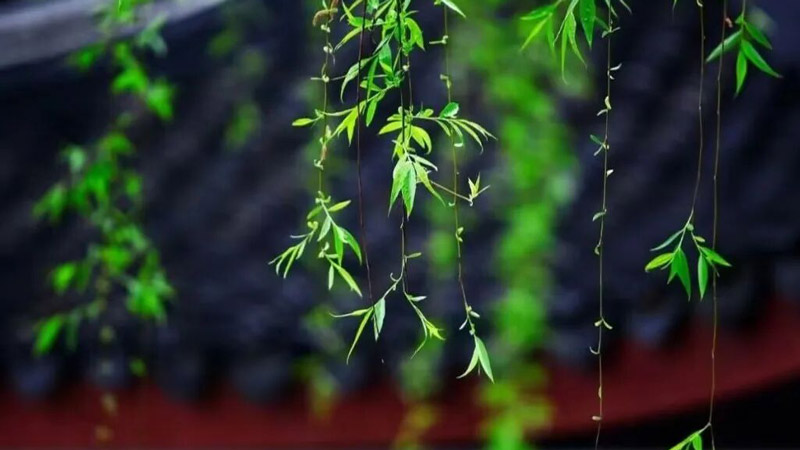
Over the centuries, this ritual became a casual outing. Families would pack cold food (since no fire was allowed) and walk to the countryside. They would admire newly bloomed flowers, listen to birds, and let children chase butterflies. In many old paintings, you can see elegantly dressed women and children strolling along riverbanks during the Cold Food Festival. They carry picnic baskets filled with Leng Shi (冷食)—cold rice balls, marinated vegetables, and dried fruits. The atmosphere was relaxed, almost playful.
Why does this matter? Because spring outings offer a balance to the solemnity of tomb sweeping. On the same day, you can honor the dead in the morning and enjoy the living world in the afternoon. Death and life stand side by side. The grass is green, the sky is wide, and the food is cold but shared with loved ones. That is the quiet wisdom of the old Cold Food Festival. Though its name may be forgotten, its spirit still walks with us every April.