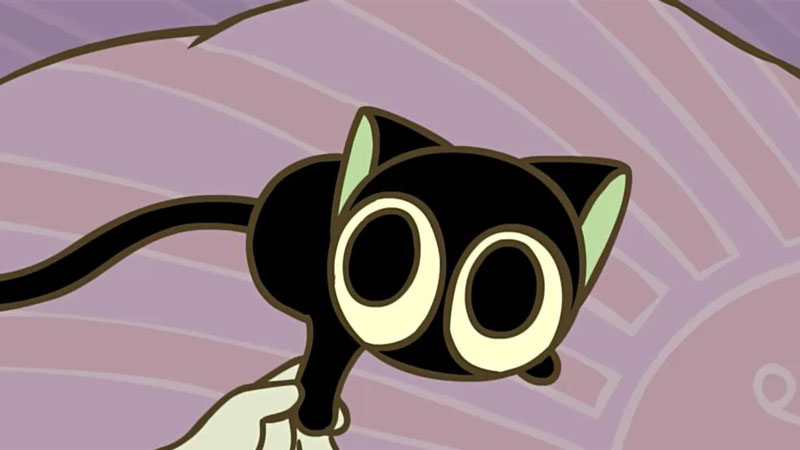
"Against the backdrop of escalating conflicts and wars in our real world, revisiting The Legend of The Legend of Hei 2 hits differently: our world truly needs more of these beautiful yet clear-eyed 'fairy tales'."
"Grandma! Grandpa! Your anime just updated!"
After a six-year wait, The Legend of The Legend of Hei 2, the series countless "Hei-ologists" have been eagerly anticipating, is finally returning with a brand-new chapter.
On July 18th, the animated film The Legend of The Legend of Hei 2 2 graced the big screen once more, six years after the debut of its predecessor.
This homegrown animation, which began in 2011, has become an emotional anchor for many viewers over the past decade. The densely packed barrage of "My youth is back!" (爷青回, a nostalgic internet meme) flooding the screen at the start of every episode is a testament to its long journey alongside its audience.
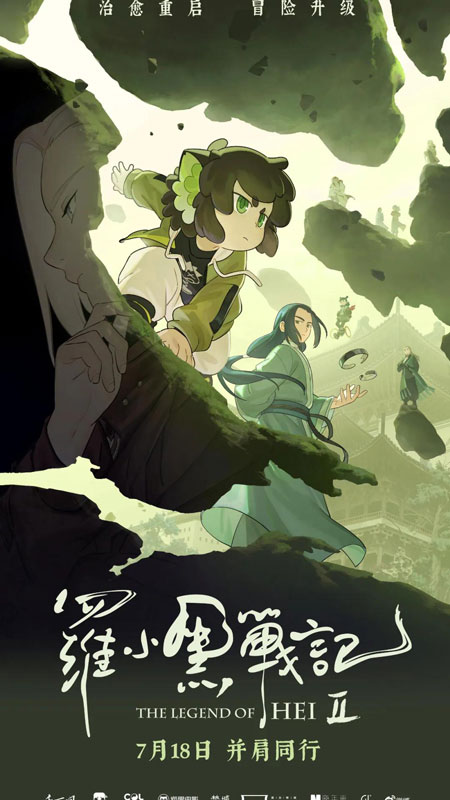
For many, The Legend of Hei 2 is more than just a soft, fluffy, and seemingly naive cat demon. He's a vivid character, a child growing gently yet steadily before our eyes.
Let's turn our gaze back to 2011. Starting from the original web series, let's revisit and rediscover The Legend of Hei 2—
 The Birth and Evolution of the The Legend of Hei 2 IP
 The Birth and Evolution of the The Legend of Hei 2 IP
That year, this animation crafted by Hanmu Chunhua Studio quietly debuted online. Without massive funding or overwhelming promotion, it quickly captivated a loyal following through its unique art style, relaxed yet nuanced storytelling, and one soft, fluffy kitten demon with clear, innocent eyes.
Unlike many high-energy, fast-paced animations, The Legend of The Legend of Hei 2 chose a gentler approach. It used small, everyday details and lively character interactions to build a parallel world where humans and spirits coexist—a world with grand underlying lore, yet grounded in the relatable hustle and bustle of ordinary life.
In its early days, Hanmu Chunhua Studio had only a handful of members. MTJJ (director Wood Head) created the first few episodes almost single-handedly using Flash software: storyboarding, animation, even voice acting relied heavily on a tiny core team.
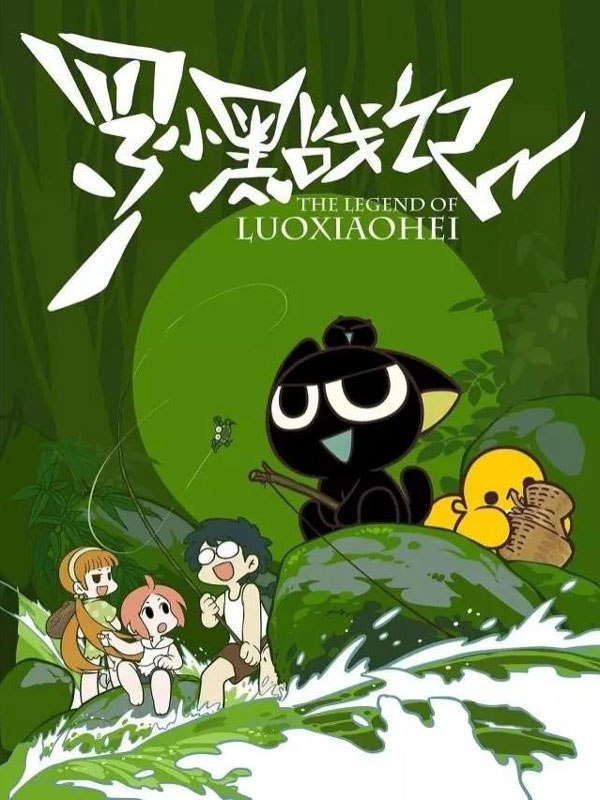
The voice actress Shan Xin, whom we know well, clicked instantly with the creators and agreed to join what she thought was a fun little project. Little did anyone know that over a decade later, that "little project" would become something much bigger. Shan Xin essentially carried the TV version of The Legend of The Legend of Hei 2, voicing over ten characters. This led to the classic gag: "Shan Xin taking Shan Xin to Shan Xin's house to tease Shan Xin with Shan Xin."
The multiple "Shan Xins" from The Legend of The Legend of Hei 2 are jokingly dubbed the "Shanxin pile" by fans.
The web series The Legend of The Legend of Hei 2 can roughly be divided into two parts.
The first part is the "Daily Life" arc. Injured after stealing the Tianming Pearl, Xiaohei is taken in from the rain by the kind-hearted girl Xiaobai. He then meets her brother, Agen, who is also a spirit, and experiences various amusing incidents. This section feels more like a slowly unfolding small world. Each episode contains little easter eggs that make you smile and moments breaking the fourth wall with witty banter, fitting the mold of a classic, lighthearted slice-of-life series.
The second part is the "Gate of All Beings" (众生之门) arc. Here, Xiaohei and his companions' adventures reach their climax, and the worldbuilding expands significantly. Compared to the more relaxed, everyday pace of the first half, the plot here becomes noticeably tighter, with escalating conflict and tension. The battle scenes receive a major upgrade, becoming smoother and more visually impressive. Crucially, this arc introduces team combat elements – multi-character coordination and tactical teamwork – rarely seen before, making each fight larger in scale and more engaging to watch.
Sandwiched between these, the 2019 film The Legend of The Legend of Hei 2 took on the crucial task of systematizing the series' worldbuilding.
Serving as a prequel, the theatrical version not only far exceeded the TV series in length but also adjusted its style. The gentle slice-of-life charm and lighthearted pace of the TV show were replaced with a grander narrative structure and a tighter emotional thread. Visual impact increased dramatically, with fight choreography and worldbuilding becoming more complete and mature. Xiaohei's story, too, transformed from "a little cat demon's daily life with friends" into a coming-of-age journey of "a youth finding himself and choosing his stance."
The film's narrative structure carries a strong "road trip" vibe. It begins with Xiaohei's home destroyed by humans, leaving him adrift on the streets. He's taken in by Fengxi, the leader of a spirit organization, experiencing warmth and belonging from his own kind for the first time. However, this newfound life is soon disrupted by the powerful being, Wuxian. Wuxian defeats Fengxi with overwhelming force and takes Xiaohei away. What seems like a forced escort becomes a journey of guidance.
Facing the silent, formidable Wuxian, Xiaohei is filled with distrust. Though not directly harmed, Wuxian's imposing presence casts a psychological shadow. Yet, beneath the stern and reserved exterior, the creators reveal another side of Wuxian through subtle details: he is not an emotionless weapon, but a specific person. He cooks, albeit poorly; he seriously asks for money when needed; and sometimes, he surprisingly shows flexibility and compromise.
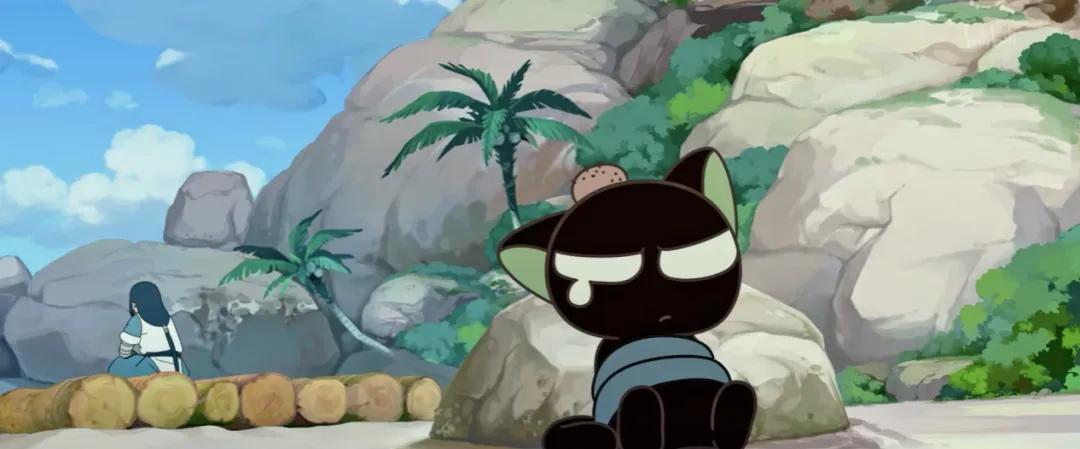
These nuanced, everyday actions, while not enough to immediately break Xiaohei's guard, quietly plant seeds of trust. Their relationship, starting from initial hostility, slowly yet steadily shifts during their mostly silent travels.
Along the way, Xiaohei witnesses the complex reality of human-spirit coexistence. Wuxian doesn't rush to convince Xiaohei or force his own beliefs onto him; instead, he lets Xiaohei experience things firsthand. The conflict between Fengxi and Wuxian isn't a simple clash of good versus evil, but a collision of two values: one firmly believes "resistance is necessary for survival," while the other insists "peaceful coexistence is still possible."
These conflicts and uncertainties about values aren't conveyed solely through dialogue in the film. They are also skillfully expressed through the concrete form of combat. Every fight scene embodies the collision of the characters' stances, serving as a release of emotion and consciousness.
The fight choreography in The Legend of The Legend of Hei 2 retains Hanmu Chunhua Studio's signature Eastern aesthetic qualities. Wuxian's movements, in particular, are concise and restrained, elegant yet powerful. Extensive use of dynamic, non-fixed camera angles makes each battle resemble a dance – visually captivating while brimming with intense emotional tension.
Behind these fight scenes lies meticulous craftsmanship from the team. The studio's Jie Ge handled the storyboards and animation sketches for the island encounter between Wuxian and Fengxi and the final showdown, establishing the visual rhythm for these climactic battles. Li Zi single-handedly created all the water and flame effects in the entire film, earning the nickname the studio's "most fluid person" (a pun on "浪" meaning both "wave" and "wild/carefree"). Liu Suan completed all the explosion shots alone, demonstrating exceptional attention to detail...
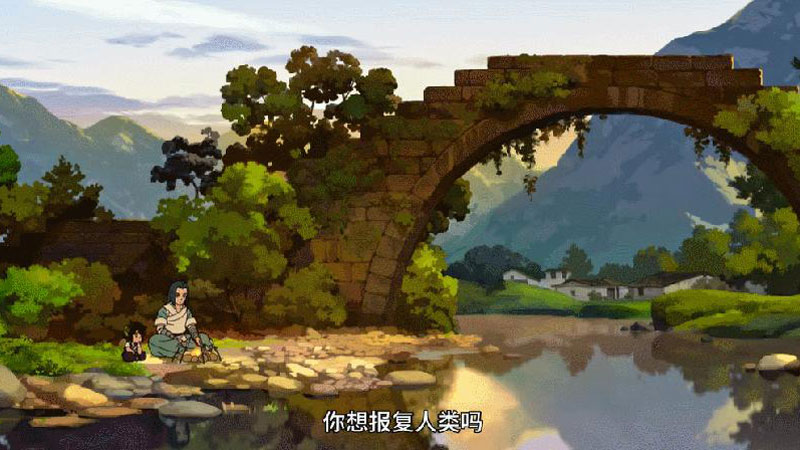
But the film's core climax isn't just the intense final battle; it's a quieter, more profound "shattering of understanding."
Fengxi isn't a "villain." He's simply stubbornly resisting human encroachment on spirit habitats in his own way. He wants to protect the home of the spirits, to give his companions a space to survive. In a sense, he, like Xiaohei, is a spirit whose "home" was taken by humans. His anger and obsession aren't evil; they stem from a deep, profound sorrow.
The film observes this world through Xiaohei's still-childlike eyes: shifting from an initial belief that "whoever treats me well is good," to gradually realizing that good and evil aren't defined by sides. Humans and spirits aren't simply enemies; those of your kind aren't necessarily all good, and those of another race aren't absolutely evil. He witnesses the cruelty of humans destroying spirit habitats, but also sees the technological marvels they've created – wonders even spirits never imagined.
Caught between Fengxi and Wuxian, Xiaohei wavers, struggles, questions, and is forced to re-examine everything he once believed. If Fengxi represents "sorrow from the past," then Wuxian resembles "possibility for the future."
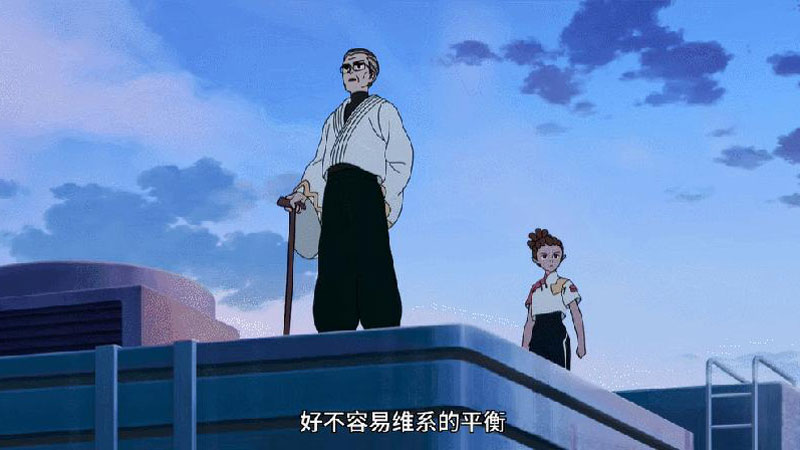
The entire film emphasizes that very "possibility for the future" – countless humans and spirits working towards peaceful coexistence. Yet, the peace painstakingly built can be shattered with alarming ease. Despite this, countless humans and spirits continue striving, generation after generation, simply to create a better world for the children.
Against the backdrop of escalating conflicts and wars in our real world, revisiting The Legend of The Legend of Hei 2 hits differently: our world truly needs more of these beautiful yet clear-eyed 'fairy tales'.
Anticipation and Analysis for the Second Movie
 Anticipation and Analysis for the Second Movie
Following its release in 2019, The Legend of The Legend of Hei 2 film achieved unexpected success and critical acclaim, garnering an enthusiastic response from domestic audiences. For the new generation of Chinese animation, which was still exploring paths to breakthrough at the time, this film was undoubtedly a shot in the arm, giving many creators renewed confidence to persevere.
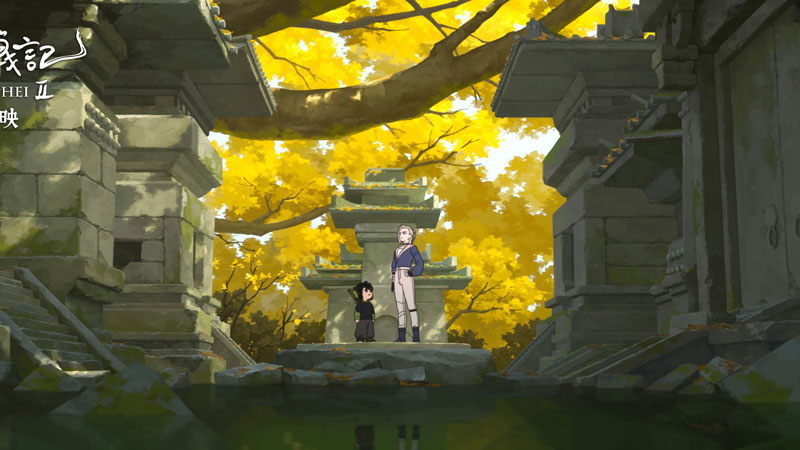
More surprisingly, The Legend of The Legend of Hei 2 subsequently achieved significant success in Japan, winning the affection of numerous industry veterans and being regarded as a representative work of Chinese 2D animation. This little "black cat fairy tale" added a distinct Chinese hue to the global animation market. When news of the sequel, The Legend of The Legend of Hei 2 2, broke on June 13th this year, it quickly sparked heated discussions both domestically and internationally.
The first film ended when Xiaohei was six years old. The sequel picks up two years later, with Xiaohei now eight. The released trailer offers glimpses of his growth. Wuxian has been teaching Xiaohei from scratch – everything from reading and numbers to metal manipulation and combat skills. The two spent peaceful, happy times together in the mountains... until news of an attack on the Spirit Assembly Hall shattered the calm.
The Spirit Assembly Hall suffered a sudden, devastating attack by humans. Flames engulfed the building, and all spirits present perished. The appearance of firearms and bullets drastically escalates the conflict beyond the previous "spirits vs. humans" dynamic. And at the center of this storm, Xiaohei will face a choice far more brutal than any before.
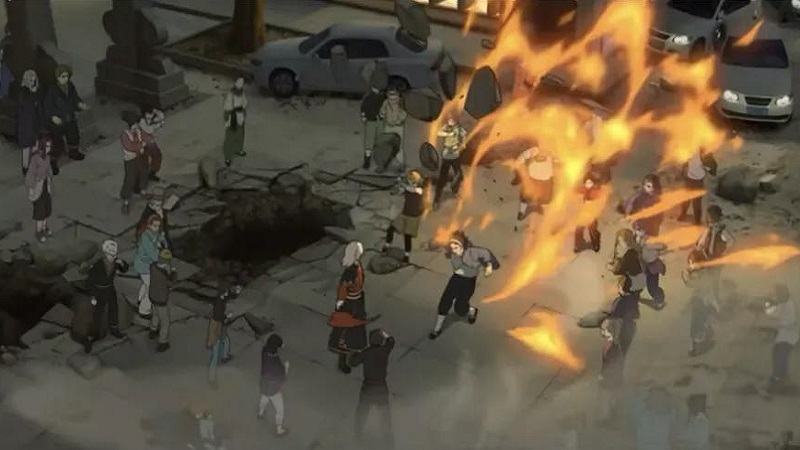
The trailer shows the destroyed Liushi Assembly Hall, which aligns with the crossed-out hall depicted in Episode 20 of the web series, strongly suggesting its annihilation.
In the first film, while the conflict between spirits and humans was complex, it largely remained localized friction. The appearance of firearms and a large-scale assault in the trailer, however, signals that this conflict has escalated to a point of near-irreconcilability. The introduction of new characters adds another layer to this complexity. The senior disciple, Lu Ye, looks incredibly cool and powerful, already capturing significant attention before the film's release. Nezha is strongly hinted to join the main cast in the sequel, and Jiu Lao is set to finally demonstrate his true abilities. Alongside a host of new characters, figures from the first film and the prequel comic Lanxi Town will also appear. Their stances and actions are likely to shatter the simplistic "human vs. spirit" dichotomy, potentially sparking new conflicts.
In the first film, Xiaohei was caught between Wuxian and Fengxi—torn between the ideal of "coexistence" and the reality of "resistance." Amidst confusion and struggle, he grew from dependence to independent judgment. Now, with the attackers being humans and bullets shattering the peace of the Assembly Hall, will Xiaohei find himself trapped in a similar dilemma?
While Xiaohei was primarily a "protected and guided" figure in the first film, the trailer suggests this time he will stand shoulder-to-shoulder with Wuxian, taking on his own responsibilities. Perhaps in this sequel, we'll see Xiaohei transform from a "child searching for a home" into someone who "protects a home."
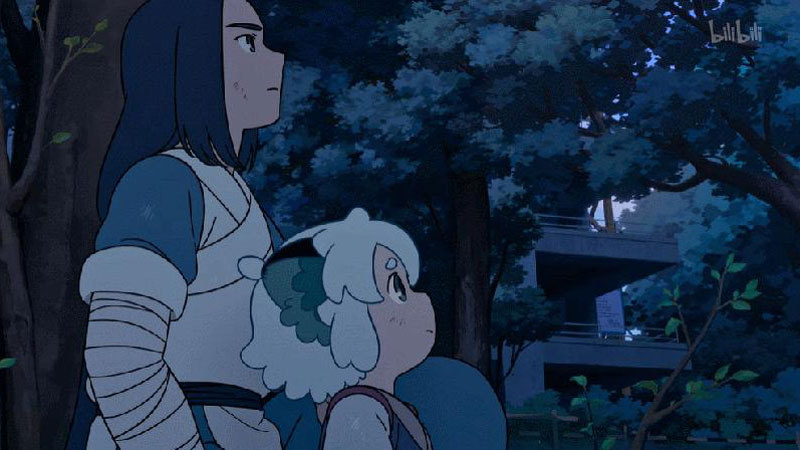
Judging by the released trailers, the sequel clearly features significantly more large-scale action sequences compared to the first film. Moving beyond the first movie's emphasis on strategic emptiness within Xiaohei's space, clean action lines, and suggestive atmosphere, the fight scenes here appear richer and fuller. There's grander environmental staging and more intricate detailing. Whether it's the substantial increase in combatants, the sky-scorching explosions, or the first appearance of human firearms, the overall texture of the battles has been significantly upgraded. The immediate visual impression is one of greater refinement (though likely achieved through copious amounts of late-night oil burned by the studio team).
To avoid spoilers, we won't delve too deeply into the plot here. Everyone is welcome to join in friendly discussion after seeing the film!
A Different Kind of Growing Protagonist
 A Different Kind of Growing Protagonist
Shifting focus from the film back to the protagonist, The Legend of Hei 2 himself, it's clear he differs from many familiar heroes.
In animation, growing protagonists are often emotion-driven: they awaken power through the loss of loved ones or the destruction of their home, transforming amidst anger, sorrow, and a thirst for revenge. Rage fuels their progress; battle cries mark their growth. Xiaohei is not like this. His growth in the first film wasn't punctuated by shouts of "I must become stronger!" or "I will have revenge!" Instead, it was a quiet, restrained journey of understanding, unfolding gradually like a steady stream.
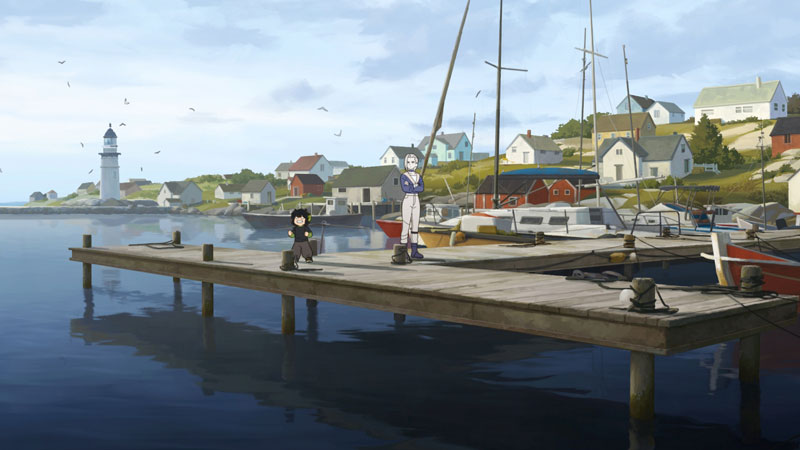
In my view, Xiaohei's growth trajectory aligns closely with Jacques Lacan's theory of the mirror stage (镜像阶段理论). Infants between 6-18 months experience the "mirror stage" – the moment they first recognize their own image in the mirror, signifying the birth of the "Self." However, this "Self" is not yet complete; it is built upon a cognitive projection of "Me + the Other."
At the beginning of the story, Xiaohei resembles an infant in this mirror stage: his understanding of "home" is passive and dependent—wherever accepts him becomes his belonging. In Fengxi and the spirit organization, he sees the future he longs for: a warm community, a haven for spirits. At this point, Xiaohei's "Self" is fragile, constantly needing external validation. Fengxi acts like a mirror, reflecting Xiaohei's initial imagining of "belonging."
The appearance of Wuxian shatters Xiaohei's "mirror illusion." He shows Xiaohei that humans are not universally hostile to spirits, nor are spirits inherently righteous. Wuxian doesn't force his beliefs onto Xiaohei; instead, he takes him to see the world, revealing that good and evil aren't cleanly separated.
This mirrors the moment after the mirror stage ends, when the subject realizes "the reflection is false," triggering conflict with the world. Xiaohei wavers, grows confused, entering a fissure in the "symbolic order": "Is the home I believed in truly where I belong?"
Lacan argued that the subject must ultimately undergo the "gaze of the Other" to establish themselves within the symbolic order. Xiaohei experiences this precisely in the clash between Wuxian's and Fengxi's ideals. He must abandon the simplistic notion that "acceptance equals belonging" and make a choice as an independent subject. At the film's climax, he firmly rejects Fengxi's assumption that "he'd be happy too." In that moment, Xiaohei completes his subjectification: true belonging isn't given—it's a place one journeys toward and confirms with their own heart.
He witnesses Fengxi's rage and helplessness, and sees Wuxian's calm and compromise; he experiences the warmth of acceptance and the pain of shattered trust. Ultimately, he evolves from a sheltered "child" to someone who charts his own path. His strength doesn't come from emotional outbursts, but from understanding, contemplation, and responsibility.
Xiaohei's question in the film: Is Fengxi a bad person?
Wuxian's reply: You can have your own answer.
If it were just a story about a young spirit's growth, The Legend of The Legend of Hei 2 might not have become the "My youth is back!" touchstone for so many. It achieves something harder: it makes us believe softness can hold resilient strength, and gentle storytelling can leave an unforgettable echo.
Characters don't exist just to defeat others. They simply exist, living their own lives and making their own choices. Its world isn't a lofty fantasy kingdom, but the familiar corners of everyday cities. It doesn't shout to be remembered—it lingers through details, quiet moments, and silence.
That's why we waited six years. That's why we'll sit in the theater for it once more.
Not because it's grander or flashier now, but because we know—this world remains complex, and Xiaohei is still on the road.