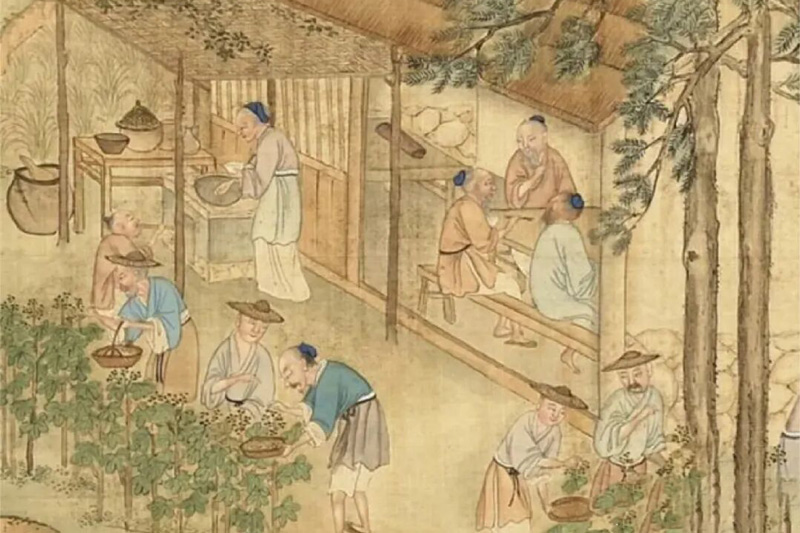
Step into a modern kitchen with its induction cooktops, smart steamers, and six-burner gas stoves. It feels like the peak of convenience, doesn’t it? But what if a time machine whisked you back 2,000 years to a Han Dynasty (汉朝, 206 BCE–220 CE) kitchen? You might drop your spatula in shock. Ancient Chinese cooks had gadgets that look suspiciously like “black tech” from the future. No electricity. No stainless steel. Just raw intelligence and a deep understanding of fire, water, and steam.
From a 7,000-year-old steamer to a collapsible bronze camping stove, their tools tell a story of relentless innovation. This article unpacks three game-changing devices that turned ancient kitchens into labs of culinary genius. Forget what you think you know about “primitive” cooking. These inventions—the Yan (甗), the Han energy-saving stove, and the Tiger-shaped portable range—prove that our ancestors didn’t just survive. They thrived, feasted, and engineered their way to flavors we still chase today.
The Steam Master
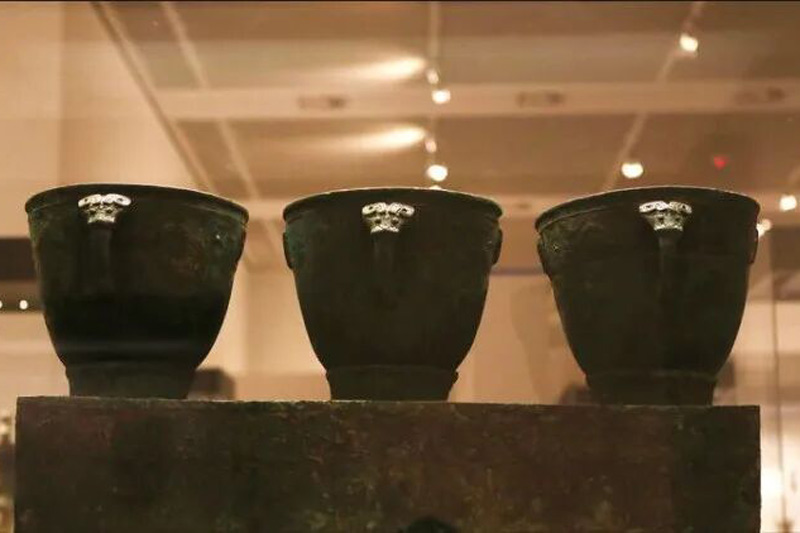
Long before pressure cookers hissed on modern stoves, the Bronze Yan was doing something almost magical. Its name sounds like “yen,” but it wasn’t for looking. This 3,000-year-old device from the Western Zhou Dynasty (西周, 1046–771 BCE) was a two-part steamer. The bottom half, called a Li (鬲), held boiling water. The top half, a Zeng (甑), was a perforated basket that sat above. Light a fire under the Li, and steam shot up through the holes, cooking grains or meat evenly. It was the world’s first dedicated steam cooker—no cross-contamination, no burnt bottoms.
But here’s the shocker: the idea of steaming with clay Zeng appeared around 7,000 years ago in the lower Yangtze River region. That’s older than the pyramids. By the Shang Dynasty (商朝, 1600–1046 BCE), craftsmen upgraded it to bronze, sometimes adding a lid to trap pressure. In effect, they built a primitive pressure cooker. The most jaw-dropping example came from Fu Hao’s (妇好) tomb at Yinxu (殷墟) in Anyang (安阳), Henan. The “Triple-Linked Yan” let a single hearth steam three different dishes at once. Imagine a noblewoman in 1200 BCE hosting a banquet with fish, millet, and pork all steaming side by side. That’s not just cooking. That’s a statement.
Why was steam such a big deal? Because it solved a riddle that baffled many ancient cultures: how to cook without burning or boiling everything into mush. Steam kept nutrients, preserved texture, and required no oil. The Chinese mastered it so completely that even today, a bamboo steamer works on the exact same principle. Western kitchens only caught on to steam ovens in the last few decades. The Bronze Yan wasn’t a relic. It was a prophecy.
The Energy Saver
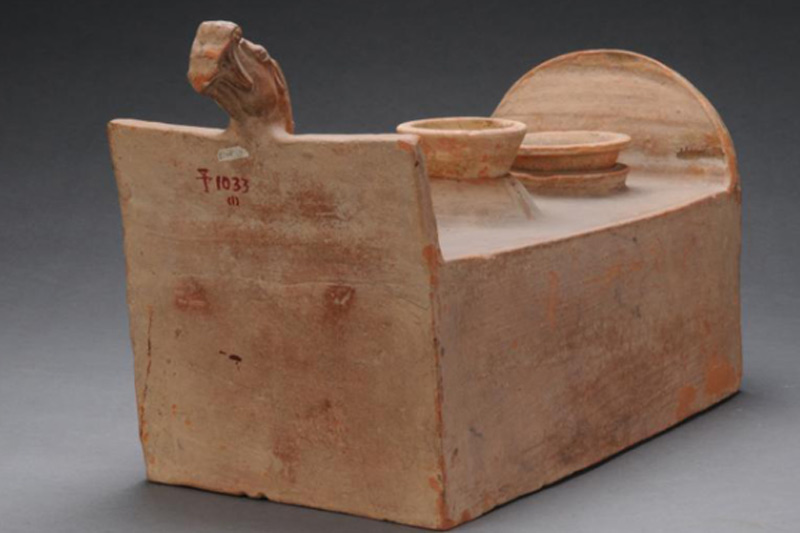
Before the Han Dynasty, cooking over an open fire or three-legged tripod was smoky, wasteful, and slow. Most heat escaped into the air. Then came the Han stove—a compact, multi-burner clay or bronze range that changed everything. Excavated Han Dynasty tomb models show stoves with two, three, or even four fire eyes. A family could boil water in one pot, steam rice in another, and stew meat in a third, all at the same time. That’s “one stove, many dishes” efficiency that modern ranges only recently matched.
But the real genius hid in the chimney. Han engineers invented the “bent flue” and the “tall chimney”. These weren’t just for smoke control. A curved or elevated chimney created a stronger draft—literally sucking air through the fire and making it burn hotter and cleaner. Imagine a natural fan inside your stove. One outstanding artifact, the Dragon-Head Bronze Stove from Inner Mongolia, features a long narrow body, a tiny fire door, and a raised dragon-head chimney. When you fed charcoal into it, black smoke puffed out of the dragon’s mouth while the fire roared underneath. It was a 2,000-year-old kitchen hood and turbocharger rolled into one.
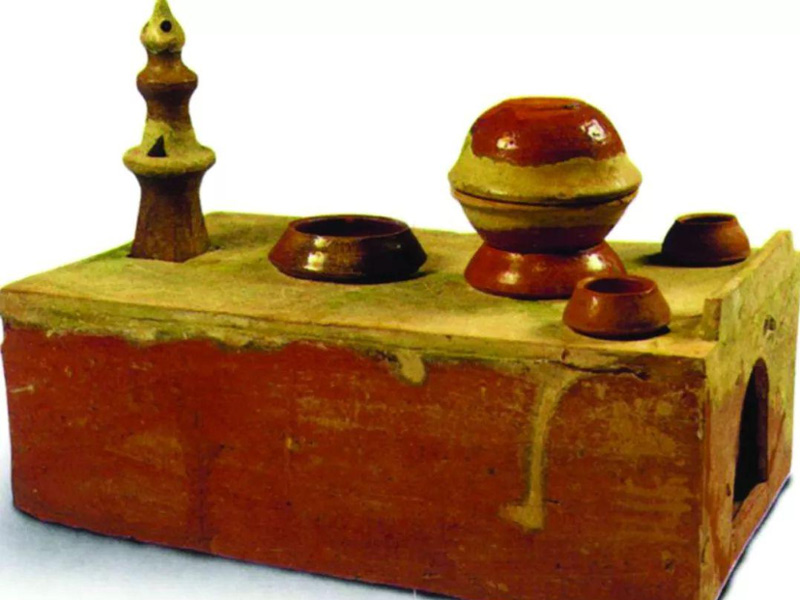
And it didn’t stop there. Some Han stoves had clay coatings on the inner walls to retain heat. Others had adjustable air vents. The design was so effective that similar “earthen stoves” remained standard in rural China well into the 20th century. The Han stove wasn’t just an appliance. It was a philosophy: work with nature’s physics, not against it. While Roman kitchens still relied on smoky braziers, Han cooks were already enjoying smokeless, high-heat cooking. That’s why stir-frying—that uniquely Chinese technique—could eventually explode in popularity. You can’t stir-fry without a fierce, steady flame. The Han stove delivered it.
The Portable Chef
What did ancient soldiers, nomads, and traveling merchants eat? They didn’t starve. In 1988, a tomb in Taiyuan (太原), Shanxi, belonging to a noble named Zhao Qing (赵卿) from the Spring and Autumn Period (春秋, 770–476 BCE) yielded a bizarre bronze artifact. It looked like a tiger with a chimney tail. Dubbed the Tiger-shaped Stove, it was a complete, collapsible outdoor kitchen. Seven interlocking pieces formed a stove body, a cauldron, a steamer, and four stackable chimney sections. Assembled, it stood 1.62 meters tall—taller than most people. Disassembled, it fit into a cart or a pack.
Every detail served a purpose. The tiger head carved at the fire door wasn’t decoration. It was the air intake. The four chimney tubes, stacked like a telescope, created an incredibly strong updraft. More draft meant a hotter fire with less fuel. Inside the stove body, rows of tiny bronze studs looked like acne. They were for holding clay. Before lighting a fire, a user would smear wet clay over the studs, forming an insulating layer. That clay kept the heat in, protected the bronze from warping, and reduced fuel consumption by a third. Two chains and a handle on the sides let you carry the whole setup while hot—no burns, no drama.
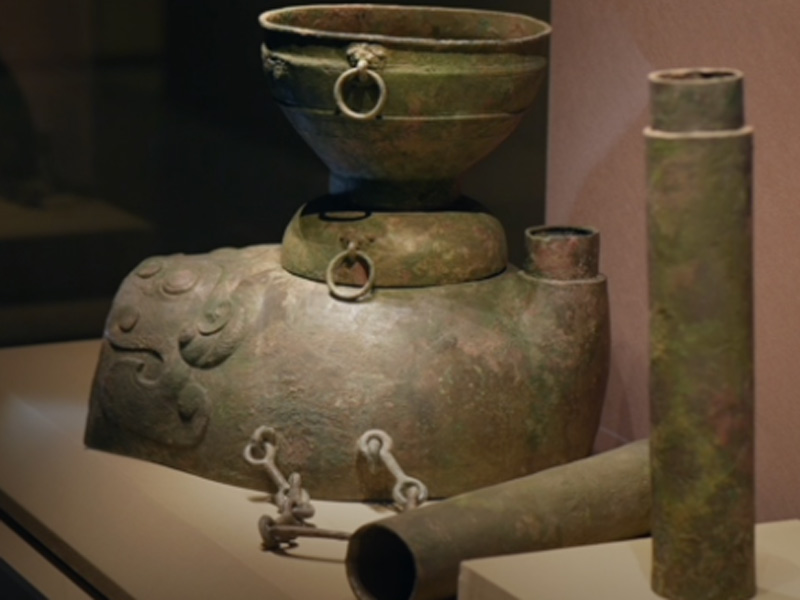
This was the Swiss Army knife of ancient cooking. A nomadic chieftain could break it out on the steppe, boil tea, steam dumplings, and then pack it away before the next sunrise. A general could feed his troops without building a permanent hearth. Even today, high-end camping stoves rarely offer that level of modular efficiency. The Tiger-shaped Stove proves that “convenience food” isn’t a modern invention. It’s a human obsession. And 2,500 years ago, the Chinese had already solved it with bronze, clay, and a little tiger swagger.