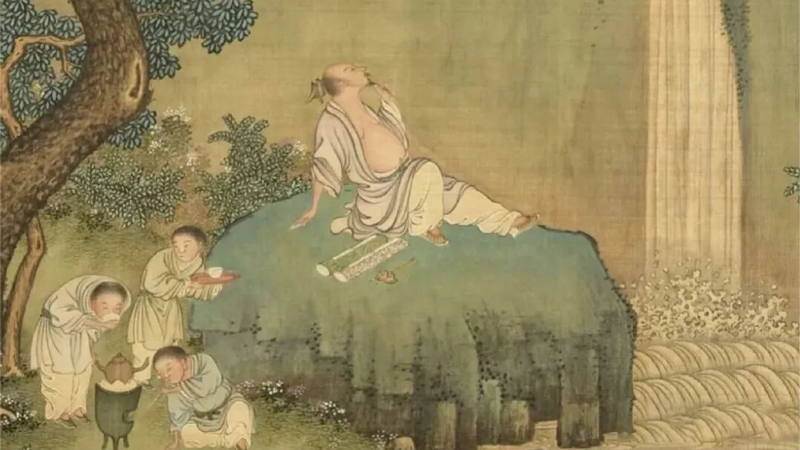
Before refrigerators and hothouse tomatoes, every bite followed the sun and the soil. The old Chinese rule “eat by the season” was not a trend but a survival code. When the first spring thunder cracked the sky, ancient cooks turned wild sprouts, tree buds, and even flower petals into dishes that whispered of renewal. This article follows that fragrant trail—from a noblewoman’s palace cake to a poet’s tipsy fish feast—to uncover four forgotten flavors of Lichun (立春), the Start of Spring. No translation, just a fresh look at how our ancestors used teeth, tongue, and imagination to “bite” into the season before it slipped away.
1. Biting Radishes
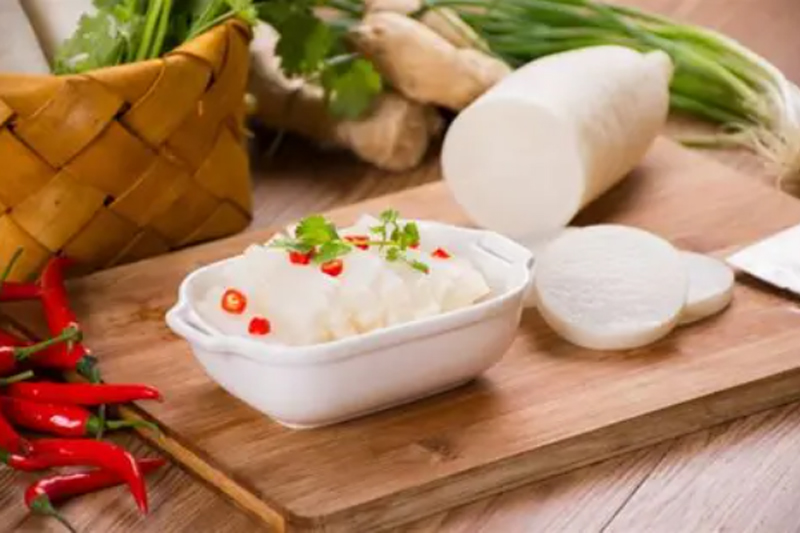
On Lichun day, rich and poor alike grabbed a raw radish and chomped down. Why? According to Zhuozhong Zhi (酌中志) by Liu Ruoyu (刘若愚) of the Ming dynasty, “noble or common, everyone chews a radish—they call it ‘biting spring’.” The sharp, peppery heat was believed to wake up a sleepy body after winter’s sluggishness. People also took it as a tiny act of grit: if you can bite through a tough root, you can han\
dle anything the year throws at you.
In old Beijing, vendors peddled a sweet pink variety called “heart-beauty radish” with the cry, “Radish sweeter than pear!” Even the poorest family would buy one for their child. That crisp, spicy crunch was a promise: the new year would be bright and smooth. No fancy cooking—just nature’s own alarm clock.
But radishes were only the opener. The real feast arrived on a plate called “spring tray”. Back in the Western Jin, it started as the “five-spice tray”—garlic, little onion, leek, rapeseed, coriander. The heat from these strong flavors was thought to flush out winter’s cold and keep plagues away. By the Tang and Song dynasties, the tray had grown richer. The great poet Du Fu (杜甫) even wrote, “On spring day, spring tray holds tender raw sprouts.”
2. Wild Herb Fever
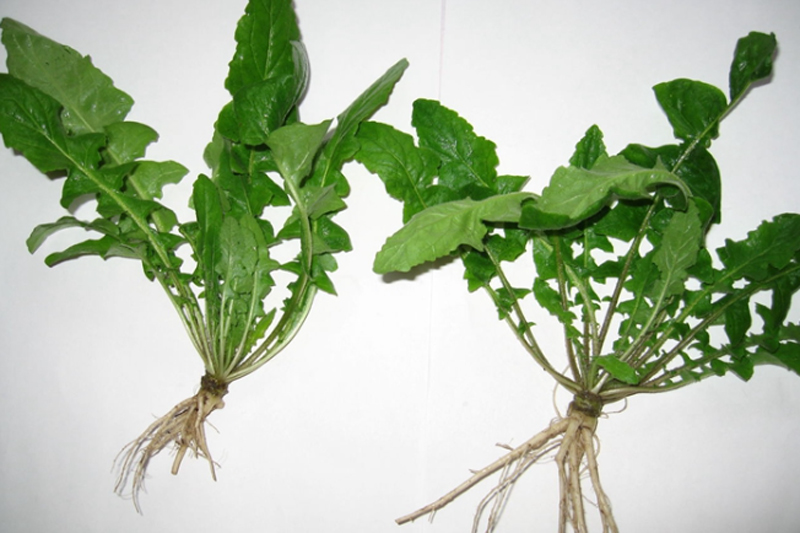
If biting radishes was the ceremony, then hunting wild greens was the season’s true passion. The Song dynasty went wild for what they poetically called “spring vegetables.” Believe it or not, even the imperial palace threw a “wild herb guessing party.” According to Wulin Jiushi (武林旧事), in the capital Lin’an (临安, today’s Hangzhou), empresses and ladies gathered freshly picked herbs, stuck them in wooden vases, and competed to name each one. Winners got prizes—like a royal botanical game night.
One green that stole everyone’s heart was shepherd’s purse, nicknamed “life-protecting herb.” The literary giant Su Dongpo (苏东坡) adored it so much he declared, “Once you truly taste it, the eight great delicacies of land and sea become disgusting.” For him, a plate of tender Jicai (荠菜) beat any luxury dish. Then came spring bamboo shoots—so prized that Li Shangyin (李商隐) wrote, “Tender shoots fresh from the grove, their price in Yuling (於陵) as heavy as gold.” A single bite of that crisp, milky sweetness was worth a fortune.
And don’t forget the “tree vegetable”—toon sprout. In the Tang dynasty, it was a northern tribute item as famous as lychee from the south. While Yang Guifei (杨贵妃) gorged on lychees, nobles rushed to eat Xiangchun (香椿). The purple-red buds turned bright green after a quick blanch. Tossed with tofu and a drip of sesame oil, it delivered the most expensive taste of spring—free for those who knew where to climb.
3. Flowers and Fish
While wild herbs kept you grounded, eating flowers lifted you to the clouds. Spring blossoms became “flower dishes”. The most legendary fan was Wu Zetian (武则天), the only female emperor of China. According to Suidang Jiahua Lu (隋唐佳话录), every February on her garden tour, she ordered a hundred flower types pounded with sticky rice and steamed into “hundred-flower cakes” to share with her ministers. Imagine biting into a blossom-scented pastry handed down by a empress.
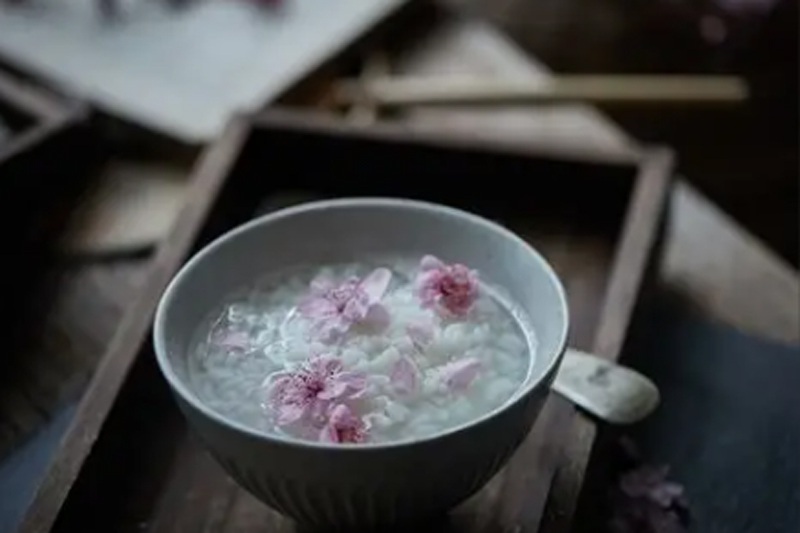
The Song scholar Lin Hong (林洪) recorded a quieter recipe in Shanjia Qinggong (山家清供): plum blossom porridge. “Wash plum petals, boil with snow water; when the white porridge is ready, add them together.” Sipping that cold, fragrant porridge while watching snow fall—that’s what literati called elegance. The Ming people went bolder: they picked magnolia flowers, dipped them in batter, and fried them in sesame oil. They named it “magnolia feast.”
After all that floral poetry, the spring table also craved something rich: fish. As the saying goes, “Peach blossoms flow, and mandarin fish fatten.” After a winter hiding underwater, fish grew plump before spawning. Fan Zhongyan (范仲淹) wrote his famous line, “People come and go on the river, but all they love is sea bass’s beauty.” The Song poet Lu You (陆游), a serious foodie, bragged in a poem: “Shepherd’s purse sells by the catty in the two capitals, but river bass is no luxury at all.” He sliced the fresh fish raw, mashed garlic, and let the fragrance fill his room—rain outside couldn’t stop his wine-and-fish joy.
4. Wine, Tea, and Green Dumplings
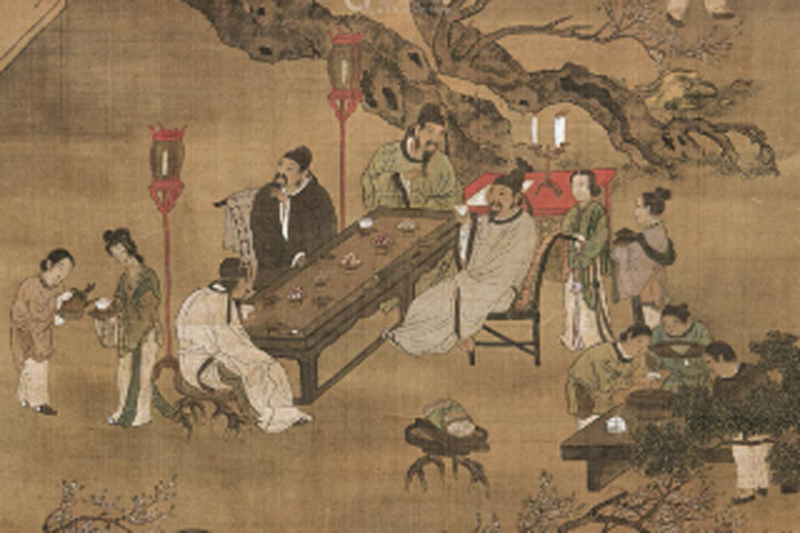
With vegetables, flowers, and fish on the table, could wine and tea be far behind? Ancient people drank “spring wine” at the equinox, when earth energy was thought to be best for brewing. In Zhejiang, villagers have made “equinox wine” for centuries. When Bai Juyi (白居易) served as an official in Hangzhou, he fell for a local pear-blossom brew called “Pear Blossom Spring.”
Yet tea spoke of spring even more urgently. The chase for pre-rain tea was almost manic. From Mengshan (蒙山) tea in the Tang to the northern tribute gardens of the Song, emperors pushed tea plantations southward just to harvest those first tender leaves a few days earlier. For Neo-Confucian scholars, sipping that pale green liquor was not just thirst-quenching—it was receiving spring’s secret message, a meditation on the endless cycle of growth.
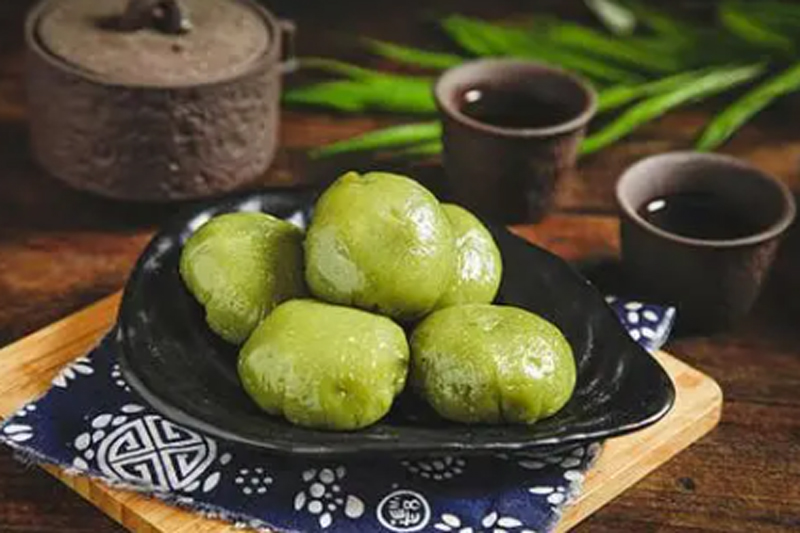
Finally, let’s end with a sweet that survives today: green dumpling. The Qing dynasty gastronome Yuan Mei (袁枚) described it perfectly in Suiyuan Shidan (随园食单): “Pound fresh mugwort for its juice, mix with glutinous rice flour into balls, color like jade.” Steam those jade-green orbs stuffed with red bean paste or black sesame, and you get a chewy, softly fragrant bite that tastes like a meadow. From spicy five-spice trays to tender shepherd’s purse, from empress’s flower cakes to these emerald dumplings, ancient people tasted spring inch by inch. It was never just about filling the stomach. It was a quiet wisdom—breathing with the earth, one seasonal bite at a time. This spring, why not put down your phone, find some wild greens at the market, and bite into your own season?