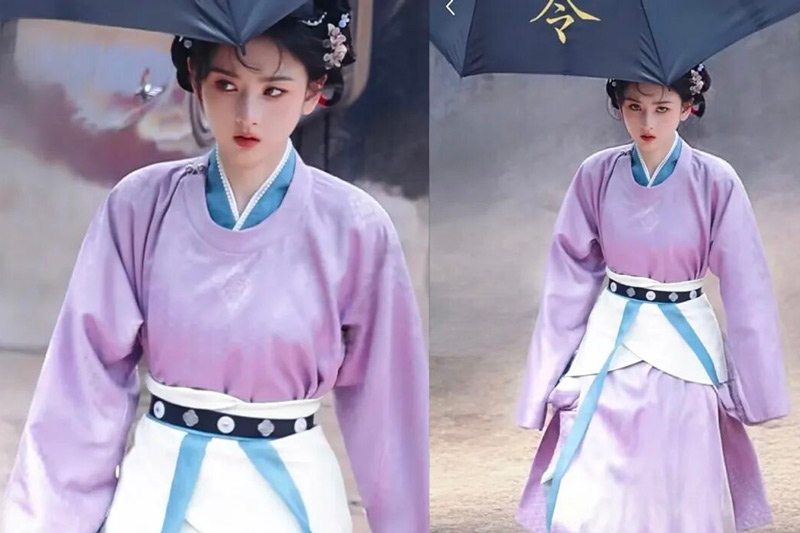
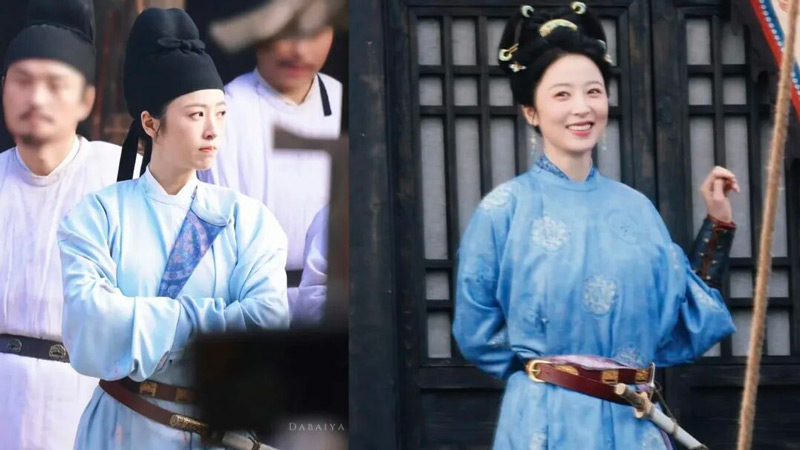
Is a round-collar robe strictly male attire? That question recently sparked heated debate online after someone noticed ancient Chinese paintings showing women in what looked like men’s clothing. The short answer? History is full of surprises. While the Yuan Ling Pao (圆领袍) did start as a male garment, Tang dynasty women boldly borrowed it—and looked fantastic doing so. From palace ladies to noble wives, they strapped on leather belts, tucked up their hair, and rode out in robes that once belonged exclusively to emperors and officials. This wasn’t a freak accident of fashion. It was a cultural storm where openness, nomadic influence, and pure practicality collided. So no, women didn’t just “get away with” wearing men’s clothes. They made the robe their own, leaving us with a fascinating lesson in how gender and clothing have always been more fluid than we think.
Male Origins
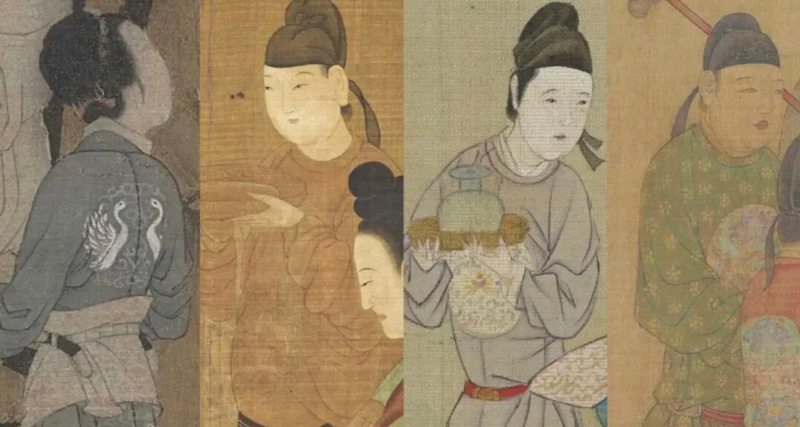
The Yuan Ling Pao came from northern nomadic tribes. During the Wei, Jin, and Northern and Southern dynasties, it drifted south with migrating peoples. By Sui and Tang times, it had become the go-to daily formal wear for men. Picture a round collar, narrow sleeves, a long hem—paired with a Futou (幞头) headwrap, a Diexie belt (蹀躞带) for hanging small tools, and black leather boots. Emperors and commoners alike wore it. In the famous painting Emperor Taizong Receiving the Tibetan Envoy (步辇图), both the emperor and his officials appear in Yuan Ling Pao. That male-only vibe was rock solid.
Tang dynasty ritual codes and clothing regulations consistently placed the Yuan Ling Pao in the male system. Colors, embroidery, and fabric quality signaled rank and status. Purple for high officials, red for mid-level, green and blue for lower ranks. Women, meanwhile, had their own universe: skirts, short jackets, and long scarves called Peizi (帔子). The two systems barely touched. For centuries, no respectable woman would dream of swapping her flowing silk for a man’s belted robe. But then came the eighth century, and everything changed.
Historical texts never claimed the Yuan Ling Pao was only for men. But the evidence suggests that for a long time, it functionally was. Excavated tombs from early Tang show male figurines exclusively in round-collar robes. No female counterparts. The gender line seemed sharp—until it suddenly blurred. That blurring is exactly what makes the story worth telling. It wasn’t a design flaw. It was a social shift waiting to happen.
Female Takeover
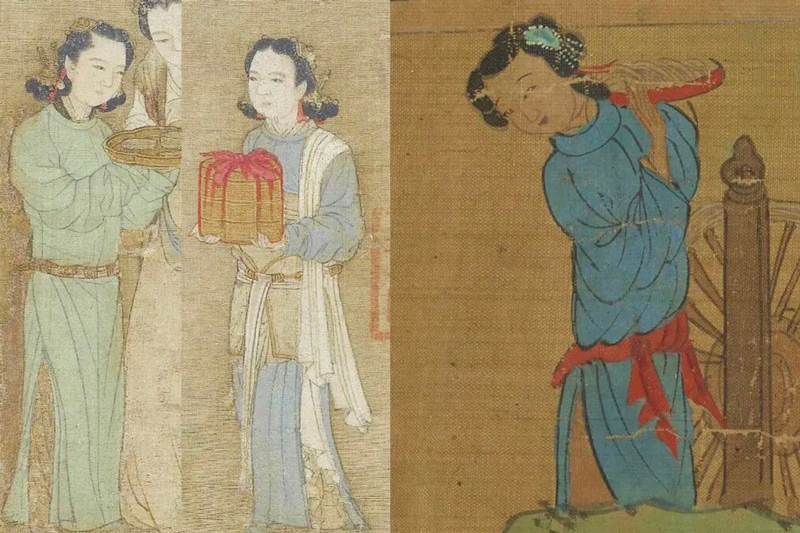
During the Kaiyuan (开元) and Tianbao (天宝) years (713–756 CE), women wearing men’s clothes became a full-blown craze. It started in the palace and spread like wildfire through the streets. The Old Book of Tang (旧唐书) notes, “Some wore husbands’ clothes, boots, and robes—noble and commoner alike.” Another text, General History of Chinese Clothing Through the Ages (中华古今注), adds that by mid-Tianbao, “wives of scholars put on husbands’ boots, robes, and casual caps—inside and outside the home, it was all the same.” This wasn’t a one-off joke. It was a social movement.
Murals tell the visual story. In the tomb of Crown Prince Zhang Huai (章怀), painted ladies in Yuan Ling Pao ride horses with perfect posture. Some wear Futou caps like men; others keep their elaborate female hairdos. The famous Lady Guo Guo’s Spring Outing (虢国夫人游春图) shows a group of aristocratic women—or are they?—in round-collar robes, straddling saddles with ease. Scholars still debate exactly who is who. That ambiguity is the point. Clothing had become a playground.
One legendary anecdote involves Princess Taiping (太平), daughter of Wu Zetian (武则天). When she appeared in a Yuan Ling Pao, her mother—the only female emperor in Chinese history—remarked that she looked like she had borrowed a military officer’s uniform. Wu Zetian wasn’t shocked. She was amused. But her comment reveals something crucial: by her time, people did have clear expectations about which clothes belonged to which gender. The fact that a princess could violate those expectations without punishment shows just how much leeway existed. That leeway carried on into Song and Ming dynasties, though never as wildly as in Tang.
Why It Worked
First reason: Tang society was unusually open. Women participated in politics, sports, and business. They rode horses, played polo, and even held court as emperor—Wu Zetian proved that. With such expanded public roles, restrictive female clothing became an annoyance. Why trail heavy skirts when you could throw on a narrow-sleeved robe and go? The social atmosphere tolerated—even celebrated—women who broke rules. That tolerance extended to fashion.
Second reason: nomadic influence. The northern Hu (胡) peoples had never drawn strict lines between male and female clothing. On the steppe, everyone rode, hunted, and fought. Practicality ruled. When their customs blended with Han Chinese culture during the Northern dynasties, the idea of gender-specific clothes loosened. The Yuan Ling Pao itself came from those nomads. It carried no deep Confucian baggage about male superiority. So when Tang women grabbed it, they weren’t desecrating a sacred symbol. They were just borrowing a useful item from a culture that didn’t care about such distinctions.
Third reason: pure practicality. A Yuan Ling Pao with its narrow sleeves and belted waist allowed a woman to ride a horse without getting tangled. She could walk fast, climb stairs, even fight if needed. Compare that to the traditional women’s outfit of a long skirt and a shawl-like Peizi—beautiful but useless for any real movement. Tang women loved outdoor activities: hunting trips, spring outings, equestrian games. The robe made those possible. No wonder they adopted it. And here’s the kicker: many modern period dramas strictly code the Yuan Ling Pao as male attire. That’s why audiences get confused. But the historical truth is messier, richer, and far more interesting. Women wore it. They looked great. And they didn’t ask for permission.