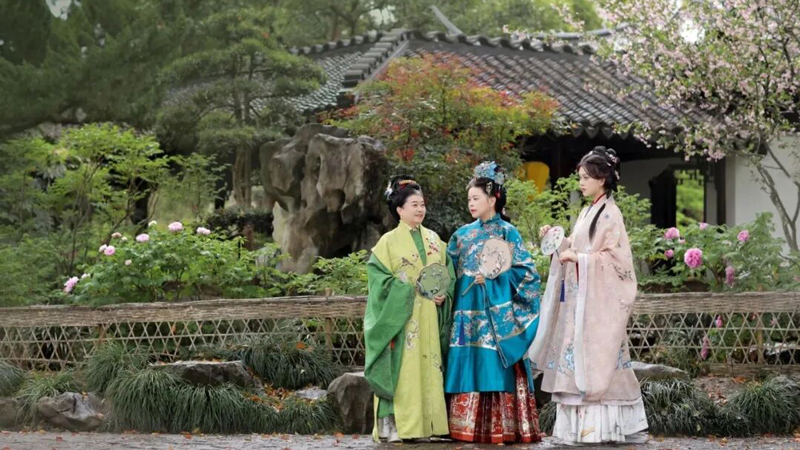
Who Says Tradition Belongs to the Young? Meet the 70-Year-Old Icons of Hanfu
When you assume that Guochao (国潮), or Chinese national trend, is the exclusive domain of the young, a group of grandmothers with an average age of 70 has quietly become the real trendsetters. As the cultural tourism season ignites this spring, a recent festival spanning 12 major venues across 10 cities showcased a booming industry where Hanfu sales surged over 25% year-on-year. With over 7,000 related enterprises, the market has crossed the 20-billion-yuan threshold. Yet, beyond these impressive figures lies a more compelling landscape—one etched into the very wrinkles on the faces of these women. They are redefining what it means to be an icon, proving that true style is not about chasing youth but about embodying a timeless spirit.
The Real Icons
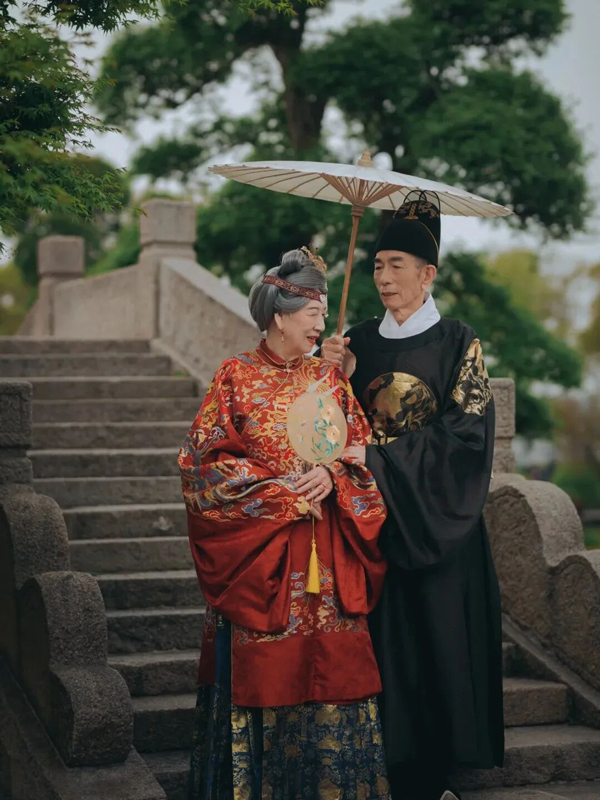
The true standard-bearers of Chinese tradition are not found in live-streaming studios; they are found in the serene smiles of a 70-year-old. While younger enthusiasts debate whether a particular garment is slimming, these silver-haired women simply drape themselves in elegant attire and walk with measured steps along ancient stone-paved streets. Their faces bear the gentle marks of time, their eyes hold a calm earned over decades, and their every gesture carries a refined grace that cannot be replicated. It is a quiet confidence that turns heads not for its novelty, but for its authenticity. One Hanfu blogger recently noted that what was once considered a niche curiosity on city streets is now the pinnacle of style when seen on grandmothers strolling through a park.
This sentiment perfectly captures a shift. As folklorist Professor Zhong Fulan (仲富兰) observes, the current generation is no longer blindly chasing foreign trends but is actively seeking its own cultural roots. Hanfu serves as the most direct expression of that identity. For the grandmothers, this expression is even purer. It is not about performance or seeking validation; it is a personal act of living beautifully. They are not wearing costumes; they are wearing their heritage with a naturalness that only a lifetime of experience can provide, turning a simple walk into a statement of timeless elegance.
A Market, A Movement
The surge in Hanfu consumption is far more than a commercial boom. From the grand procession in Xitang (西塘) Ancient Town to the photo shoots in Shanghai’s Yu (豫) Garden, from the relentless hum of sewing machines in Caoxian (曹县), Shandong, to the explosive growth in online searches, this single garment now supports a 20-billion-yuan industry. It represents a profound cultural renaissance. In the first two months of this year alone, searches for Hanfu increased by 240% year-on-year, with specific items like the Mamianqun (马面裙) and Song-style jackets selling millions of units. On platforms like Douyin, the hashtag for Hanfu styling has been viewed over 140 billion times, marking a clear public endorsement of this cultural symbol.
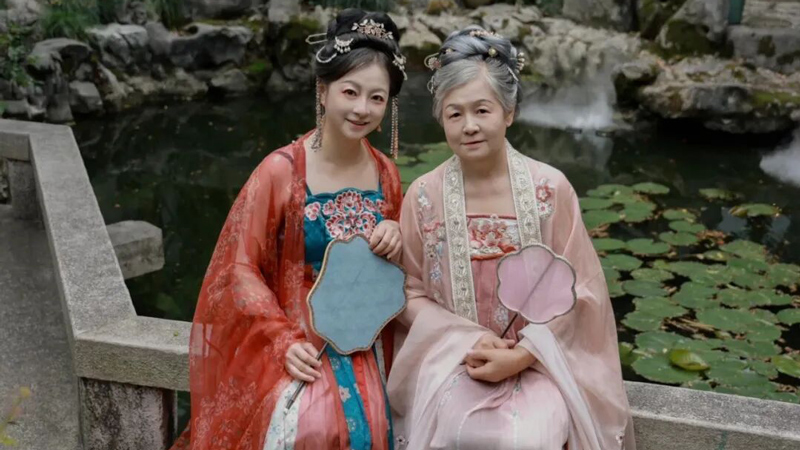
What is most exciting is the demographic shift. The consumer base is expanding to include all ages, with data showing that buyers over 40 now account for 15% of the market. There is a growing demand for family sets, couple outfits, and custom designs for the silver-haired generation. The grandmothers have indeed arrived. This is not just a market for the young; it is a movement that is reclaiming tradition across generations. The commercial growth is merely the visible wave, but the cultural undercurrent—a collective reconnection with heritage—is what truly powers it, making the choice to wear Hanfu an act of cultural pride accessible to everyone.
A Beauty Beyond Age
The current cultural festivals are a testament to this inclusivity, filled with creative concepts for all ages. In Shenzhen, a grand water stage show featuring 100 dancers combined the spectacle of fire pots and water dragons to depict the romance and grandeur of Chinese civilization. In Tianjin, a national intangible cultural heritage, Weifang (潍坊) Kite, was integrated into a parade, allowing both the elderly and children to look up in wonder as kites danced in the spring breeze. These events prove that Guochao is far from a young person’s exclusive term. From combining Hanfu with travel photography to integrating it into wedding celebrations and educational tours, the expanding landscape allows people of all ages to find their personal connection to Chinese aesthetics.
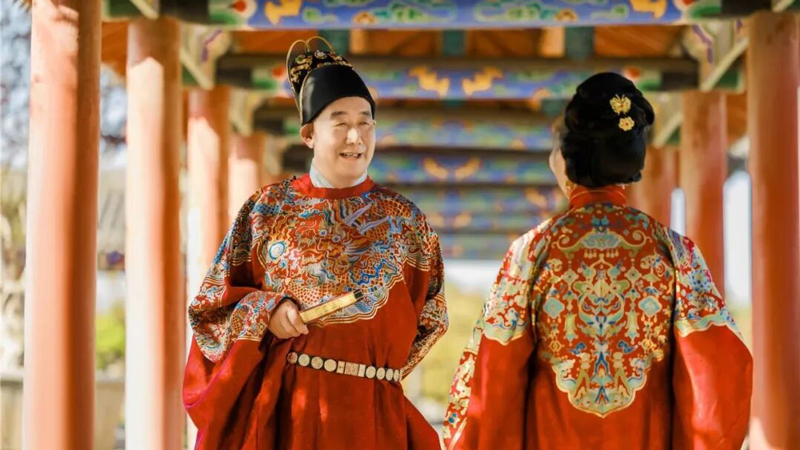
When grandmothers wear Hanfu, they are not merely following a trend; they are reinterpreting the concept of “everyday oriental aesthetics.” They embody a different kind of beauty, one that challenges conventional standards. An online comment captured this sentiment perfectly: “Seeing photos of grandmothers in Hanfu, I’m suddenly no longer afraid of growing old.” This is perhaps the most profound definition of a true cultural icon. It is not about defying age but about embracing it, showing that the grace of a life fully lived is the most captivating fashion statement. The beauty lies not in the absence of wrinkles, but in the stories and confidence they represent.


This is so heartwarming!!
So glad it touches you. ❤️