For years, fans of the hit animated series Shrouding the Heavens (遮天) have waited for the moment a simple young man from Earth would stop running and start fighting back. That moment has finally arrived. The first-ever animated movie, Shrouding the Heavens: The Coffin That Challenged a God (遮天: 背棺战王腾), drops on April 4th.
With over 90 minutes of runtime, it promises to deliver the most explosive turning point in the story. This is not just another battle. It is the scene where Ye Fan (叶凡), a boy with no background and no support, carries a bronze coffin onto sacred ground to destroy the arrogance of a so-called "prodigy." It is a story of love, rage, and the birth of a legend.
Love as a Declaration of War
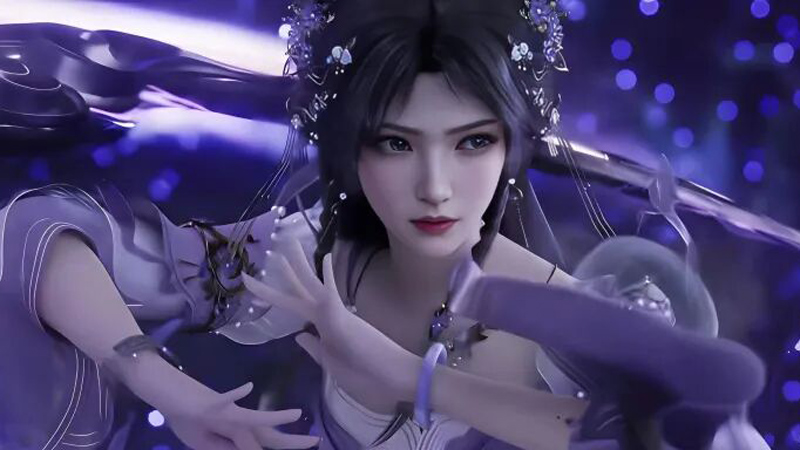
At its heart, this story begins with a simple, powerful emotion: love for a girl trapped by her own family. Ji Ziyue (姬紫月), the lively and kind young mistress of the Ji family, is not being married; she is being traded. The powerful Wang family from the northern plains wants her, and her own relatives see her only as a bargaining chip to acquire a powerful martial arts manual. She is a pawn in a game played by cruel adults, and her silent despair sets the stage for the explosion to come.
Ye Fan does not arrive with an army or a grand strategy. He arrives alone, with a coffin on his back. He does not come to negotiate her release or to beg for her hand. He comes to tear down the entire table. His message is brutally simple: if you force her, he will fight you. If you threaten her, he will destroy you. There are no pretty speeches, only the raw promise written in his eyes and the heavy thud of the ancient bronze coffin hitting the marble floor of the Ji family hall.
This is not a calculated move in a political game; it is a young man’s absolute refusal to let the woman he loves be sacrificed on the altar of family ambition. His actions scream louder than any words could. In a world where power dictates everything, he brings only his fists and his will. This act of defiance transforms a political marriage into a personal war, making every viewer root for the underdog who risks everything, not for power or glory, but for one person.
Shattering the Myth of the "Chosen One"
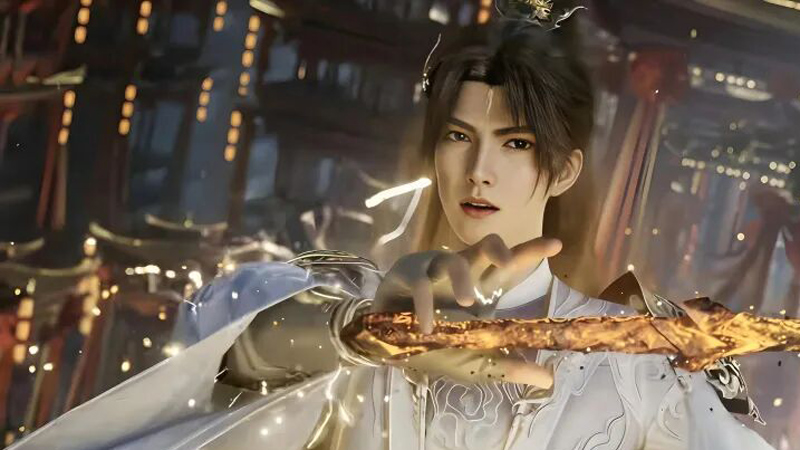
The villain of this piece, Wang Teng (王腾), is the embodiment of everything wrong with this world. From the moment of his birth, the world declared, "My son Wang Teng has the bearing of an Emperor!" He was handed the ultimate power-ups, ancient inheritances, and the unwavering support of his clan. He is the "chosen one," the golden boy who has never known a day of true struggle. His confidence is not earned; it is a birthright. He represents the crushing belief that bloodline and destiny are everything.
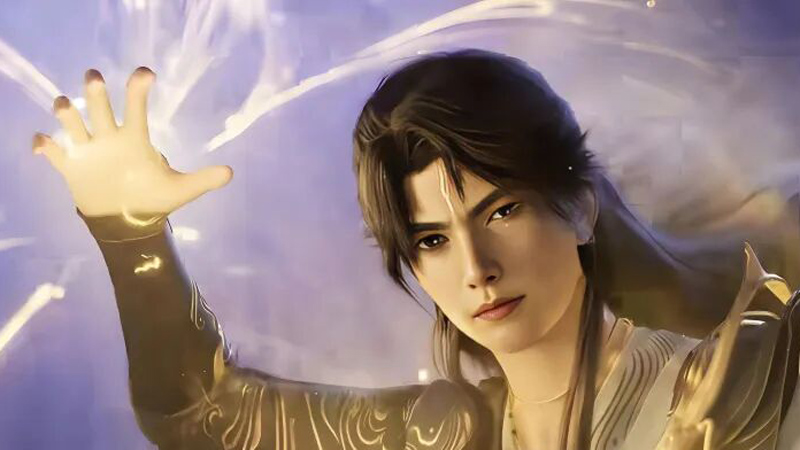
Standing across from this golden child is Ye Fan, the "cursed" one. He carries a useless Sacred Body constitution that the world believes cannot cultivate. He has no family backing him, no ancient master teaching him secrets. He has survived by running, hiding, and clawing his way forward against impossible odds. He is the living proof that the system is broken, that it denies the worthy and elevates the lucky. This fight is his final exam, a chance to prove that sweat and grit can outweigh a silver spoon.
When Ye Fan’s fist finally connects with Wang Teng’s perfect face, it is more than a physical blow. It is a punch aimed at every smug, entitled "genius" who ever looked down on a hardworking nobody. He is shattering the lie that where you start determines where you can finish. He fights not just to win a girl, but to destroy the arrogant assumption that destiny is something you are born with, not something you carve out with your own two hands, dripping with blood and sweat.
The Coffin That Changed Everything
Before this day, Ye Fan was known as "Running Ye." His life was a series of narrow escapes. He hid from stronger enemies, endured humiliation, and focused on one thing: survival. He was a ghost in the world of cultivators, existing in the cracks and shadows. But the weight of the bronze coffin on his back changes everything. It is not just a weapon or a shield; it is a statement. It carries the memory of his past struggles and the crushing weight of everyone’s low expectations.
As he walks into the Ji family compound, each step with that coffin on his shoulder is an act of defiance. The ancient artifact, tied to mysteries far beyond this world, becomes an extension of his rage. He is not just attending a wedding; he is attending a funeral—the funeral of the old Ye Fan. The moment the coffin slams to the ground, the entire assembly of powerful experts and arrogant young masters is silenced. The message is clear: he fears no one, not their rules, not their power, not their precious "destiny."
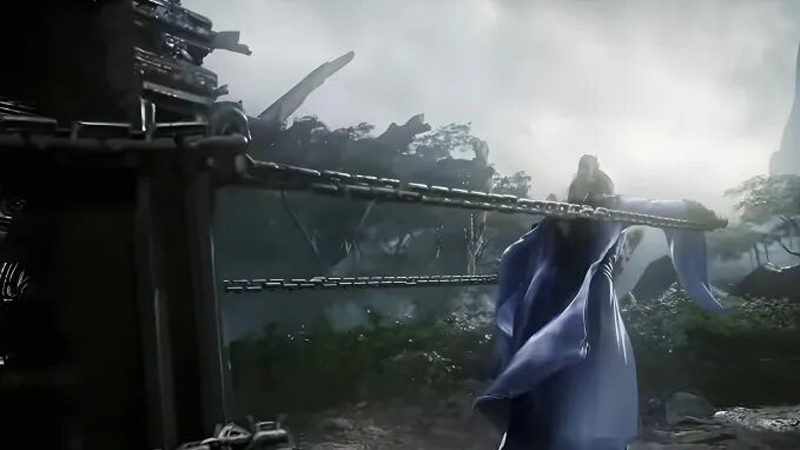
This single act—the back coffin, the lonely walk, the silent challenge—is the spark that ignites the Emperor within. From this moment on, he stops running. He becomes the man who will challenge gods, break ancient families, and eventually rule the heavens. For the audience, this scene is pure catharsis. It speaks to the part of all of us that has felt small, underestimated, and held back. Ye Fan carrying that coffin is us, carrying our own burdens and daring the world to stop us. It is the ultimate tribute to the ordinary or ordinary person who refuses to stay down, and on April 4th, we finally get to watch him rise.
