
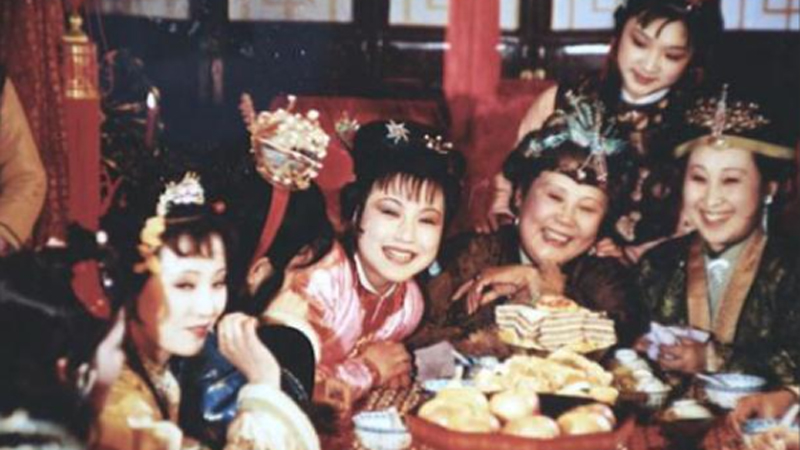
In an era overwhelmed by bubble tea and mousse cakes, we constantly chase novel flavors. Yet, over a thousand years ago, our ancestors had already perfected the art of consuming "romance." Without artificial colors or flavors, they looked to nature, kneading seasonal flowers into dough and rice cakes. Eating flowers was not just about nourishment; it was a dialogue with the world. Let us travel back to that elegant age and explore the exquisite "flower cakes" that defined an era.
The Empress's Floral Feast
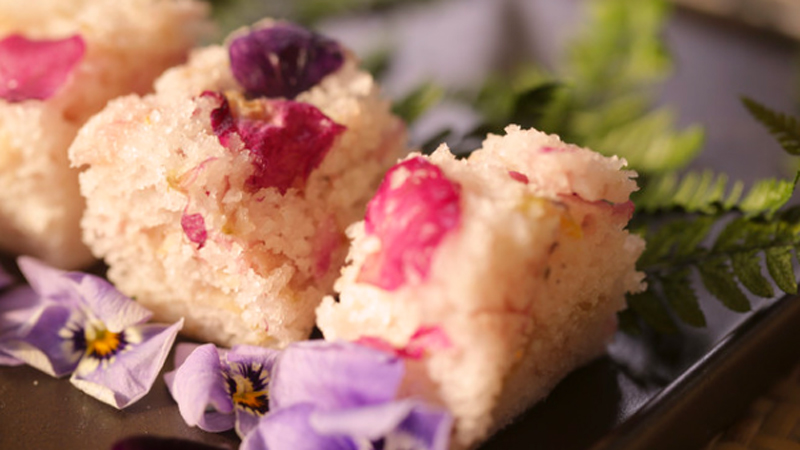
Legend has it that during the Tang Dynasty, the Huazhao Festival (花朝节), or Birthday of the Hundred Flowers, was as significant as the Lantern Festival. Wu Zetian (武则天), the only female emperor, who had a passion for blossoms, would command her maids to collect a hundred different flowers from the palace gardens on this day. She would have these petals ground with rice and steamed into a cake, which she then distributed to her ministers. This was the legendary "Baihua Gao" (百花糕), or Hundred-Flower Cake.
It required no fixed recipe; its beauty lay in its spontaneity and ceremony. One bite captured the vibrant essence of an entire spring. This imperial trend spread to the common people, and eating flower cakes became the most fashionable and elegant pastime of the season.
Plum Blossoms in a Bowl
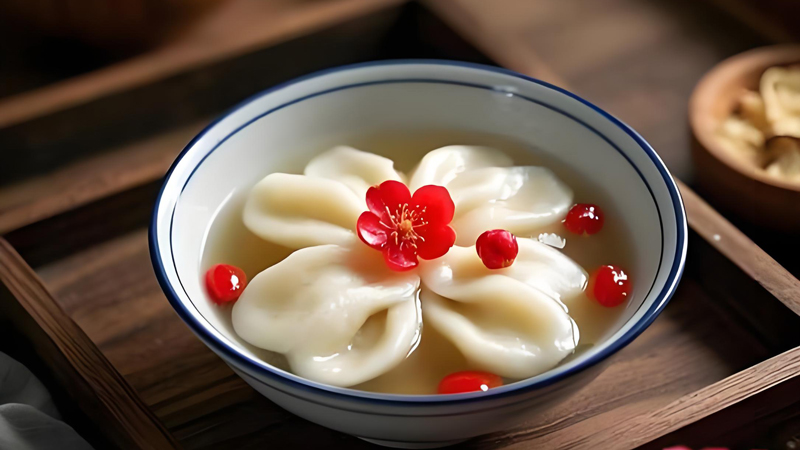
If the Tang dynasty's approach was bold, the Song dynasty's was one of intricate delicacy. The classic recipe book Shanjia Qinggong (山家清供) records a breathtaking dish called "Meihua Tangbing" (梅花汤饼), or Plum Blossom Soup Pancakes. The method was meticulous: the chef would first knead the dough with water infused with white plum blossoms and sandalwood powder, allowing the flour to absorb the plum's ethereal fragrance.
This dough was then rolled thin and stamped into the shape of plum blossoms using an iron mold. Finally, these delicate "flowers" were cooked in a clear chicken broth and served in a bowl. Imagine dozens of white "plum blossoms" floating in a pristine soup—each mouthful a sophisticated blend of savory stock and floral aroma. It is no wonder we still admire this pinnacle of Song aesthetics today.
Whispers of the Pine Forest
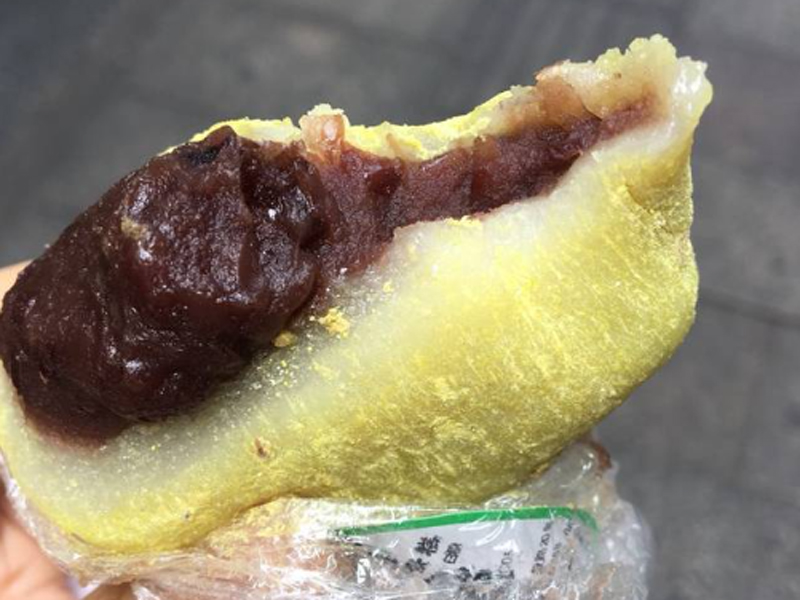
Ancient people valued not only the color and scent of flowers but also their practical benefits. Pine pollen, or "Songhua" (松花粉), was recorded in the Compendium of Materia Medica for its healthful properties. People would collect this golden powder in spring and mix it with glutinous rice flour and honey. The resulting cake had a natural yellow hue and carried a unique, subtle fragrance of the forest.
In Hangzhou, time-honored shops still sell Songhua Gao today. The locals believe it helps with digestion. The delicate, sweet flavor and fine texture of the cake seem to carry the whisper of a mountain breeze, connecting the eater to the tranquility of the woods .
A Lotus Blossom on Your Plate
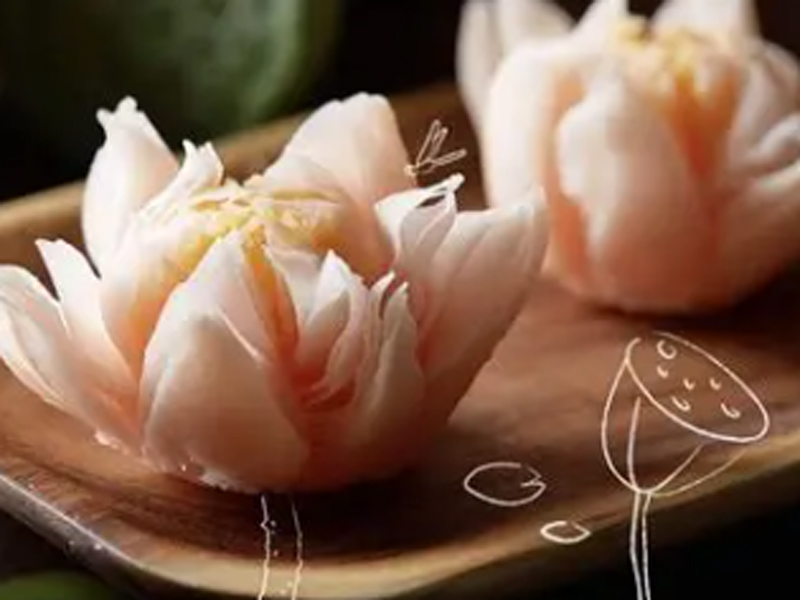
Summer belonged to the lotus. Records from the Southern Song dynasty show a fondness for lotus-flavored snacks. Ancient gourmets ingeniously combined the flower with pastry to create the stunningly beautiful "Hehua Su" (荷花酥), or Lotus Flower Pastry. Using oil-based dough, they would sculpt and deep-fry the pastry until its "petals" unfurled layer by layer, resembling a vibrant red lotus, often with a sweet lotus seed paste hidden inside.
This creation was as much a feast for the eyes as for the palate. It served as the perfect companion for scholars sipping tea and reading on a hot summer afternoon, offering a sense of cool elegance with every bite.
The Cake of Ascending Heights
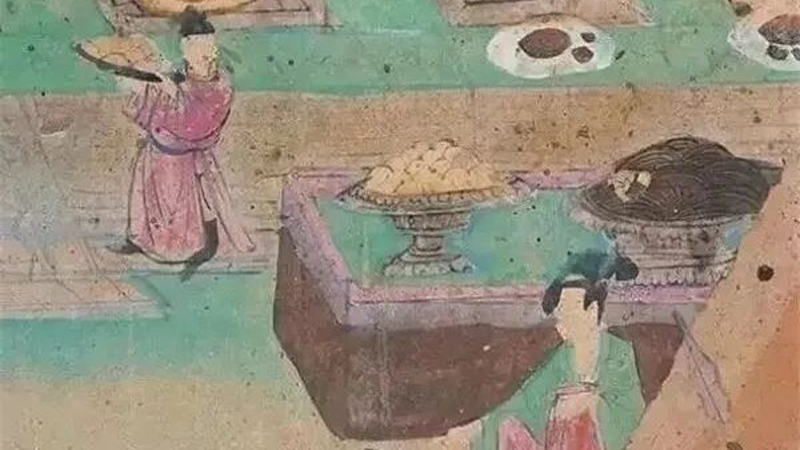
The most heartwarming of these treats is undoubtedly the "Chongyang Gao" (重阳糕), or Double Ninth Cake. Eaten during the Double Ninth Festival, its name is a pun, as "cake" (gao) sounds like "high," symbolizing a wish for "progress in all things" . Historical records from the Ming and Qing dynasties describe these cakes in detail. They were often made in two or three layers, with a filling of nuts, hawthorn, and jujube paste .
The top was often decorated with colorful seeds and tiny flags made of paper. This was not merely a snack but a tangible expression of the people's simple, sincere hopes for a better life and longevity.
From Qu Yuan's (屈原) poetic line about eating autumn chrysanthemums to Empress Wu's lavish Baihua Gao, the tradition of eating flowers is a thread of beauty running through Chinese history. To savor a flower cake today is to repeat the daily ritual of the ancients. In our fast-paced world, may you also find a moment to enjoy such a treat, turning the ordinary into something poetic.
