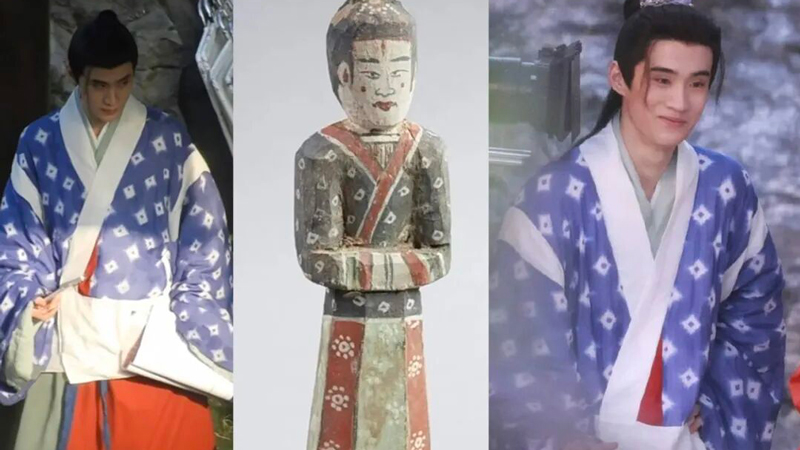
In a recent behind-the-scenes glimpse of the upcoming historical drama Generation to Generation (江湖夜雨十年灯), a costume worn by actor Bian Tianyang (边天扬) ignited a firestorm online. Netizens were quick to question the design, with many accusing it of looking like Wo Fu (倭风), or "Japanese style." The immediate outcry raises a pertinent question: Is this ancient Chinese garment a case of cultural misappropriation, or is it simply a case of mistaken identity? A closer look at archaeological findings and textile history suggests the latter, revealing a rich, homegrown tradition that has merely been forgotten over time.
A Dig Uncovered the Truth
The outfit in question is a set of Ruqun (襦裙), a classic two-piece Han Chinese garment consisting of a short jacket and a skirt. While the style might look foreign to some modern eyes, its design is not pulled from thin air. It is a meticulous recreation based on an actual archaeological discovery from 2002 at the Huahai Biejiatan Cemetery (花海毕家滩墓地) in Gansu Province. The grave, dating back to the Sixteen Kingdoms period, contained a well-preserved set of Wei and Jin-style Ruqun.
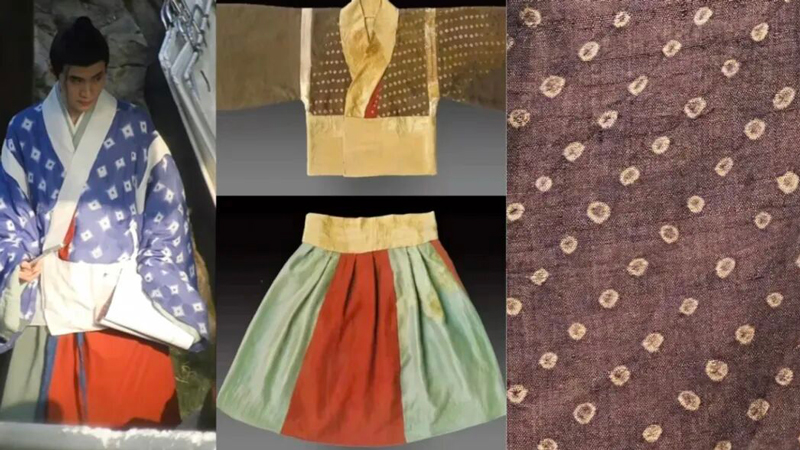
This find is crucial because it provides tangible evidence of clothing from the Wei, Jin, and the Southern and Northern Dynasties, a time of immense cultural exchange and evolution within China itself. The unearthed garments confirm that the style seen on Bian Tianyang—with its specific cut and structure—is authentically Chinese in origin. It is a direct link to a distant past, not a borrowed element from a neighboring island nation. The discovery clarifies a lot: the design is a product of Chinese soil, centuries before similar aesthetics appeared in Japan.
He wears it with a long, flowing skirt, which in this case features a two-tone design. This kind of garment has a very specific name in Chinese textile history: a Jianse Qun (间色裙) or, more tellingly, a Po Qun (破裙). The term "Po Qun" often confuses people, as it literally means "broken skirt." However, it is not torn or damaged. Instead, "Po" refers to the panels or strips of fabric that are cut and then sewn together to create the skirt.
A Skirt Built from Strips
This paneling technique, known as Po Qun, is a testament to ancient Chinese ingenuity in textile crafting. By stitching together several trapezoidal pieces of fabric, the skirt gains a flared, A-line shape that allows for greater freedom of movement compared to a straight tube skirt. This construction method was practical and also created a visually interesting striped effect, especially when different colors or shades of fabric were used. The excavated skirt from the Huahai Biejiatan cemetery shows this exact method, complete with pleats, demonstrating the sophisticated tailoring of the time.
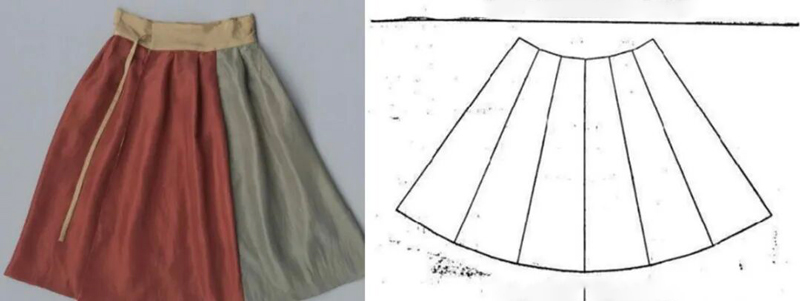
This "Po Qun" style was not a fleeting trend. It first appeared during the Han and Jin dynasties and remained a staple of Han Chinese dress for centuries. Its prevalence can be traced through paintings, figurines, and literary records up until the Song and Ming dynasties. The skirt seen in the drama, with its two-tone color blocking, fits perfectly into this long lineage. It is a direct descendant of a weaving and sewing tradition that was refined on Chinese soil long before it influenced the development of similar paneled skirts in other cultures.
Therefore, the visual cue of a multi-paneled skirt, which some might associate with traditional Japanese attire, is actually a shared East Asian aesthetic whose roots lie deep in ancient China. It is a classic example of how cultural elements travel, evolve, and become integrated into different societies over centuries. The drama's costume, in this respect, is not imPorting a foreign style but reconnecting with a forgotten chapter of its own textile heritage.
The Dot Pattern's True Origin
The most striking and controversial element of the costume is arguably the pattern on the purple jacket: the evenly spaced white dots. This effect is achieved through a technique called Jiaoxie (绞缬), an ancient form of resist-dyeing more commonly known today as tie-dye. The process involves gathering sections of fabric with thread before dyeing it. The tied areas resist the dye, creating patterns. In this case, tiny, tight ties were used to produce the signature small white dots, a pattern historically known in China as "fish roe tie-dye".
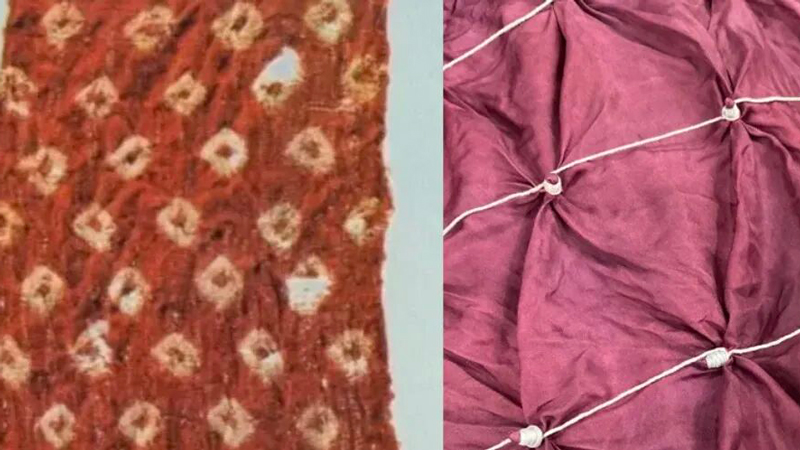
Historical texts and Tang dynasty Poetry are replete with references to this technique, proving its deep roots in Chinese culture. Poets like Li Qunyu (李群玉) vividly described it, and Duan Chengshi's (段成式) work mentions specific patterns like "fish roe" and "drunken eye" tie-dye. This craft was already widespread during the Eastern Jin dynasty, centuries before it was transmitted to Japan through cultural exchange.
This phenomenon, where a culture's own heritage becomes more famously associated with another, is a Poignant reminder of the work that lies ahead. The costume controversy is not just about a single garment in a single drama; it is a reflection of a broader disconnect from China's own rich and complex material history. It highlights the need for greater public education and appreciation of traditional clothing and crafts. Television dramas, with their massive reach, have a Powerful role to play in reintroducing these forgotten arts to a modern audience, turning a moment of online debate into an opportunity for cultural rediscovery. The fragrance, it seems, has been floating outside the wall; it is time to welcome it back home.