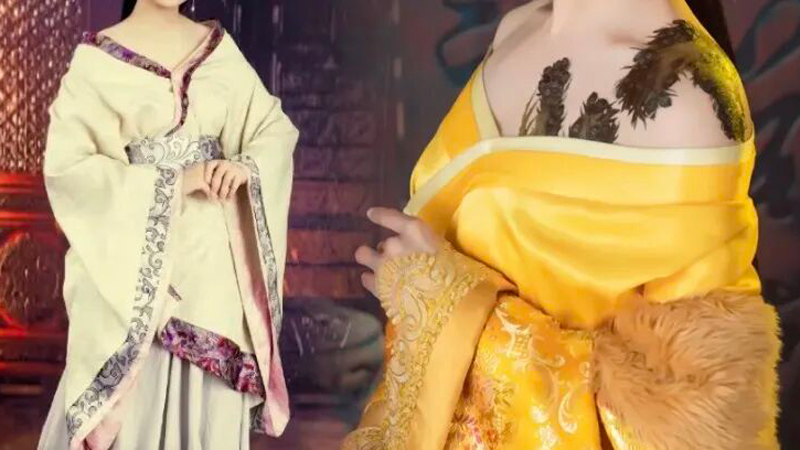
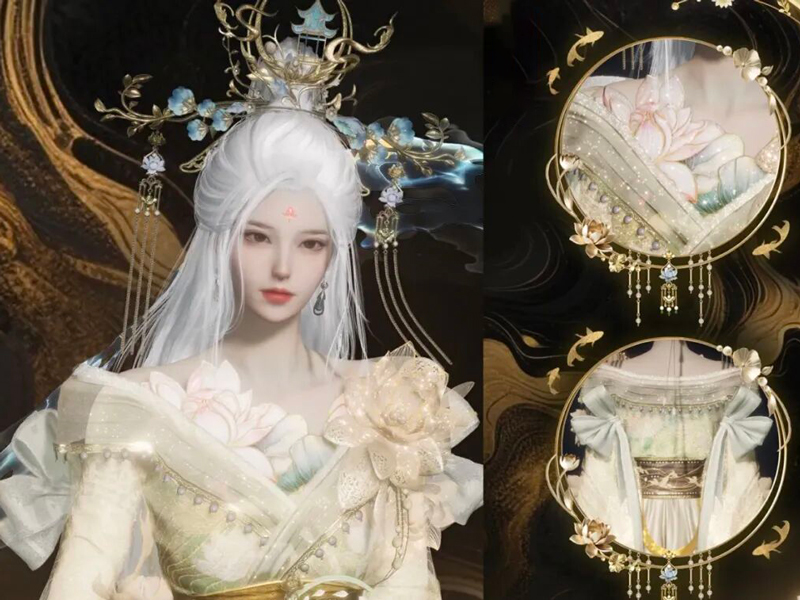
For over a decade, the definition of "magnificent" in Chinese game fashion has been surprisingly static. The winning formula seems to involve shiny fabrics, exposed shoulders, oversized sleeves, large bows, and dramatic trailing hems. Browse through any collection of in-game cosmetics from the last ten years, and you'll find these same elements repeated endlessly. Why is there such a strong preference for this particular style? It appears to be less about traditional Chinese aesthetics and more about a pervasive influence from Western fairy-tale imagery.
The modern princess dress, popularized by characters from Disney and similar media, typically features a sweetheart neckline. This design has been directly transplanted onto garments marketed as "Hanfu," where the traditional collar is simply pulled wide to create an off-the-shoulder look. The same logic applies to men's attire, which often incorporates deep V-necks, seemingly designed to reveal as much of the torso as possible. This borrowed aesthetic, rather than any historical precedent, is the primary driver behind many of today's game designs.
The Bow Dilemma
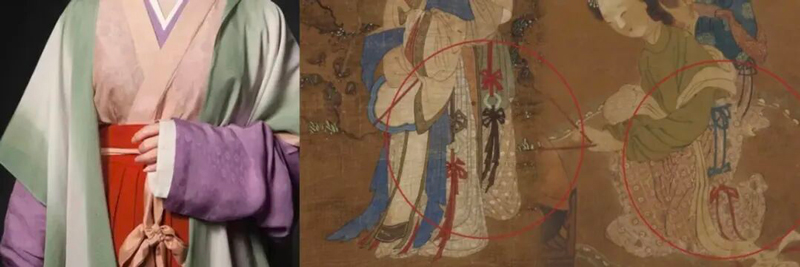
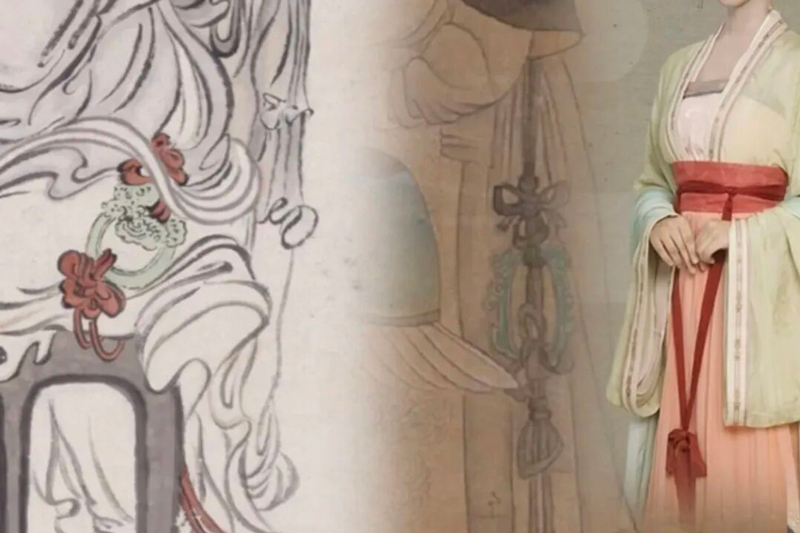
Perhaps the most conspicuous of these recurring motifs is the large bow, which can appear almost anywhere—perched on the head, trailing down the back, or cinched at the waist. While the modern bow has become a global symbol of cuteness or decoration, it's a distinctly Western import. China possesses its own rich history of decorative knots, a world far more intricate than a simple pair of loops.
The traditional Cao Hua Jie (草花结), or straw flower knot, is just one example of a vast and sophisticated system of cord-tying art. These knots are structurally complex, symbolically rich, and stylistically diverse, offering a heritage of ornamentation that is entirely distinct from the single, imported motif of the floppy-eared bow. The reliance on the latter in game design represents a missed opportunity to explore this unique visual language.
Lost in Silhouettes and Sparkle
The obsession with the "big sleeve" is another point of departure from historical accuracy. The current trend favors an extreme, almost jarring contrast: a tightly fitted arm that abruptly explodes into a massive, flowing sleeve. While some historical periods, like the Northern and Southern Dynasties, featured voluminous sleeves, the execution was more harmonious and less severe. The modern cut feels more like a theatrical costume piece designed to emphasize an hourglass figure while still claiming a "flowing" aesthetic.
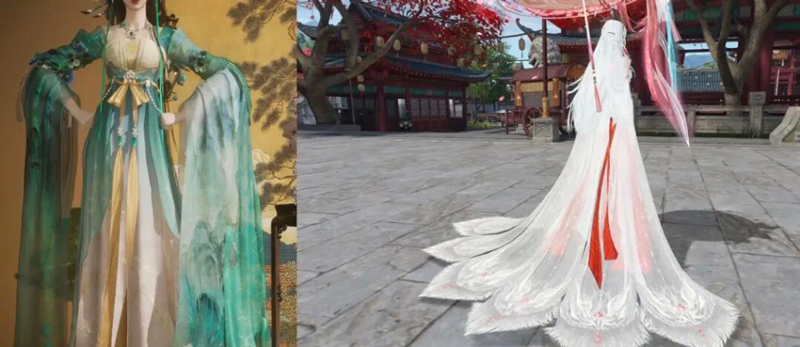
Similarly, the standard for luxury has been hijacked by a preference for blinding sparkle. Historically, elegance was found in matte, high-quality fabrics where the lustre came from natural fibers and the intricate patterns woven or embroidered with muted gold thread. True opulence was subtle. The modern approach piles on shiny, often cheap-looking lamé that catches the light in a harsh, glaring way, a far cry from the refined shimmer of historical luxury.
The Weight of Empty Opulence
This philosophy of "more is more" extends to ornamentation, where garments are indiscriminately layered with large plastic flowers, chunky plastic beads, and every conceivable decorative element, resulting in a chaotic and visually cluttered look. This style has been given the fitting label of "heavy work." In stark contrast, traditional Chinese jewelry work on clothing was a masterclass in understated elegance.
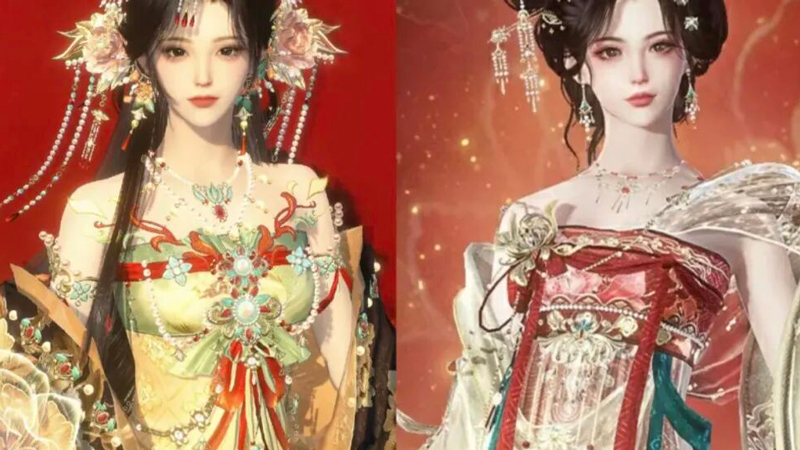
A pearl-studded trim, with each pearl spaced carefully and perhaps paired with a tiny, precisely-set gemstone, spoke of immense wealth and sophistication without a hint of vulgarity. It whispered of luxury, rather than shouting it. The current aesthetic in games shouts. It piles on elements without thought for composition, creating a look that is flashy yet devoid of genuine substance. This "plastic fantastic" sensibility is now shaping the taste of a generation, normalizing polyester blends as the default for "beautiful" clothing, sometimes priced exorbitantly based on a famous brand name rather than any inherent design quality or craftsmanship.
This imported style is often repackaged and sold under the banner of Guofeng (国风), or "national style." While personal preference is entirely valid, labeling these designs as representative of Chinese cultural heritage is a significant misstep. When the core criteria for beauty become opulence, exposure, and sheer accumulation of ornamentation, it signals a departure from the principles of classical Chinese aesthetics, which valued harmony, symbolism, and subtlety.
To attach the label of "Guofeng" to these creations, and to then speak of China as a "land of attire" and a "state of ceremonies" based on them, does a disservice to the rich, nuanced, and deeply sophisticated history of Chinese dress. It reduces a profound cultural legacy to a shallow collection of borrowed tropes, ultimately diluting the very meaning of "national style" itself.