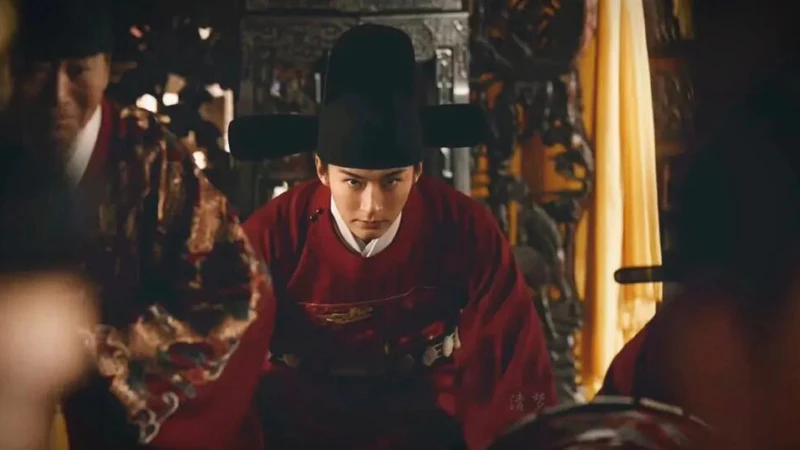
If you have watched any Chinese period drama lately, you know the scene well. A servant, a general, or even a high-ranking official enters a room, spots the emperor, and immediately drops to their knees with a dramatic thud. It happens so often that it has become a visual shorthand for ancient China itself. But is this constant kneeling historically accurate, or is it just a lazy habit of modern screenwriters? The truth might surprise you.
For most of Chinese history, people did not drop to their knees at the drop of a hat. In fact, the constant kneeling we see on screen today is largely a legacy of later dynasties, and its overuse in television is starting to feel less like history and more like a strange promotion of submission culture.
When Officials Sat With the Emperor
Contrary to popular belief, court life in ancient China was not always a game of standing and kneeling. During the Tang Dynasty (618–907), things were much more relaxed. When discussing state affairs, officials didn’t just stand there trembling. They sat. Imagine the emperor on his throne and his top advisors sitting comfortably on mats or low couches below him, debating policy like a team of executives. This was the norm for centuries. The act of kneeling, known as kowtowing, was reserved for only the most sacred moments.
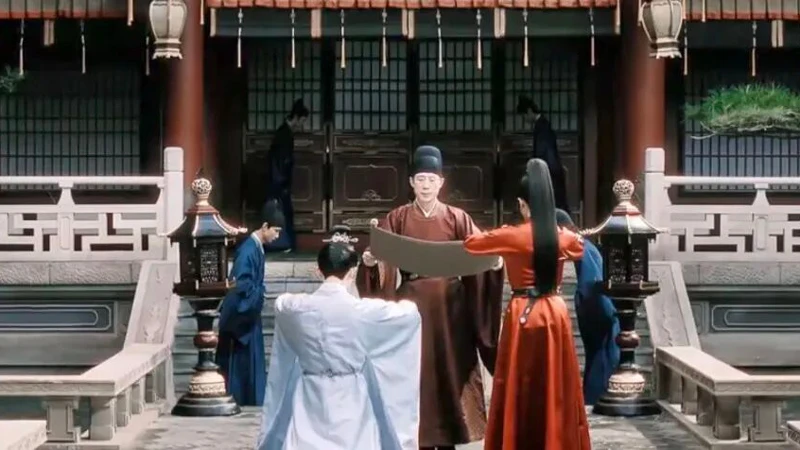
You did it when praying to the heavens, honoring your ancestors, or perhaps showing gratitude to a life-saving benefactor. It was a gesture of ultimate respect, not a daily greeting. A person’s knees weren’t meant to be permanent fixtures on the floor. The idea of kneeling before a magistrate or a noble just because they held a higher rank would have seemed very strange to a person from the early imperial era.
The Mongol Shift That Changed Everything
So, when did the knees start to hurt? The big shift came in the 13th century with the Mongol-led Yuan Dynasty. The Mongols had a very different view of leadership. In their steppe tradition, the relationship between a ruler and his followers was that of a lord and his vassals, or even a master and his slaves. When they conquered China, they brought these ideas with them. For the first time, it became standard practice for officials to kneel just to report the weather. Historical records from the Yuan era describe ministers kneeling to present routine memorials, a custom that would have shocked their Tang ancestors. This was a fundamental change. It turned a sacred ritual into a simple tool of power, visually reinforcing that everyone in the room was merely a servant to the one man on the throne.
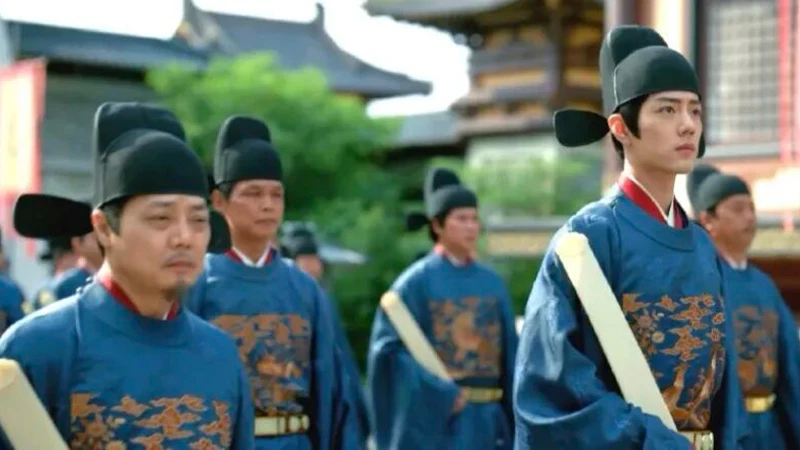
The Ming Dynasty (1368–1644) tried to roll this habit back a bit. Its founder, Emperor Zhu Yuanzhang (朱元璋), actually hated the Mongol influence. He issued decrees banning the excessive kneeling that had become common, especially in non-official settings. He wanted to restore some dignity to everyday interactions. However, he couldn’t fully escape the logic of absolute power. By 1370, his own legal codes formally required officials to kneel when presenting matters to the emperor.
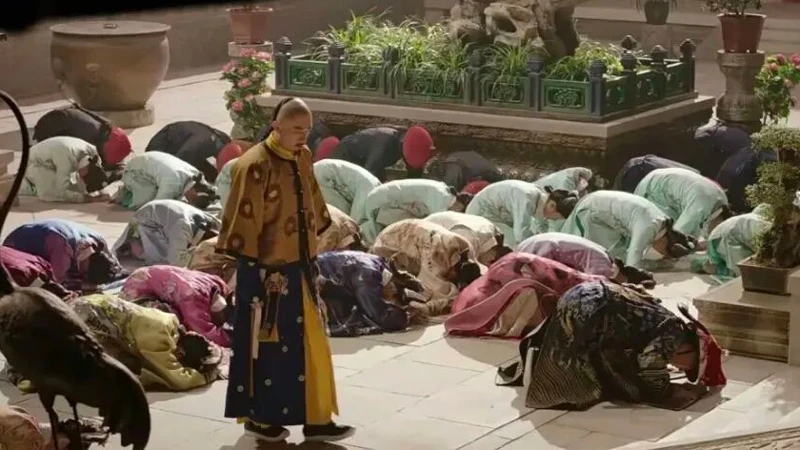
The rule was now clear: you knelt to speak. The Ming emperors may have disliked the Mongol style, but they kept the core mechanism that made the emperor the unchallenged master of the room. It was the Qing Dynasty (1644–1912), however, that perfected the art of the kneel. They took the Ming rules and amplified them, demanding the dramatic three kneels and nine prostrations that we now associate with imperial China. They even formalized the self-deprecating language, requiring officials to refer to themselves as “slaves”.
Dramas That Confuse Habit With History
This brings us to the modern problem. When a historical drama set in the Tang Dynasty shows a minor official dropping to his knees just to hand the emperor a cup of tea, it is not just a small mistake. It is an anachronism that erases centuries of cultural evolution. It takes the extreme rituals of the Qing Dynasty—a period already grappling with its own complex legacy—and projects them backward onto all of Chinese history. This creates a false image for viewers, especially younger audiences, making it seem like bowing and scraping is the eternal, unchanging fate of the Chinese people. It subtly normalizes a master-servant dynamic that was actually the subject of political debate and change for over a thousand years.
Why do screenwriters do it? Perhaps they are just following the visual language of older films. Perhaps they think it adds a sense of “period authenticity” without realizing they are mixing and matching customs from different eras. Whatever the reason, the effect is a kind of cultural flattening. It robs history of its dynamism. The real story isn’t that Chinese people always knelt; it’s that the act of kneeling was a political battleground, a symbol that changed meaning as dynasties rose and fell.
By ignoring this, modern dramas don’t just get the facts wrong—they miss the chance to tell a much more interesting story about power, dignity, and the human body as a symbol of political change. The Qing Dynasty fell over a century ago. It might be time for its most tiring ritual to finally rest in peace on the editing room floor.