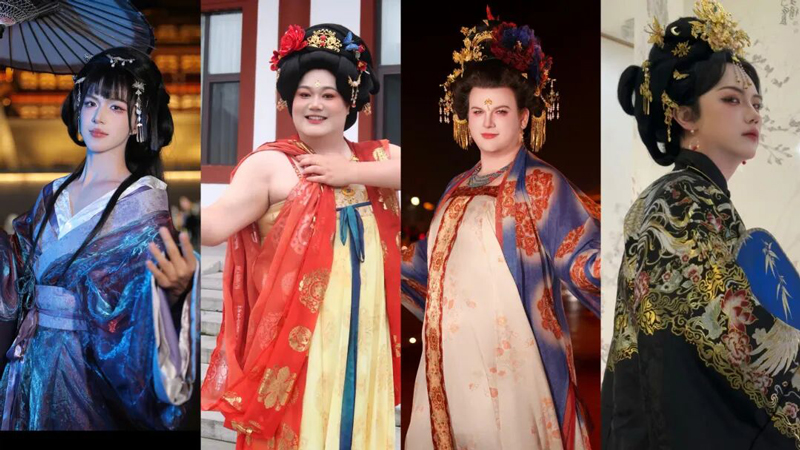
What happens when a city's ancient fashion revival becomes a stage for gender-bending spectacle? In Luoyang, the Spring Festival of 2026 brought an unexpected twist to China's Hanfu resurgence—young men in droves squeezing into oversized Tang Dynasty-style gowns designed for women, their transformed images plastered across social media as local tourism bureaus cheerfully marketed the trend as "innovation through shock value." But beneath the surface of viral videos showing bearded faces framed by delicate silk ruffles lies a troubling question: has the Hanfu movement lost its cultural compass in pursuit of clicks and commerce?
When Men Have No Clothes
The scene at Luoyang's ancient city attractions tells a revealing story about where the Hanfu industry has gone wrong. Young men cluster at photo spots wearing Qixiong Shanqun (齐胸衫裙)—the high-waisted wraparound dresses that define women's Tang Dynasty fashion—because local rental shops simply have nothing else to offer. A quick survey of experience stores shows men's sections relegated to a dark corner with perhaps three options: straight-front robes, Taoist-style gowns, or round-collar robes, all in somber colors and rigid cuts that fit poorly and flatter rarely.
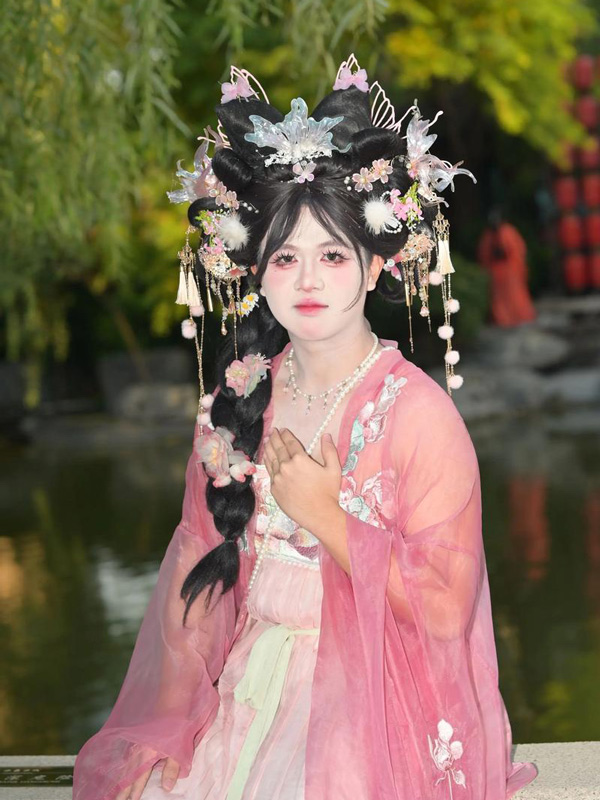
The inventory imbalance speaks volumes about market priorities. Women's racks burst with Tang, Ming, and Song Dynasty styles in every imaginable color, while men make do with leftovers. When shop assistants respond to male customers by reaching for plus-size women's gowns and promising a "stunning transformation," they aren't offering choice—they're enforcing availability. This isn't gender-bending fashion rebellion; it's the predictable outcome of an industry that has systematically neglected half its potential customer base while chasing the more lucrative female market.
What emerges from this commercial shortcut is a bizarre feedback loop. Men wear what they're given, their images go viral as "daring fashion statements," shop owners see the attention and double down on promoting cross-dressing experiences, and suddenly a supply-side failure gets rebranded as trendy gender play. The men themselves often appear uncomfortable in videos, stiffly mimicking feminine poses they've seen online, their expressions caught somewhere between performance and confusion.
Beyond the Costume Party
The cultural cost of this commercial game runs deeper than awkward tourist photos. Traditional Han Chinese clothing developed over millennia with distinct male and female lineages—not arbitrary distinctions, but thoughtful designs reflecting different social roles, physical movements, and aesthetic values. Even in the Qin-Han (秦汉) period, when silhouettes shared similarities, color symbolism and decorative motifs clearly distinguished masculine from feminine expression. These weren't fashion statements but cultural language, speaking of family lineage, social position, and ritual appropriateness.
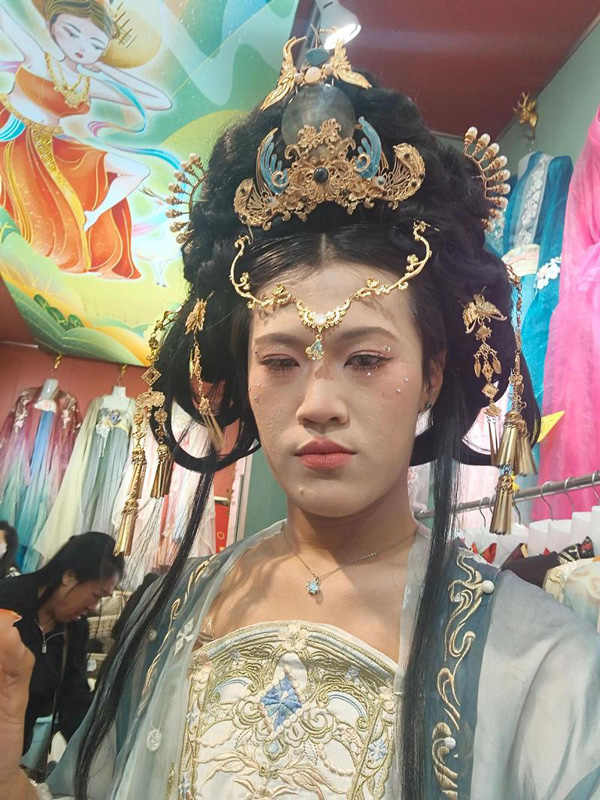
When Luoyang's streets fill with men in women's Tang gowns and women appropriating masculine styles without understanding the vocabulary, the language becomes noise. Young visitors encounter Hanfu not as cultural inheritance but as fancy dress—costumes to be worn ironically, dramatically, for maximum social media impact. The educational potential evaporates when a teenage boy's first experience with traditional clothing involves being painted with feminine makeup and Photoshopped into a wasp-waisted silhouette that bears no relation to either historical accuracy or his own body.
The situation worsens as influencers and businesses amplify the confusion. Social media floods with "transformation" videos that frame gender-bending Hanfu as cutting-edge fashion, while rental shop marketing explicitly pitches "cross-dressing extreme makeovers" as the unique experience Luoyang offers. What began as a workaround for poor inventory becomes packaged as intentional provocation, turning cultural symbols into clickbait and dressing commercial neglect in the language of progressive gender expression.
Finding the Fit
Addressing this phenomenon requires separating genuine fashion exploration from manufactured spectacle. The first step demands honest acknowledgment: many men wearing women's Hanfu in Luoyang aren't making conscious style statements—they're making do with what shopkeepers push. Industry stakeholders must confront the men's wear gap directly, investing in design research that produces masculine Hanfu appealing to contemporary tastes while respecting traditional forms. Lighter round-collar robes, versatile straight robes in modern fabrics, and size-inclusive cuts could transform male participation from awkward compromise to genuine interest.
Cultural education must accompany commercial development. Tourism campaigns should showcase masculine Hanfu heritage alongside feminine styles, featuring male models and real men wearing properly fitted traditional clothing. Museum collaborations, historical reenactments, and cultural workshops can demonstrate that Hanfu isn't female-exclusive but family-inclusive—clothing for grandfathers and sons as much as mothers and daughters. When young men see masculine Hanfu presented as desirable, culturally significant, and socially approved, organic demand will gradually reshape inventory decisions.
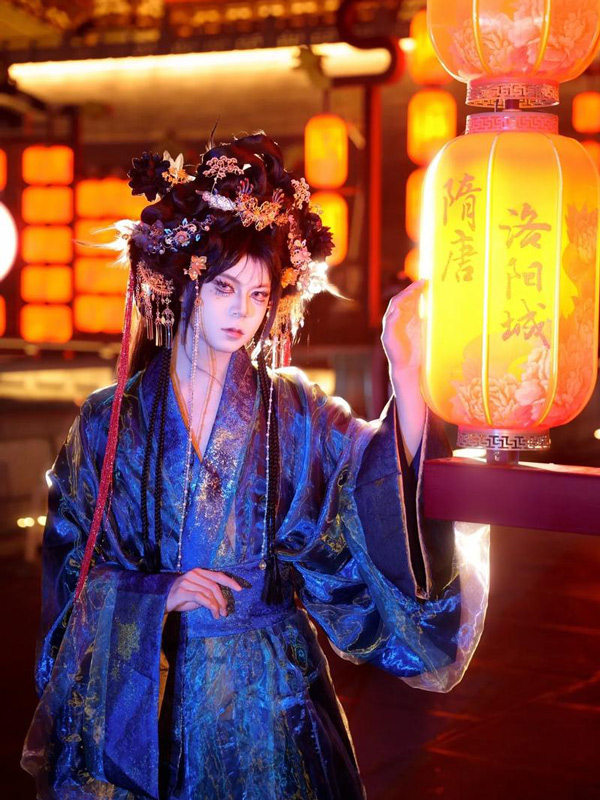
The question of gender-crossing fashion deserves nuanced handling. Authentic interest in gender-fluid expression exists and deserves respect, but dressing commercial failure as cultural progress insults both traditions and genuine gender exploration. Industry guidelines might encourage neutral-styled Hanfu options—designs that reference historical forms while accommodating diverse body types and aesthetic preferences—without forcing every male customer into feminized presentations. The goal shouldn't be policing individual choice but ensuring choices exist beyond the current false binary of ill-fitting men's wear or oversized women's gowns.
Hanfu's revival represents something precious—a living connection to civilizational heritage expressed through daily life. Luoyang's Spring Festival snapshot reveals how commercial shortcuts can distort that connection into caricature. The path forward requires patient investment in masculine design, honest cultural education that includes male traditions, and marketing that sells heritage rather than shock. When the clothing of Chinese civilization truly fits all bodies and respects all expressions, its beauty will need no viral tricks to reach the world.