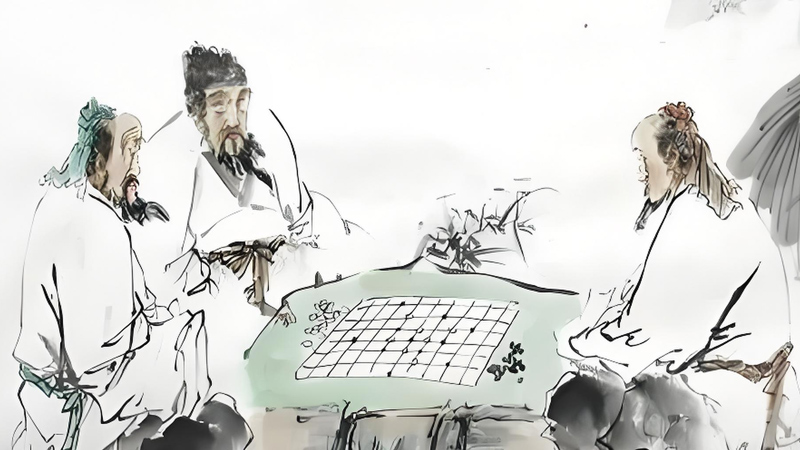
Imagine a Ming Dynasty county magistrate, sitting upright in the rear hall, supposedly deep in discussion with his advisor. Beneath the table, hidden within the voluminous sleeves of his official robe, his fingertips are engaged in a silent, strategic battle. This was the reality of "fishing for leisure" in ancient China—a subtle art of stealing moments of personal delight amidst the rigid demands of a bureaucratic career.
Long before smartphones offered a digital escape, Chinese scholar-officials perfected the use of exquisite, miniature tools designed for quiet, portable play. These weren't just toys; they were carefully crafted instruments of mental respite, allowing the mind to wander and reset, all while maintaining an outward appearance of diligent focus. This is the untold story of how China's ancient workforce found its own clever ways to reclaim a sliver of personal time.
1. Elephant Chess
The most ingenious solution for the busy official was the pocket chess set. These were not the large boards set up in gardens, but miniature versions of elephant chess, carved from ivory or hardwood, with a board no larger than a palm and pieces as tiny as buttons. The genius lay in its complete reliance on touch. A player could identify a chariot by its shape or a general by its height, all through the fabric of a sleeve. The Qing dynasty scholar Zhao Yi (赵翼) recorded this practice in his book Yanpu Zaji (檐曝杂记), noting how officials would play "as if nothing were happening."
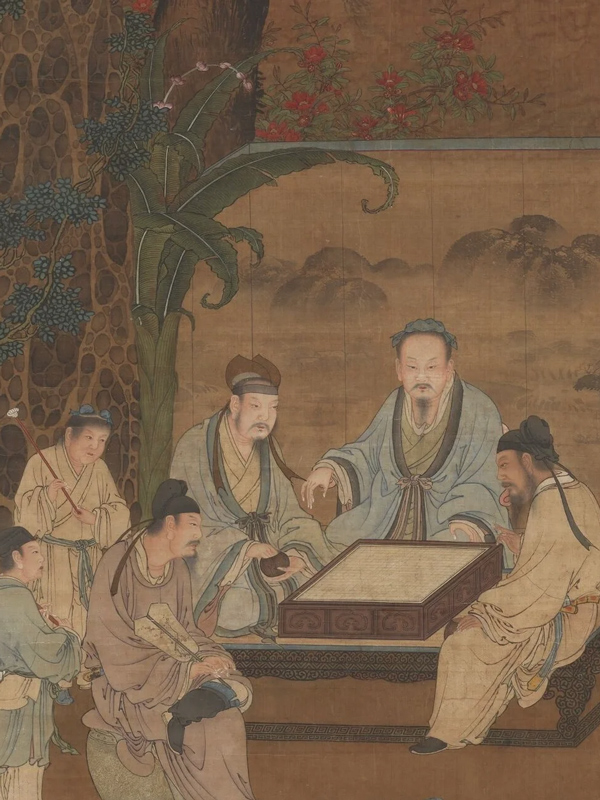
This "sleeve chess" was an unspoken agreement within the rigid hierarchy of the imperial court. During a superior's lengthy monologue, or in the interminable wait for an audience, a miniature battlefield could be opened. It was a private world of strategy and competition, a silent counterpoint to the public performance of deference. The set could even be disguised within a seal case, making it the ultimate tool for a discreet mental break. With a quick shake of the sleeve, the game was over, and the image of the dedicated servant was instantly restored.
2. Nine Linked Rings
If chess was a form of silent socializing, the Nine Linked Rings was pure solitary meditation. This puzzle, consisting of nine interlocked metal rings, requires a staggering 341 steps to solve. It was the ancient equivalent of a "brain-burning" video game, famously mentioned in the classic novel The Dream of Red Mansions (红楼梦) as a pastime for the melancholic Lin Daiyu (林黛玉). For a real-life official trapped in a tedious meeting, it was a perfect escape. As his fingers navigated the cold, intricate metal, emitting the faintest of clicks, his mind could be completely absorbed in the logic of the puzzle.
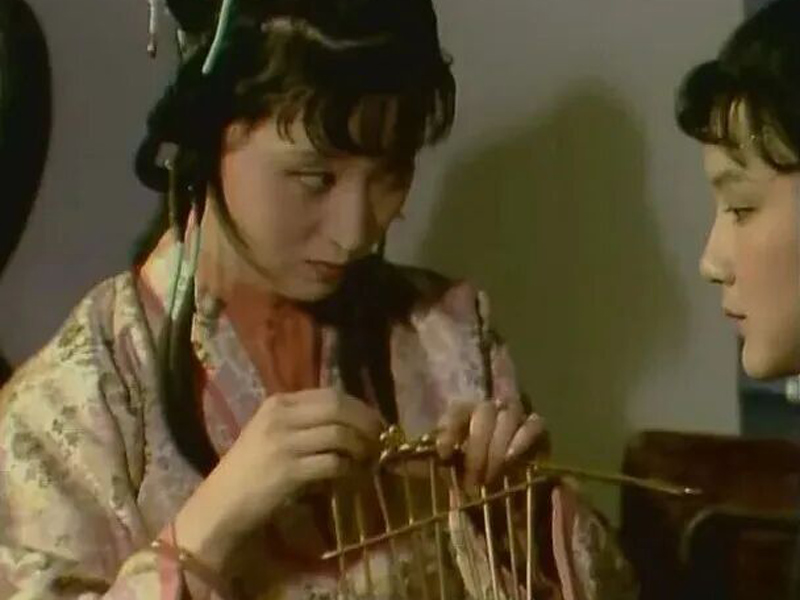
Qing dynasty scholars described the process of solving it as akin to "meditating to attain enlightenment." The experience of finding order in profound complexity offered a perfect counterbalance to the chaos of administrative paperwork. Its beauty was in its subtlety: the small movements and gentle sounds were nearly undetectable, even when one was required to sit upright and attentive. Many officials kept a set in their desk drawer, ready to be pulled out during a lull in document review to give both fingers and brain a quiet workout. Experts could even develop the skill of "blind solving," manipulating the rings entirely by touch under the table while maintaining a convincing stare at official documents.
3. Tangram
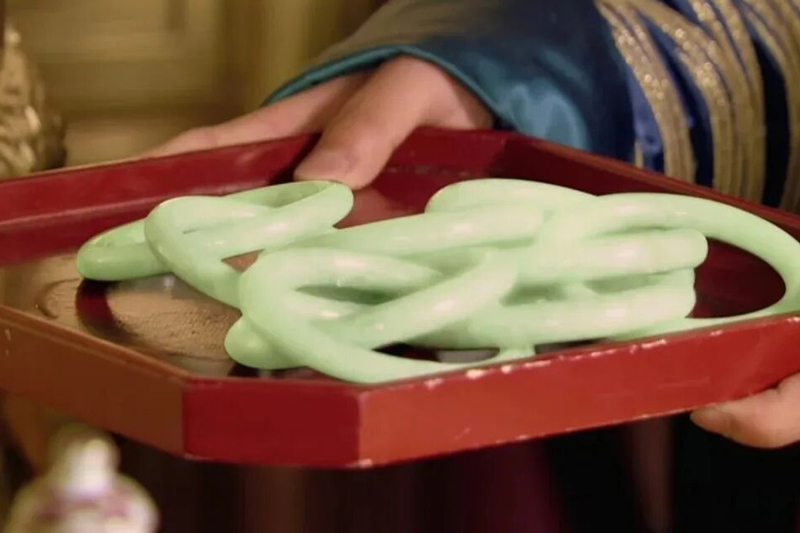
The Tangram might have been the most "open secret" of the ancient office. This set of seven flat pieces of wood can be arranged to form over a thousand different shapes, from animals to people to architectural structures. It was, in essence, an ancient graphics processor for the mind. Originating in the Song dynasty, it became an exquisitely refined pastime in the Ming and Qing eras, with sets made from simple wood to lacquer inlaid with mother-of-pearl sitting on every cultured person's desk.
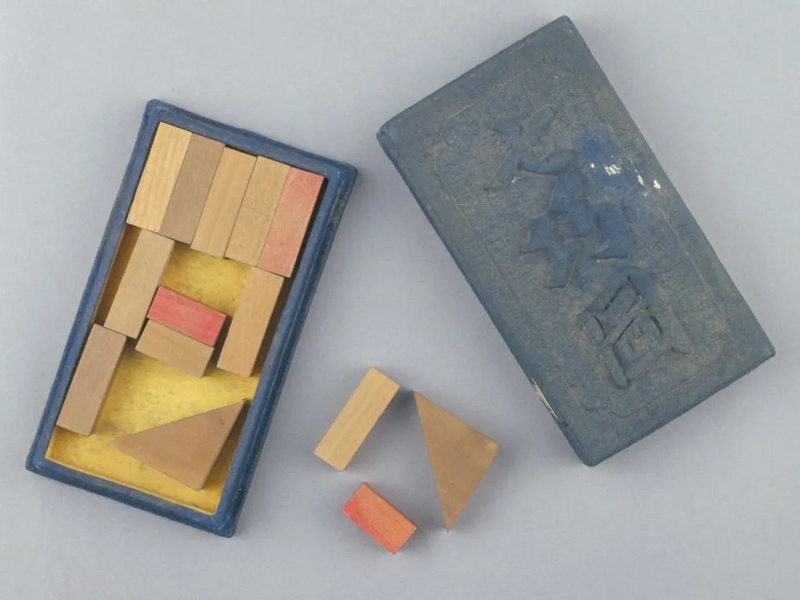
Its cleverness was its duality. It could be presented as a serious "intellectual tool," while effortlessly transforming into a toy for whiling away the time. An official pondering the wording of a memorial might idly move the pieces, and a sudden flash of inspiration could strike as a triangle slid into place. It was also the perfect prop for an unexpected visit. If a superior approached, the official could quickly arrange the pieces into an elegant design, claiming to be "composing a painting" or "exploring a geometric principle." A scene in the Qing dynasty pictorial Wu Youru's Painting Treasures (吴友如画宝) shows an official doing just this, with a caption that reads: "A small pleasure after official duties, sharpening the mind and pleasing the spirit."
4. Luban Lock
The toy that perhaps best embodies the spirit of "fishing for leisure" is the Luban Lock (鲁班锁). This three-dimensional puzzle, made of interlocking wooden pieces that hold together without glue or nails, is a masterpiece of structural engineering. Dismantling and reassembling a complex Luban lock could take hours, demanding intense concentration at every step. This slow, deliberate pace made it the ideal companion for a long night shift or an interminable wait. The imperial encyclopedia Gujin Tushu Jicheng (古今图书集成), compiled during the Qianlong (乾隆) era, classified it as an "elegant pastime for leisure."
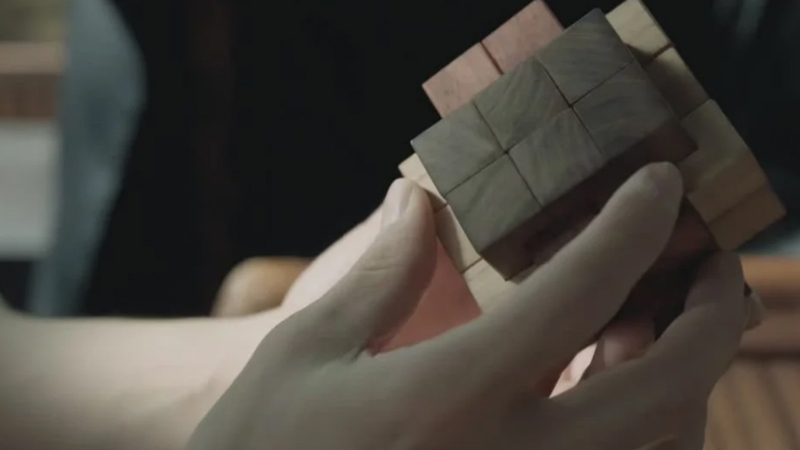
In the study of a high-ranking official, a Luban lock made of precious woods like rosewood or Huang Huai Li(黄花梨) was both a status symbol and a tool for navigating boring conversation. As a guest droned on, the host could manipulate the lock, appearing to be thoughtfully considering the visitor's words while actually engaged in a silent, spatial dialogue with the piece of wood. With each interlocking click, time passed unnoticed. These "fishing toys" all shared key traits: they were small, quiet, and demanded deep focus. They were the ancient world's answer to the modern coffee break—a sophisticated, silent rebellion against the tedium of a predictable day.