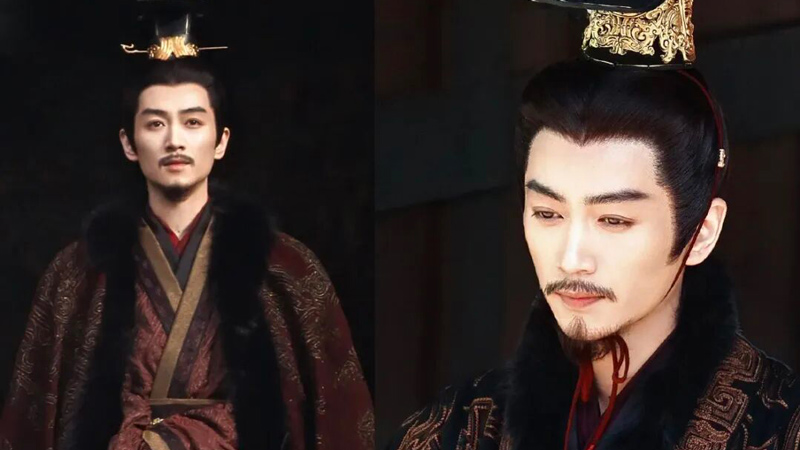
Every few years, a new actor steps into the formidable shoes of Emperor Qin Shihuang (秦始皇), the First Emperor of China, and the cycle of debate begins anew. The latest is actor Chen Xiao (陈晓) in the new series Qi Mi (秦谜), whose portrayal has been met with online commentary ranging from approval to the dismissive quip that a teenage actor from decades ago did it better. This recurring public scrutiny highlights a central dilemma: how does one visually embody a figure shrouded in millennia of history, myth, and political narrative?
The search for the "real" Emperor Qin Shihuang is less about finding historical accuracy—an impossible task—and more a reflection of what audiences, and times, need him to be. Is he a ruthless tyrant with the face of a predator, a visionary unifier burdened by solitude, or something else entirely? Each performance becomes a mirror held up to our own era's understanding of power, legacy, and the weight of history.
The Historical Blueprint
What little we have originates from a handful of ancient texts. The most cited description comes from Wei Liao (尉缭), a former Qin state official, who described the king as having a "bee-stung nose", long eyes, the breast of a raptor, and the voice of a jackal. This was not a flattering portrait; it painted a picture of a man whose physicality mirrored a cruel, predatory nature. Later texts like the Taiping Yulan (太平御览) attempted to refine this, swapping "bee-stung" for "prominent nose" and adding details like a "tiger's mouth" and broad forehead.
Scholars have debated the interpretation for centuries. Was the "bee-stung nose" actually a disfigured saddle nose, or simply a prominent bridge? Was the "raptor's breast" a stoop or a posture of imposing chest-out authority? The "jackal's voice" suggests a grating, harsh tone used to command and intimidate. These cryptic phrases form the shaky foundation upon which all visual interpretations are built, allowing wide latitude for creative and cultural projection.
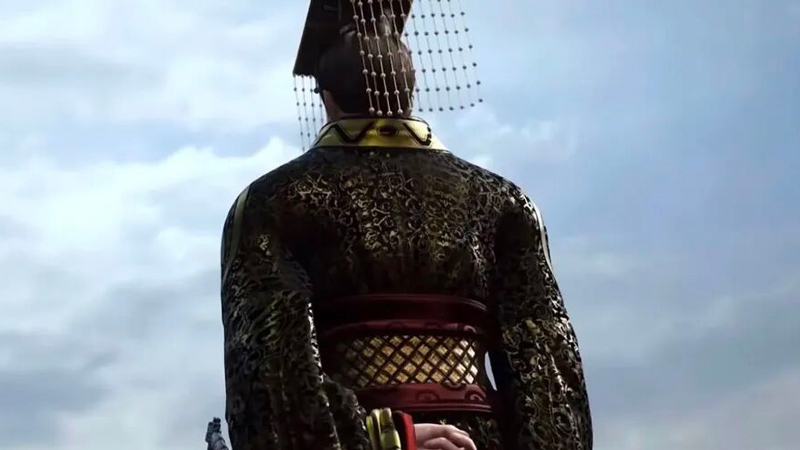
The historical record further complicates iconic imagery. A common visual trope in film and television is the emperor wearing the Liu Mian (旒冕), the beaded crown ceremonial headdress. However, historical consensus suggests Emperor Qin Shihuang abolished the old Zhou dynasty ritual attire, including this crown, after unifying the empire. His own court dress likely differed. This anachronism persists because the Liu Mian has become, in the popular imagination, a direct symbol of imperial authority and ancient Chinese monarchy. Its visual power overrides historical precision, demonstrating how iconography often serves dramatic and symbolic needs first.
Definitive Portrayals in Memory
Among audiences, certain portrayals have achieved a near-mythic status. The "summer job" referenced by netizens points to a cultural touchstone: young actor Weng Feiran's (翁斐然) performance as the adolescent Ying Zheng (嬴政) in the 1996 series Emperor Qin Shihuang (秦始皇). With only three episodes, his depiction left an indelible mark. He captured a chilling duality—youthful beauty fused with a piercing, inscrutable gaze that hinted at the formidable ruler to come. His performance is often described not as acting, but as being.
In contrast, Chen Daoming (陈道明) in the 2002 film Hero (英雄) presented a radically different take: an emperor of calculated calm and philosophical depth. His Emperor Qin Shihuang was a weary visionary, articulating a rationale for brutal unification as a painful necessity for lasting peace. This portrayal added layers of humanity and intellectual gravity to the archetypal tyrant.
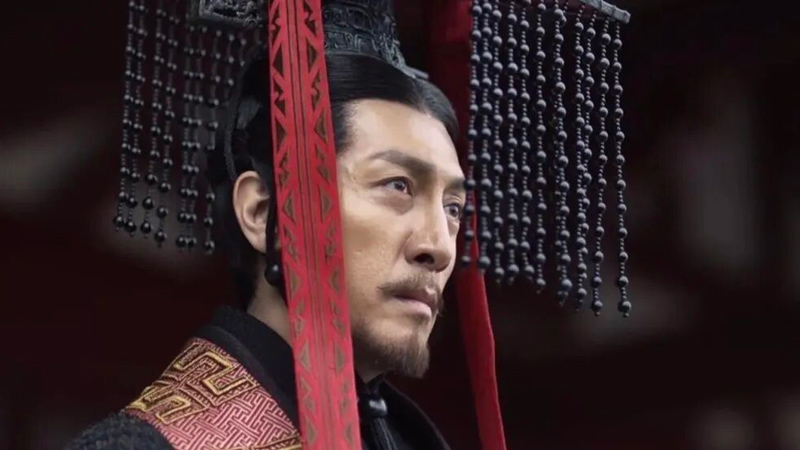
For the emperor's later years, Yu Hewei (于和伟) in The Legend of Chu and Han (楚汉传奇) is frequently cited. He embodied the isolation and deepening paranoia of absolute power, portraying a man trapped within his own palace and legend. More recently, Zhang Luyi (张鲁一) in the series Qin Dynasty (大秦赋) was praised for his physical stature and regal bearing, convincingly charting the character's evolution from a young king to an obsessive, world-weary emperor. Each of these actors latched onto a different facet of the historical fragments—the menacing youth, the philosophical ruler, the paranoid autocrat—and amplified it into a complete, compelling performance that satisfies a particular audience expectation.
Beyond the Live-Actor
The quest for a perfect representation extends beyond flesh-and-blood performers. In the animated universe of The Legend of Qin (秦时明月), Emperor Qin Shihuang is rendered with a commanding, elegant, and ageless severity. This version is free from the limitations of any single actor's features or age, allowing the animators to synthesize an idealised imperial presence—stern, majestic, and eternally powerful. It proves that the character's essence can be distilled into pure form and demeanor, resonating powerfully with a younger generation. Furthermore, online communities actively participate in this sculpting process. They use digital tools to "age" beloved young portrayals like Weng Feiran's, creating speculative images of what his emperor might have become. This fan-driven activity underscores that the portrayal of Emperor Qin Shihuang is now a collaborative, ongoing cultural conversation, not merely a task for casting directors.
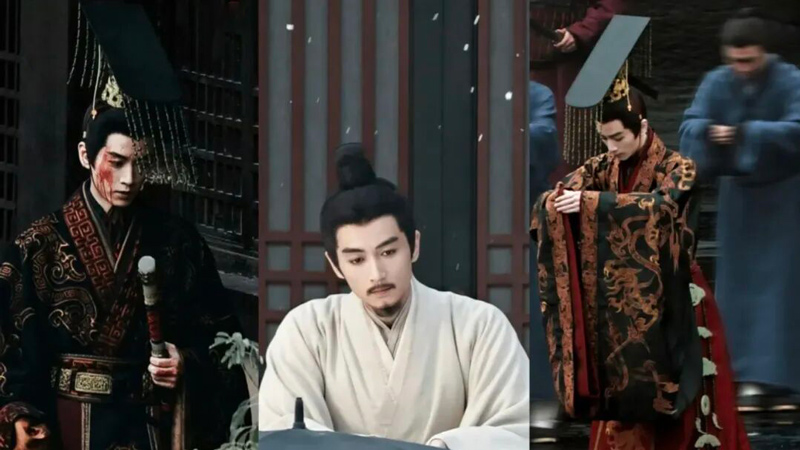
So, who captures the true First Emperor? The answer lies not in a history book, but in the interplay between a scarce historical blueprint, an actor's transformative interpretation, and the cultural moment receiving it. The perfect Emperor Qin Shihuang is a composite, a shifting image built from our enduring fascination with one of history's most consequential and enigmatic figures. He is a screen onto which we project our awe of absolute power, our debates on the costs of unity, and our curiosity about the person behind the legend. The debate sparked by Chen Xiao's latest version is not a critique of his skill, but proof that the role remains powerfully alive, waiting for the next performer to add their unique brushstroke to an unfinished portrait.