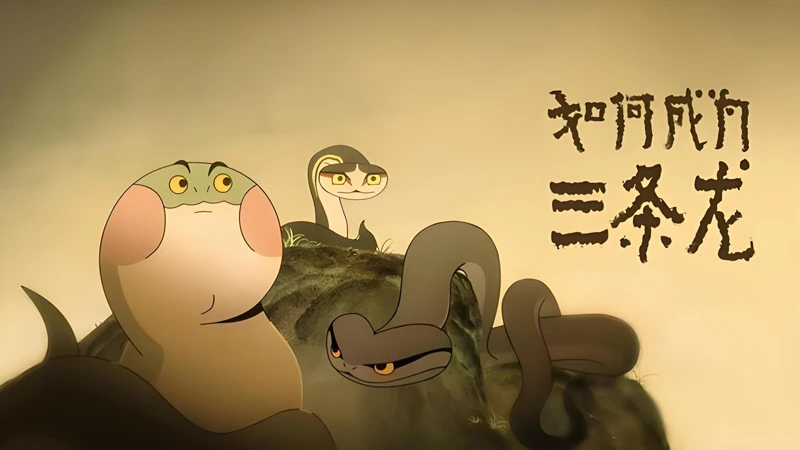
The second episode of the animated anthology Yao-Chinese Folktales 2 (中国奇谭2) , titled “Ear Dweller (耳中人),” presents a puzzle. It is not a straightforward narrative but a dense, visual poem about desire. While its sibling episode “How to Be Three Dragons” deals with communal aspiration, this story turns inward. It asks what happens when a lonely heart fixates on an impossible fantasy. The tale is an adaptation, yet it boldly reimagines its source to probe the darker corners of longing. At its core, it is a portrait of obsession—how it begins as a whisper and grows into a scream that drowns out the real world.
A Seed from Strange Tales
The story finds its roots in Strange Tales from a Chinese Studio (聊斋志异). The original is brief: a scholar named Tan Jinxuan (谭晋玄), obsessed with Daoyin (导引) breathing exercises, hears a tiny person speaking in his ear. He coaxes it out, only for a neighbor’s interruption to scare it away. The scholar then falls into madness. This classical tale serves as a clear warning against excessive fixation, or what Buddhism calls Wo Zhi (我执), the attachment to self. The animated version takes this seed and plants it in richer, more complicated soil. It shifts the obsession from spiritual cultivation to human emotion, specifically romantic yearning. This change makes the ancient fable resonate with a timeless human vulnerability.
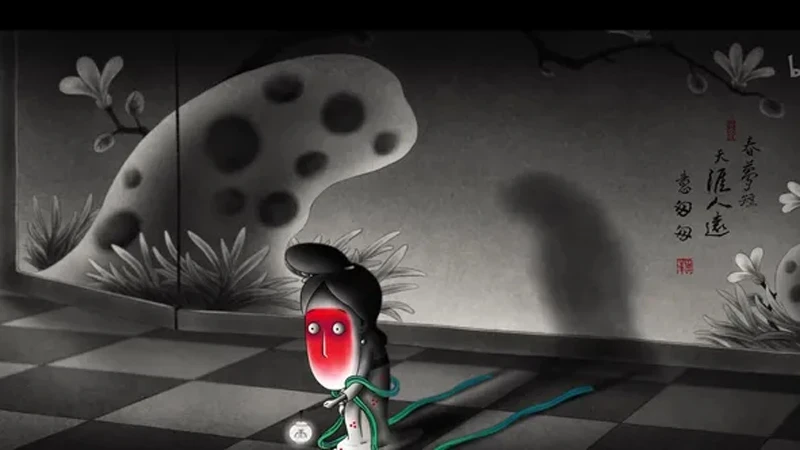
The adaptation introduces new layers. The scholar is no longer just a practitioner of esoteric arts; he is a lonely man surrounded by artifacts of culture and beauty. His world is one of books, paintings, and quiet desperation. This setting becomes a crucible for his imagination. When he discovers a mystical text with the power to let him hear distant sounds, he immediately breaks its primary rule: use it to help others, never for personal gain. His first act is to eavesdrop on a young woman, an action that sets his downfall in motion. The original’s framework remains, but the nature of the temptation is profoundly different and more relatable.
This evolution from mystical obsession to romantic fixation is key. It universalizes the theme. The “ear dweller” is no longer a simple byproduct of failed meditation; it becomes a manifestation of repressed desire. The scholar’s environment, filled with artistic hints of spring and fleeting beauty, primes him for this fall. His transgression with the magical hearing is not one of pride, but of loneliness. He reaches for a connection, however illicit, and in doing so, unleashes the whispering demon of his own unmet needs.
Whispers and Blossoms
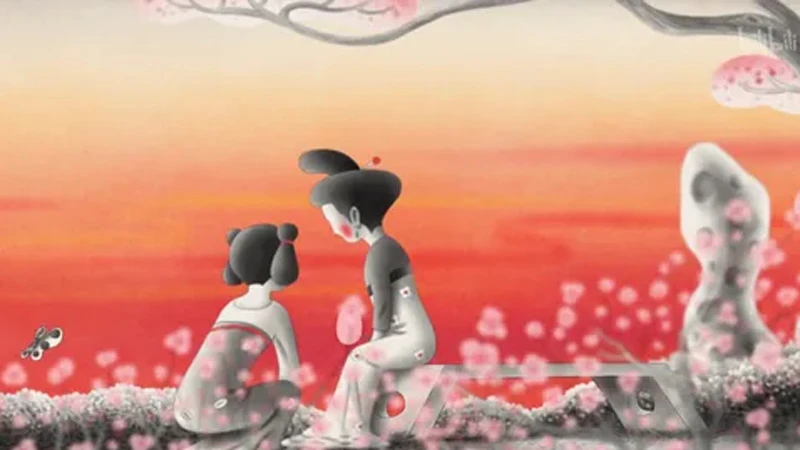
Visual poetry drives the narrative. Before any major plot point, a screen in the scholar’s study holds a fragment of a poem by the Ming dynasty artist Tang Bohu (唐伯虎): “Spring dreams are short, the ends of the earth feel far, intentions hurried.” This fragment is the story’s thesis. It speaks of ephemeral beauty and the melancholy of distance. The full poem, written about apricot blossoms, laments how quickly brilliant flowers fall. This motif of brief splendor is mirrored everywhere. The scholar sees a vision of a woman holding a lantern, here then gone, leaving only the tangible proof of the lantern behind—a moment that feels both dream and reality.
The apricot blossom appears at a critical moment. When the tiny “ear dweller” first perches on the scholar’s ear, a single, vivid red apricot flower is revealed behind it. This is no accident. It directly references Tang Bohu’s poetry and visually anchors the creature to the theme of fleeting springtime and ripe, transient desire. The blossom is a symbol of the beauty the scholar craves but cannot hold. Furthermore, the woman he overhears is singing a line from the classic Kunqu (昆曲) opera The Peony Pavilion (牡丹亭—游园): “If I do not visit the garden, how can I know such splendor of spring?”
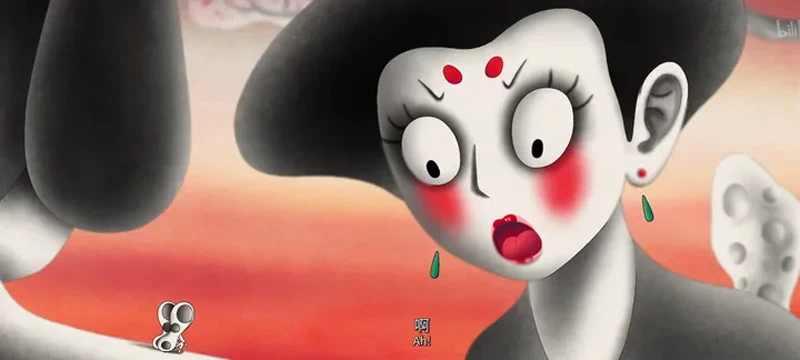
The Peony Pavilion is a foundational romantic text about a young woman who dreams of a lover, dies of longing, and is later revived to unite with him. It is a story of desire so powerful it transcends death. By invoking it, “Ear Dweller” links its scholar to a grand tradition of romantic obsession. The woman’s flushed cheeks as she sings of “spring” signal her own awakening desire, which the scholar’s eavesdropping intercepts and appropriates. His involuntary cry of “Sister!” is the spark. It is the moment his internal longing externalizes, giving birth to the physical tormentor in his ear.
The Dweller in the Mind
The creature itself, a grotesque fly-like homunculus, cannot be physically removed. When a street ear-cleaner tries, the tool passes straight through. This is the story’s central metaphor: the dweller is not in the ear, but in the mind. It is the obsessive thought loop, the persistent whisper of “what if.” The scholar’s clever solution is to stage a puppet show, using a doll to represent the young lady and lure the creature out. The scene where the tiny dweller encounters the puppet meticulously mirrors the scholar’s own earlier spying, proving they are one and the same psyche.
Here, the narrative delivers its most poignant blow. The dweller knows the puppet is false. Yet, at the last second, it turns back from safety to “save” it from a giant, crushing hand. This is the tragedy of obsession: the heart invests in the illusion. Even when the mind recognizes the fantasy, the emotional commitment feels real. The dweller’s fatal struggle against the inevitable hand—a force like fate or karma—is the scholar’s own self-destructive battle against his impossible desire. The obsession, not an external foe, kills him.
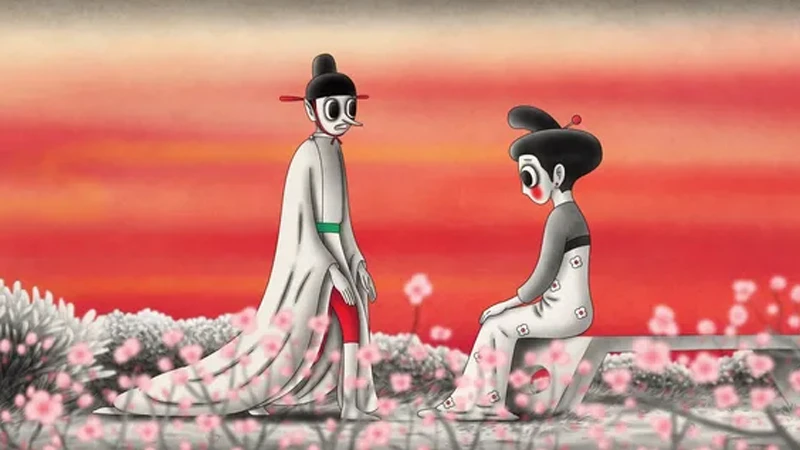
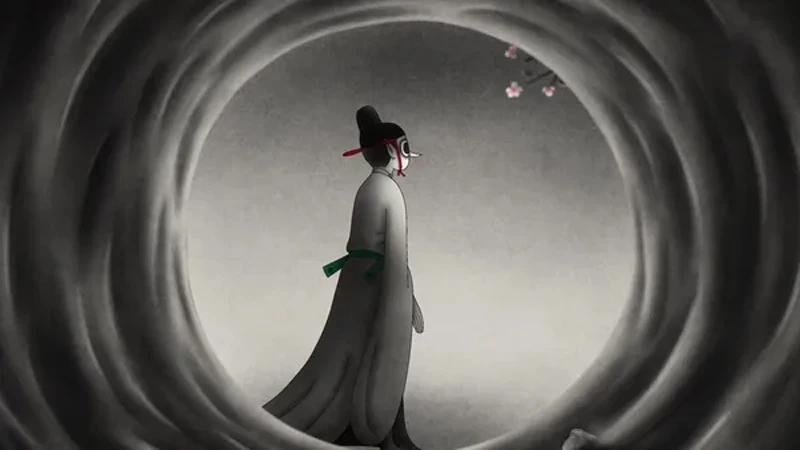
The ending is deliberately ambiguous. The scholar appears free, seeing that the blossoms in his courtyard were never actually in bloom. But as he walks through a gateway, the visual perspective shifts—he is entering a giant ear canal, and the shadow of the fly-creature looms behind him. Has he truly escaped, or has he merely entered a new cycle of fixation? The entire story might be a dream, born from gazing at a painted woman on his brush pot. The final message echoes Tang Bohu’s verse: life is brief, dreams are short, and we are often hurried along by our own relentless wants. We are, the story suggests, forever prone to becoming prisoners of the whispers we choose to entertain.