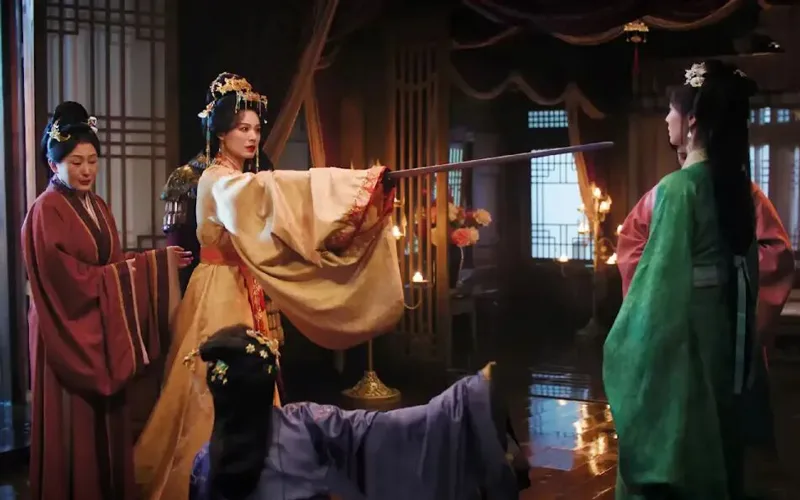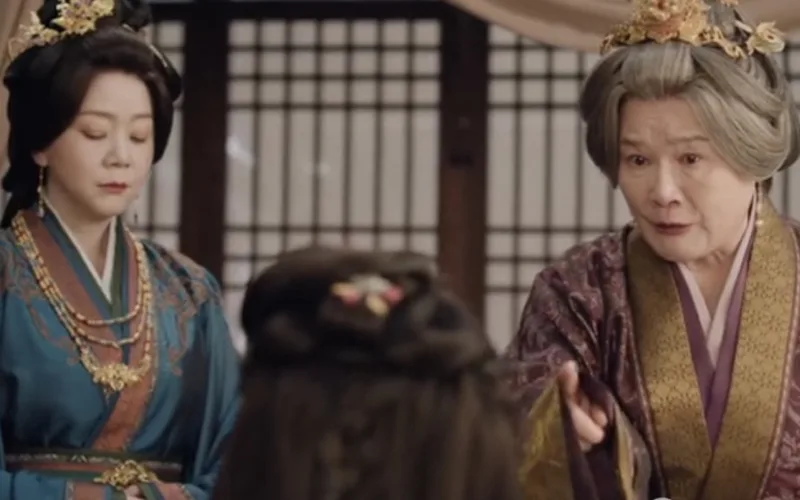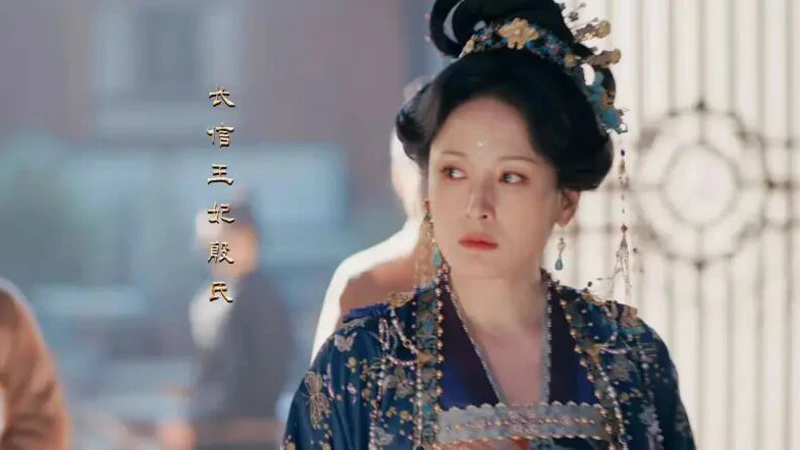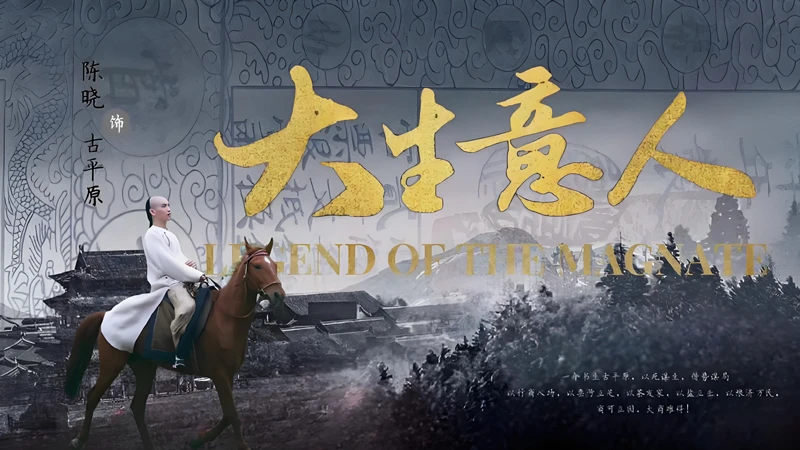
Historical dramas often weave ambition and fate into grand tapestries, but few threads are as startling as the one followed by Gu Pingyuan (古平原). His story begins not in a mansion but in despair, a scholar whose path to imperial examination glory was shattered in an instant. A single act of spilled ink rerouted his destiny from scholar to exile, casting him into the remote harshness of Ninggu Pagoda (宁古塔).
What defines Gu is not the fall, but the arduous climb back. Survival in exile required a different kind of cunning. The classical texts in his mind gradually made room for the calculus of the marketplace. His journey from the frozen frontier to the pinnacle of the Qing dynasty’s commercial world is a relentless pursuit of both justice and prosperity, a quest to unravel the conspiracy that upended his life.

The television adaptation, Legend of the Magnate (大生意人), has rapidly captivated audiences. While praised for its scale and emotional pull, viewers note a familiar echo. Gu Pingyuan’s remarkable blend of scholarly wit, martial prowess, and disruptive commercial savvy feels less like a historical figure and more like a direct descendant of a modern archetype. The comparison is inevitable: here stands a Qing-era Fan Xian (范闲), the resourceful hero from the series Joy of Life (庆余年). Both are intellectuals who navigate immense political peril with a sharp mind and a rebellious spirit, transforming their worlds from the margins. This parallel, whether intentional or not, provides a compelling bridge for contemporary audiences to engage with a historical narrative.

Four Fathers, One Fate: The Unseen Guides of a Merchant’s Journey
The path from exile to empire is rarely walked alone. For Gu Pingyuan, a man cast into the desolate frontier by a false charge, survival and eventual triumph were not solitary feats. His story, etched against the backdrop of late Qing Dynasty commerce and social upheaval, is fundamentally shaped by a series of paternal figures. These men, bound to him by blood, duty, conflict, or a mix of all three, served as unlikely architects of his destiny. They were not merely helpers but catalysts—some offering shelter, others imparting brutal lessons, and one even orchestrating his ruin to save his life. This is a chronicle of five fathers: the protector, the moral compass, the rival mentor, and the ghost from the past. Each left an indelible mark, steering the course of a merchant’s heart and the fate of his legacy.
- The Protector: Chang Si (常四)
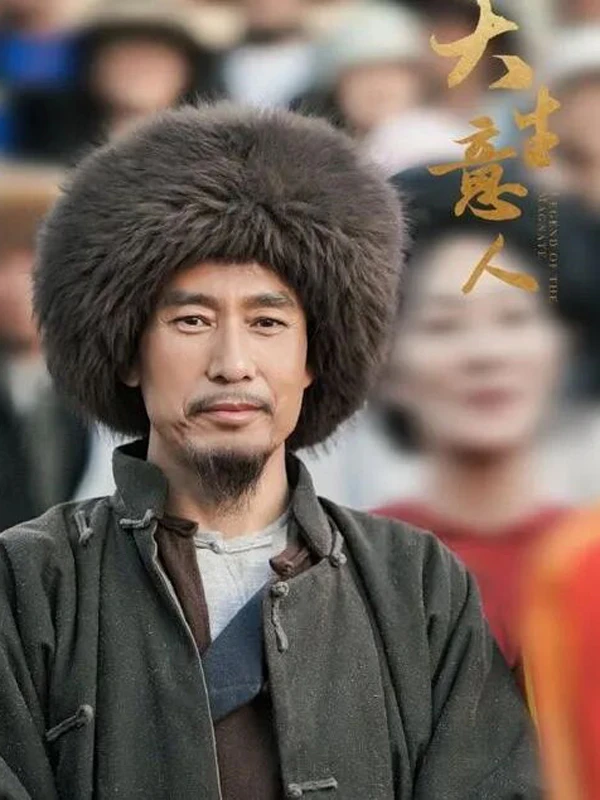
His world was frost and despair in Ningguta (宁古塔), a penal colony far from home. Rescue came not from officials but from the dusty, pragmatic world of the caravan. Chang Si, a veteran Mabang (马帮) leader, provided the first crack in Gu Pingyuan’s prison. The arrival of Chang’s convoy offered the cover needed for a desperate escape. When pursuit came, it was Chang Si who shielded the fugitive, offering not just a hiding place but a passage west to Xi’an (西安) and, unexpectedly, a place within his own family.
Under Chang Si’s rough tutelage, Gu Pingyuan took his first steps into the life of a traveling merchant. This was no formal education; it was knowledge earned on treacherous roads. Chang Si taught through action, demonstrating the unwritten codes of trust and “Daoyi” (道义)—righteousness in dealings. He guided Gu to his first major opportunity: a trade mission to the Khorchin grasslands. This journey was the true beginning.
The final lesson was one of ultimate sacrifice. When an assassin’s blade targeted Gu Pingyuan’s back, the old caravan master threw himself in its path. With his dying breath, Chang Si entrusted his daughter, Chang Yu’er (常玉儿), to the young man he had sheltered and shaped. In this act, protector became father-in-law in promise, and his death became the solid ground from which Gu’s new life would grow.
- The Moral Anchor: Bai Xiansheng (白先生)
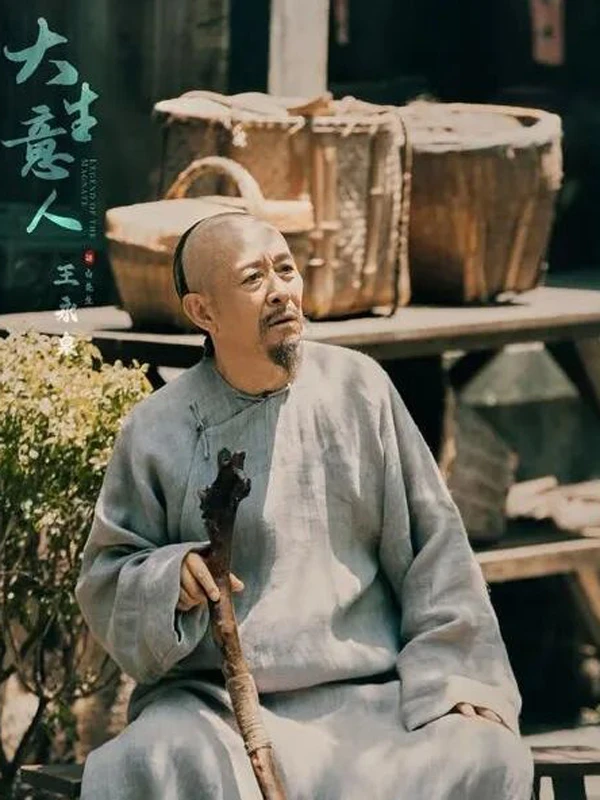
Long before the exile, there was a foundation. After Gu Pingyuan’s own father vanished and fortune faded, the scholar Bai Xiansheng became his anchor. He was the teacher who instilled not just classical texts but the very bearing of a literate man. Their bond deepened with a betrothal to Bai’s daughter, Bai Yimei (白依梅), weaving family ties through mentorship.
When Gu, now a returned exile, faced framed charges once more, the elderly scholar did not hesitate. In a dramatic public act of faith, Bai Xiansheng used his own life to vouch for his student’s innocence, a devastating testament that shattered the accusations. This was the final, profound gift from teacher to son.
Bai Xiansheng represented the conscience Gu Pingyuan carried within him—the classical ideals of integrity and sacrifice that would both complicate and guide his commercial ambitions. This father figure provided the ethical counterweight to the cutthroat world of business, a voice that would echo long after he was gone.
- The Rival Mentor: Wang Tiangui (王天贵)
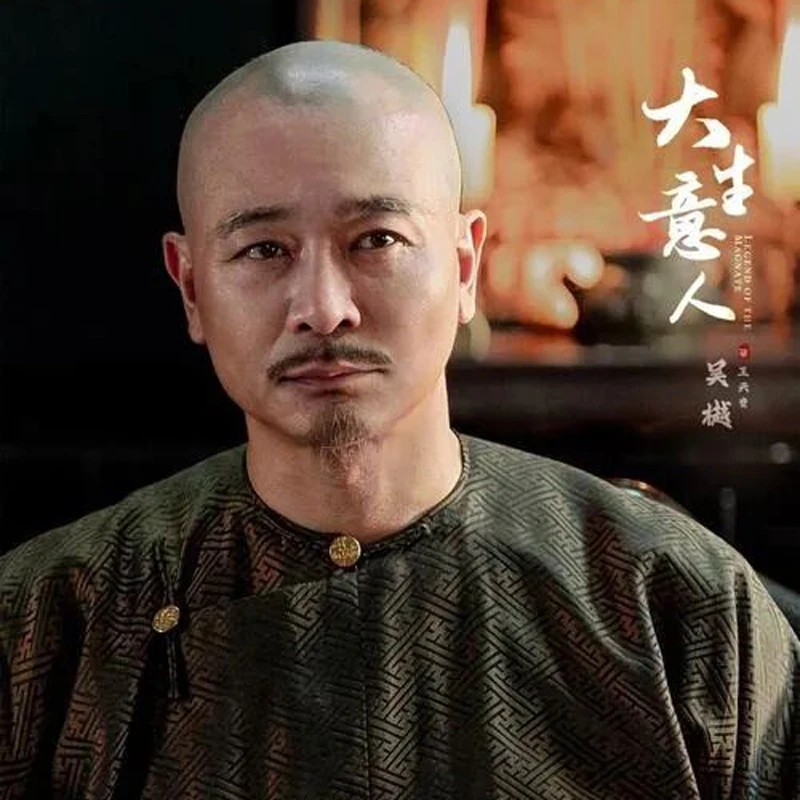
The relationship with Wang Tiangui was a dance of admiration and antagonism. A wealthy merchant mocked for having no heir, Wang saw in Gu Pingyuan the sharp mind and drive he desperately needed. He deliberately drew Gu into his world, placing him as a clerk in a pawnshop to learn the mechanics of finance and trade from the ground up.
Here was a fatherhood of harsh utility. Wang Tiangui’s cultivation was real, but it was also a test. He pushed, challenged, and manipulated, perhaps seeing Gu as the son he could mold in his own image. This ambition turned to resentment when Gu established his own rival firm, Tongjilong (通济隆) Piaohao (票号). Feeling betrayed, Wang allied with Gu’s enemies.
Yet, their fates remained knotted. Wang later broke his own alliances, sometimes aiding Gu from the shadows. In crucial battles against foreign merchants and compradors, his resources and cunning proved invaluable. He was the abrasive whetstone against which Gu’s strategies were sharpened, a paternal figure whose lessons were often written in conflict rather than care.
- The Ghost: Li Wantang (李万堂)
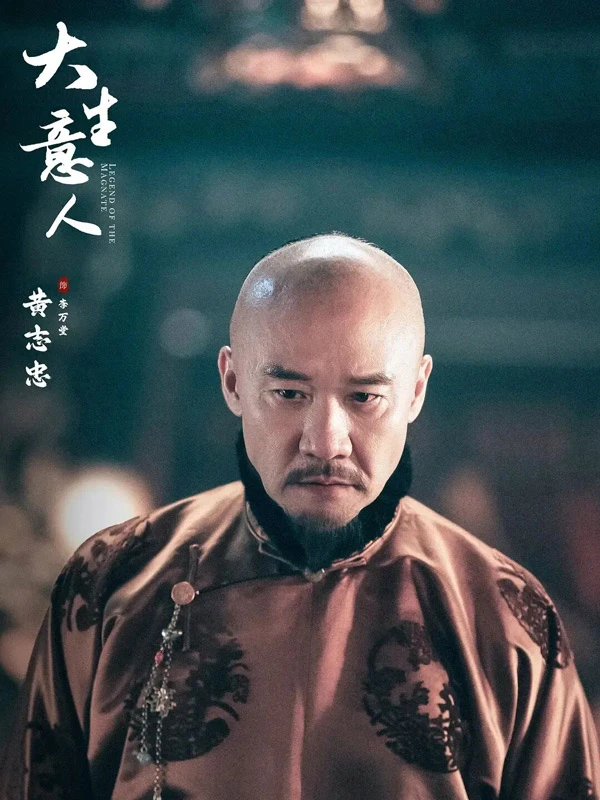
The deepest shadow over Gu Pingyuan’s life had a name: Li Wantang. Unbeknownst to Gu, this powerful figure was originally Gu Wanzhang (古皖章), his biological father. This was the man who had orchestrated the examination fraud that led to Gu’s exile—the architect of his suffering.
The truth, when it surfaced, revealed a tragic calculus. Years earlier, facing ruin and his own father’s death, Gu Wanzhang made a bitter choice: to enter the wealthy Li (李家) family as a son-in-law, changing his name and severing his past to secure funds for burial and revenge. When his original son, Gu Pingyuan, later appeared in the capital, he became a threat to the Li family’s peace.
To preempt his wife’s lethal intentions, Li Wantang engineered Gu Pingyuan’s exile—a harsh fate, but one with a chance for life. From then on, his involvement was a paradox of opposition and hidden guidance. Every commercial clash served as both a attack and a grueling test. His final defeat by Gu, facilitated by official support from figures like Zeng Guofan (曾国藩), seemed a fate long written, the closing of a circle begun with his own desperate choice years before. He was the father whose legacy was paradoxically built by trying to break his son.

The Three Who Shaped Him: A Man Between Duty and Heart
In the tumultuous final years of the Qing dynasty, the life of a man named Gu Pingyuan was irrevocably shaped by three women. Their stories are not mere subplots but core narratives that define his journey from an exiled scholar to a significant figure. Each woman entered his world at a different crossroads, representing distinct facets of love, obligation, and survival. Through them, we see not only Gu’s personal evolution but also a poignant reflection on the limited choices and immense resilience of women in a fading empire. Their connections to him form a complex web of missed timing, unwavering devotion, and quiet strength that ultimately determines his path.
- Bai Yimei (白依梅)

Bai Yimei was his beginning. She was the daughter of his teacher, a childhood companion turned betrothed. Their promise was simple and sincere, sealed with the exchange of wooden hairpins. He vowed to return after gaining honor and position to make her his wife. This promise became the quiet anchor of his early ambitions.
Fate, however, was cruel. During Gu’s five-year exile to Ningguta, all communication was severed. A forged letter, stating he had died in prison, was sent to his village. For Bai Yimei, her world collapsed. Believing him lost, and facing the pressures of a chaotic time, she accepted the protection offered by Chen Yucheng (陈玉城), a Taiping Rebellion general.
Yet, her heart never fully moved on. On the eve of her wedding, she wept over his old books. A final, secret gesture tied her to her first love: she sewed half of an embroidered handkerchief into the lining of her wedding gown. Her influence persisted, later facilitating crucial alliances between Gu and Chen’s forces, proving that some bonds, even severed, never truly break.
- Su Zixuan (苏紫轩)
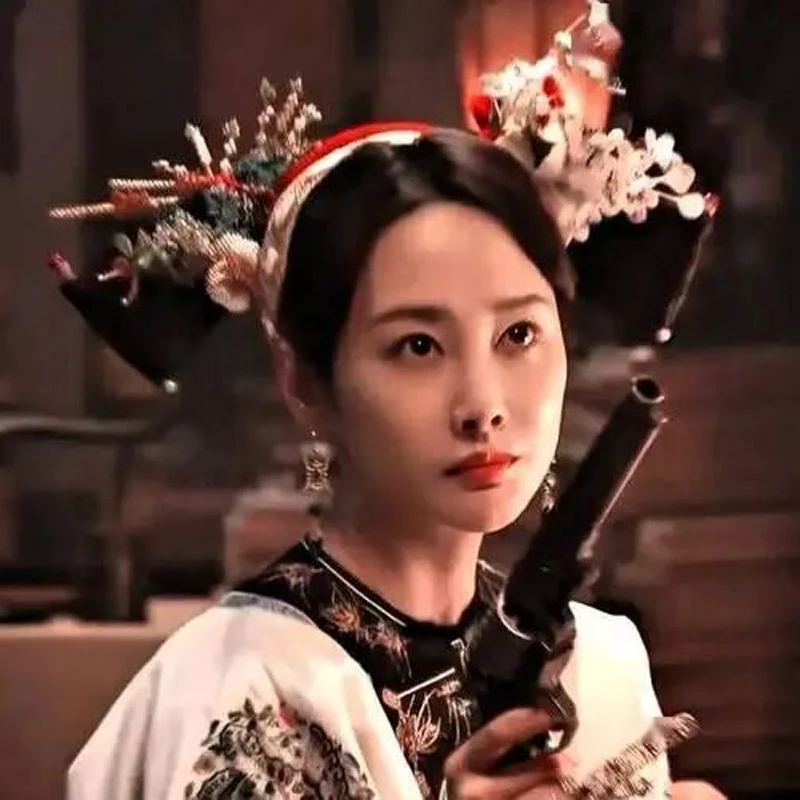
Then there was Su Zixuan, who blazed into his life like a comet. She was a figure of mystery, operating under the guise of a foreign trade merchant while nursing a deep-seated vendetta for her family. Her mission consumed her, making her both brilliant and detached. In the harsh environment of Ningguta, she first noticed Gu’s sharp mind during a gambling house confrontation.
What truly captivated her was his unyielding spirit, his refusal to break even under threat of death. This resilience mirrored her own, and through subsequent encounters, her admiration grew into a profound, unspoken affection. Gu, preoccupied with his own struggles and past, remained largely unaware, or perhaps deliberately unresponsive, to her deeper feelings.
Their partnership peaked when they worked together to expose a foreign merchant’s conspiracy, allowing her to achieve her long-sought revenge. With that purpose fulfilled, her intense focus on Gu gradually softened into a quiet release. Knowing a future together was impossible, she chose to depart from his life entirely, carrying both regret and peace, and never married.
- Chang Yu’er (常玉儿)

The third was Chang Yu’er, who became his wife. The daughter of salt guild leader Chang Si, she was his ultimate sanctuary. Forged in the martial world, she was straightforward, brave, and possessed a natural, chivalrous demeanor from years of traveling with her father. In Ningguta, she recognized Gu’s unique blend of scholarly virtue and martial courage immediately.
Their bond deepened through repeated trials. When her father died saving Gu, his final wish was for Gu to care for her. Gu, bound by honor and gratitude, agreed to marry her. Yet, his heart initially remained with the memory of Bai Yimei. For a time, his feelings for Yu’er were rooted more in duty than passion.
This changed. Bai Yimei’s marriage and Yu’er’s infinite patience and steadfast support slowly melted his guarded heart. She was not just a companion at home but his most capable partner in business, using her resources and even her status as a grassland gege (格格) to aid him. Through every crisis, she stood firmly by his side. Her unwavering presence became the foundation upon which he rebuilt his life, transforming duty into genuine, deep-rooted love.

A Different Measure of Success
The story of Gu Pingyuan reaches its final chapter not with a ledger of profits, but with a quiet departure. After navigating a world of high-stakes commerce and personal trials, he chooses to walk away. This conclusion, shared with Chang Yu’er, feels less like an ending and more like a hard-won beginning. Their journey through the competitive landscape of Legend of the Magnate reveals that the most significant transactions are not measured in silver, but in character.
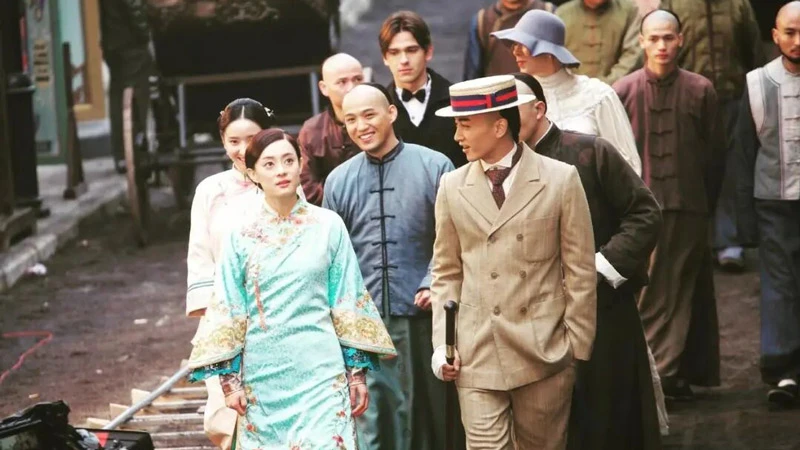
His methods were notably practical. To move money across vast distances, he devised a system for remote exchange, solving a critical problem for merchants. When famine struck, he created work for the hungry instead of simply handing out alms. Facing pressure from foreign tea traders, he refused to compromise. His response was to guarantee quality, trace each leaf to its origin, and even promise to buy back aged stock. This was a battle fought with integrity and trust, not just price.
These are not mere historical anecdotes. They are reminders that sustainable enterprise requires more than sharp tactics. Gu Pingyuan’s path demonstrates that ambition must be tempered by principle. A business built solely on profit has shallow roots. To endure, it must be grounded in something deeper—a sense of responsibility to one’s community and craft. His ultimate retreat with his partner is not a defeat. It is the final, decisive choice of a person who understood that the greatest venture is a life well-lived, and that the truest wealth is freedom earned with a clear conscience.