
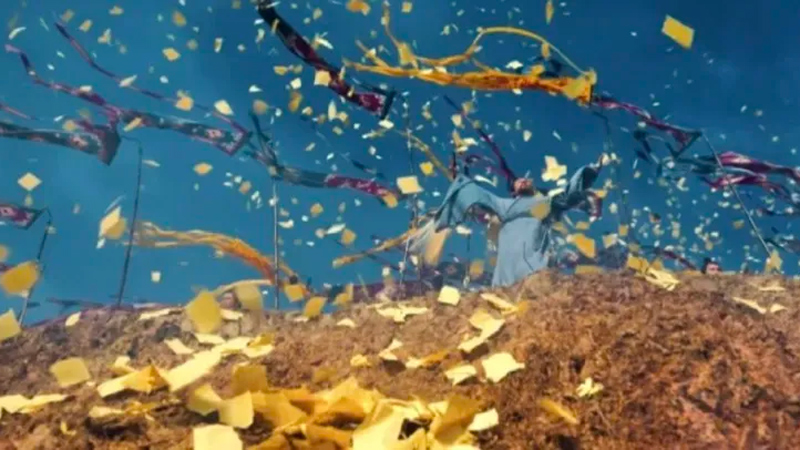
In the television series Strange Tales of Tang Dynasty Ⅲ: Chang'an ( 唐朝诡事录之长安), two officials are on a mission to locate a mysterious artifact—a golden slip. This object holds the key to unraveling a complex mystery. What many viewers might not realize is that this plot device is not merely a writer's invention. It is based on a real, historical treasure connected to one of China's most powerful rulers, Empress Wu Zetian (武则天). This gleaming piece of gold offers a tangible link to her reign, raising a compelling question: could this small object have truly held significance for the fate of an entire dynasty?
The Golden Proof
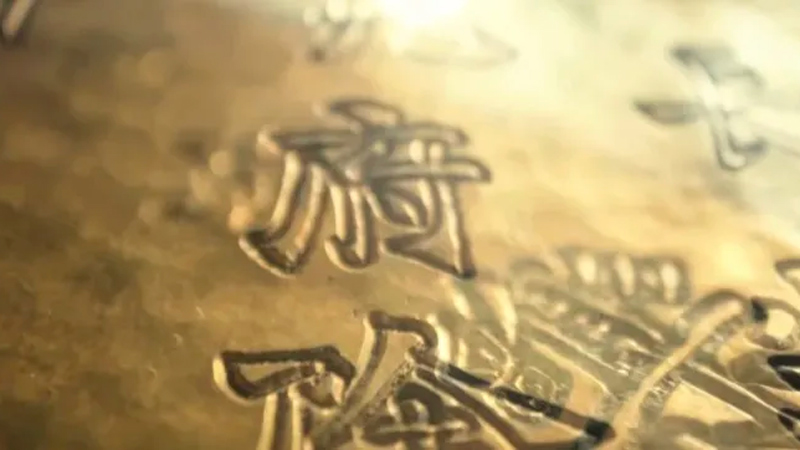
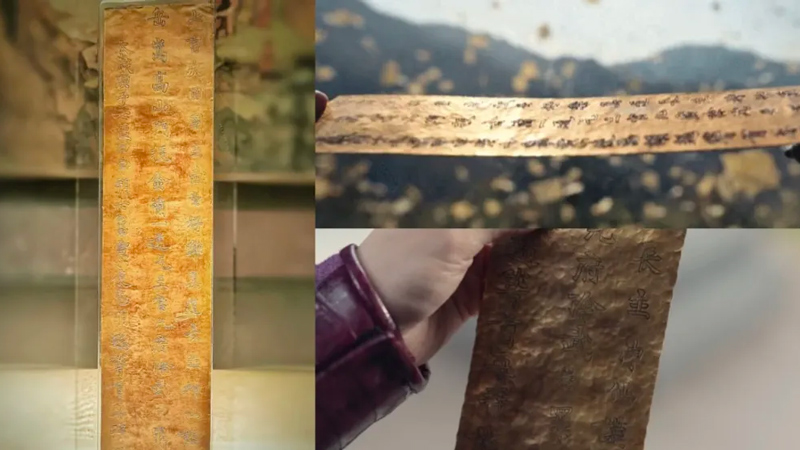
The prop in the show is a detailed replica of an actual artifact housed in the Henan Museum. This genuine Jin Jian (金简), or Golden Slip, measures 36.2 centimeters in length, 8 centimeters in width, and weighs 223.5 grams. Its gold content exceeds an impressive 96%. The surface is devoid of intricate patterns. Instead, its value lies in the sixty-three characters etched into the metal. These words form a personal plea from the Empress, asking the heavens to absolve her of her worldly sins. This slip remains the only known relic directly tied to her.
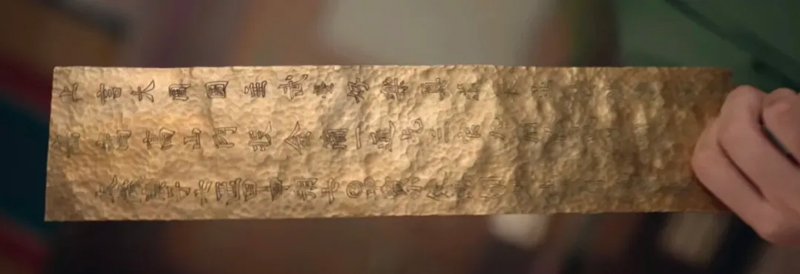
In ancient times, a "Jian" was a writing material, typically a thin strip of bamboo, used for recording events or important documents. This gold version served a far more sacred purpose. The inscription reveals that the Empress, devout in her pursuit of Daoism and longevity, sent an emissary to Mount Song (嵩山). His task was to deposit the slip there, seeking divine forgiveness. The text even includes five characters that Wu Zetian created herself, a testament to her unique authority and intellect.
The discovery of this artifact is a story in itself. It was not unearthed by a grand archaeological expedition. In 1982, a farmer found it wedged between rocks on the sacred mountain. It had rested there for over a millennium, silently witnessing the rise and fall of dynasties, waiting to share its story with the modern world.
A Plea to the Gods
Why was this valuable object deliberately left on a mountain? The act was part of a Daoist ritual known as "Tou Long (投龙)," or "Projecting the Dragon." This was a form of communication with the celestial realm. Worshippers would inscribe their prayers onto three different slips—mountain, earth, and water—each dedicated to one of the three Daoist officials representing heaven, earth, and water. The mountain slip was always destined for a high peak, carrying its message skyward.
This practice was also intertwined with the imperial "Feng Shan" (封禅) ceremonies, where an emperor would journey to a sacred mountain to legitimize their rule and pray for the nation's prosperity. Part of this grand ritual involved depositing a written declaration, or "Jian," into nature. Most emperors performed this at Mount Tai (泰山). Wu Zetian, however, broke with tradition. She chose Mount Song for her Feng Shan ceremony, elevating its status by renaming it the "Divine Peak" and changing the local county's name to Dengfeng to commemorate the event.
The mountain seemed to reward her devotion. Historical records indicate that in the year 700, Wu Zetian fell gravely ill. Court ministers journeyed to Mount Song to pray for her recovery. She did indeed regain her health, an event she interpreted as a divine answer. In gratitude, she returned to the mountain to perform another ceremony and cast the golden slip that would survive for centuries.
Echoes in the Present
The survival of this Golden Slip provides a rare and intimate glimpse into the mind of a female emperor during her final years. It speaks of her fears, her faith, and her desire for redemption. More than just a piece of gold, it is a snapshot of the era's religious beliefs, political customs, and linguistic evolution. It carries the weight of her personality and the complexities of her rule.

Today, seeing this artifact featured prominently in a popular television series creates a new kind of connection. It bridges the gap between a distant, powerful historical figure and a contemporary audience. The drama serves as a conduit, bringing this important piece of cultural heritage back into the public consciousness. It transforms a museum exhibit into a central character in a gripping narrative.
This blending of entertainment and history is a powerful tool for cultural transmission. It allows a new generation to engage with the past in an accessible and exciting way. The Golden Slip’s journey—from a sacred mountain ritual to a farmer’s chance discovery, and now to a key plot point in a hit show—ensures that the legacy of Empress Wu Zetian and the mysteries of the Tang Dynasty continue to captivate and inspire.