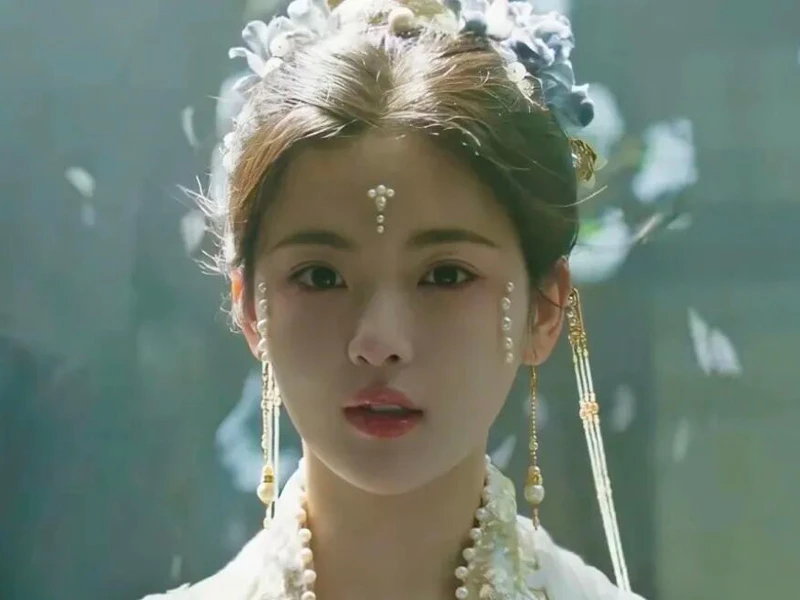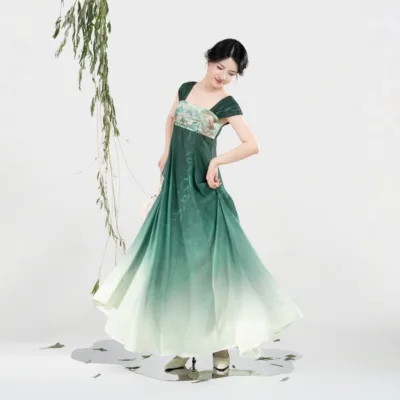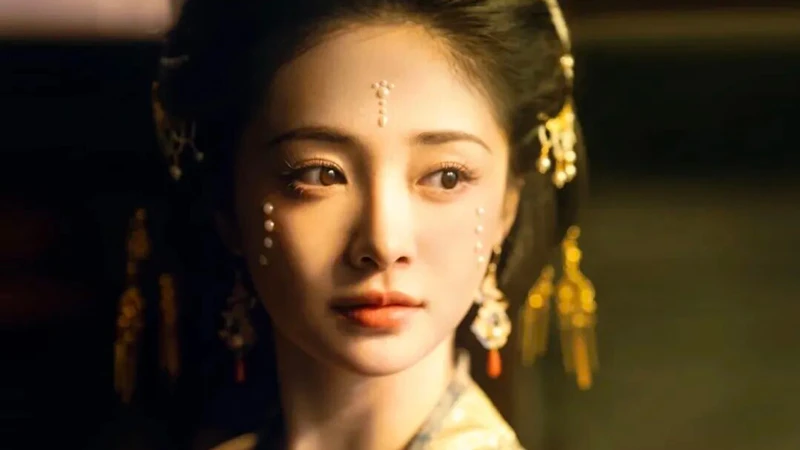
Why Did Pearl Makeup Styles Vary So Greatly in the Song Dynasty? From royal portraits to modern television dramas, the distinctive Zhenzhu Zhuang (珍珠妆), or pearl makeup, has become an iconic representation of Song Dynasty aesthetics. This facial adornment, featuring pearls strategically placed on the face, appears in countless historical productions and contemporary Hanfu fashion.
Yet observers quickly notice puzzling differences: some wearers display sparse clusters of pearls, while others boast lavish arrangements covering entire cheekbones. What accounts for this dramatic variation in application and quantity? The answer reveals a fascinating narrative about personal expression, economic status, and cultural practices that transcended rigid social hierarchies.
Social Statements
Contrary to popular assumption, pearl placement and quantity never reflected official rank or marital status during the Song period. While court regulations meticulously dictated dragon and phoenix motifs on formal headdresses to indicate hierarchy, no edict governed facial pearls. The widespread belief that lower-status individuals wore fewer pearls represents a modern misinterpretation. Historical evidence confirms that pearl adornment functioned as what we might call democratic fashion—accessible in theory to anyone who could acquire pearls, though practical limitations naturally applied. The face offers limited real estate for decoration, with preferred positions including the forehead center, temple areas, and cheek hollows. These constrained locations naturally created pattern variations as wearers sought balanced compositions that enhanced their facial features.
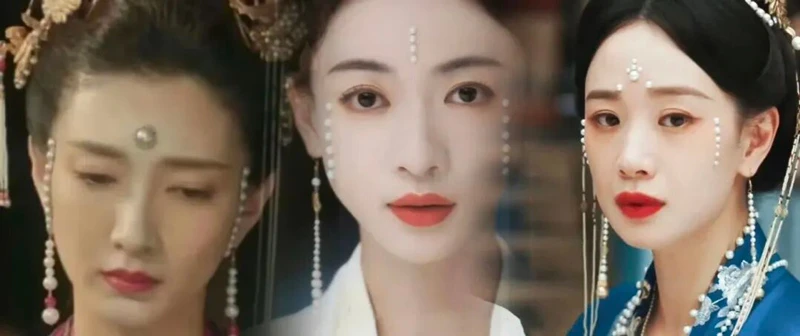
Wealth became the true differentiator in pearl presentation. Affluent families transformed pearls into ubiquitous status symbols, embedding them in clothing edges, furniture inlays, and even household textiles. A specific decoration called Zhuluo (珠络) involved lining garment collars, sleeves, and seams with pearl strands, creating shimmering borders that announced the wearer’s prosperity. Historical records describe princesses receiving pearl-encrusted wedding robes, while urban residents flaunted “pearl and jade collars” during lantern festivals. This obsession crossed gender boundaries, with Emperor Huizong (徽宗) himself owning a military jacket stitched with pearls along its seams. The phenomenon grew so pervasive that it sparked official concern about extravagance.
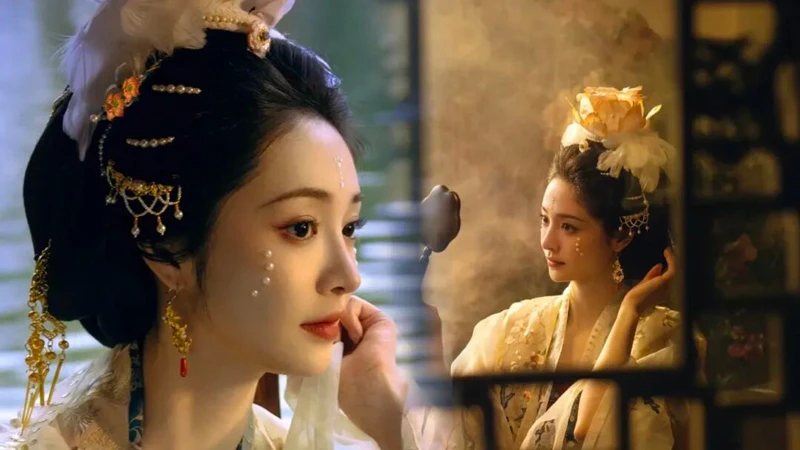
The government’s attempted restrictions highlight pearl fashion’s popularity across social strata. Authorities issued decrees prohibiting non-aristocratic families from using genuine pearls in clothing and accessories, but these rules proved largely unenforceable. By Emperor Shenzong’s (神宗) reign, the state abandoned suppression in favor of regulation, legalizing private pearl harvesting and taxing pearl transactions. This pragmatic shift acknowledged the impossibility of stifling a trend that had captured the cultural imagination. The very failure of sumptuary laws demonstrates how pearl adornment had evolved from aristocratic privilege to popular passion, with variations reflecting individual taste and economic means rather than bureaucratic prescription.
Technical Mastery
Creating lasting pearl arrangements required sophisticated adhesive technology. Artisans developed specialized glue from Yu Jiao (鱼胶), fish swim bladder glue, produced through steaming and pounding fish membranes into viscous paste. This biological adhesive provided strong bonding suitable for delicate facial application, similar to modern spirit gum. The ancient technical manual Kaogong Ji (考工记) documents various animal-derived adhesives, classifying fish glue as particularly effective. This innovation enabled wearers to maintain intricate pearl patterns through daily activities, though humidity and perspiration undoubtedly challenged the adhesive’s endurance. The craftsmanship extended beyond attachment techniques to pearl sourcing and arrangement aesthetics.
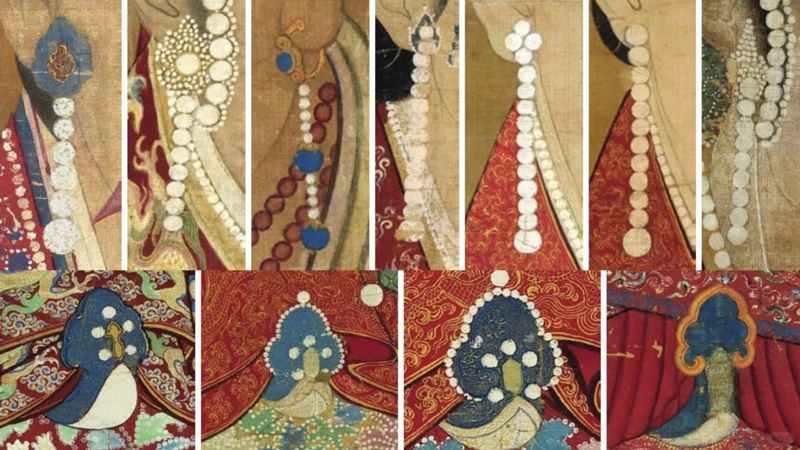
Pearl procurement itself influenced design possibilities. Southern coastal regions produced abundant pearls through diving operations, while northern territories supplied prized varieties. This geographic diversity created regional stylistic preferences, with some areas favoring smaller, uniformly sized pearls and others opting for larger, irregular specimens. The pearls’ inherent imperfections—variations in luster, shape, and color—meant each arrangement possessed unique characteristics. Artisans and wearers collaborated to create patterns that either emphasized symmetry or embraced organic asymmetry, much like contemporary makeup artists working with individual facial structures.
Modern reinterpretations of pearl makeup demonstrate its enduring design potential. Contemporary beauty enthusiasts use smaller pearls to contour cheekbones or highlight brow arches, adapting ancient techniques to current aesthetics. This evolutionary process mirrors the original Song practice of personalizing trends within technical constraints. The cultural legacy survives in idioms like “pearls linked together” symbolizing perfect combinations, reflecting how pearls became embedded in Chinese conceptual language. Today’s versions might incorporate synthetic pearls or adhesive alternatives, but the core concept of transformative facial decoration remains unchanged from its Song origins, proving the timeless appeal of combining natural elements with human creativity.