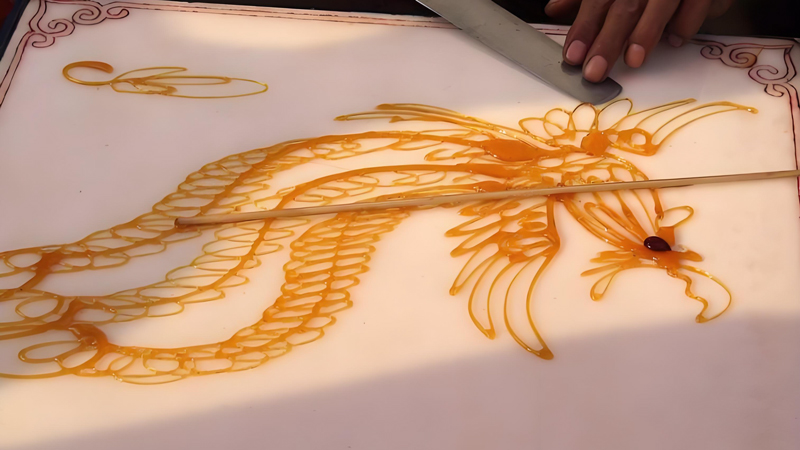
In the bustling parks and festive streets of Mianzhu (绵竹), a city in Sichuan province, clusters of children often gather around small, foldable tables, their eyes wide with anticipation. Here, a sugar painting artist works with simple tools: a smooth marble slab, a rotating disc adorned with patterns of flowers, birds, fish, and mythical dragons, and a ladle filled with molten sugar. With a quick spin of the disc, a child selects a design, and the artist swiftly transforms golden syrup into delicate, shimmering creations. Once solidified with a bamboo stick, these edible artworks are handed over, bringing joy that is both visual and gustatory. This tradition, known as sugar painting, blends playfulness with craftsmanship, offering a fleeting moment of sweetness that has been cherished for generations.
The Craft Process
Creating sugar painting requires precision and speed. Artists begin by heating a mixture of malt sugar and rock sugar until it reaches a liquid state, carefully controlling the temperature to avoid burning or premature hardening. The syrup must be poured quickly onto the stone surface, where it cools and solidifies almost instantly. Using a copper ladle as their brush, artisans draw freehand lines to form intricate shapes, from animals to modern objects like airplanes. This process demands a steady hand and an eye for detail, as any hesitation can result in broken lines or misshapen figures.
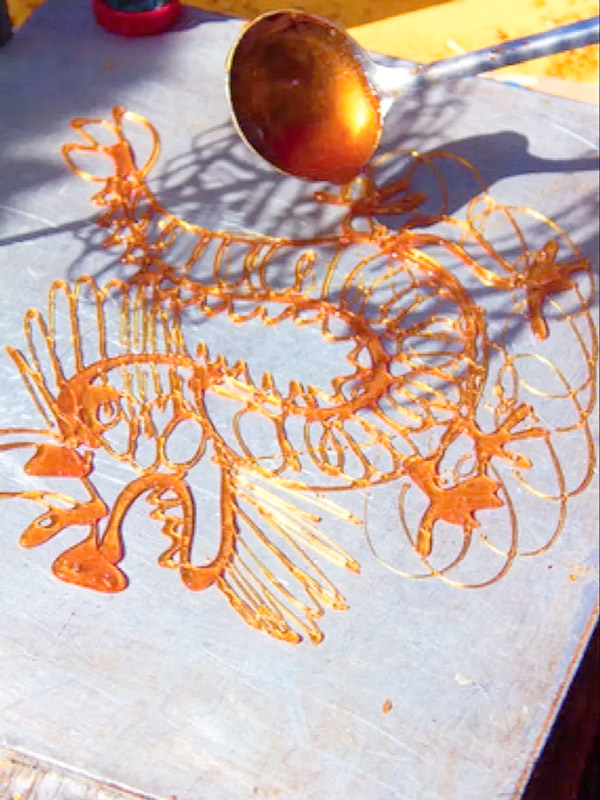
The materials have evolved over time. Traditionally, yellow sugar made from sugarcane and malt sugar was used, but it often produced darker, less vibrant results. Today, artists prefer combinations that yield a clearer, golden hue, sometimes enhanced with food-safe colors for added appeal. The key to success lies in the consistency of the sugar—too hot, and it scorches; too cool, and it fails to flow smoothly. Mastery of this balance allows for both two-dimensional designs and three-dimensional sculptures, showcasing the artist's skill and creativity.
Beyond technical skill, sugar painting embodies a rhythmic artistry. Each movement is fluid, almost dance-like, as the artist transfers mental images into tangible forms. Themes range from classical figures, such as warriors and phoenixes, to contemporary elements that resonate with younger audiences. This adaptability keeps the craft relevant, turning each piece into a unique expression that captivates onlookers before it is enjoyed as a treat.
Historical Roots
The origins of sugar painting are often traced back to the Tang Dynasty and the poet Chen Zi'ang (陈子昂), who is revered as a foundational figure in this art. Legend says he developed a method of melting sugar to create decorative shapes for entertainment, which he later consumed. During a period of personal disappointment, his creations caught the attention of a royal heir, leading to their introduction into the imperial court. There, they were named "tang bing er," or sugar cakes, and gained popularity among nobles.
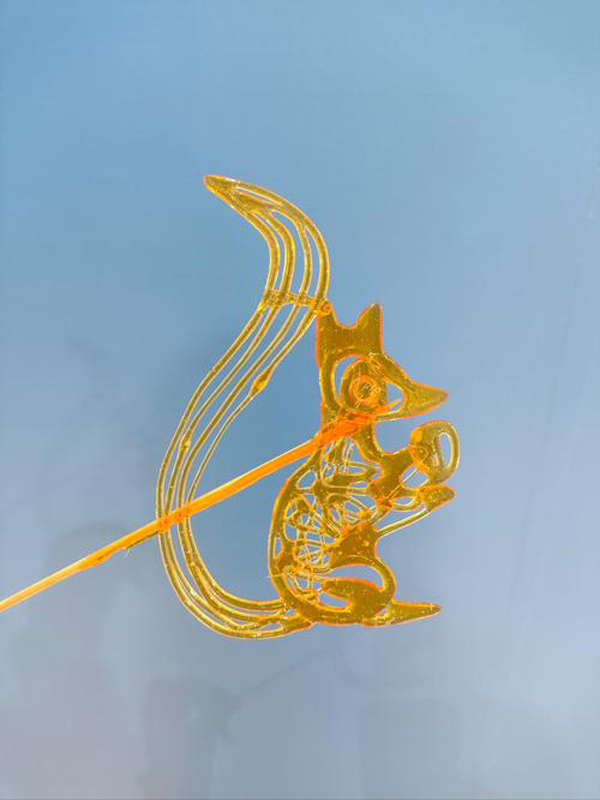
From the court, the practice spread to commoners, particularly in Sichuan, where it flourished during the Ming and Qing dynasties. Mianzhu, often called "Little Chengdu" for its commercial vitality, became a hub for this craft. Artisans adapted local aesthetics, incorporating symbols of prosperity and nature into their work. Over centuries, sugar painting evolved from a royal novelty into a street-side delight, reflecting the cultural exchanges and artistic innovations of the region.
This historical narrative is not just about technique but also about cultural transmission. Stories of Chen Zi'ang and his disciples highlight how art can bridge social divides, moving from elite circles to public spaces. The endurance of sugar painting through dynastic changes underscores its role as a living heritage, preserving tales of ingenuity and resilience in every sweet stroke.
Modern Challenges
In Mianzhu, the legacy of sugar painting is upheld by families like the Zhao (赵) lineage, who have practiced for generations. Figures such as Zhao Shengdian (赵盛典) from the late Qing era laid the foundation, while his son, Zhao Xueli (赵学礼), known locally as "Zhao Tang Ying Er," gained fame for realistic plane and three-dimensional designs. Today, descendants like Zhao Zhongyuan (赵忠元) and Zhao Zhongfu (赵忠富) continue this tradition, balancing farming with artistic work during holidays. Meanwhile, Zhao Ying (赵英), a younger relative, represents a new wave of practitioners, though few from her generation pursue it full-time.
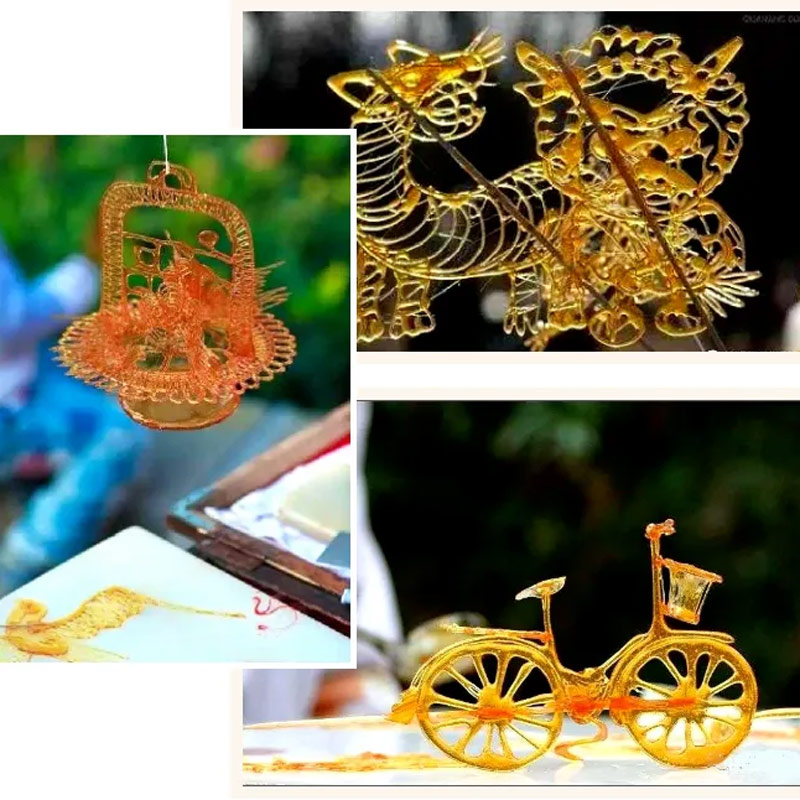
Another notable artisan, Zhang Xianlin (张先林), who learned from the Zhao family, has innovated by creating permanent sugar artworks, such as pieces titled Smooth Sailing (一帆风顺). These non-edible versions aim to prolong the life of the art but appeal to a narrower audience, as they lose the interactive element of consumption. Despite invitations to exhibitions and cultural events, sugar painting faces significant hurdles, including fragile results that limit durability, seasonal demand, and low income for artists, which discourages new entrants.
Efforts to sustain this craft rely on community awareness and policy support. Without intervention, the skills honed over centuries could fade, taking with them a piece of intangible cultural heritage. By valuing these sweet creations as more than mere novelties, society can help ensure that the artistry of Mianzhu sugar painting continues to inspire future generations, preserving a taste of history in every golden thread.