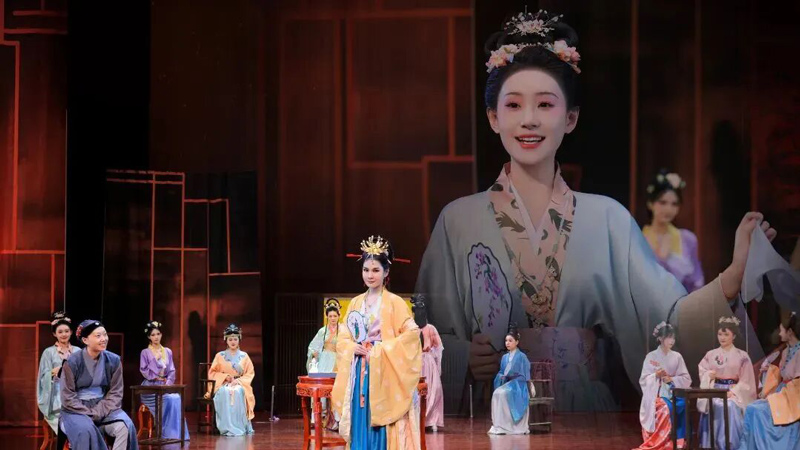
This November, the Huizhou Culture and Art Center (惠州文化艺术中心) transforms into a portal to the late Qing dynasty, presenting a stage adaptation of The Story of the Stone (红楼梦). On November 19, 2025, audiences will witness a condensed, 150-minute spectacle that distills Cao Xueqin's (曹雪芹) monumental novel. This production does not merely recount a story; it invites viewers into a reflective space where personal desires clash with societal confines. Through innovative narrative techniques and visual poetry, the play examines the delicate threads of love and loss within the illustrious Jia Mansion (贾府). It is an experience designed to resonate with modern sensibilities, questioning how much has truly changed in the human heart.
Performance Time:
November 19th, 2025 at 19:30
Venue:
Huizhou Culture and Art Center
The Narrative
Guided by the otherworldly perspectives of a lame Taoist and a scabby monk, the play frames the saga as a search for cause and effect. This unique viewpoint allows the audience to journey through pivotal moments, such as Lin Daiyu's (林黛玉) initial arrival at the mansion and Granny Liu's (刘姥姥) wide-eyed tour of the gardens. The plot weaves these episodes into a tapestry that highlights both romantic yearning and familial decay.
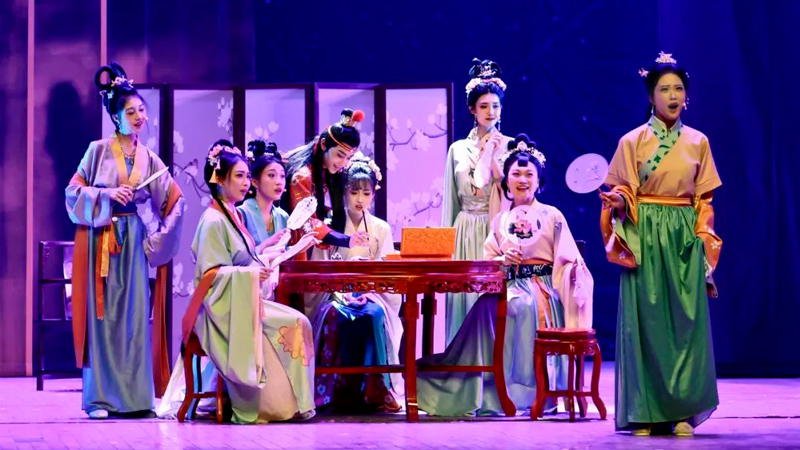
Key events like the inspection of the Grand View Garden unfold not as isolated incidents, but as interconnected pieces in a larger puzzle of destiny. The narrative rhythm mirrors life's own unpredictability, where joy and sorrow are deeply intertwined. This approach provides a fresh lens on a classic, making the sprawling epic accessible and emotionally immediate for today's viewers.
By focusing on the concept of "wishes," the production explores the consequences that bind its characters. The love between Jia Baoyu (贾宝玉) and Lin Daiyu becomes a central force, their personal struggles reflecting the wider disintegration of their world. This structure emphasizes the universal and timeless nature of their dilemmas.
Stage Design
The set is a character in itself, composed of massive, moving panels that create a rigid, grid-like environment. These walls rise and fall to shift between scenes, representing both the physical and psychological spaces of the mansion. Their stark, geometric forms evoke a sense of inescapable structure, mirroring the social constraints on the characters.
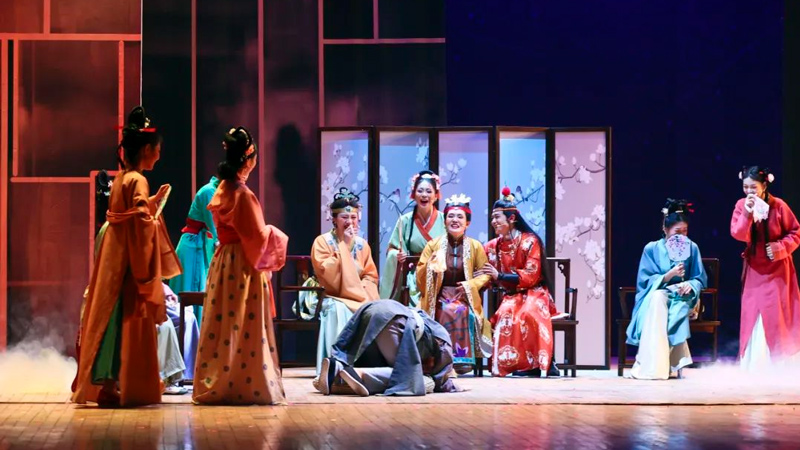
This architectural choice powerfully symbolizes the cyclical nature of existence—prosperity and ruin, presence and absence. The famous line "all that is left is a vast whiteness" is visually realized, suggesting a clean slate that is also an end. The minimalist aesthetic enhances the dreamlike quality of the story, where reality and illusion blur.
Transitions between scenes are seamless yet abrupt, mimicking the jumps of a memory or a vision. This technique pulls the audience into a shared dream state, making the fall of the Jia family feel both inevitable and deeply personal. The stage becomes a metaphor for the fragile boundaries of our own lives.
Costume Creation
Costumes blend historical accuracy with contemporary design, using traditional materials like silk and ramie. Each garment is tailored to reflect the inner world and social standing of its wearer, from the delicate fabrics for the young maidens to the more structured pieces for the family elders. This design philosophy roots the characters in their era while allowing modern audiences to connect with them.
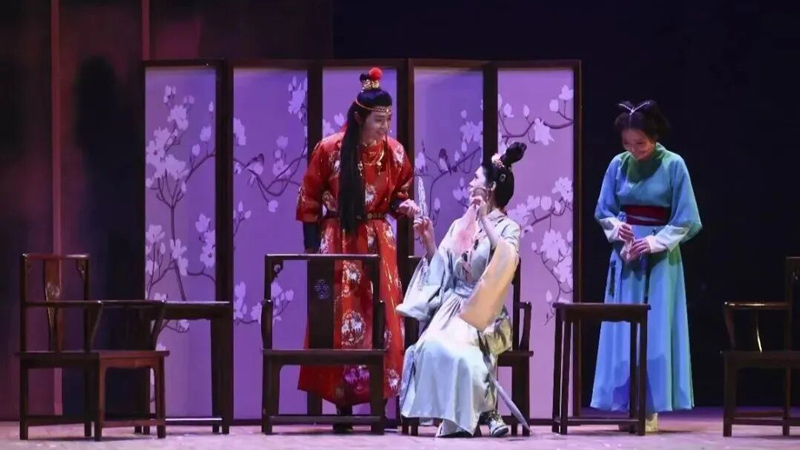
The aesthetic foundation "life as a summer flower" informs the vibrant yet transient beauty of the attire. Xue Baochai's (薛宝钗) clothing, for instance, is elegant and composed, mirroring her pragmatic nature, while Lin Daiyu's dresses are softer and more poetic, hinting at her fragile health and sensitive spirit. These visual cues silently communicate fate and personality.
This attention to detail builds a unique aesthetic universe that encourages viewers to ponder their own responses to destiny. The costumes are not mere decoration; they are integral to understanding the characters' journeys and the forces that shape them, making the themes of choice and consequence vividly tangible.
Key Highlights
A standout feature is the seamless fusion of classical Chinese opera elements with modern theatrical techniques. This blend is most potent in the portrayal of Lin Daiyu's final moments, a segment hailed as the production's emotional peak. The stagecraft here is subtle yet devastating, capturing the tragedy with profound sensitivity.
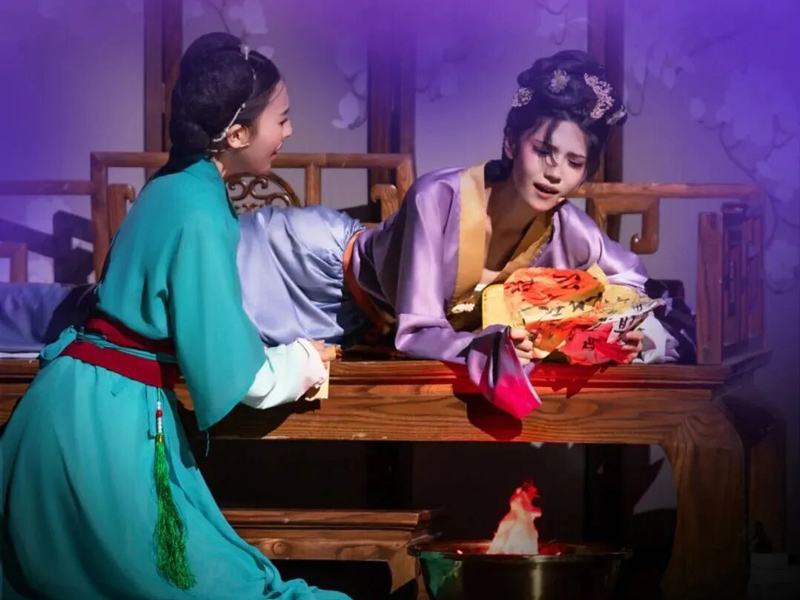
In this scene, dressed in plain white, Daiyu learns of Baoyu's arranged marriage to Baochai. The realization shatters her will to live. She asks her maid, Zijuan (紫鹃), for the old handkerchief Baoyu once gave her, a token that sparks a flood of memories from their first meeting to their deepest connections.
The direction uses light and movement to externalize her inner turmoil, making her heartbreak palpable across the footlights. This moment crystallizes the play's core themes, demonstrating how personal anguish is amplified by societal pressures. It is a testament to the power of performance to convey complex emotions without words.
Final Reflections
The Grand View Garden is portrayed as an ephemeral paradise, a place of youthful freedom and aesthetic delight where characters briefly escape their duties. This sanctuary, however, is as temporary as a flower in bloom. Its beauty is intense but destined to fade, leaving behind only echoes of what once was.
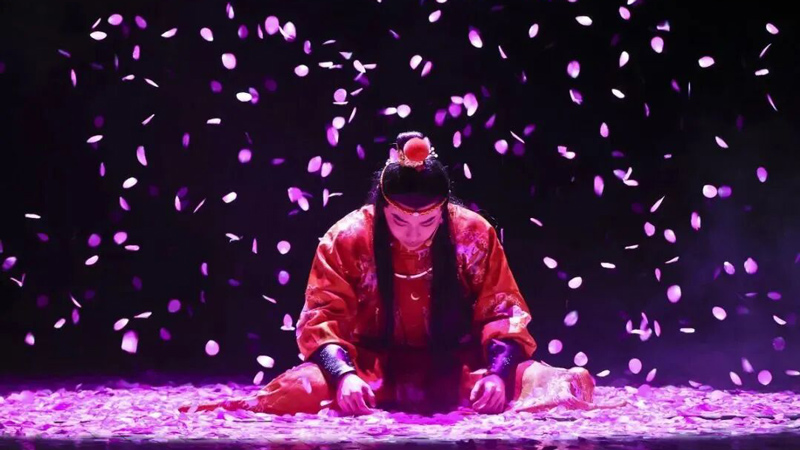
This production does not offer easy answers but instead immerses the audience in the poignant truth that all dreams must end. The sudden extinguishing of the garden's vitality serves as a stark reminder of life's impermanence. It challenges viewers to consider the value of such beautiful illusions, even knowing they cannot last.
Ultimately, the play suggests that the awakening from the dream is as significant as the dream itself. By walking through the rise and fall of the Jia family, one might find a deeper appreciation for the fleeting moments of joy and connection in their own life. It is an invitation to reflect on what remains after the curtain falls.