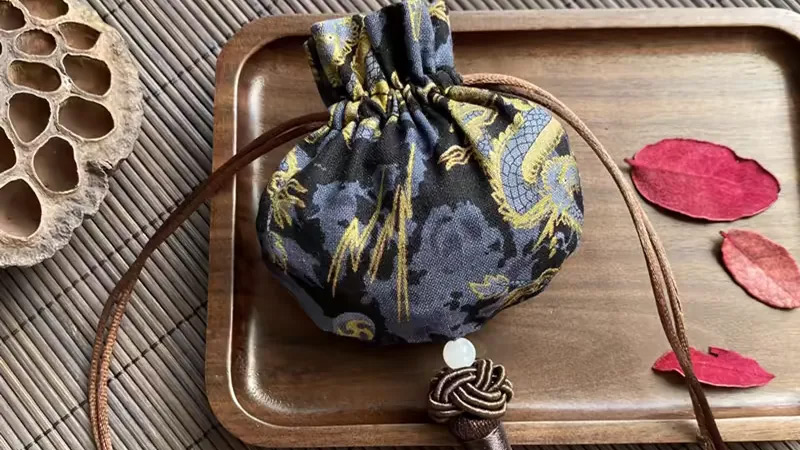
What if your accessories could tell a story a thousand years old? In an age of mass production, a small, fragrant pouch offers a different kind of luxury. This is not just a scent carrier; it is a wearable piece of history, a whisper from ancient China. The Xiangnang (香囊), or scented sachet, holds within its delicate stitches the essence of a cultural legacy. Far more than a simple ornament, it is a complex artifact where botany, craft, and deep-seated human emotion converge. From royal courts to rustic villages, it has served as a personal air of poetry, a protective charm, and a silent messenger of the heart.
The Craft
Creating a Xiangnang is a meditation in itself. The process begins not with thread or cloth, but with scent. An artisan selects herbs like mugwort, cloves, or borneol, each chosen for its aromatic and symbolic properties. The goal is to design a fragrance profile that is either invigorating, calming, or protective. This initial step is deeply personal, akin to composing a unique olfactory signature for the future wearer.
The true test of patience follows: grinding. The dried botanicals are placed into a stone mortar. The rhythmic, circular crushing is not a task to be rushed. It is a physical act that transforms brittle leaves and hard buds into a fine, consistent powder. This powder must be utterly smooth to prevent it from poking through the fabric of the pouch, ensuring both comfort and a slow, steady release of its perfume.
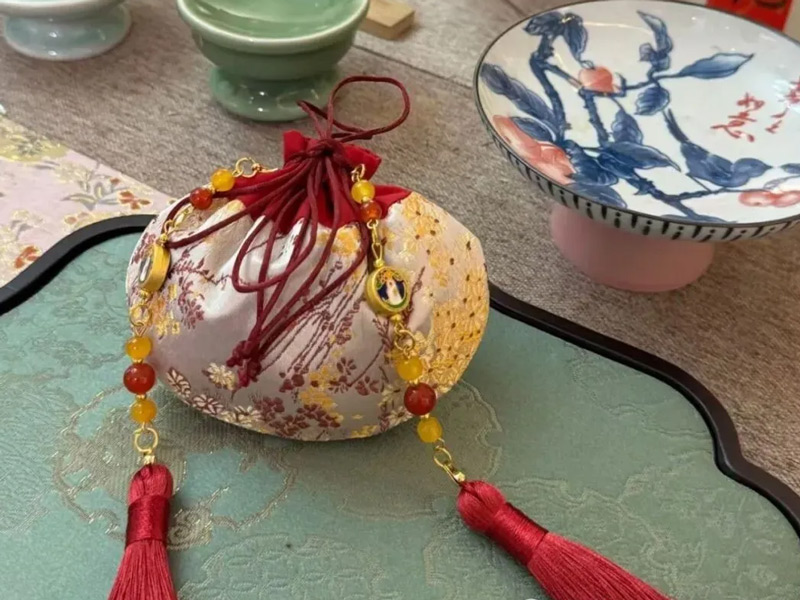
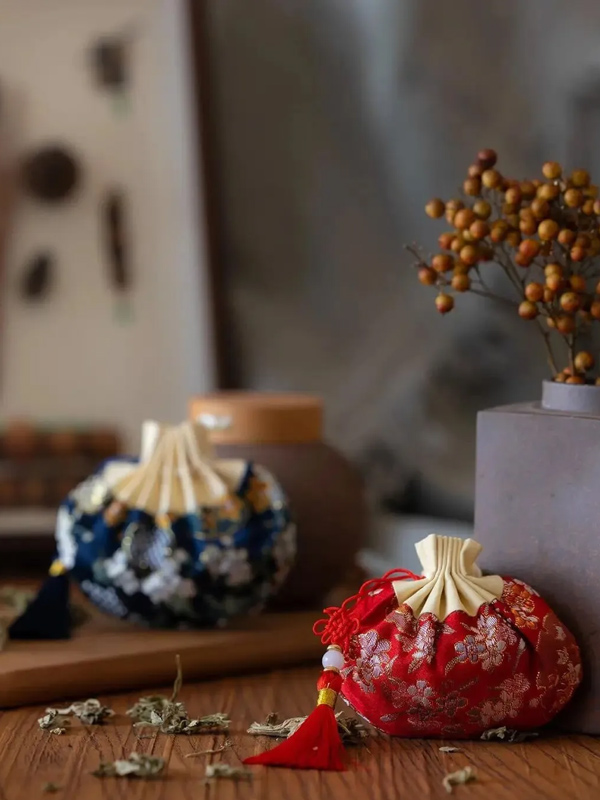
Finally, the crafted scent meets its vessel. A small pouch, often made of silk or brocade, is meticulously sewn by hand. These pouches are themselves works of art, embroidered with symbolic patterns like lotus flowers for purity or mandarin ducks for love. The fragrant powder is carefully poured inside, and the pouch is sealed. What emerges is a complete sensory object, beautiful to behold and enchanting to smell.
Silent Language
In the intricate social tapestry of ancient China, the Xiangnang served as a sophisticated medium for non-verbal communication. Its most romantic role was that of a token of affection. Unlike a spoken word that fades, a gifted sachet was a tangible promise. A young woman might spend days embroidering a pouch and blending a special fragrance to give to her beloved, a silent yet powerful declaration of her feelings. It was a secret language understood by all.
Beyond romance, these sachets conveyed respect and social decorum. Historical texts like the Book of Rites (礼记·内则) record that young people wore them in the presence of elders as a sign of reverence. The clean, refined scent was a marker of good upbringing and personal hygiene. In the stifling heat of summer or crowded spaces, the gentle fragrance from a sachet provided a personal bubble of freshness and civility.
The function of the Xiangnang also extended into the realm of well-being. Traditional Chinese medicine held that certain aromatic herbs could ward off pests and purify the air, thus protecting the wearer from common ailments. During festivals like the Dragon Boat Festival, sachets filled with pungent herbs were worn to dispel evil spirits and prevent disease. It was a portable pharmacy, blending preventative health with spiritual belief.
Modern Echo
Today, the Xiangnang is experiencing a quiet revival. It is no longer confined to museum displays or historical dramas. Contemporary designers are reinterpreting this ancient accessory, creating patterns that appeal to modern aesthetics while preserving the core craftsmanship. You might now see a sachet hanging from a rearview mirror in a car or tucked into a wardrobe as a natural alternative to synthetic air fresheners.
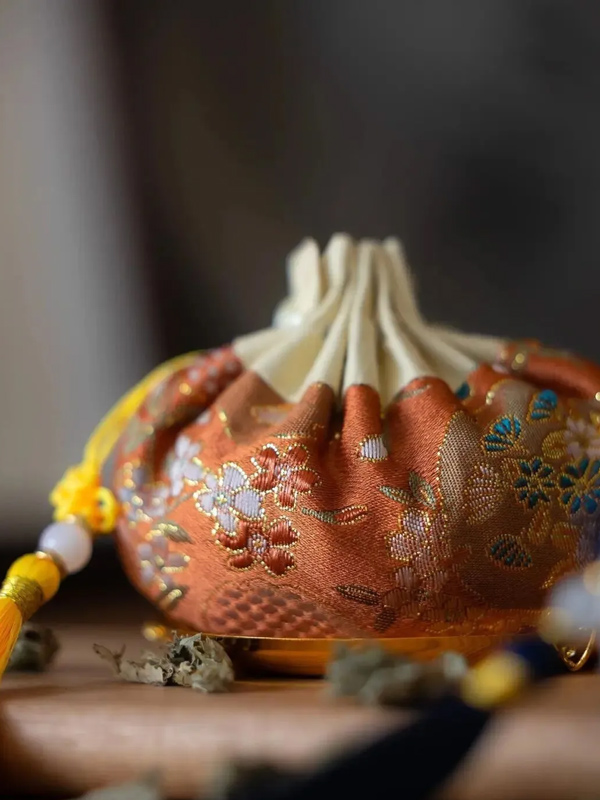
For a new generation, making a Xiangnang offers a tangible link to their heritage. Workshops are springing up where people can learn to grind herbs and sew pouches. This hands-on engagement transforms an abstract concept of "intangible cultural heritage" into a personal, creative experience. The act of making becomes as meaningful as the object itself, fostering a deep, personal connection to a fading art form.
The true power of the Xiangnang lies in its enduring relevance. In our fast-paced, digital world, it represents a pause. It champions the value of the handmade, the personal, and the meaningful over the disposable. It reminds us that the most powerful connections are sometimes not spoken or typed, but carried close to the heart, releasing their story with every subtle, fragrant breath.