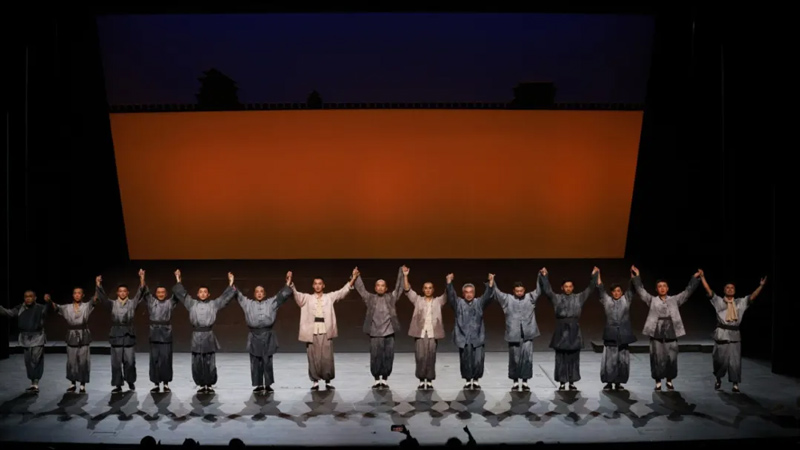
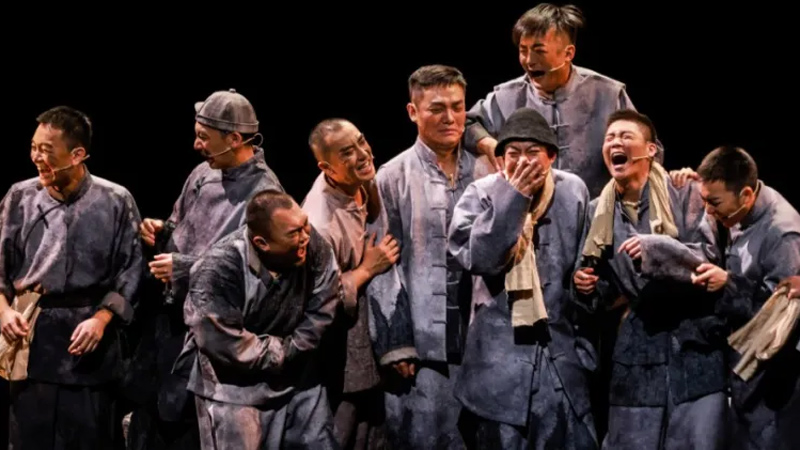
In the heart of Beiping (北平) during the 1920s, a rickshaw puller's dream unfolds on stage, capturing the essence of human resilience. The theatrical adaptation of Rickshaw Boy (骆驼祥子), based on Lao She's (老舍) classic novel, brings to life the gritty streets and soaring hopes of a bygone era. Directed by Fang Xu (方旭), this production revitalizes the tale for modern audiences, blending innovative staging with emotional depth. As the curtains rise at the Quanzhou Grand Theatre (泉州大剧院) on October 18, 2025, viewers are invited to step into a world where every pull of the rickshaw echoes with struggle and aspiration. This isn't just a retelling; it's an immersion into the soul of a city and its people, making literature breathe and pulse in real time.
Performance Time:
Saturday, October 18th, 2025 at 19:30
Venue:
Quanzhou Grand Theatre
Stage Interpretation
Xiangzi's (祥子) journey from hopeful youth to broken man is distilled into a powerful two-hour performance. Three actors portray him at different life stages, sharing the stage to weave a symphony of fate. The young Xiangzi beams with ambition, the middle-aged one grapples with despair, and the elderly version retreats into defeat. This layered approach allows the audience to witness his entire arc in a single, gripping narrative. Scenes shift seamlessly from bustling alleyways to intimate moments, using minimal props to suggest entire neighborhoods. Each movement and expression builds a tangible connection, turning abstract literary themes into visceral experiences that linger long after the show ends.
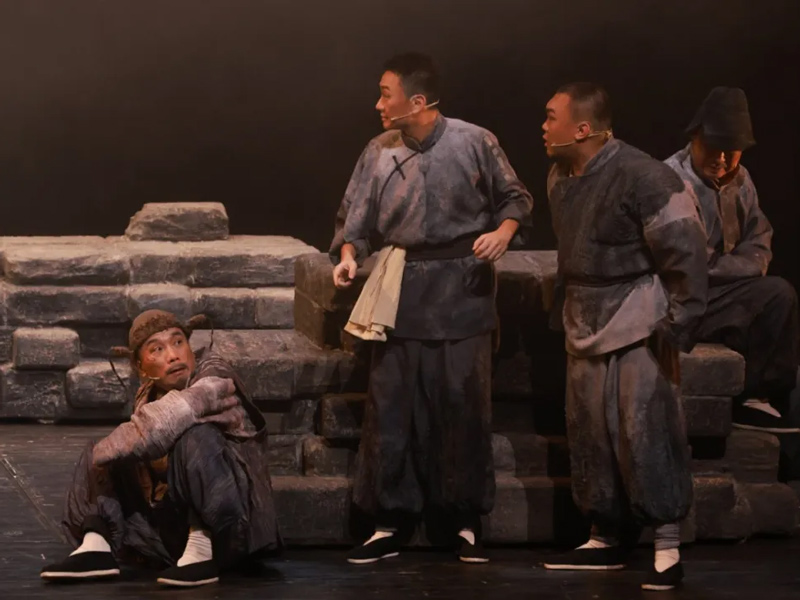
The production avoids heavy symbolism, focusing instead on raw human emotion. When Xiangzi loses his rickshaw, his cry of anguish isn't just heard; it's felt. Directors like Fang Xu emphasize physicality to convey inner turmoil, making the character's plight relatable without need for elaborate explanations. Simple set pieces—a flickering lamp, a worn-out coat—evoke the harshness of his world. This clarity helps viewers, especially younger ones, grasp the story's depth without feeling overwhelmed. By stripping away excess, the play highlights the universal struggle for dignity, resonating across generations.
Audiences leave not with memorized plot points, but with embodied memories of Xiangzi's sweat and determination. The staging transforms complex motives from the book into accessible visual cues. For instance, the repeated image of the rickshaw becomes a metaphor for life's burdens, moving from a symbol of hope to one of entrapment. This direct storytelling approach ensures that even those unfamiliar with the novel can engage fully. It's a testament to how theater can make classic literature feel immediate and urgent, bridging the gap between page and performance.
Sensory Journey
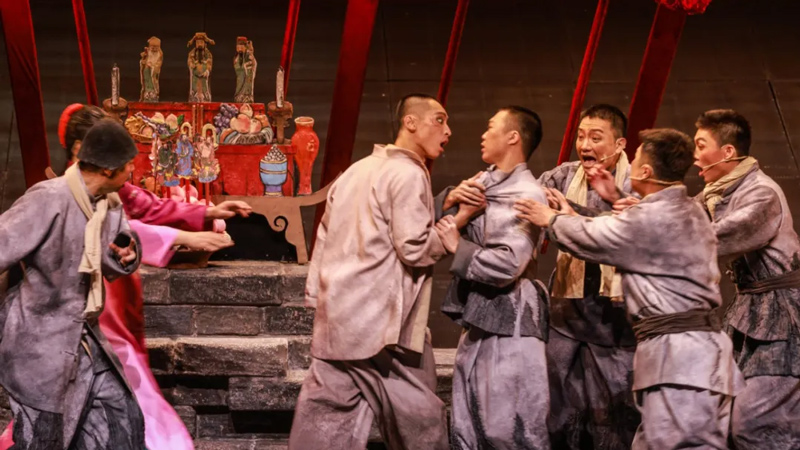
From the first jingle of a bell to the strum of a sanxian (三弦), soundscapes immerse viewers in 1920s Beiping. Traditional instruments and dialects create an auditory tapestry that transports the audience to crowded hutongs (胡同) and lively markets. Chants like "Eight-armed Nezha in the four-nine city" echo as rickshaw pullers dash across the stage, painting a vivid picture of their daily lives. These elements aren't mere background; they're integral to building the world, making the setting feel alive and authentic without relying on elaborate visuals.
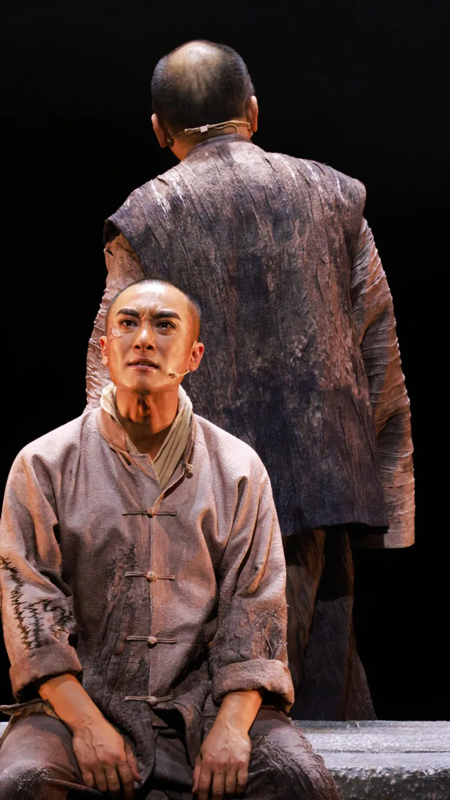
Lighting and multimedia effects enhance this immersion, simulating scorching summers and thunderous storms that mirror Xiangzi's emotional highs and lows. Projections cast shadows of ancient city walls, while subtle color shifts signal transitions between scenes like Cao's (曹) residence and the chaotic streets. Such techniques draw viewers into the narrative, allowing them to feel the chill of rain or the weight of the sun. This multi-sensory engagement turns passive watching into an active, empathetic experience, where the audience doesn't just observe but participates in the story's unfolding.
Children and adults alike find their imaginations ignited, blending music, performance, and text into a personal understanding of the tale. The simplicity of the staging encourages viewers to fill gaps with their own interpretations, fostering a deeper connection to the material. As sounds and sights converge, the play becomes a gateway to exploring broader themes of perseverance and societal pressure. It's a reminder that great storytelling doesn't need grandeur—it thrives on authenticity and emotional truth, leaving a lasting imprint on the heart.