What secrets lie within the rhythmic beats of Tibet's ancient Rebadance (热巴舞)? This dynamic performance, recognized as a national intangible cultural heritage, is far more than a series of steps. It is a living narrative, a spiritual dialogue, and a vibrant expression of identity for Tibetan communities across the Plateau.
With its powerful drumming and acrobatic movements, Rebadance connects the past to the present, telling stories of faith, nature, and human endurance. Its very name, translating to "tassel" or "fringe," hints at the intricate layers of meaning woven into every gesture and costume. This dance does not simply entertain; it invites audiences into a world where every jump and turn carries the weight of centuries.
Roots and Rhythm
The story of Rebadance begins in the mists of time, with many tracing its origins to the 11th century and the influential Buddhist master, Milarepa (米拉日巴). He and his disciples are credited with shaping the art form, blending physical discipline with spiritual intent. However, deeper echoes resonate from an even older tradition. The central instrument, the drum, was originally a ritual object in the indigenous Bon (苯教) religion, used in ceremonies to summon deities. This highlights a fascinating transformation, where the dance gradually incorporated figures and themes from Tibetan Buddhism, creating a unique synthesis that mirrors the region's own spiritual evolution.
This historical blend is palpable in the performance. The drumbeat serves as a heartbeat, connecting the earthly to the divine. Initially, its sound called communities together for rituals meant to welcome and honor gods. Over generations, the purpose expanded, but the core remained: a sacred communication. The dance became a moving tapestry, illustrating the shift from Bon animism to Buddhist philosophy without erasing its original character. It stands as a testament to how cultures absorb and reinterpret influences, creating something entirely new yet deeply rooted.
Understanding this background transforms how one sees the dance. It is not a static relic but a record of adaptation. The very movements, demanding strength and flexibility, are believed to have been developed as a form of spiritual and physical training by early practitioners. This connection between bodily exertion and inner cultivation remains a defining feature, making Rebadance a holistic practice that challenges the performer on multiple levels.
Movement and Adornment
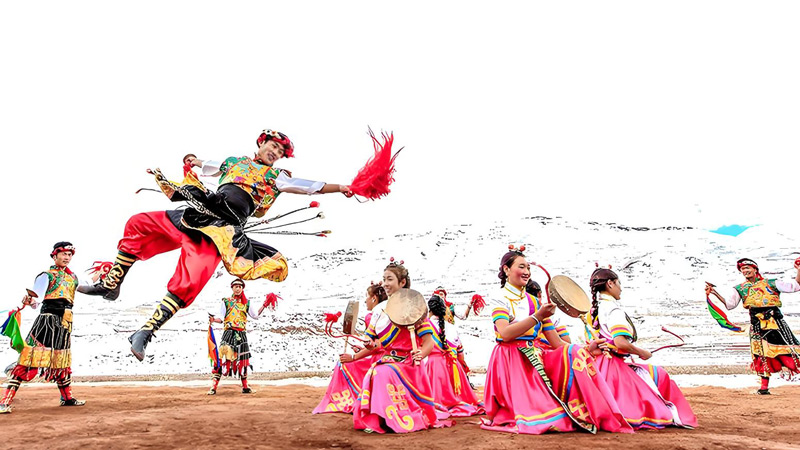
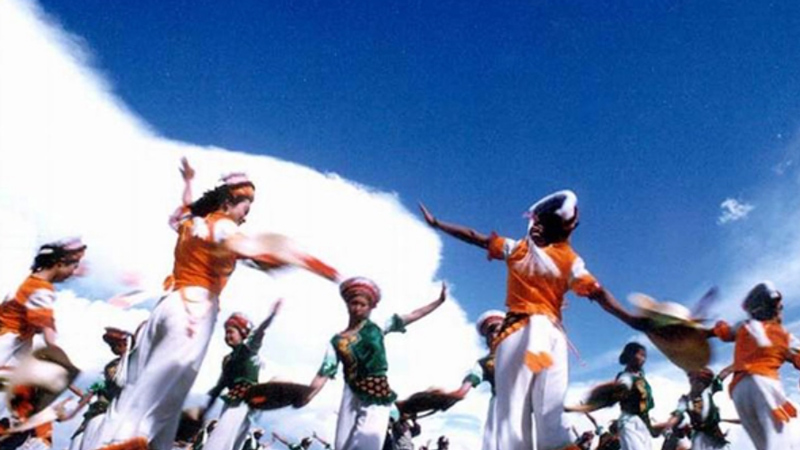
Watching Rebadance is an immersive experience defined by its striking physicality and visual spectacle. The movement vocabulary is precise and demanding. Dancers execute deep bends, sharp turns, and controlled squats, their bodies telling a story of power and grace. Male performers showcase raw strength through high leaps and vigorous sequences, while female dancers emphasize fluidity and coordination, their limbs moving in elegant, sweeping patterns. This contrast creates a dynamic visual rhythm that is both thrilling and mesmerizing to witness.
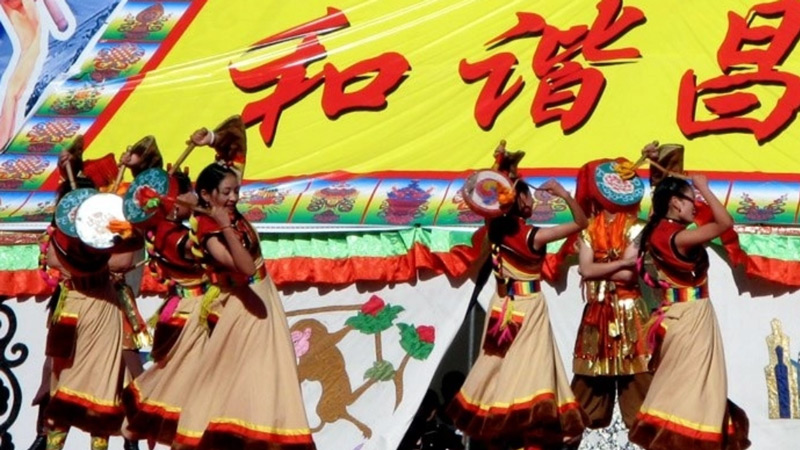
The costumes are integral to the narrative, each element rich with symbolism. Women wear long yellow vests over red shirts, colors representing nobility and spiritual purity. Their heads are adorned with a silver triangular ornament, and they wear specialized boots, Resamalang (热萨玛郎), handcrafted from leather for comfort and durability. Men often wear double-colored trousers in red-yellow or black-white, symbolizing dualities like secular and religious authority, or good and evil. A black sash is tied at the waist, and a white shirt is worn to signify the suppression of negative forces.
The props further animate the performance. The dancers hold a drum in one hand and a bell, or Drilbu (铃钹), in the other. The sound of these instruments does more than keep time; it directs the flow of the dance and signals transitions between segments. The combination of percussive sound and precise, often acrobatic, movement requires immense skill and years of training. This fusion of auditory and visual elements ensures that Rebadance engages all the senses, making each performance a unique and powerful event.
A Living Art
Beyond its historical and aesthetic dimensions, Rebadance thrives because of its profound connection to community life. Its value is not locked in a museum; it is felt in the joy and release it provides. For the performers, the dance is a channel for emotional expression. The intense physical activity can be a form of catharsis, a way to release pent-up feelings and achieve a state of mental clarity. The rhythmic exertion is said to calm the nervous system, making the dance a personal, therapeutic practice for those who perform it.
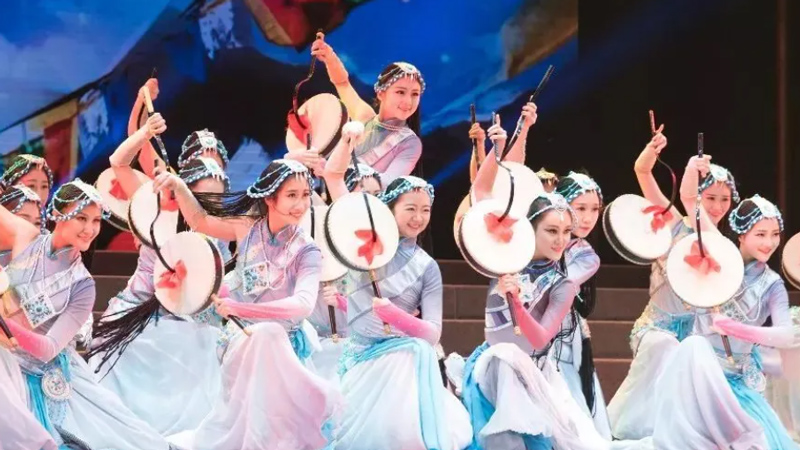
For the audience, the experience is equally engaging. The performance is often punctuated by humorous spoken-word sections and playful interactions between dancers. This breaks the tension of the more strenuous sequences and creates a lighthearted, festive atmosphere. The spectacle of dancers leaping, spinning, and moving in complex patterns—sometimes advancing, sometimes retreating—holds viewers in rapt attention. It is a shared social event that strengthens community bonds and provides collective entertainment.
The future of Rebadance depends on this continued relevance. As younger generations learn the intricate steps and stories, they infuse the tradition with new energy. It is taught not just as a sequence of movements, but as a carrier of identity and values. In villages and on modern stages, the drum of Rebadance continues to beat, a resilient echo proving that this ancient art is very much alive, adapting and inspiring with each new performance.