
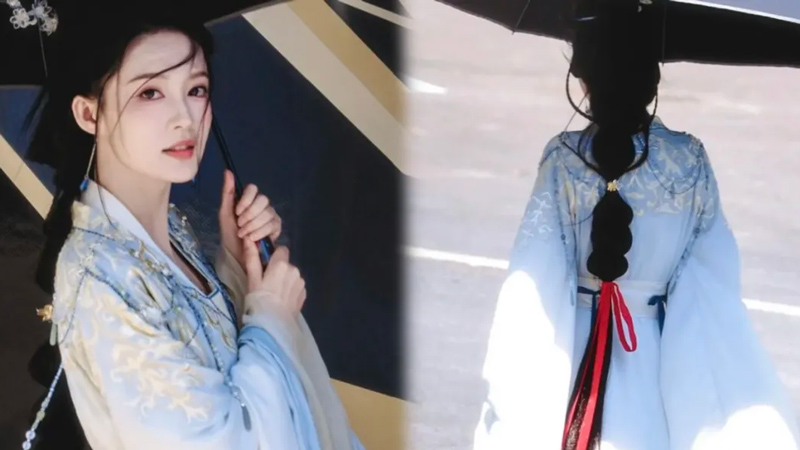
In the captivating historical drama Fated Hearts (一笑随歌), actress Li Qin (李沁) mesmerizes viewers with costumes that blend simplicity with intricate detail. One standout feature is the delicate web of chains and beads draped over her garments, which shimmer and dance with every movement, especially during elegant sword sequences. This accessory, known as Yingluo (璎珞), is far more than mere decoration; it is a nod to a rich cultural legacy that has evolved over millennia. Its presence on screen sparks curiosity about its origins and significance, inviting us to explore how ancient traditions find new life in modern storytelling.
Ancient Origins
The story of Yingluo begins in ancient China, with traces found as early as the Warring States period. Excavations at sites like the Majiayuan Cemetery (马家塬墓地) revealed net-like ornaments used as headpieces or necklaces, though they might not have been called Yingluo at the time. These pieces often symbolized status and wealth, crafted from materials that reflected the wearer's rank. Classical texts, such as the Yupian (玉篇) dictionary, define "Ying" as a jade-like stone and "Luo" as strung jewels, highlighting the accessory's luxurious roots and its role in distinguishing the elite.
As dynasties shifted, Yingluo gained prominence during the Sui and Tang eras, particularly through Buddhist influences. Statues of deities featured elaborate multi-gemstone drapings, described in texts like Xuanzang's (玄奘) Great Tang Records on the Western Regions (大唐西域记), where kings and nobles adorned themselves with floral crowns and Yingluo to embody both earthly power and spiritual devotion. This period saw a fusion of imported styles with local tastes, resulting in designs that used vibrant stones like gold, silver, and pearls to create a "multi-treasure" aesthetic that celebrated divine and human beauty alike.
Tang dynasty women, known for their bold fashion choices, embraced Yingluo as everyday wear, transforming it from sacred symbol to popular accessory. Noblewomen led the trend, wearing it as necklaces, and soon, commoners followed suit. Poets like Liu Yuxi (刘禹锡) captured this shift in verses describing merchants' daughters decked in pearl strands, while Yuan Zhen (元稹) wrote of street scenes where such ornaments were commonplace. This widespread adoption showed how cultural elements could cross social boundaries, becoming part of daily life and personal expression.

Evolving Styles
By the Yuan and Ming dynasties, Yingluo underwent a stylistic transformation, shifting from heavy jeweled nets to lighter, embroidered forms. Designers incorporated patterns like cloud collars that simulated the flow of gems with thread, making the accessory more wearable yet equally striking. These adaptations reflected practical needs while maintaining visual appeal, as seen in artifacts where intricate stitching replaced solid stones, allowing for greater mobility without sacrificing elegance.
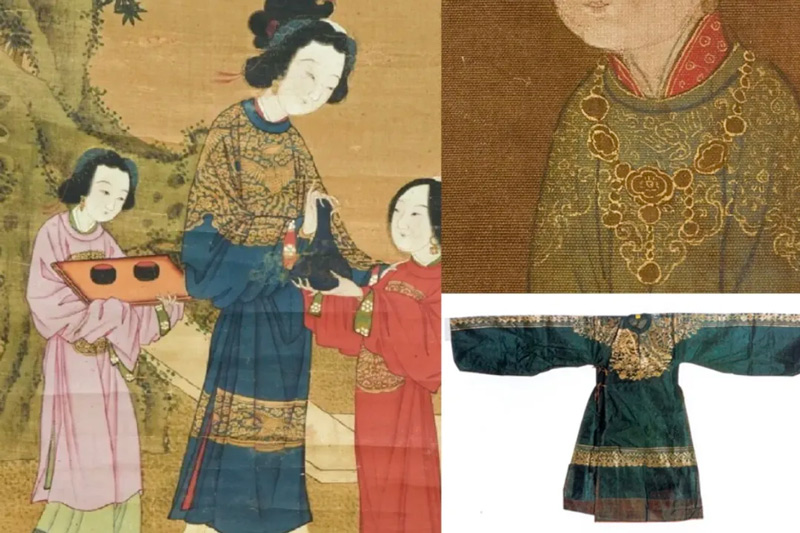
In the Ming era, collar-style Yingluo became fashionable, often featuring pendants such as longevity locks or protective charms made from gold and embedded with precious stones. Literary works like The Dream of Red Mansions (红楼梦) illustrate this trend, with characters like Jia Baoyu (贾宝玉) sporting collars with golden locks and figures such as Xue Baochai (薛宝钗) adorning themselves with similar pieces. These details underscore how the accessory permeated all levels of society, serving as both personal adornment and a marker of identity during a time of cultural refinement.
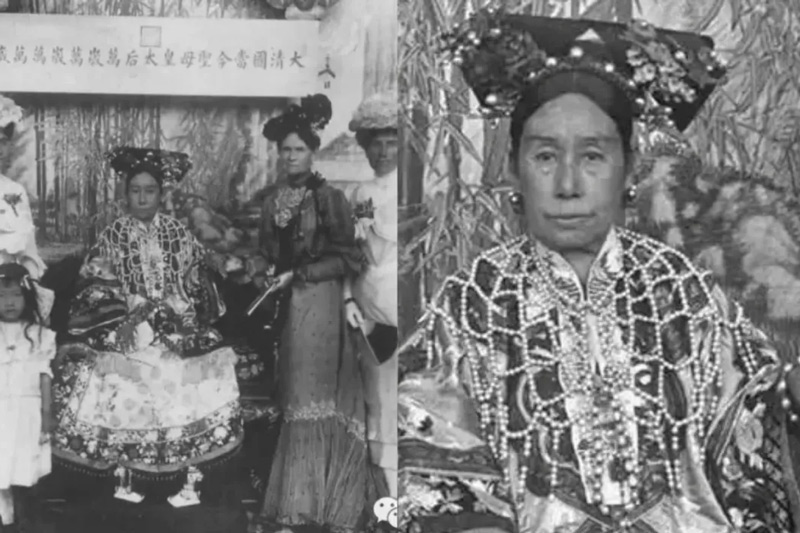
The Qing dynasty further innovated with Yingluo, as evidenced by items like Empress Dowager Cixi's (慈禧) pearl-studded cloud shoulder, which reimagined the classic form with opulent materials. This evolution demonstrated a continuous reinvention, where traditional elements were adapted to suit changing tastes and technologies. Through these iterations, Yingluo retained its core essence as a symbol of grace and status, while its forms diversified to meet the demands of each era.
Modern Resonance
Today, Yingluo experiences a vibrant revival in historical films and series, where costume designers draw inspiration from ancient artifacts to create visually stunning pieces. In productions like Fated Hearts, these accessories add depth to characters, connecting viewers to bygone eras through their tactile beauty and movement. By integrating historical accuracy with creative flair, modern interpretations allow Yingluo to transcend its origins, becoming a dynamic part of contemporary visual culture that resonates with global audiences.
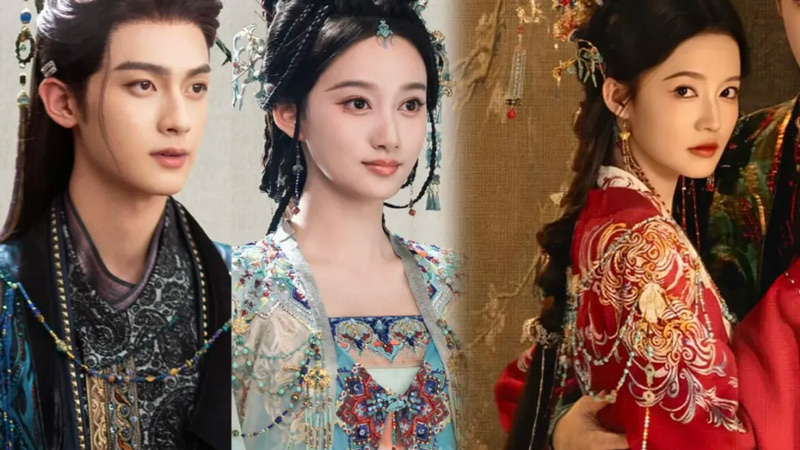
This renewed interest highlights how traditional crafts can inspire modern artistry, fostering a dialogue between past and present. As viewers admire the cascading chains on screen, they engage with a legacy that spans centuries, appreciating how age-old designs can feel fresh and relevant. The ongoing use of Yingluo in media not only preserves cultural memory but also encourages exploration into other forgotten arts, showing how heritage can be a wellspring for innovation.
Ultimately, the enduring appeal of Yingluo lies in its ability to adapt—whether on ancient statues, Tang dynasty nobles, or today's screens. It reminds us that beauty is timeless, and that by reimagining the past, we keep its stories alive. As audiences continue to discover these elegant accessories, they participate in a cultural conversation that bridges generations, proving that some traditions only grow richer with time.