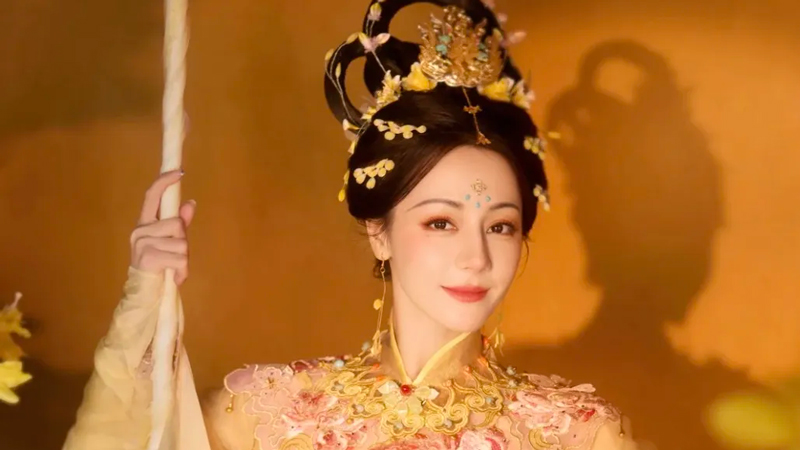
When Dilraba appeared at the Mid-Autumn Gala, her ensemble instantly captivated audiences, sparking conversations far beyond typical celebrity fashion chatter. Unlike conventional ancient-style attire, her look drew from the classic motif of the Heavenly Maiden Scattering Flowers, evoking childhood fantasies of ethereal beings gracing the earthly realm. While fellow actress Gulnazar showcased her own elegant traditional design, Dilraba's interpretation stood out for its layered cultural resonance. This was not merely a costume; it was a visual narrative weaving together history, art, and collective memory, reminding viewers that some aesthetic ideals transcend time.
Styling Secrets
Dilraba's outfit featured specific elements that immediately signaled its mythical inspiration. Her hair was arranged in a Huanji (鬟髻), a classic coiled bun that has symbolized feminine grace and divinity in Chinese art for centuries. This hairstyle frequently appears in renowned works like Nymph of the Luo River (洛神赋图) by Gu Kaizhi (顾恺之) and Eighty-Seven Celestials (八十七神仙卷) by Wu Daozi (吴道子), establishing it as a quintessential feature of celestial figures. The style's circular form projects harmony and elegance, making it a perennial choice for representing otherworldly beauty in both historical and modern contexts.
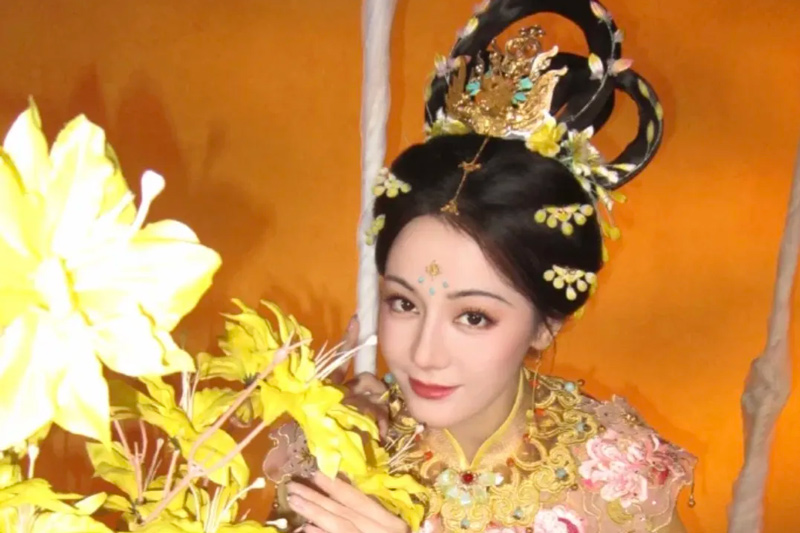
Another defining component was the Yuanjian (云肩), a decorative cape draped over the shoulders. Traditionally crafted from luxurious silks and brocades, it is often embroidered with cloud patterns, its colors mimicking a radiant rainbow. This item transcends mere decoration; it functions as a ceremonial emblem, instantly elevating the wearer's presence to something divine and authoritative. In this context, the Yuanjian helped transform Dilraba into a figure of benevolent power, much like a floral deity presiding over nature's bounty.
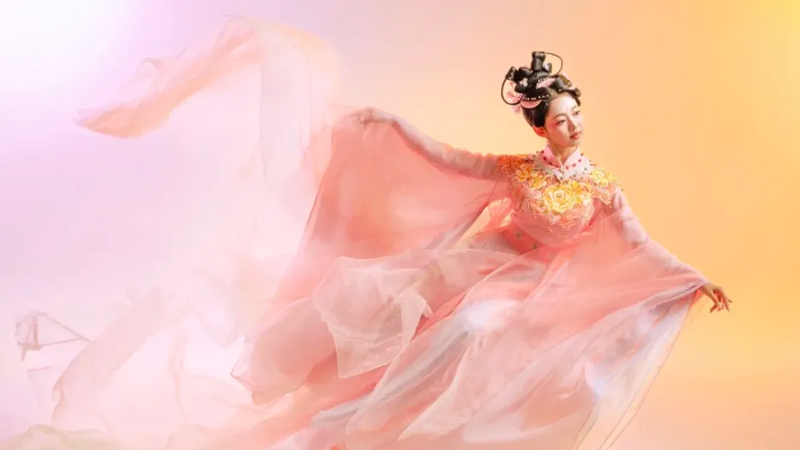
The overall design, while incorporating contemporary fashion elements, stayed true to the iconography found in classical paintings. It avoided strict historical replication but captured the essence of the heavenly maiden archetype. The flowing fabrics and delicate accessories worked in concert to create a sense of movement and grace, as if she were poised to scatter blossoms at any moment. This careful balance between authenticity and modern appeal is what made the costume so visually striking and memorable for a global audience.
Mythological Roots
The concept of the Heavenly Maiden Scattering Flowers originates from Buddhist scripture, specifically the Vimalakirti Sutra (维摩经). In one episode, a celestial maiden showers flowers upon bodhisattvas and disciples to test their spiritual attainment. Those still bound by earthly attachments found the petals adhering to their robes, while the flowers slid off the truly enlightened. This narrative framed the act not as mere decoration, but as a profound metaphor for detachment and purity, embedding the imagery with deep philosophical meaning from its inception.
Some scholars suggest the motif may also blend with earlier indigenous beliefs, such as those surrounding Nüyi (女夷), a goddess referenced in the ancient text Huainanzi (淮南子). Described as overseeing harmony and nurturing all living things—grains, plants, and animals—Nüyi embodies the life-giving force of nature. The heavenly maiden's gesture of scattering flowers aligns closely with this idea of bestowing growth and beauty upon the world. This fusion of Buddhist and native traditions enriched the symbol, making it a multifaceted representation of divine benevolence.
Over time, the story evolved beyond religious doctrine to become a broader cultural allegory for spreading joy and prosperity. The maiden's flowers came to symbolize wishes for goodwill and abundance, resonating with universal human aspirations. This adaptability allowed the theme to persist through dynasties, continually finding new expressions in folk art and literature while retaining its core message of hope and renewal.
Artistic Journey
Following the Tang dynasty, as Buddhist art flourished, the Heavenly Maiden Scattering Flowers became a favored subject in temple murals and scroll paintings. Artists depicted her floating on clouds, sleeves billowing as she released a shower of petals onto the mortal realm. These representations were not only aesthetically pleasing but also served as communal expressions of longing for peace and auspicious signs. The imagery provided a visual language for conveying shared dreams of a harmonious society under divine favor.
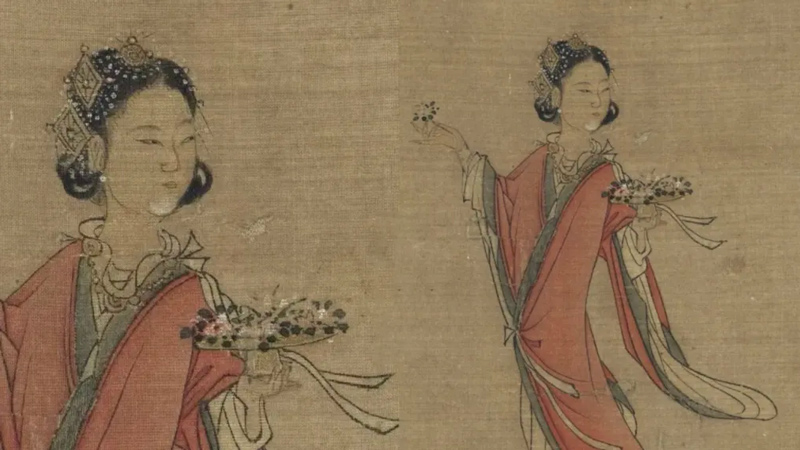
During the Song dynasty, painters like Liu Songnian (刘松年) refined the depiction further in works such as Heavenly Maiden Scattering Flowers (天女散花图). His detailed renderings showed the maiden with a low Huanji, adorned with dragon-shaped hairpins and jade pendants, wearing a crossed-collar gown, and holding a vessel from which she scattered blossoms. This meticulous attention to costume and gesture helped standardize the visual identity of the celestial figure, reinforcing her role as a bridge between heaven and earth, responsible for the genesis of flora below.
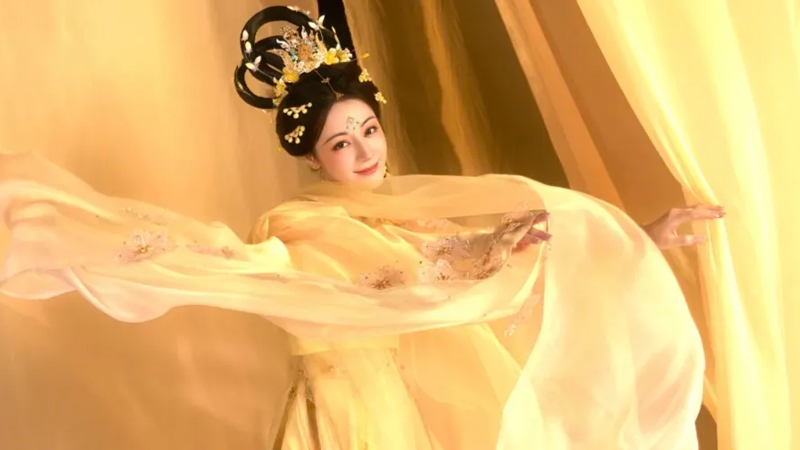
In contemporary times, this ancient motif continues to inspire fashion designers and stylists seeking to infuse modern looks with cultural depth. Dilraba's ensemble is a prime example of how traditional symbols can be reimagined for new audiences without losing their essence. The enduring appeal lies in the theme's positive connotations—it speaks to an innate desire for beauty and generosity that crosses temporal and geographical boundaries, ensuring its place in the visual lexicon for generations to come.