Long before plastic and batteries, the children of ancient China found their joy in toys born from nature and human ingenuity. These playthings, crafted from bamboo, wood, paper, and clay, were not merely for distraction; they were instruments of imagination, physical activity, and social connection. They filled courtyards and village squares with laughter and competition, creating a vibrant soundscape of childhood that has, in many ways, echoed through the centuries. From the skies above to the dust beneath their feet, every element of the world could be transformed into a source of wonder. The legacy of these ancient amusements offers a fascinating window into the daily lives and creative spirits of young people from a bygone era, showing us that the fundamental desire for play is truly timeless.
Flying Kites
Soaring high above the earth on the breath of the wind, the kite was a marvel of ancient engineering and artistry. Known poetically as Yuan, its origins trace back to wooden birds crafted by master artisans like Lu Ban (鲁班). With the advancement of papermaking during the Han Dynasty, these prototypes evolved into the more accessible paper kite, or Zhiyuan (纸鸢). By the time of the Song Dynasty, flying kites had blossomed into a beloved outdoor ritual, particularly during the Qingming Festival. The air would be filled with colorful creations shaped like butterflies, swallows, and even dragons, each one a testament to the craftsman's skill and the flyer's patience.
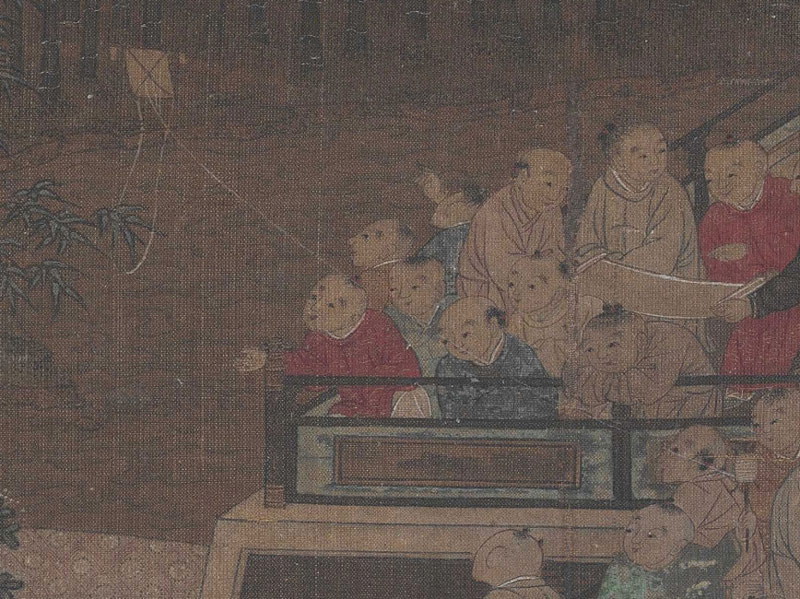
The cultural footprint of kite-flying is deeply etched into Chinese history. Venerated scroll paintings like Along the River During the Qingming Festival (清明上河图) and One Hundred Children at Play (百子图) capture vivid scenes of youngsters engrossed in this aerial ballet. The activity was more than a simple game; it was a way to connect with the seasons and the sky. Today, the tradition remains wonderfully alive. On any clear, breezy day, you can still see children, their heads tilted back and hands gripping a string, experiencing the same simple thrill of guiding a dancing silhouette against the vast canvas of the sky, a direct link to their ancestors' play.
Zhuma (竹马)
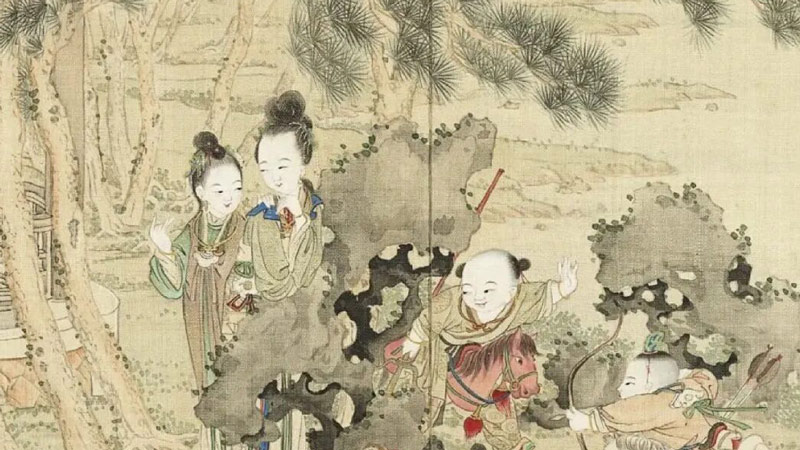
With nothing more than a simple bamboo stalk, a child could gallop across vast imaginary plains. The Zhuma, or bamboo horse, was the ultimate symbol of childhood imagination. Children would straddle the bamboo pole and run, pretending to be noble riders on powerful steeds. This play was often enhanced with creative decorations—a tied cloth for a mane, or painted eyes to give the stick a personality. It was a game that required no cost, only creativity, and it fostered social play among groups of friends.
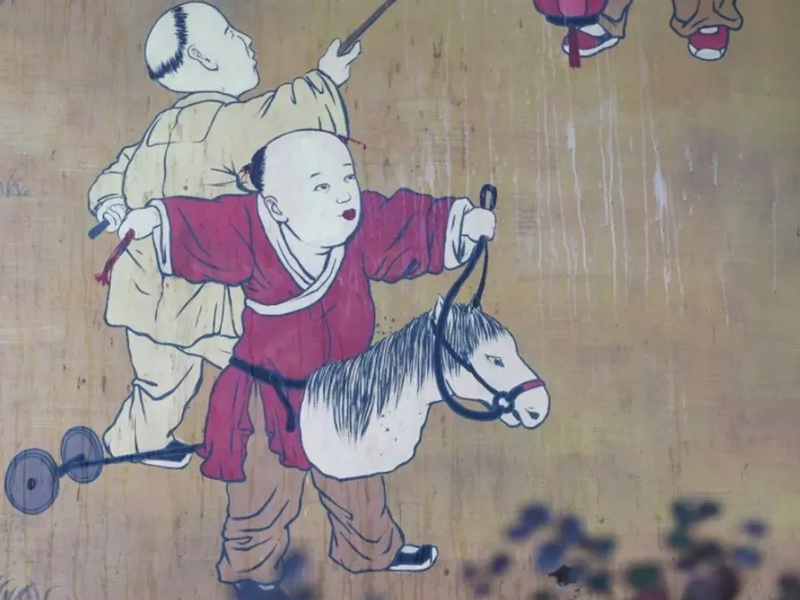
The charm of the bamboo horse is deeply woven into the language and literature of China. Its earliest documented appearance is in the historical records of the Eastern Han Dynasty. Later, in the Tang Dynasty, it became a powerful poetic metaphor for innocent youth. The great poet Li Bai (李白) immortalized it in his poem Changgan Xing (长干行), writing of a boy and girl playing together, "riding bamboo horses, tossing green plums." This phrase, "Qingmei Zhuma" (青梅竹马), has endured for centuries as an expression of pure, childhood friendship untouched by suspicion or complication.
Spinning Tops
The hypnotic whirl of a spinning top, known elegantly as Qianqian (千千), has captivated children for millennia. Its origins are ancient, possibly descending from clay spheres spun for amusement. By the Han Dynasty, wooden tops with pointed ends, called Zhuangyu (妆域), were popular, often spun by palace inhabitants. The craft reached its peak in the Song Dynasty, where artisans used hardwoods and embedded iron beads for stability, creating tops that could spin for impressively long durations.
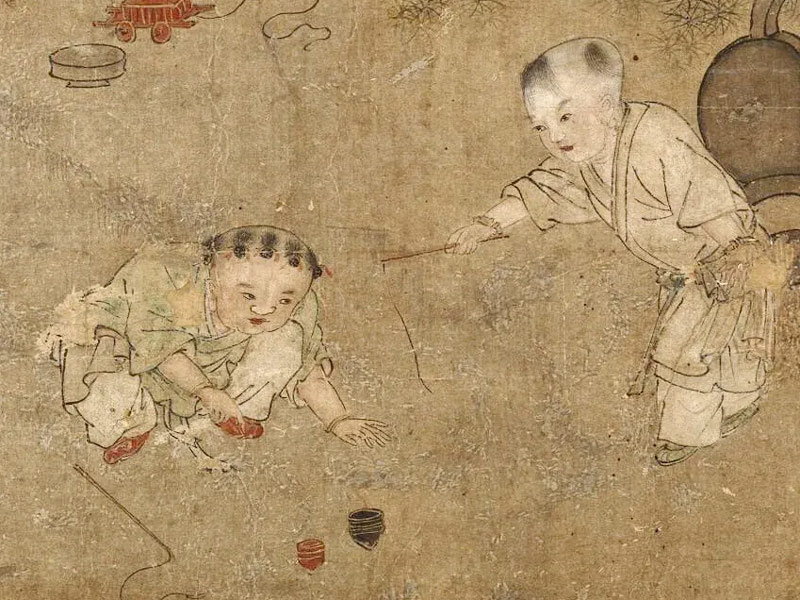
These tops were not just simple toys; they were objects of competition and artistry. Historical texts note that children would gather in open spaces to whip their tops, competing to see whose could spin the longest. The designs became increasingly sophisticated during the Ming and Qing dynasties. Some were hollowed and carved to create "humming tops" that buzzed as they spun, while others were painted with intricate patterns that transformed into a blur of color.
Dangong (弹弓)
Before the bow and arrow, there was the Dangong, a simple yet effective launcher that began as a tool for hunting. Early versions were fashioned from a bamboo frame and animal sinew. Over time, it was miniaturized and adapted into a child's toy, used to shoot small stones at targets like fruits in friendly competitions. As it transitioned into a plaything, its construction was refined, with wealthier families using materials like ox tendon and decorated leather.
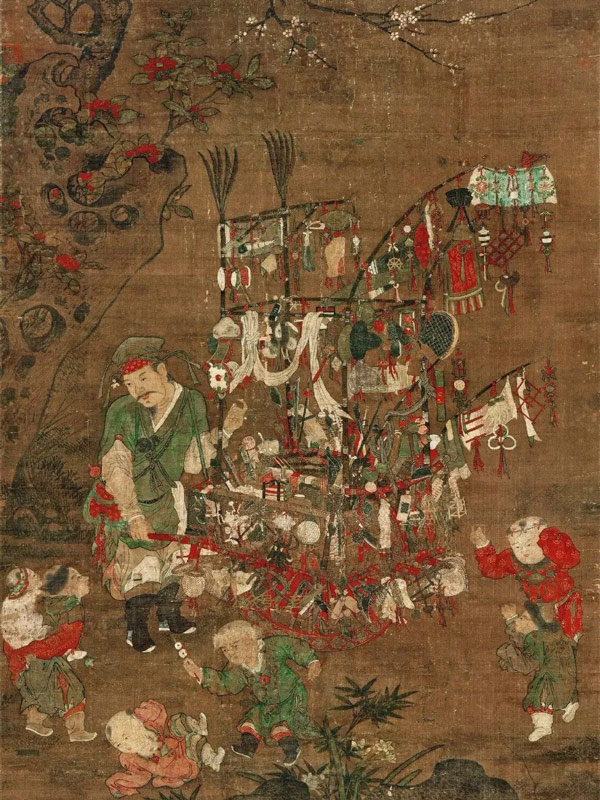
The Dangong's popularity in ancient society is well-documented. Tang Dynasty poet Bai Juyi (白居易) mentioned a "child holding a Dangong, chasing sparrows into the woods." By the Song Dynasty, it was a common sight in the bustling streets of Bianjing (汴京), where children would use it in various games. The Ming and Qing Dynasty saw even more elaborate designs, with frames made from precious materials like purple bamboo and antelope horn, often adorned with intricate carvings. While its modern counterpart may be made of different materials, the essential joy of aiming and launching remains, a small-scale echo of an ancient and universal impulse.