
I. Introduction to the Benefits of Cultural Learning
The learning of culture is an enriching activity that surpasses language acquisition. It opens one's eyes to the traditions, customs, and artistic expressions that shape a society. When individuals embark on learning a foreign language, they are not merely memorizing vocabulary and grammar rules; they are tapping into a rich heritage of cultural richness.
This exchange generates empathy, broadens world perspectives, and enhances communication skills, enabling students to connect with others on a personal level.
A. Importance of Language Acquisition in Cultural Context
Language reflects culture, adopting the values, beliefs, and history of a people. Through Korean learning, for example, students gain familiarity with the complexities of Korean society, including its etiquette, social norms, and historical context. Studying the language in its cultural context allows students to understand the subtleties of communication, such as honorifics for conveying respect and idiomatic expressions for revealing cultural attitudes. Not only does such a cultural approach enrich the process of learning the language, but it also fosters an attitude of global citizenship.
B. Korean Language Overview
Korean, the official language of both North and South Korea, stands out with its distinct phonetic and grammatical structures. Its alphabet, Hangul, is celebrated as a scientific invention and remains highly accessible for students. Learning Korean can progress from simple conversations to advanced mastery, offering countless opportunities for personal and professional growth. Today, many learners choose a Korean learning app to guide them step by step through this journey. As they deepen their knowledge, they also gain access to the vibrant world of K-pop, cinema, and traditional arts, enriching both language skills and cultural understanding.
C. Introduction to Chinese Calligraphy and Hanfu
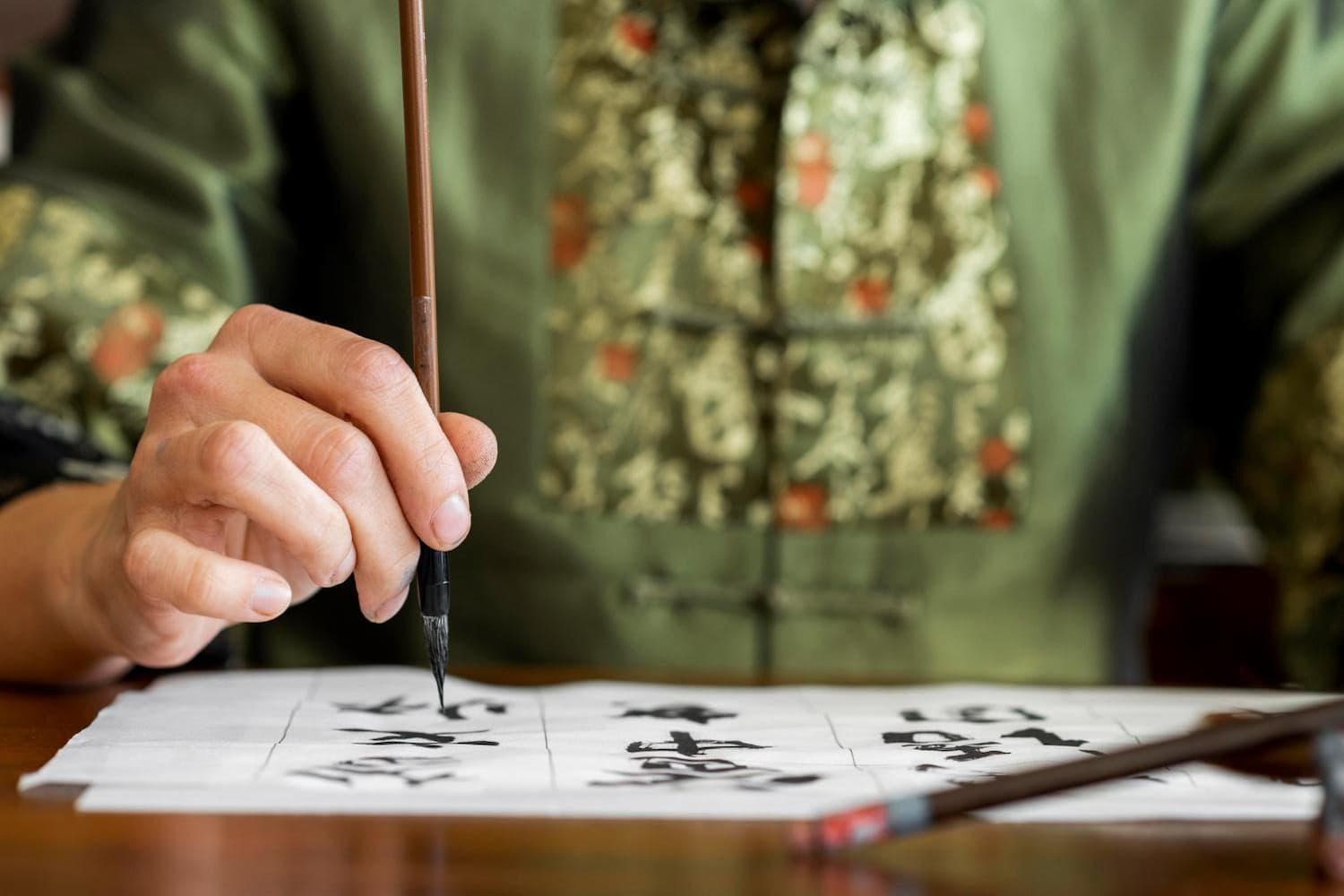
Chinese calligraphy is a traditional art form that embodies the beauty of Chinese characters and philosophy. Each stroke has a tale to tell, conveying the feeling and purpose of the writer. This multifaceted task not only enhances fine motor control but also increases the appreciation of the written word as art.
Similarly, Hanfu, which is the Han Chinese traditional attire, carries a rich cultural legacy dating thousands of years. Wearing Hanfu allows one to extend a hand towards the past and directly experience the beauty of Chinese traditional culture.
II. Korean Language Learning Strategies
A. Immersive Learning Methods
Immersion is one of the most effective methods of learning a new language, and the same holds true for Korean as well. By subjecting oneself to the language in a practical environment, one can speed up the comprehension and speaking process. This can be achieved in various ways, such as through language exchange programs, where one gets to interact with native speakers.
Listening to Korean media—such as television dramas, music, and movies—is a great immersion technique that allows learners to develop a natural ear for the language and, meanwhile, enjoy Korea's diverse culture.
B. Utilizing Multimedial Resources
In this day and age of the digital age, there is no lack of multimedia resources for Korean language learners. Websites, mobile applications, and interactive websites offer diverse and interactive methods of learning. For instance, Promova and Memrise are applications that offer gamified lessons that make vocabulary learning enjoyable.
Audiobooks and Korean podcasts can also be excellent resources for building listening skills and comprehension, as they expose the learner to different dialects and speech patterns.
C. Practice through Conversation and Contextual Learning
The regular practice of conversation is one of the most effective ways of reinforcing language learning. Engaging in dialogues with native speakers, either by attending arranged language exchange sessions or online chatting, allows learners to apply their knowledge in practical situations. The practice not only builds fluency but also confidence in speaking.
By learning through conversation and context, students can get a fuller impression of the Korean language, which they can more easily recall and use in various contexts.
III. Exploring Chinese Calligraphy
Chinese calligraphy, being a highly venerated art that transcends the boundaries of mere writing, offers a profound intersection between language, visual art, and culture. This chapter examines the history and significance of calligraphy, speaks of the methods and materials involved in this ancient practice, and examines how the intersection of calligraphy and Korean language study can offer an enhanced learning process.
A. History and Value of Calligraphy
Chinese calligraphy boasts a history of thousands of years, tracing its roots to the ancient Chinese writing scripts. What was once devised for the purpose of communication has evolved into one of the most highly regarded arts, appreciated for its beauty and expressiveness. Each stroke of the brush in calligraphy is not just a representation of a character but embodies the sentiments, philosophies, and cultural identity of the practitioner.
Calligraphy has, throughout Chinese history, been associated with scholars and literati as a symbol of their status and scholarship. Well-known calligraphers, such as Wang Xizhi and Yan Zhenqing, have left an indelible mark, and their styles continue to be imitated by practitioners today. Calligraphy is also regarded as a way to cultivate one's character and discipline, and thus it is an essential part of Chinese culture and education.
B. Techniques and Tools Used in Calligraphy
Chinese calligraphy can be mastered only if one has not just a knowledge of the characters but also a command over the various techniques and tools involved.
The fundamental tools, referred to as the "Four Treasures of the Study," are the brush, ink, paper, and inkstone. Each of these tools has a crucial role to play in the creation of calligraphic works.
- Brush: The brush is what provides the fluidity and variation in stroke thickness that characterize calligraphy. Different brushes can produce different effects, depending on their size, shape, and flexibility.
- Ink: The ink is traditionally prepared by grinding solid ink sticks on an inkstone with some water. The quality of the ink can greatly affect the final product, the richness and depth it will have.
- Paper: Chinese calligraphers often use rice paper or other specialty papers that have good absorbency and do not bleed to produce clean and clear strokes.
- Technique: Calligraphic techniques include the learning of basic strokes, knowledge of character structure, and practice in various styles, such as regular script (kai), running script (xing), and cursive script (cao). Each style has its own difficulties and needs special practice to master.
C. Using Calligraphy in Korean Language Learning
The inclusion of Chinese calligraphy in Korean language lessons can provide a multi-dimensional education that enhances not just linguistic but also cultural understanding. As students learn to write Korean letters, they can learn Chinese calligraphy as well, and appreciate the beauty of the art form and its position in history.
Workshops combining the instruction of Korean language and calligraphy may also include sessions on the cultural histories of the two languages, highlighting shared histories and influences. An integrated approach such as this not only enhances language acquisition but also an appreciation for the accompanying art forms of language, making the learning experience more enjoyable and memorable.
IV. Appreciating Hanfu and Its Cultural Significance
A. Hanfu History and How It Evolved
Hanfu, the traditional dress of the Han Chinese, boasts a rich history that extends for over three thousand years. Having begun in the Han Dynasty (206 BCE–220 CE), Hanfu was famous for its flowing curves, intricate patterns, and vibrant colors. The dress was not only a means of fashion but a reflection of the social status, cultural identity, and philosophical beliefs of the time. Hanfu developed over centuries, undergoing changes wrought by dynastic change, cultural exchange, and evolving societal values.
The Ming and Qing Dynasties were particularly characterized by stylistic advances through new fabrics and embellishments, further diversifying the Hanfu range. Today, there is a renewed interest in Hanfu, particularly among young people, who wish to re-engage with their past and express their cultural identity through traditional dress.
B. The Meaning of Hanfu in Chinese Culture
Hanfu is significant in Chinese culture as a symbol of national pride and continuity with the past. It embodies the beauty of ancient Chinese civilization that emphasizes harmony, modesty, and respect for heritage. The garment is routinely associated with some cultural activities, such as tea ceremonies, traditional festivals, and artistic activities like calligraphy and dancing.
Wearing Hanfu is not just wearing a piece of clothing but a cultural expression that makes one belong and feel attached to his or her origin. Hanfu has also gained popularity outside China in recent years, fostering global interest in traditional Chinese culture, which is part of the growing global awareness of appreciation for cultural exchange and understanding.
V. Conclusion: The Synergy of Language, Art, and Culture
As we reach the conclusion of our sojourn in the intersecting realms of Korean language courses, Chinese calligraphy, and Hanfu classes, it is evident that the synergy of language, art, and culture is not merely beneficial but transformative. These elements, when learned, allow students to better appreciate the nuances of communication as they marvel at the rich heritage of East Asian cultures.
In embracing the intersection of language, art, and culture, we open the door to a more meaningful, engaging educational experience that respects the intricacies of human expression. As we move forward, it is apparent that the intersection of these fields will remain a source of inspiration and grow a generation of learners who are not just linguistically competent but also culturally aware.
