A new Chinese animated series is captivating audiences with a plot so audacious it defies conventional storytelling. Eclipse of Illusion (云深不知梦) presents a tale where a radiant genius is betrayed on her wedding night by the groom, only to discover, decades later, that her assassin is her own direct descendant. This is not a simple story of revenge; it is a convoluted saga of identity, predestined tragedy, and the heavy chains of familial legacy that transcend time itself. The series weaves a dark fantasy across the Muling Continent (沐灵大陆), challenging its characters and viewers with profound moral quandaries.
A Wedding Night Turned Bloody
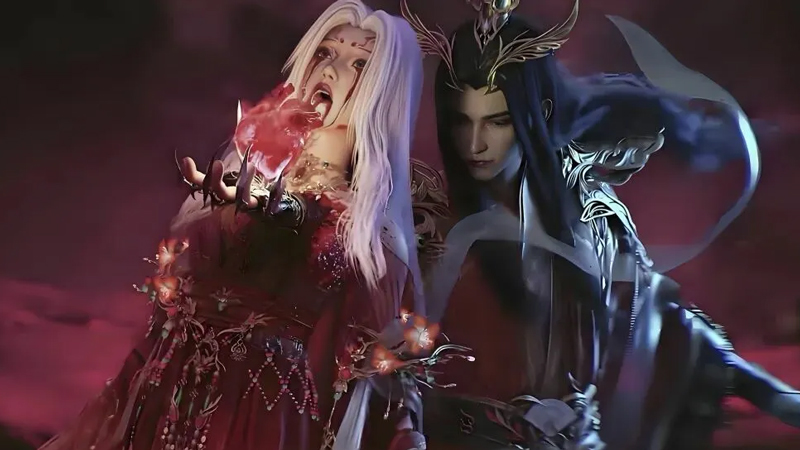
Yun Wangshu (云望舒), once the most brilliant talent of the Huihua Clan, faced utter betrayal as she donned her wedding attire. The man she loved, Fengyi Wenxue (封仪问雪), did not come to cherish her but to kill her. In a brutal act, he reached into her chest and crushed her heart, believing it would end her life and fulfill a dark pact. The red of her wedding dress deepened with her blood, marking not a beginning but a shocking, violent end to her life as she knew it.
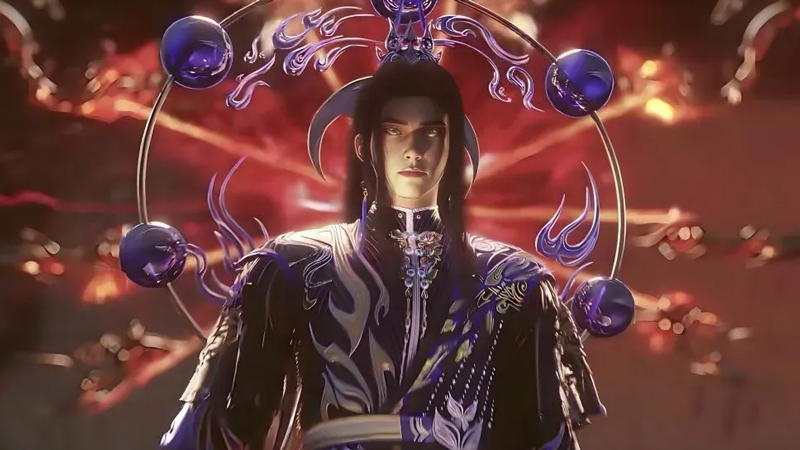
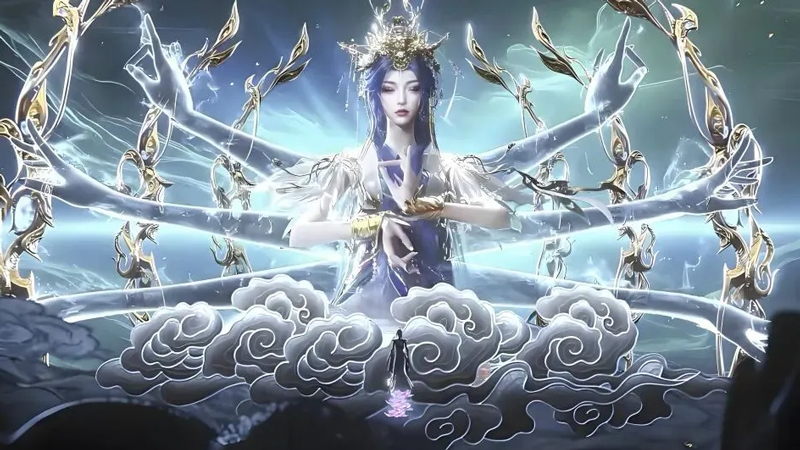
Yet, Yun Wangshu did not die. Her identity was far from ordinary. Unbeknownst to her attacker, she was the reincarnation of the Zhuzhao Goddess (烛照神女), the ancient matriarch of Fengyi Wenxue's own lineage. The man who destroyed her heart was, in a cruel twist of fate, her own distant grandson. This revelation forms the core of the story's shocking premise: a descendant, driven by desperation, unknowingly murders his ancestral progenitor on what was meant to be their union.
Fengyi Wenxue's motives were born from a different kind of betrayal. His family, descendants of the goddess, faced an impossible crisis. The demonic Qiongming Clan (穷冥魔族), sealed away centuries ago by the Zhuzhao Goddess, was on the verge of breaking free. With the family's power waning, its elders made a horrific choice: to sacrifice Fengyi Wenxue, their sole heir, to reinforce the failing seal. Feeling utterly abandoned, he struck a deal with the demon lord, Luohou (罗喉), trading his loyalty for a new body and the power to survive.
Legacy and Lies
His part of the bargain was to destroy Yun Wangshu, the Huihua Clan's rising star. Using a body acquired through a possession technique, he seduced her, earned her trust, and executed his mission on their wedding night. This act was not just personal violence; it was a violation of natural order, a severing of the sacred bond between past and present. For sixty years, Yun Wangshu wandered, her heart miraculously reformed through arduous cultivation, fueled solely by a desire for vengeance.
When she finally confronted Fengyi Wenxue, he had fully embraced the corrupting power granted by Luohou. Consumed by resentment toward a world that discarded him, he sought to drag the entire continent into darkness. "Since this world has no place for me," he declared, "I will destroy this world." He had become the very calamity his family had sought to prevent, a monster created by their own ruthless pragmatism.
Their final battle was a clash of twisted legacies. Yun Wangshu, having fully awakened her goddess lineage, wielded power that completely overwhelmed him. The descendant was decisively defeated by the ancestor. In his final moments, Fengyi Wenxue—a man starved of love and recognition—felt true fear. His path, built on familial betrayal and existential rage, led only to death. With his fall, Yun Wangshu's revenge concluded, but a larger mystery remained.
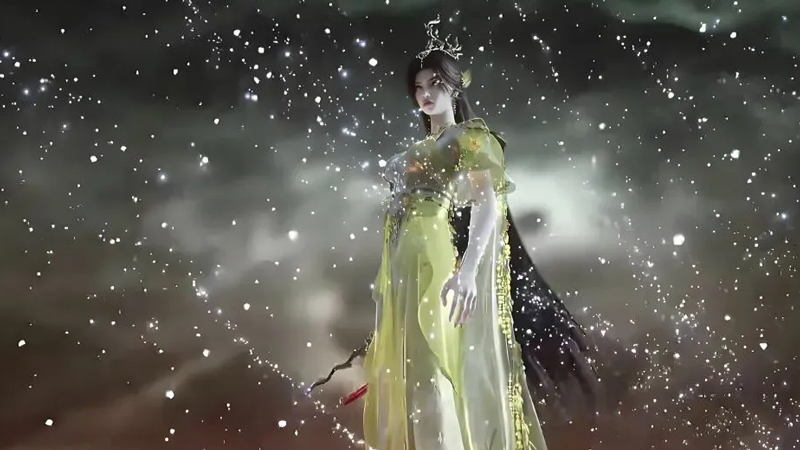
The story now turns to its final, most enigmatic figure: Yan Qingfei. Fiercely talented and ruthlessly ambitious, her origins are shrouded in secrecy. Fans speculate wildly: could she be a hybrid, a child born from a union between the demon lord Luohou and a human? Her mixed heritage and terrifying prowess point to an origin as unconventional as the series' plot. She represents the unresolved thread in this millennium-spanning conflict.
Eclipse of Illusion resonates because it frames its fantastical drama around piercing human questions. What does one owe to family, and what does one owe to oneself? When love is poisoned by betrayal, is retribution justice or a perpetuation of pain? And what are the consequences when the lines between ancestor and descendant, creator and destroyer, are irrevocably blurred? The series offers no easy answers, ensuring that its emotional and philosophical impact lingers long after the final scene.