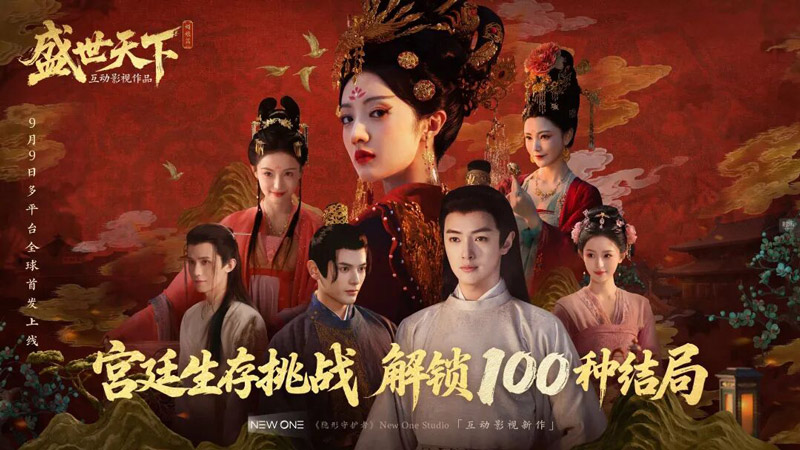
Created by New One Studio, the team behind The Invisible Guardian (隐形守护者), the new live-action interactive project Road to Empress (盛世天下) has officially launched worldwide on multiple platforms in September 9. The first installment, "Meiniang's Chapter," focuses on palace survival in an imperial setting.
Since the first teaser dropped on June 26, the project has been on the radar of many players. At the time of writing, it sits at 8.7 on TapTap and 8.6 on Hao You Kuai Bao (a Chinese mobile gaming community and rating site). The bundle combining The Invisible Guardian and Road to Empress even peaked at No. 8 on China's top-selling chart.
At a recent media event, editors from Chuapp (a Chinese games media outlet) got to try out several chapters ahead of release. Later, producer Demi shared details about the vision, process, and production scale. The story spans two parts: "Meiniang's Chapter" and "The Empress Chapter," with a combined runtime of over 20 hours of live-action footage. The team clearly aims to deliver a large-scale narrative that pulls players into the dangerous dance of imperial politics and survival choices.
But the real question is: how exactly does Road to Empress keep players immersed?
Entering the Stage: A Lavish Imperial Canvas
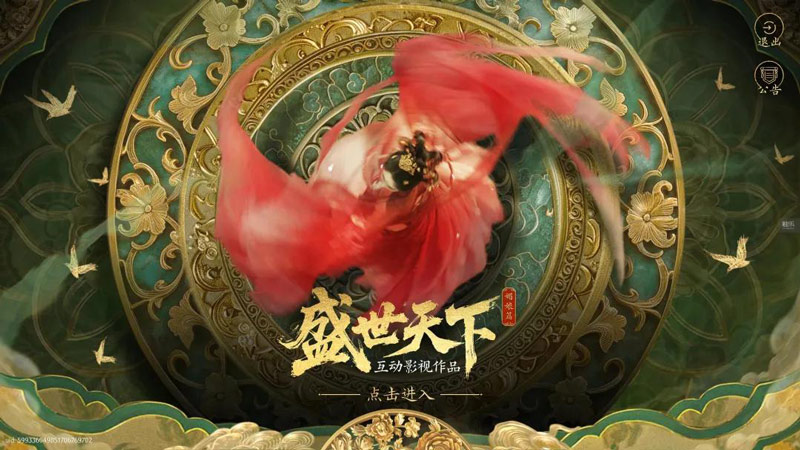
The first impression is dazzling. The opening screen shows the heroine dancing, her crimson dress unfurling like a mandala, framed by a stage of jade textures and golden patterns. It feels like stepping into a richly painted scroll of imperial glory. With a character inspired by Wu Yuanzhao, it's easy to assume this will be a feel-good "rise to power" story.
That assumption doesn't last long. Once the palace gates open and the main story begins, Wu Yuanzhao enters alongside other court ladies. Then Consort Wei appears, and almost immediately the first life-or-death choice unfolds—what the script calls "the peony hairpin trap."
This trap delivers three sharp surprises. First, the ornate hairpin given by the heroine's childhood friend isn't a token of kindness but the very evidence Consort Wei uses to accuse her. Second, all three options offered to players at this point are dangerous—choosing "wrong" obviously leads to punishment, but even the "right" choice spares Wu Yuanzhao only at the cost of others being tortured. And third, Jiang Cairen, the striking court lady who stands out in the opening, becomes the first casualty.
Moments like this immediately establish the palace as a place where survival is anything but guaranteed. They also shatter expectations of a glossy palace fantasy. Producer Demi compared the design to Game of Thrones, pointing out that being framed as a "main character" doesn't guarantee survival. In Road to Empress, death can strike at any moment, and that constant threat forces players into a state of pressure and tension from the very beginning.
Facing Cruel Trials with Cold Logic
As the story moves forward, chapters like "Finding a Roommate," "Night Banquet Before the Emperor," and "Deposing the Crown Prince" throw the heroine into a relentless string of deadly traps. The pace is so tight that I didn't feel a real pause until the end of Chapter 4. The game keeps stressing one thing: "a character's fate is dictated by almost cold, objective logic." By the time players accept this, it's already become the foundation of how they approach every choice.
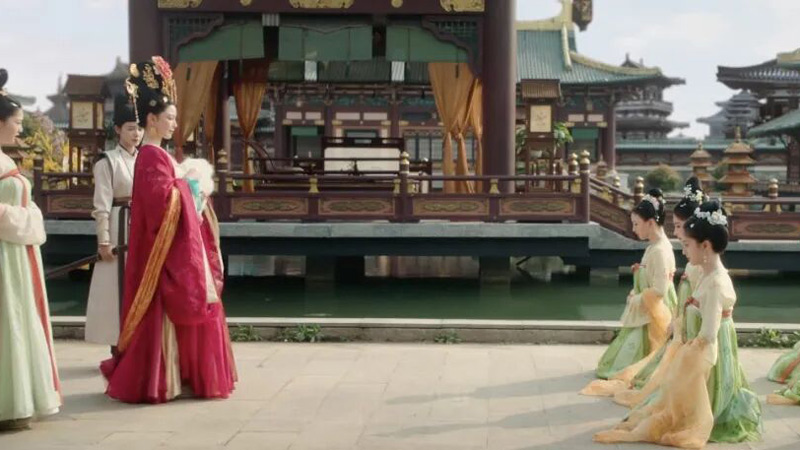
This naturally creates a deeper question. When players step into Wu Yuanzhao's shoes and risk her life with each decision, they start to wonder: "What kind of person should I be in this story?" If Road to Empress were a traditional TV drama, the heroine would be guaranteed survival, reaching the finale no matter how rough the journey. In that setup, all the "correct" answers would build a single, fixed version of Wu Yuanzhao, leaving little room for player freedom.
The writers found a clever workaround. Wu Yuanzhao's story still moves in a straight line, but players only come to understand her—and her era—through trial and error. The branching paths are wide open, and many choices don't reveal their consequences until much later. After dozens of reloads, I realized there was no obvious formula for survival. Each restart pushed me to think again, weighing Wu Yuanzhao's past encounters before making the next move.
Take the example of Prince Wei inviting her to form an alliance. Based on my earlier deduction—"never trust anyone"—I chose to refuse outright, only to be stabbed to death on the spot. After trying every possible response, I came away thinking, "perhaps it's better to build allies." But the game wasn't done. In the very next sequence, Wu Yuanzhao flees from her aunt's quarters and bumps into a palace maid. Faced with the choice of killing or sparing her, I chose mercy. That act of kindness led to betrayal, exposure, and another brutal death.
At this point, many players would adjust their strategy, deciding it's safest to cling to the strongest power. Yet the story reminds you of Wu Yuanzhao's historical prototype (the real-life reference the character is loosely modeled after): someone whose deeper, unwavering goal was survival. In the early chapters, she is merely a low-ranking court lady. She lacks the ability to protect others or live by lofty ideals—her only mission is to survive. Road to Empress doesn't simply invite players to "be themselves." Instead, it demands they use "objective, realistic logic" to confront the harshness of palace politics.
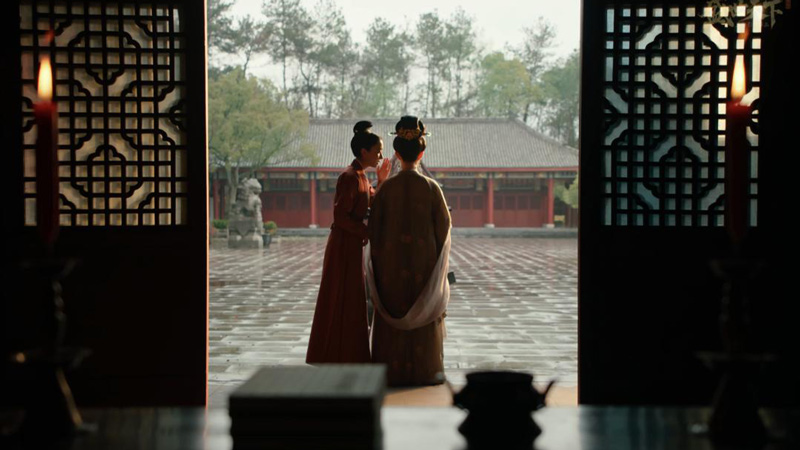
What I find striking about this narrative approach is how it mirrors real life. The answers to survival shift as circumstances change. Wu Yuanzhao's path to staying alive transforms with each stage, making her feel like more than a scripted character. She becomes layered and human—almost like "someone you once knew" or "an earlier version of yourself" preserved in memory.
By grounding the entire story in this unflinching survival theme, and by letting the game's environment evolve over time, the writers create a design that feels brutally real. Players don't just watch Wu Yuanzhao's journey—they live inside it, pulled fully into the role.
A Small Figure's Journey Through the Grand Palace: Trapped by Fate
I once heard a writer sum up their craft like this: "Writing a story is really about writing villains. Once the villain is exhausted, the story is over."
In Road to Empress, Wu Yuanzhao's obstacles come not only from individual rivals in the palace, but also from the walls themselves—those towering barriers that cage her in. The story takes place in the fictional "Sheng Dynasty," loosely modeled on the Tang era. Within this setting, her challenges can be reduced to a few brutal words: peer exclusion, oppression from above, one mistake means death, and a life not her own. On the page, these phrases look like abstract fragments from old chronicles. But when placed on the player's shoulders, they turn into vivid, suffocating dilemmas.
Take an example mentioned earlier: after the banquet chapter, Prince Wei pressures Wu Yuanzhao to commit an act forbidden by imperial decree. Refusal means immediate danger, so survival requires compliance—yet agreeing only opens the door to greater risks. For Prince Wei, this is merely one step on his climb toward power, his own survival agenda. He isn't out to kill Wu Yuanzhao directly, but his pursuit drags her to the cliff's edge all the same.
This highlights a key point: while Prince Wei looks like a villain, the real "antagonist" of the story is broader—the survival demands faced by every person in that era. Road to Empress doesn't run out of enemies once a single court rival is gone, because someone will always be struggling to endure. Under feudal rule, the governed class has no control over its destiny. Wu Yuanzhao can only navigate danger as it comes.
Later, a similar dilemma unfolds. After violating the emperor's order, she seeks advice from her aunt. But while hiding nearby, she overhears her aunt coldly weighing options: "If she's useful, keep her. If not, get rid of her." On the surface, it plays like a plot twist, but the motive is the same: survival. Even family bonds bend beneath the weight of constant fear. The aunt's harsh calculation is no different from the strategies everyone else must adopt in this hostile environment. The design feels organic, not forced—an inevitable wall for the heroine to crash into.
By this point, I found myself looking back at the story's starting moment: Wu Yuanzhao pushing open the palace gates with her own hands. From that choice onward, the spiral of crisis is relentless. It carries a strong sense of tragedy. Entering the palace was her decision, and so every danger that follows has no one else to blame. Even at her lowest, when despair is overwhelming, she has no scapegoat—only herself. That irony cuts deep.
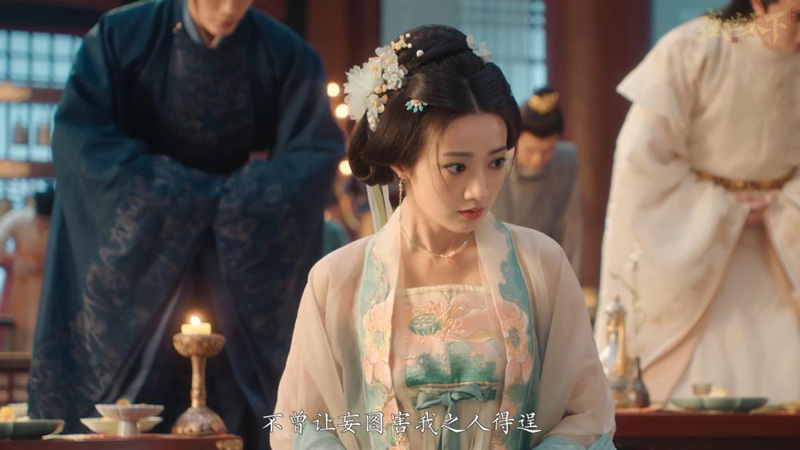
At the same time, the pacing of the early chapters makes itself felt. The narrative is so tightly packed that players are caught between two sensations: the "heart-gripping tension" of knowing the heroine's life is on the line, and the "overwhelming rush" of plot events stacked back-to-back. The tension comes from every decision carrying life-or-death weight, while the sense of overload comes from how lavishly the writers burn through material in the opening stretch.
Wu Yuanzhao survives the deadly trap with the peony ornament, only to face rejection from most of the other court ladies. Cornered, she is taken in by Lady Xu Hui, which seems to offer a moment of peace—until it's revealed that Xu Hui enjoys the emperor's favor, placing Wu Yuanzhao in another precarious position. Then comes the next night's banquet, with yet another murder plot, from which she narrowly escapes thanks to her aunt's timely intervention.
It feels almost like a whirlwind sightseeing trip, with too many stops crammed into a short itinerary. The heroine is pushed through scenes at breakneck speed, leading players from imperial banquets to the dungeons in just a few chapters. Gradually, the entire palace ecosystem comes into focus: rigid hierarchies, shifting factions, and the lethal whirlpool that drags down everyone beneath the emperor. In this world, "survival" is not just Wu Yuanzhao's story—it's the story of everyone outside the throne itself. That survival theme is the backbone of Road to Empress.
Branching Paths that Touch Every Corner of the Story
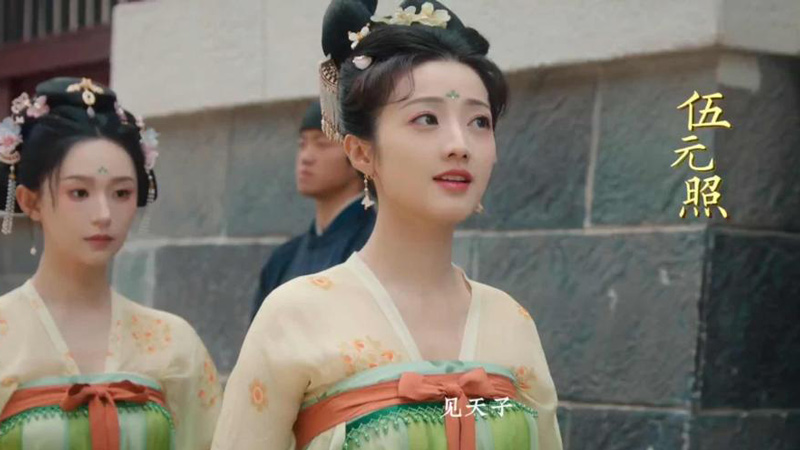
In New One Studio's previous project The Invisible Guardian, picking the wrong option in the opening could send players straight to Yan'an (a historical Communist base area), ending the game and unlocking the tongue-in-cheek achievement "Border Region Worker." That opening "how long can you last" challenge became a fan favorite, and the same spirit carries over into Road to Empress.
Plenty of players go in testing themselves with that exact challenge—"let's see how long I can survive on one life."
Personally, my run ended the moment I met Consort Wei. I suspect that's true for most players, because as the story unfolds, Wu Yuanzhao meets a dazzling variety of deaths no matter which path you pick. At this point, "killing off the heroine" stops feeling like a failure state. What matters is trying every branch, uncovering every ending, and collecting every death. My own motivation shifted toward hitting 100% completion, savoring all the possible outcomes.
What makes this design stand out is how different the experiences are between "just following the main story" and "trying every choice." The developers clearly wanted each option to carry real weight. If a standard linear plot is a vertical timeline that shows you how events unfold, then Road to Empress adds a horizontal axis—every possible branch that shows what else could have happened in the same moment.
For instance, during the banquet sequence, Wu Yuanzhao can present one of three performances to the emperor: a stunning song, an ordinary dance, or a painfully bad pipa solo. Logic says the song will lead to the "right" path. But for the sake of "testing the outcome" and "collecting endings," players may deliberately pick the worst option. In that case, the emperor feels provoked and throws Wu Yuanzhao out of the palace altogether. She dies, of course—but the emperor's reaction is so amusing that it turns into one of the most entertaining branches I've seen.
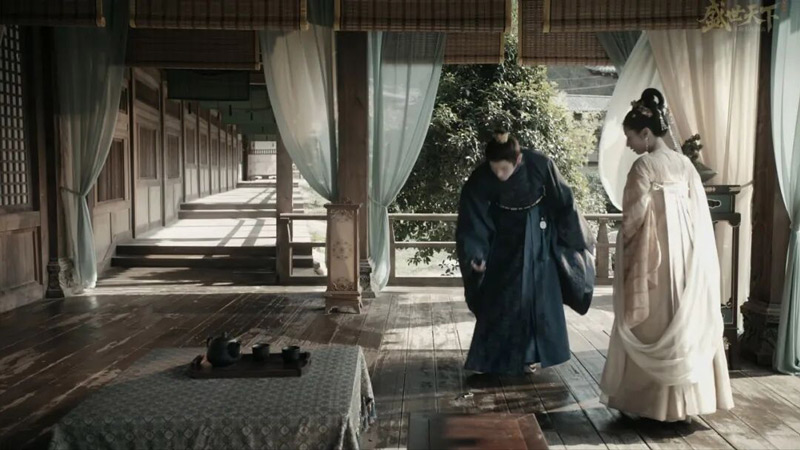
Then I tried the other two options, and to my surprise, the correct answer turned out to be "an utterly unremarkable dance"! If you picked "a stunning, show-stopping voice," you'd end up being poisoned after the banquet for drawing too much attention—showing that both extremes, being too aggressive or too passive, will get you killed. At this stage, the middle path is the way to survive. If I had chosen "an utterly unremarkable dance" right away and pushed forward with the main story, I probably would've thought, "Huh, nothing special here," and missed the subtle brilliance of the writing.
This is where the real aftertaste lies. The writers scattered loads of non-core information into side branches rather than the main storyline. Most players only notice the cleverness after dying multiple times. As you explore every corner of the branching paths, you realize that even throwaway mentions in the main plot are fully echoed in side endings. And once you've died enough times, when the protagonist sighs, "Before imperial power, we are nothing but ants," the weight of those words hits harder—you don't just understand it, you feel it.
That's the key difference: when information is pieced together by the player themselves, versus when the devs just dump it in a massive info panel for you to slog through. The former elevates the whole work; the latter almost always invites bad reviews. Sheng Shi Tian Xia handles this beautifully: even secondary branches deliver important details, cleverly spreading out clues and elements so players are naturally motivated to explore every corner of the story.
For me, the heart of Sheng Shi Tian Xia is still its dazzlingly complex narrative. In an interactive film, storytelling becomes the core bond that ties the player to the "characters," "scenes," and all the interlocking elements. It leaves a lasting mark, and often elements resonate with one another. For instance, a bowl of osmanthus soup instantly brings to mind the aunt's gentle smile—and oddly, even a faint stomachache.
Given the game's sheer scope, by the time I wrapped up my trial, I had gone through nearly half of Consort Mei's arc. Following the classic structure of "setup, development, twist, resolution," Act One was already complete—the stage and characters firmly established. Looking back, I realized I was not only immersing myself in the protagonist and the story, but also grappling with the dilemma of "choosing between survival and all other emotional attachments." This sense of helpless compromise mirrors real-life struggles, delivering enormous dramatic tension and emotional resonance. Gradually, a grand impression takes shape: within the palace walls of a dynasty, the protagonist, a mere nobody, can only fight desperately to stay alive.
Debating the quality of narrative-driven works has always been contentious—everyone's standards and tastes vary wildly. That's why "pleasing everyone" is a goal no work can fully achieve. What matters is that the devs pour their full attention into the work itself. As the first project to carve out the "palace survival + interactive film" genre, Sheng Shi Tian Xia shows meticulous effort and ingenuity in its plotting and story design. As players, we can feel the team's dedication in presenting the story in its full brilliance.