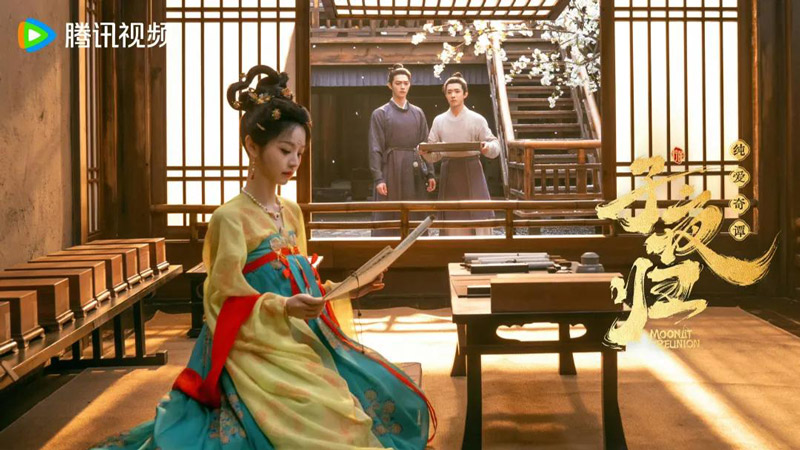
The happy ending went viral on Weibo. Mei Zhuyu and Wu Zhen overcame the barrier between humans and demons to be together, and viewers were thrilled: "This is the HE (happy ending) we wanted!"
Unlike other hit dramas that relied on constant twists, cliffhangers, or heavy plotting, Moonlit Reunion locked onto what today's viewers actually want to feel. With delicate visuals and the flow of everyday emotions between characters, the show offered audiences a journey into another world.
That difference allowed Moonlit Reunion to break free from the clichés of fantasy costume dramas. Its emotional frequency matches modern audiences—when we're touched by the pure love in the show, deep down it's because we all long for the courage to choose and the right to be chosen.
So what exactly made the drama hit that emotional "switch" for so many? Huan.tv Big Data sat down with producer Wu Ruoyan to look behind the curtain.
All Cast, All In: Form and Spirit as One
"First the form, then the spirit." That was the casting philosophy, and it's why Moonlit Reunion could hook viewers in seconds. Whether it's the contrast written into the leads or the arcs given to supporting characters, every performance aligned seamlessly with the roles.
Take Tian Xiwei as Wu Zhen—the best embodiment of a "cat demon" you could imagine. Wu Ruoyan said, "Tian Xiwei was simply destined to play Wu Zhen! She carries both the cat-like features and the sharp switch between sweet girl and femme fatale." Her naturally round, bright eyes give off a lazy, relaxed feline energy, but when she shifts into a cold mode, there's a sharp distance to her. Even her "tough Barbie" persona on variety shows adds to that contrast, making her a perfect match.
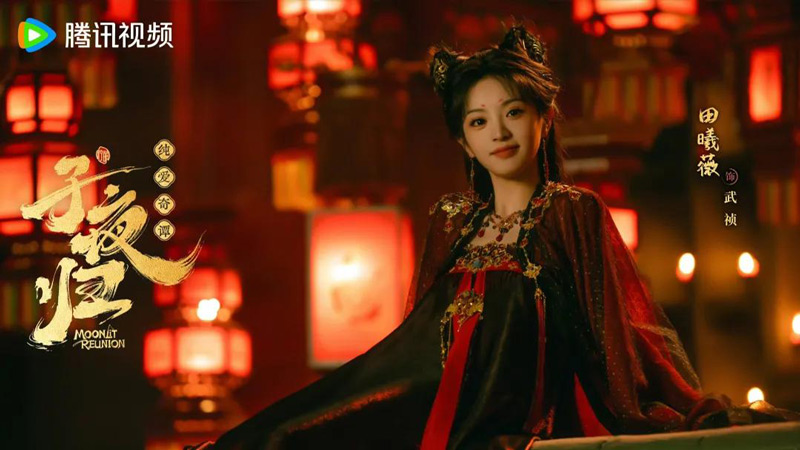
On screen, Tian Xiwei by day wears a flower mark on her forehead and a Chest-High Ruqun (齐胸襦裙, a type of traditional Han Chinese dress), tilting her head as she teases Mei Zhuyu like a playful kitten. By night, in a crimson battle robe with golden slit-pupils flashing, she transforms into the commanding "cat lord" who rules the demon market. No wonder viewers exclaimed: "Whoever came up with this cat persona is a genius."
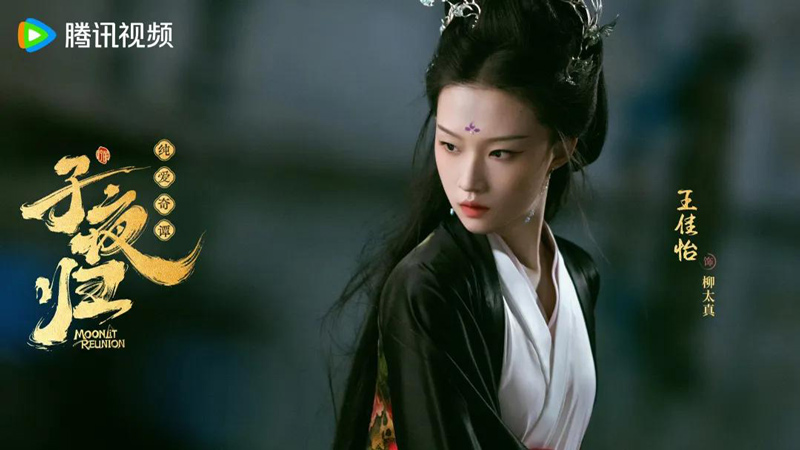
Then there's Wang Jiayi as the snake lord Liu Taizhen, who redefined the "serpent beauty" archetype with her cold but seductive aura. Wu Ruoyan explained, "We chose Wang Jiayi because she carries a naturally classical elegance. Her tall, slender figure and sharp phoenix eyes give her the presence of a snake." When Liu Taizhen's power surges, the icy gleam in her eyes and the subtle sway of her waist make her look both dangerous and untouchable. Wang Jiayi could convey the menace of the snake lord with just her gaze and body language.
Other casting choices were just as sharp. For Zhu Zhengting as Pei Jiaya, Wu Ruoyan noted, "He trained as a dancer, so he naturally has the graceful bearing of a nobleman. He's also extremely intense in real life, always chasing perfection." On screen, he channeled that perfectionism into portraying Pei Jiaya's extremes—his obsessive need for control, his madness, and his tragic fragility. The result was a layered, unforgettable performance.
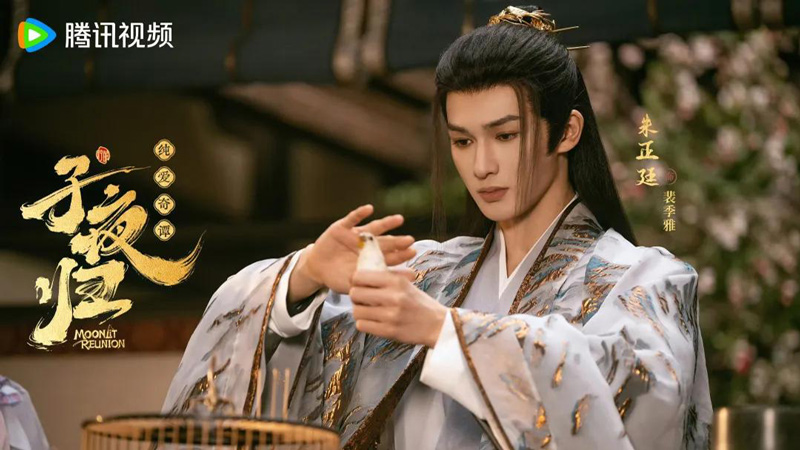
Every character, whether lead or supporting, righteous or villainous, was treated with respect for their human essence. Each has their own light and growth. Pei Jiaya spent his life proving himself worthy, only to realize at the end that life doesn't need constant competition. Liu Taizhen went from denying love to opening her heart again. Mei Si grew from a carefree wanderer into someone who understood that real love sometimes means letting go.
It's this respect for the "person" in every role that gave Moonlit Reunion its vivid, three-dimensional cast—one of the main reasons it resonated so deeply with viewers.
Multi-CPs: A Sugar Rush of Pure Love and Resonance
"Fantasy is just the shell, pure love is the soul." That's not only how the creative team saw it, but also what shows up in the keyword analysis from Huan.tv Big Data. Wu Ruoyan admitted: "Moonlit Reunion didn't go for the typical 'leveling up and fighting monsters' track. It built a Chang'an fantasy world centered on emotion, where the barriers between humans and demons, and the clashes between order and instinct, all became touchstones for love."
The appeal of "Mei x Wu" (梅梦成祯, short for Mei Zhuyu + Wu Zhen) lies in their two-way pursuit across worlds. Mei Zhuyu embodies human order, law, and class—everything that looks proper and orthodox. Wu Zhen, on the other hand, represents the hidden demon underworld of Chang'an: free, playful, and sometimes reckless. Their love isn't just about crossing species lines; it's about the collision and merging of two completely different systems of rules. Wu Ruoyan explained: "Opposites becoming one is the most basic romance in fantasy pure love. I protect you—not only your light, but also your shadows, and I love the way you balance the two." The opposition comes from their roles and identities; the unity comes from their shared desire to draw closer.
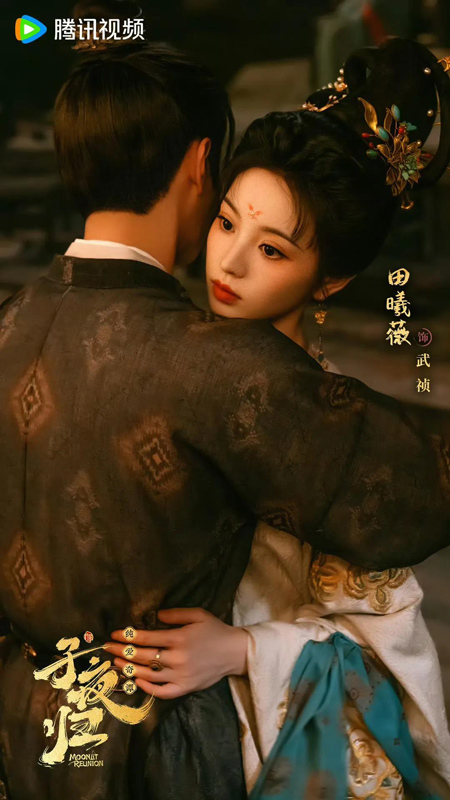
The key was giving the audience something real to empathize with. Wu Ruoyan revealed: "The writers spent a lot of time on non-fantasy, everyday details, so the romance had an anchor." For example, Mei Zhuyu quietly spends money to repair the road outside his home so Wu Zhen can visit more easily. Wu Zhen, in return, pampers her husband relentlessly: standing up for him when others insult him, defending him when he faces injustice at work. These grounded "relationship anchors" pulled the fantasy back to something emotionally tangible, convincing viewers that no matter how otherworldly the setting, the feeling of loving someone is always the same.
The side couples were just as addictive, each leaving behind distinct "emotional memory points."
Liu Taizhen, the snake lord, and the fourth Mei brother had a healing story of "a century-old wound meeting pure devotion." Betrayed by a mortal lover once her serpent identity was revealed, Liu Taizhen lost all faith in humans. Then Mei Si appeared like a beam of light. Even after learning she was a snake demon, his love overrode fear. Remembering from a demon folklore text that snakes need mulberry leaves during molting, he ran everywhere to find the freshest ones for her. And when she was at her weakest, molting and facing a challenger serpent, this seemingly powerless young man stood in front of her without hesitation. That burning purity eventually melted the ice around her heart.
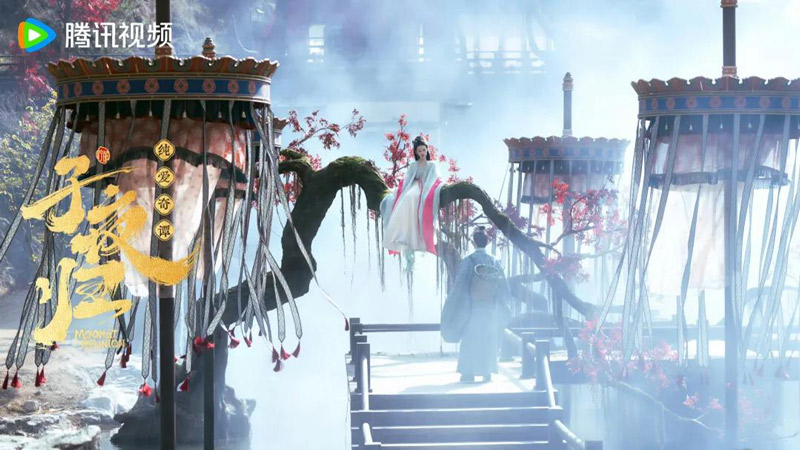
Princess Yuanzhen and the camellia spirit were the drama's ultimate BE romance (BE = Bad Ending, a fan term for tragic love stories). As a child, the princess was lost in the mountains and rescued by a camellia spirit. She later transplanted the camellia tree to the palace, naming it "Hua'er" ("Flower"). In the lonely palace years, Hua'er was her only companion. When ink demons invaded, Hua'er sacrificed himself to save her. Later, Wu Zhen sealed his spirit into a camellia hairpin, allowing them to stay together "in another form." The restraint of this eternal promise—"with this hairpin, I'll accompany you for life"—left viewers in tears, flooding the screen with comments begging for a side story.
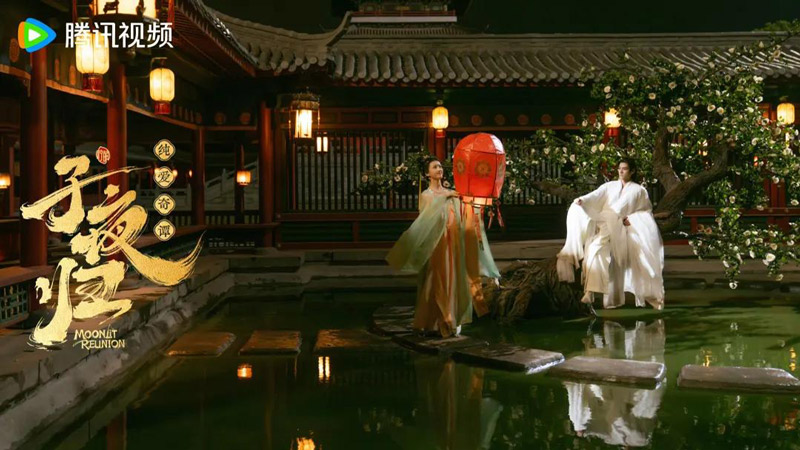
Then there's the unforgettable chemistry of Wu Zhen and Liu Taizhen, nicknamed the "cat-and-snake CP" (CP = "couple pairing," Chinese fandom slang for a ship). On the surface, they're supposed to be enemies, but in truth, they protect each other. Wu Zhen teases her with lines like, "Little snake, I'll tie you into a dead knot," while Liu Taizhen, upon hearing Wu Zhen had signed a life-or-death pact, replies, "If the little cat really dies, I'll take her place." Wu Zhen is fire, bold and restless yet secretly dependent; Liu Taizhen is jade soaked in ice, outwardly cold but entirely protective beneath. Their dynamic of "heat and cool, motion and stillness" made their CP chemistry unforgettable.
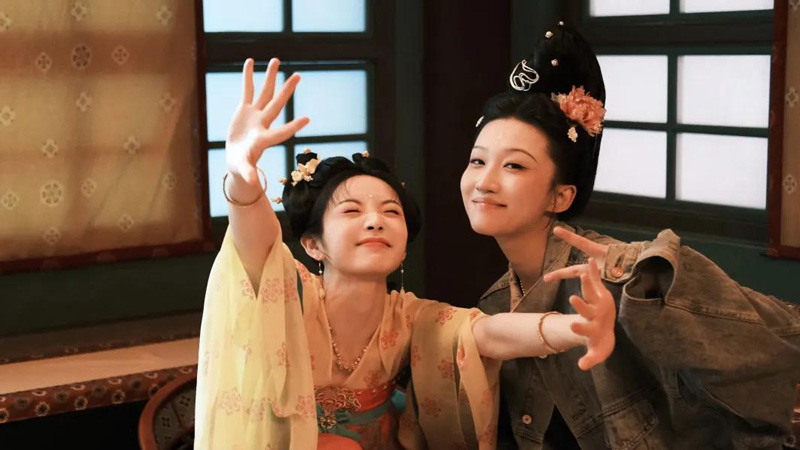
Off-screen, the banter continued. Wang Jiayi joked, "Little cat, no one stands before you because I'm the snake." Tian Xiwei snapped back instantly: "So what if you're a snake, big deal!" These playful exchanges blurred the line between role and reality, giving the "cat-and-snake CP" a warmth that went beyond scripted romance.
Aesthetics: Viewers Want More Than Just a Story
One of the biggest reasons Moonlit Reunionblew up was its aesthetics.
Today's drama audiences don't just want "a good story and a favorite actor." What they consume is atmosphere, emotion, and a fully immersive aesthetic experience.
The show's worldbuilding, costumes, makeup, props, art design, and visual effects all pushed beyond the usual audience threshold for visual storytelling.
Competing on Atmosphere: Two Sides of the World Made Real
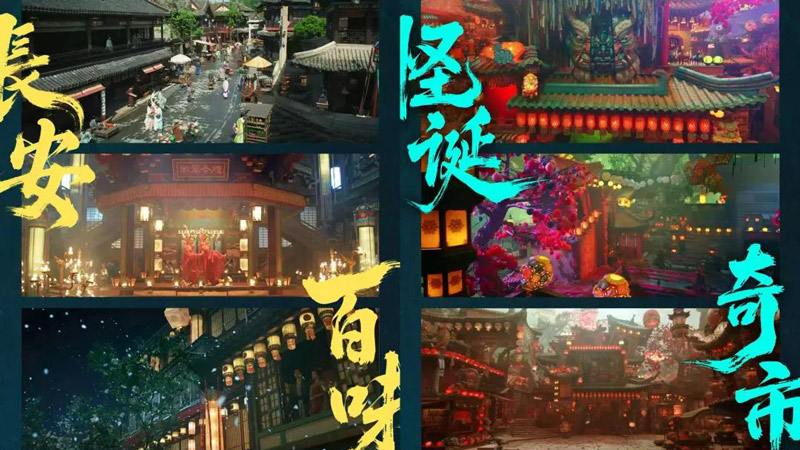
Moonlit Reunioncreated two parallel worlds—Chang'an for humans and the demon market hidden below. Chang'an is dazzling, bustling, and glamorous. The demon market, in contrast, leans into the bizarre and surreal.
Many of the demon market's houses are intentionally crooked, their skewed proportions and tilted structures forming a space that feels off-balance and uncanny. This wasn't just visual novelty. It symbolized how the demons live outside the order of the human world.
The designers also wove in elements of Chinese folk culture, opera masks, and touches of Chinese horror aesthetics, creating a place that felt at once grotesque and strangely alive. The demon market wasn't just a visual spectacle—it felt like a real shelter, a community with warmth where demons could belong. Wu Ruoyan confirmed: "Yes, we proposed the concept of the demon market as a sanctuary."
The visual contrast between Chang'an and the demon market didn't just serve worldbuilding—it made the audience believe that the other side of the world really should look different.
Costumes and makeup as storytelling
The much-discussed "insanely detailed" styling wasn't exaggerated. Wu Ruoyan laughed: "Yes, we were absolutely competitive about it." The team worked with a principle of "extracting animal traits first, then merging them with human character design." Wu Zhen's cat ears weren't only realistic in shape—even the fine hairs along the edges were recreated through hair and makeup to feel alive.
A single stitch, a strand of hair, a trace of color—each detail silently told the story of a character's identity, temperament, and fate. The goal was for viewers to "read" them instantly and enter their emotions.
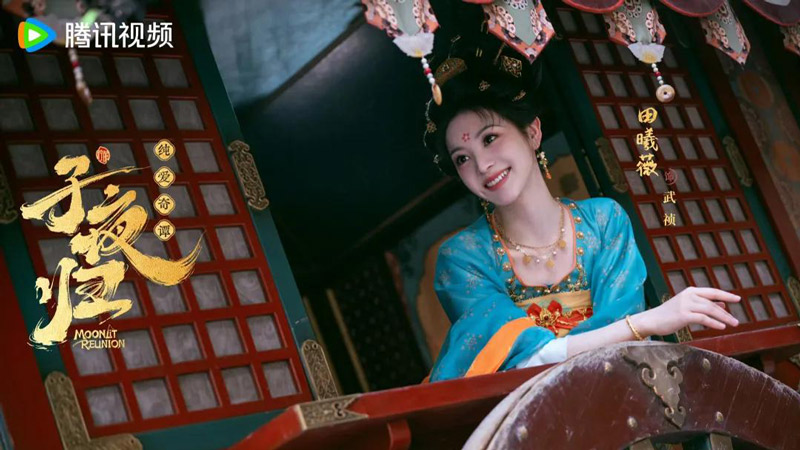
Wu Zhen is both a spoiled noble lady of Chang'an and a lively cat demon. As a human, her outfits burst with vibrant colors, like sunlight spilling across embroidered silk. Every flower on her robes was not ordinary stitching but crafted in three-dimensional detail, layered with beads that shimmered as she walked. Luxurious and flamboyant. In the demon market, her clothing integrated fur textures and feline elements, capturing both her wild agility and her human elegance.
Liu Taizhen, by contrast, was like a snake under moonlight—cold, mysterious, and captivating. Her silver accessories flowed like serpentine lines; the patterns on her sleeves rippled like water. The pale pink-and-white palette made her look both icy and seductive without her needing to say a word.
Other characters were never treated carelessly. The bat demon sisters had wings with clear vein patterns. The camellia spirit looked translucent like jade. Villain Pei Ji'a's robes carried hidden dark patterns and heavy silver chains, giving off the aura of a corrupted cultivator. Every figure was a painting worth studying, a scroll of demon lives.
Craftsmanship meant taking "small details" to the level of poetry. The result was a "young Chang'an" that felt both authentically Tang in flavor and filled with dreamlike fantasy. The human world was vibrant and dazzling, while the demon market was eerie yet beautiful, fluid and alive.
In this way, the costumes, makeup, and props became more than visual pleasure—they became containers for emotion, a second language for the characters. They made you believe that when the sun set over Chang'an, the demon market truly woke in the shadows—and you were already standing inside it.
Creating the "Ancient Painting Illusion" Audiences Dream Of
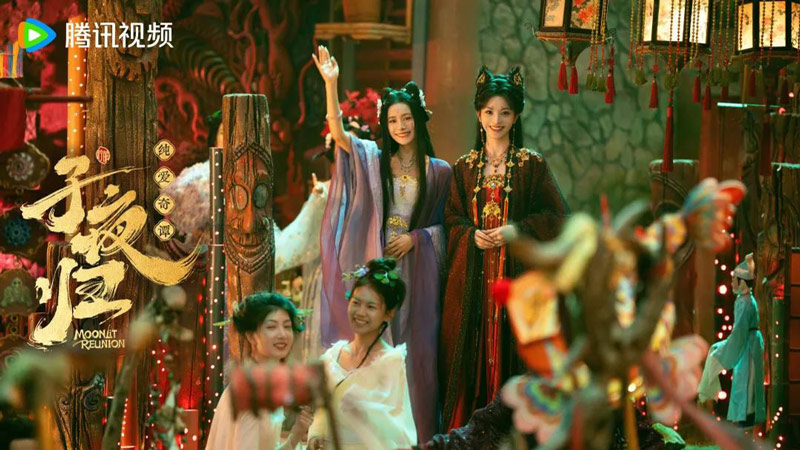
Some viewers called Midnight Return's cinematography the "ceiling of directorial flair." But in truth, every so-called "show-off shot" hides painstaking precision from the creative team. The director studied frame by frame, deciding which side of an actor's face caught the best light; even the arc of Mei Zhuyu's drifting ribbons, or the feline curve of Wu Zhen's shoulders when she slipped into catlike poise, were adjusted over and over.
To imbue the screen with a soul of Chinese aesthetics, producer Wu Ruoyan explained that from the very start, the team agreed: it must be classical, it must be symmetrical, it must be dazzling, but above all, it must feel textured. The camera had to become "a paintbrush that tells stories."
The series' use of "framed composition" plays like a living textbook of Chinese visual taste. When the shadow demon is falsely accused, the shot captures her struggle through window lattices and door frames, freezing her tragedy like a scene inside an old scroll. When Wu Zhen and Mei Zhuyu converse in a courtyard, the lens peers past carved columns, letting solid and void weave together, evoking the liubai—the purposeful blank spaces—of classical art.
What makes this even rarer is the team's refusal to rely on heavy virtual sets. Instead, they insisted on constructing real spaces to anchor the fantasy. "We want the audience to truly enter the story," Wu Ruoyan said, "not feel pulled out by obvious green-screen composites. Nearly all the demon market scenes you see are built sets." This devotion to authenticity transforms the market from a floating backdrop of effects into a "living space"—tangible, breathable, alive.
Wu added that the most painstaking work went into "creature effects," especially the greatest challenge: Wu Zhen's true form, a tabby cat.
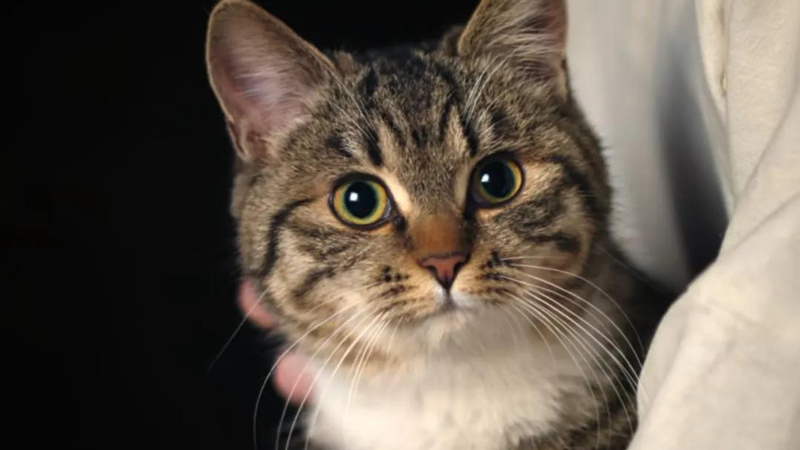
To merge real cat and CGI cat seamlessly, the team created a 1:1 digital model, tweaking everything from the gloss of its fur to the rhythm of its gait. The goal was to ensure viewers never sensed the switch—"this frame is real, the next is digital." And it wasn't just the tabby. Mice, serpents, and other beings were also designed with real-life anatomy as their base, then layered with anime-like touches of personification. The result is a fantasy world both graspably real and unimaginably dreamlike—where animals retain their essence, yet shimmer with supernatural spirit.
In Emotional Sync with Contemporary Women
Two faces of Chang'an, one human, one demonic.
Chang'an and the demon market are not two separate realms but two sides of the same city. Daylight and nightfall, order and chaos—two rhythms of life within one shared soul. Just as every modern person lives their own double narrative, commuting between the public and the private, duty and desire.
This duality mirrors the survival state of us all. And the women of Midnight Return embody this duality with striking elegance.
The show's two most dazzling heroines—Wu Zhen and Liu Taizhen—perfectly channel its allure. By day in Chang'an, Wu Zhen is the flamboyant, free-spirited Princess of Qinghe, flaunting her unruly charm against Confucian norms. Liu Taizhen, in contrast, is the impeccable daughter of a censor, her composure flawless, her every move aligned with societal rules.
But when darkness wakes the demon market, their other selves emerge: Wu Zhen becomes the Cat Lord who rules the night, sharp and decisive, keeper of order; Liu Taizhen reveals her true form as the Snake Lord, sensual yet imperious, her aura commanding. This is not a mere mask swap but a deeper expansion of self. Through their dual lives, they don't fragment but rather unify, achieving a richer wholeness—characters transcending, women fully realized.
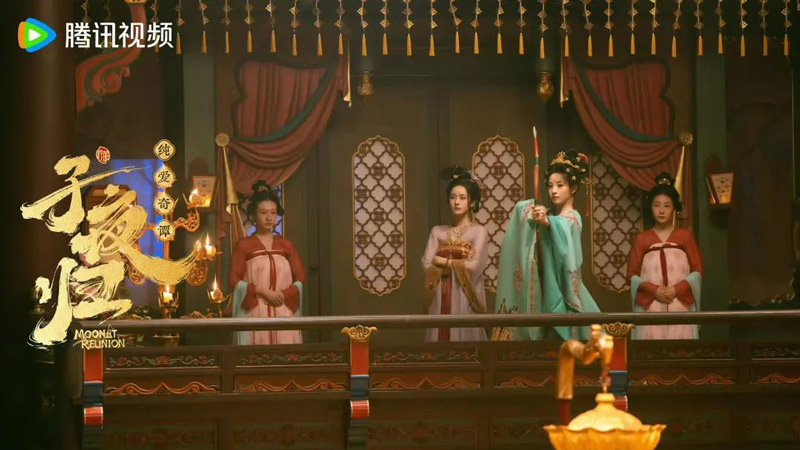
This dual narrative resonated deeply with viewers because it reflects truths of everyday life. In the morning, we dress ourselves in the professional armor of work; by night, we return to our private selves—perhaps a gentle partner, a passionate dreamer, or a vulnerable lone wanderer.
Moonlit Reunion elevates these everyday identity shifts into a fantasy aesthetic, letting us see our own reflections in its world.
The survival aesthetics of its female characters, framed through the contrast of their dual lives, feed contemporary women's imagination of wielding strong agency over their ideal selves. Most strikingly, Wu Zhen shatters the traditional narrative mold for women. She is not a princess waiting to be rescued; she is the master of her own fate. Consequently, her love is not passive, but an active choice from the heart. As Wu Ruoyan put it: "Her emotional arc is entirely driven by her own decisions—'I choose to love you, rather than being loved by you.'" Whether it's kicking away an intrusive suitor in the first episode or repeatedly saving the hero, she embodies vitality and female-centered agency rather than helplessness.
This narrative strikes an emotional chord with contemporary women. Like Wu Zhen, we crave freedom to navigate between societal expectations and self-imposed limits, to find balance between rules and desire, and ultimately to live as complete, authentic selves. Chang'an and the demon market reflect the dual desires we all hold: respect for order and yearning for freedom, responsibility and fidelity to self.
This is the most moving power of Return at Midnight: under the guise of fantasy, it lets us encounter the selves we most long to be. Wu Ruoyan said: "We wanted to portray an ideal woman, what a woman can be. We didn't intend to push a moral value, so we were thrilled when audiences responded with 'female-centered' feedback."
Across this time-spanning emotional story, what we see are not only vivid, alive female characters but also the "demonic nights and human days" each woman carries in her heart.