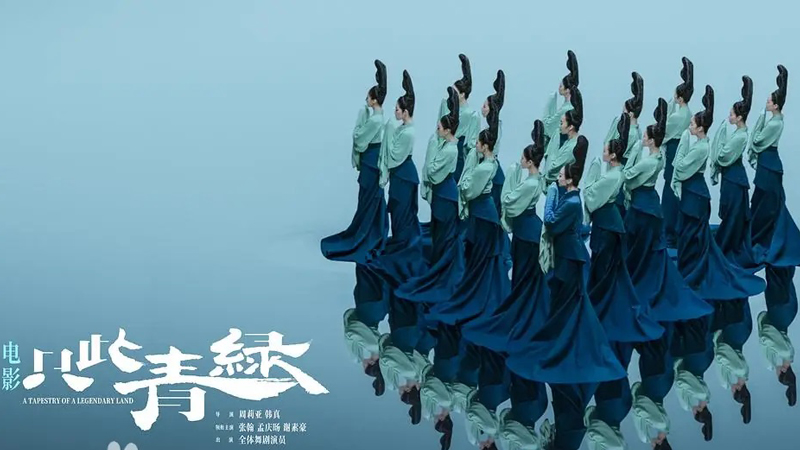
The dance film Only A Tapestry of a Legendary Land (只此青绿) has returned to cinemas for a special engagement, offering audiences another chance to immerse themselves in its unique blend of classical Chinese dance, painting, and cinematic storytelling. Directed by Zhou Liya (周莉亚) and Han Zhen (韩真), the film transcends mere documentation of a stage performance. It uses sweeping landscapes, intimate close-ups, and fluid editing to translate the abstract language of dance into a powerful narrative.
Every gesture-a sleeve fluttering like a brushstroke or a dancer's arch echoing a mountain ridge-is meticulously crafted to evoke the grace and discipline of traditional Chinese art.
Silence as a Narrative Tool
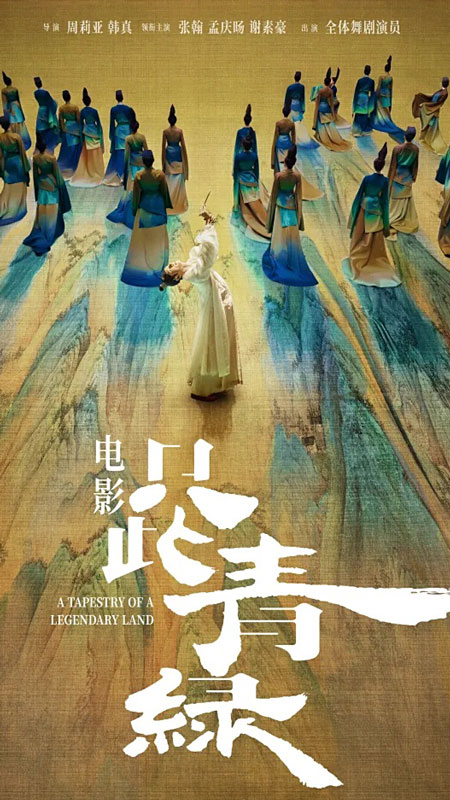
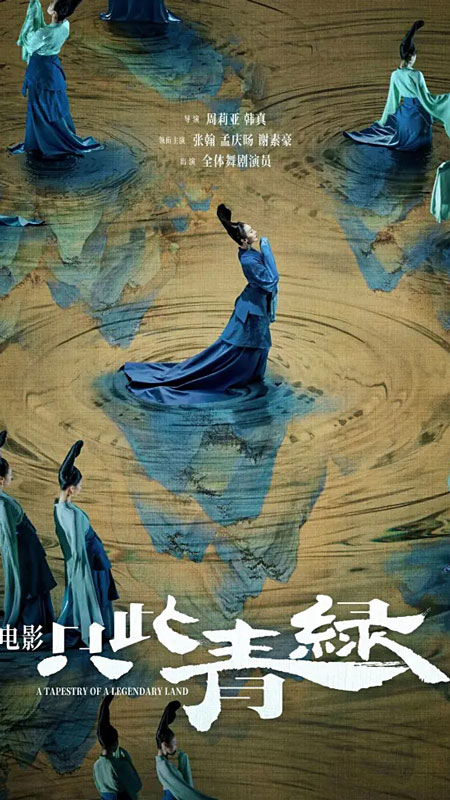
Without dialogue, the film relies entirely on movement and music to convey its story. Dancers' limbs extend like deliberate brushstrokes; swirling robes mimic the flow of ink and water.
In one standout scene, the young painter Wang Ximeng (王希孟) is depicted by a stream, his fingertips stained with green and blue pigments that seem to interact with the dappled sunlight and flowing water around him. This moment captures the sacredness of artistic inspiration, blurring the line between the cinematic and the timeless.
Connecting with Modern Audiences
The film has resonated deeply with younger viewers, particularly within the context of the "Guochao" (国潮) trend, which celebrates traditional Chinese culture.
Its return to theaters on September 15th saw enthusiastic attendance, with many viewers returning for repeat screenings. Advanced point screenings on September 13th and 14th generated strong word-of-mouth, driving its Douban rating to 8.3.
A Tribute to Collective Creation
The film draws inspiration from the Northern Song Dynasty masterpiece A Thousand Miles of Rivers and Mountains (千里江山图) by Wang Ximeng, who completed the painting in his teens.
Yet it also honors the unnamed artisans-ink grinders, weavers, pigment makers, and calligraphers-whose labor was essential to the artwork's creation. This emphasis on collective effort resonates with contemporary audiences, as seen at a Beijing screening where an attendee brought a hand-painted replica of the scroll, created with over twenty fellow enthusiasts.
Cinematic Innovations and Challenges
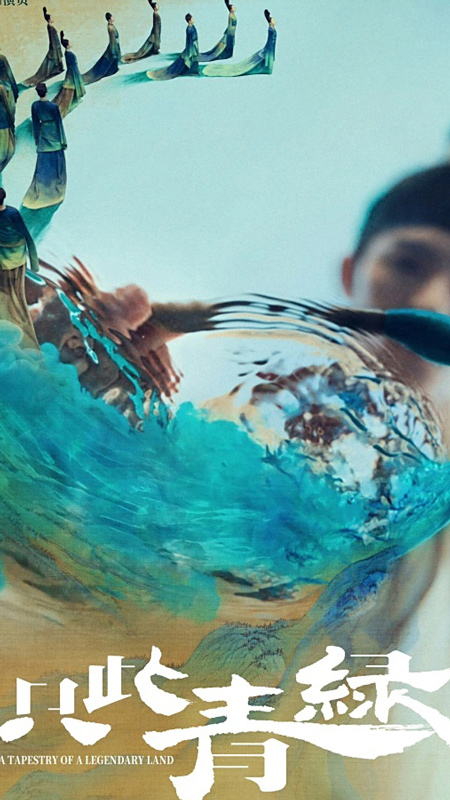
The film's directors, known as the "gemini" of Chinese dance theater, faced the challenge of adapting a highly abstract stage production for the screen.
While the stage version relied on minimal sets and maximal imagination, the film incorporates real landscapes and detailed sets to enhance immersion. However, this approach has drawn criticism from some purists who felt the literalness of certain scenes-such as Wang Ximeng dancing in real rain with soaked robes-diminished the poetic ambiguity of the stage version.
Global Appeal and Cultural Nuance
Despite its deeply Chinese roots, the film's themes of artistry, legacy, and collaboration have universal appeal. Its visual language-every frame is meticulously composed-transcends cultural barriers.
The soundtrack, blending classical Chinese instruments like the guqin (古琴) and pipa (琵琶) with modern orchestration, adds emotional depth without relying on dialogue.
Why It Matters
Only This Greenish Blue is more than a film; it is a meditation on how art bridges time and space. It asserts that great works are rarely the product of solitary genius but rather the culmination of countless hands and hearts working in unison.
For international audiences, it offers a glimpse into the sophistication of Chinese aesthetic traditions, from the intricate steps of classical dance to the philosophical ideals of harmony between humanity and nature.
Now showing in select cinemas, the film invites viewers to experience a two-hour oasis of reflection-a rare opportunity to witness the convergence of dance, painting, and cinema in a celebration of cultural heritage.