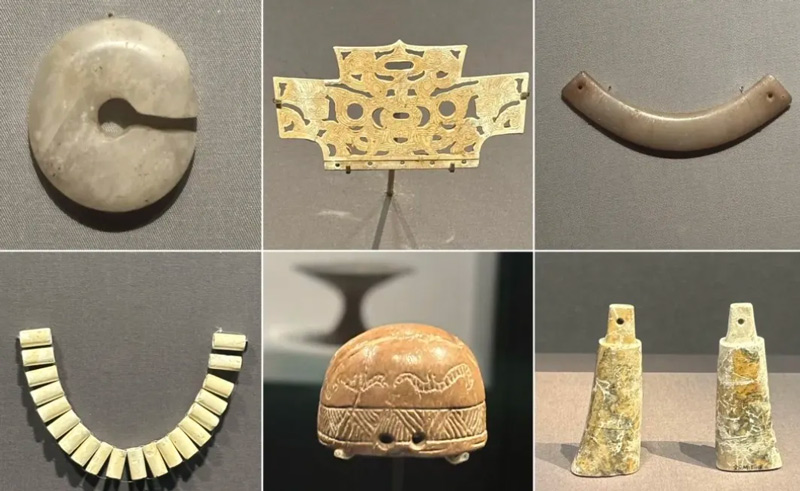
A recent online debate has questioned the authenticity of certain stone tools from the Liangzhu (良渚) culture displayed at the Shanghai Museum. Skeptics argued that their sharp edges, straight lines, and polished surfaces must be the work of modern machinery. How could artifacts buried for millennia show so little weathering and such refined detail? The museum firmly confirmed their legitimacy, sparking a wider conversation about the sophistication of ancient Chinese craftsmanship.
Beyond Modern Assumptions
This skepticism reveals a common modern bias. We often equate age with primitiveness and handcrafted work with roughness. In an era dominated by digital technology, our collective memory of manual skill has faded. We assume precision requires advanced tools.
This is a profound misunderstanding of ancient societies, particularly the Liangzhu culture, which flourished around 3300–2300 BCE. Their artisans operated on a millimeter scale, achieving accuracies that challenge our perceptions of prehistoric technology. Their work was not crude; it was meticulously planned and executed.
The belief that "handmade" means "imperfect" is simply incorrect. These artifacts stand as a testament to a highly developed artistic and technical tradition that rivaled, in its own way, the capabilities we associate with modern industry.
The Evidence of Skill
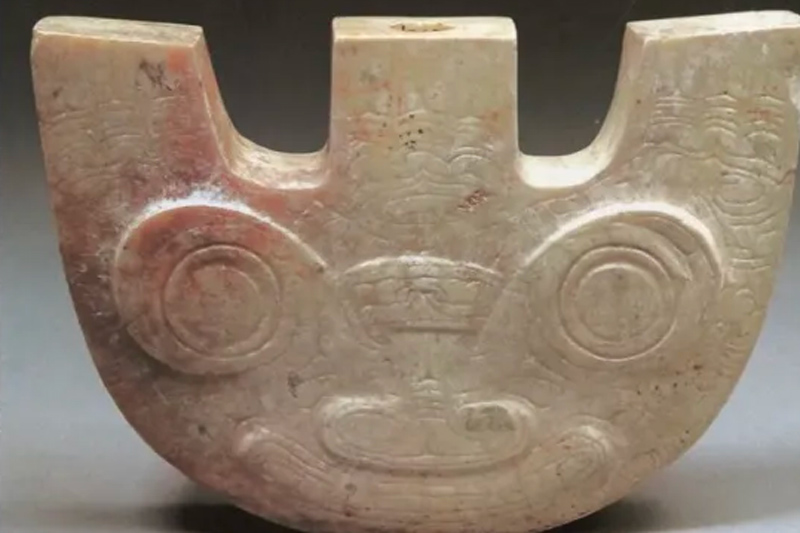
The proof lies not just in the straight lines of a single tool but in the diversity of forms mastered by Liangzhu craftspeople. Beyond simple stone axes, they produced incredibly intricate jade carvings. Jade was the ultimate expression of their culture, a material demanding immense skill and patience.
They expertly employed techniques like cutting, drilling, engraving, incising, and polishing. Creating a perfect circle or a smooth, cylindrical tube from solid stone without modern lathes is an astounding feat. The perforations inside these tubes are equally circular and polished, demonstrating a complete mastery of the process from start to finish.
Some of the finest lines engraved onto these jades are a mere 0.1 millimeters wide. This precision was achieved using tools harder than jade itself, such as quartz or agstone, and abrasives like sand mixed with water, applied with cord or flat implements. It was a slow, deliberate process of grinding and polishing, not cutting in the modern sense.
More Than Just Tools
These objects were not everyday items. They held significant cultural and social meaning. These exquisitely crafted stone and jade artifacts are predominantly found in high-status tombs and important ceremonial sites, indicating their role as ritual objects.
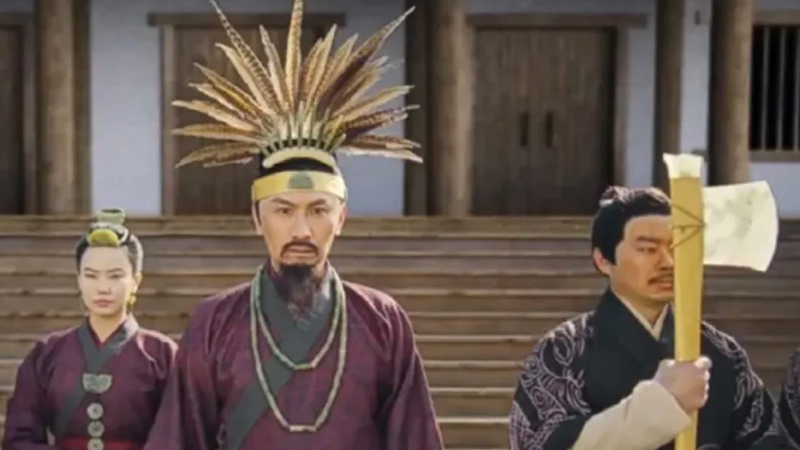
They were symbols of power, spirituality, and identity. Arrangements of burial goods have allowed archaeologists to reconstruct how the Liangzu elite adorned themselves. Male nobles might wear sets of conical ornaments and three-pronged headpieces, while women decorated their hair with crowns and jade Cong (琮) tubes.
The documentary China Before China (何以中国) visualizes these possible uses, showing how these artifacts were integral to social hierarchy and belief systems. They represented a society's investment in beauty, order, and the afterlife, far exceeding mere utility.
The Liangzhu artifacts are genuine. They invite us to reconsider the past not as a simple, backward time, but as an era of incredible human ingenuity and dedicated artistry. They whisper a story of a civilization that pursued perfection long before the written word, leaving behind a legacy etched in stone and jade for us to decipher and admire.