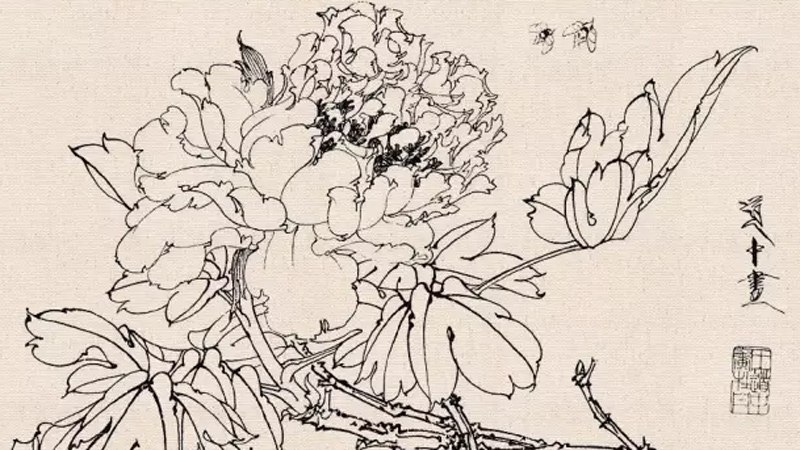
Chinese flower-and-bird painting, known as “Xie Yi” (写意), is far more than a simple act of representation. It is a profound philosophical and artistic practice that seeks to capture the very essence of nature. By infusing depictions of plum blossoms, orchids, birds in flight, and other natural subjects with deep human sentiment and cultural ideals, this art form becomes a dialogue with life itself. It reflects a timeless yearning for harmony between humanity and the natural world. True mastery in this tradition begins not with the brush, but with the eye and the heart, requiring patient observation, a poetic sensibility, and a deep understanding of the inner spirit of all living things.

1. The Heart of Chinese Flower-and-Bird Painting
Chinese flower-and-bird painting, Xie Yi, transcends mere representation. It captures the essence of nature – plum blossoms, orchids, chrysanthemums, bamboo, birds in flight – infusing them with profound human sentiment and cultural ideals. These subjects are not just beautiful forms; they embody virtues admired for centuries, reflecting a deep yearning for harmony between humanity and the natural world. To paint them is to engage in a dialogue with life itself, seeking resonance between the outer scene and the inner spirit.
1.1 Observing Life
True mastery begins not with the brush, but with the eye and the heart. Before any stroke is made, the artist must enter a state of deep, patient observation. This means studying the intricate details: the curve of a bud, the delicate structure of petals and stamens, the specific angles where branches meet, the unique shape of a bird's beak or the texture differentiating its downy chest feathers from its flight quills. Understanding the subtle distinctions between male and female plumage, the characteristic postures, the very rhythm of growth and movement in plants and creatures, is foundational. This meticulous study of life's forms is the essential groundwork, demanding far more time than the act of painting itself.
Nature's diversity is immense. Attempting to catalog every plant and bird is impractical. Instead, the wise painter learns through focused study, recognizing patterns and characteristics within categories. Knowing that animals depend on plants within their ecosystems, a dedicated practitioner gains botanical insight. This knowledge isn't merely scientific; it deepens the painter's connection to the subject, allowing emotion to flow more authentically through the depiction of natural forms.
1.2 Poetry's Guiding Hand
The spirit animating these paintings finds a kindred voice in classical Chinese poetry. The ancient ideal that "poetry holds painting within it, and painting embodies poetry" remains central. Capturing an image during field sketching is thus inseparable from capturing its inherent poetry and emotional state. Consider the evocative power of lines like Su Shi's (苏轼) description of a sparrow on a swaying branch, its chirps seeming to dance amidst blossoms. Such verses don't just describe; they paint vivid scenes in the mind's eye.
When gathering material, this poetic sensibility must permeate the artist's approach. It transforms observation from a technical exercise into a quest for resonant feeling. Cultivating literary appreciation and refining one's aesthetic perception are therefore not mere supplements; they are vital nourishment for the artist's vision, directly enriching the choices made in selecting and portraying subjects.
1.3 Understanding Essence
Observation yields form, but understanding unlocks meaning. Beyond recognizing physical characteristics, the painter seeks to grasp the inherent nature and spirit of the subject – the resilience of bamboo, the quiet dignity of an orchid. Furthermore, understanding the subject's typical behaviour and emotional resonance is crucial. How does a bird react to the morning sun? What feeling does a wilting lotus evoke?
This triad of understanding – physical truth, inherent nature, and emotional expression – allows the artist to move beyond superficial likeness. It enables them to select subjects that genuinely move them and to portray them with a depth that resonates with the viewer. It’s this fusion of keen observation, poetic feeling, and profound understanding of essence that breathes life and enduring spirit into the art of Chinese flower-and-bird painting.
2. Plant Life: Patterns, Personalities, and Forms
Understanding plants goes beyond simple recognition. It involves appreciating their inherent life cycles, the symbolic meanings cultures attach to their resilience, and the vast array of physical forms they exhibit. This intricate world reveals nature's blueprint, where structure, behavior, and appearance intertwine. Observing these aspects deeply allows us to connect with the botanical realm, transforming simple observation into meaningful insight and artistic expression. Each leaf, stem, and bloom tells a unique story of adaptation and beauty.
2.1 Life Cycles
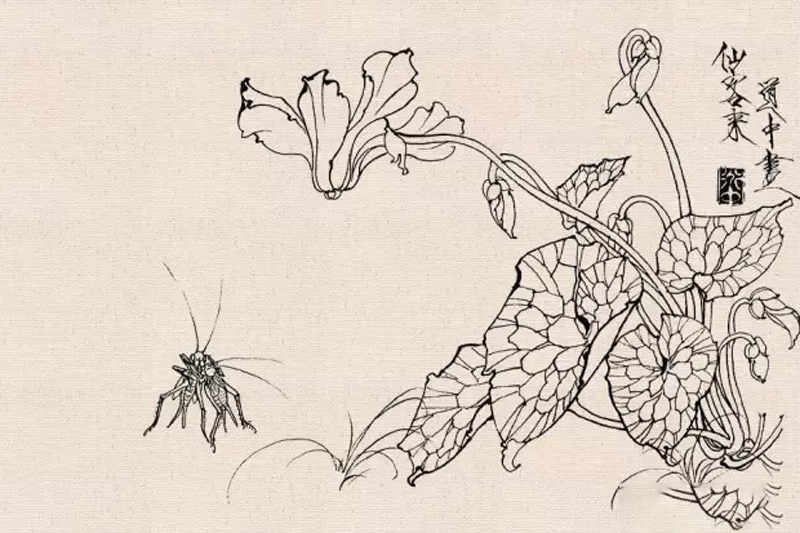
Plants exhibit diverse life cycles and structures. They are broadly categorized: herbaceous plants (annuals or perennials), shrubs, trees (including sub-trees), and vines (climbing or twining). Flowers display an astonishing variety of forms. Perennials like lilies, dahlias, peonies, and orchids die back seasonally but persist through nutrient-storing roots, ready to sprout anew.
Trees, mostly flowering and fruiting types, fall into two main groups: evergreen and deciduous. Evergreens, such as pines, firs, and cypresses, maintain green foliage year-round. Their needles constantly renew; old ones shed as new growth emerges. Deciduous trees, like phoenix and maple, offer spectacular autumn color displays. Shrubs, compact woody plants like tea bushes, jujubes, wild roses, and azaleas, form dense clusters.
Vines include deciduous types like wisteria and evergreen species like rattan palms, known for their slender, flexible stems. Common examples like grapes, cucumbers, and luffa are also vines. Bamboo, a towering evergreen "tree" in southern regions, grows uniquely. New shoots emerge with pre-formed sections, growing rapidly upward but not outward. After reaching about seven segments, branches develop, typically two per section lower down, reducing to one near the tip. Leaves sprout in groups, usually an odd number like five, seven, or more.
2.2 Symbolic Spirits
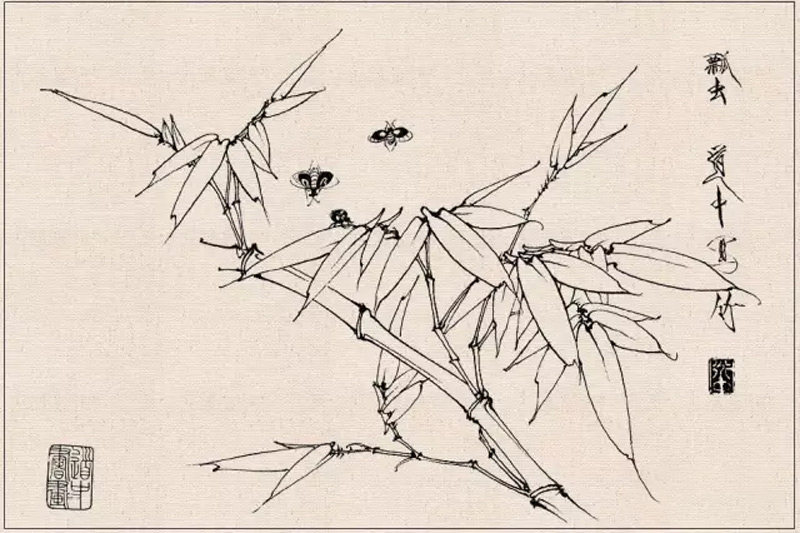
Plants possess distinct personalities, often embodying cultural symbolism through their endurance. Pine, bamboo, plum, chrysanthemum, and hibiscus withstand harsh cold, frost, wind, and snow. This resilience earned them symbolic status, representing steadfastness. Pine and plum branches, resisting snow and ice, develop rugged, twisted forms. Plum blossoms thrive in winter snow, their branches growing at sharp angles, unlike peach or apricot. Ancient artists noted plum branches resemble the character for 'woman' due to their frequent bends.
Hibiscus, blooming defiantly before frost, was termed “Frost Resister”. Chrysanthemums bloom even later, enduring severe cold, earning the name 'Frost Defender'. Bamboo symbolizes vigor with its hollow, upright stems and upward-pointing segments. Orchids, often found deep in forests, exude an effortless grace, avoiding competition, seen as embodying noble refinement. Together, plum, orchid, bamboo, and chrysanthemum are revered as the 'Four Nobles', representing scholarly virtue.
Other plants show different sensitivities. Peonies and tree peonies, large-petaled spring bloomers, are delicate. They unfurl at dawn, close at dusk, and wilt in midday heat. Their optimal viewing is mid-morning or late afternoon. Lotus flowers open at dawn, close by noon, reopen the next day, and fade by the third. Both peonies and lotuses bloom from the center outwards and close inwards. Observers discern morning blooms from afternoon closures. Night-blooming cereus and epiphyllum flower briefly at night, lasting mere hours, exemplifying fleeting beauty. Hibiscus mutabilis blooms white in the morning, turning pink by afternoon.
Morning is universally prime time for flowers. Dew-kissed petals stand erect, releasing fragrance under the first light. Capturing this vibrant essence requires sensing the plant's vitality and grace. “Spring sheds petals, autumn sheds blossoms” highlights a seasonal difference. Most spring flowers lose individual petals; many summer/autumn flowers like hibiscus drop entire blossoms. Phototropism dictates growth; stems reach for light, leaves face upwards for photosynthesis. Branches generally grow inwards and upwards. Artists note 'leaves turn without wind' is significant. While most trees exhibit inward growth, pagoda trees show distinct outward-reaching 'sparrow foot' branches, and weeping willows curve downwards uniquely. This light-seeking trait allows cultivation techniques like cascading chrysanthemums.
2.3 Distinctive Forms
The sheer variety of plant forms demands attention to unique characteristics. The majestic kapok tree, tall with fiery red blooms, is celebrated as a “hero flower”. Artists emphasize its towering presence. Luxuriant blooms like peonies and tree peonies call for depictions of opulence. Fragrant, elegant orchids and narcissus require capturing delicate beauty. Upward-facing magnolias demand portrayals of proud stature. Drooping flowers like begonias and fuchsias need rendering with soft, resilient stems that sway gracefully. Fruit-laden branches should convey abundance and ripeness.
Recognizing subtle differences is crucial. Early bloomers like winter jasmine and forsythia, or plum and apricot blossoms, share similarities—flowering on bare branches in similar hues. Close inspection reveals distinct traits. The same applies to differentiating peach and cherry blossoms, or pear and crabapple flowers. Leaf shapes vary immensely. Palmate leaves, often five-lobed, resist formulaic representation; their specific variations matter. While most leaves exhibit symmetry, exceptions exist. Arrowhead and sagittaria leaves have backward-pointing lobes, with unique vein patterns and petiole attachments.
Basic botanical knowledge aids perception. Analyzing a plant reveals its true growth patterns, structure, character, and essence. This deeper understanding prevents distraction by superficial appearances, enabling artists to distill life into authentic, resonant forms. It bridges observation and meaningful artistic creation.

3. Xiesheng Essentials for Artists
Master painters begin by studying great works before approaching living subjects. This prepares their vision to discover beauty in nature. They apply learned techniques without forcing preconceived frameworks, trusting personal perception above rigid formulas. Each flower demands thoughtful perspective selection—circling specimens to find their most revealing angles. Downward-facing blooms like begonias require upward views to avoid wilted appearances. Peonies and magnolias unveil their centers best from above. Trumpet-shaped blossoms need three-quarter angles to show depth. This initial observation shapes the entire artistic process.
3.1 Studying Life
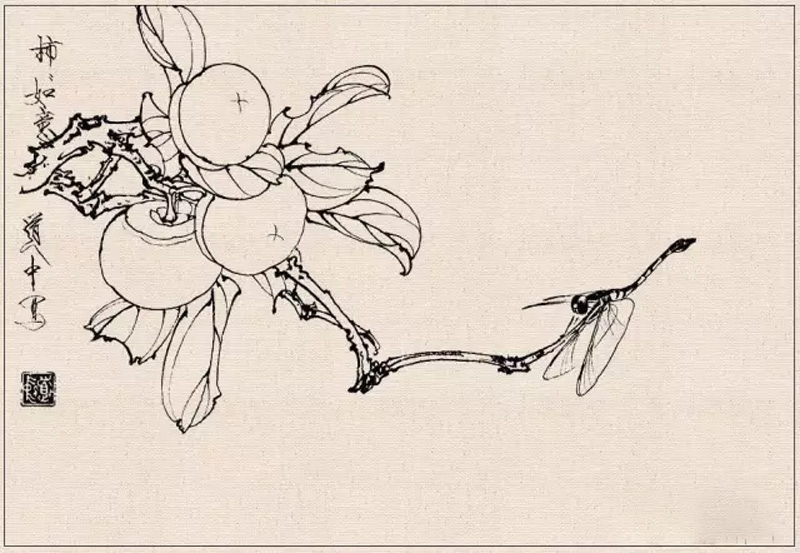
Xiesheng (写生) starts with defining the plant's overall structure. Artists progress petal by petal from foreground to background, ensuring each connects organically to the heart. Disconnected elements must be revised. Comprehensive studies document single stems fully—blossom, leaf, and stalk—revealing growth patterns while refining technique. This meticulous recording builds foundational knowledge.
Painters gather reference materials systematically. They collect flower portraits from multiple orientations: front, side, back, and bud stages. Leaves are captured in varied positions. Quick gesture sketches capture compositional frameworks efficiently. Color notes and growth habits supplement visual records. These three approaches—detailed studies, multi-angle references, and structural outlines—provide raw material for future creations.
3.2 Capturing Movement
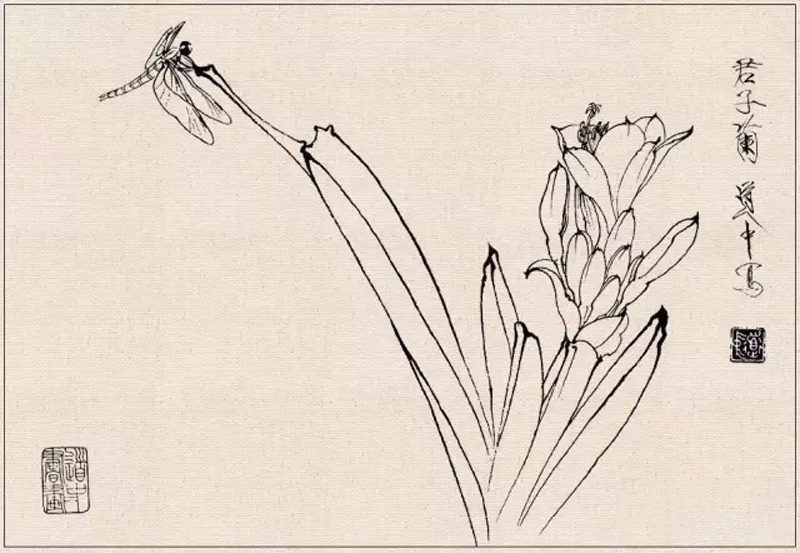
Suxie (速写) trains artists to seize dynamic essence swiftly. It distills subjects to their vital lines and rhythms within minutes. Practitioners learn to observe birds mid-flight or blossoms trembling in wind, translating fleeting moments onto paper. Essential contours replace intricate details, prioritizing motion and character.
This skill develops through progressive practice: beginning with static subjects before advancing to quick movements. Confident strokes extract key lines from complex actions while maintaining movement continuity. Environmental inspiration guides composition during these rapid sessions. Mastery demands persistent effort—slower practice gradually accelerates until capturing life’s pulse becomes instinctive.
3.3 Painting From Memory
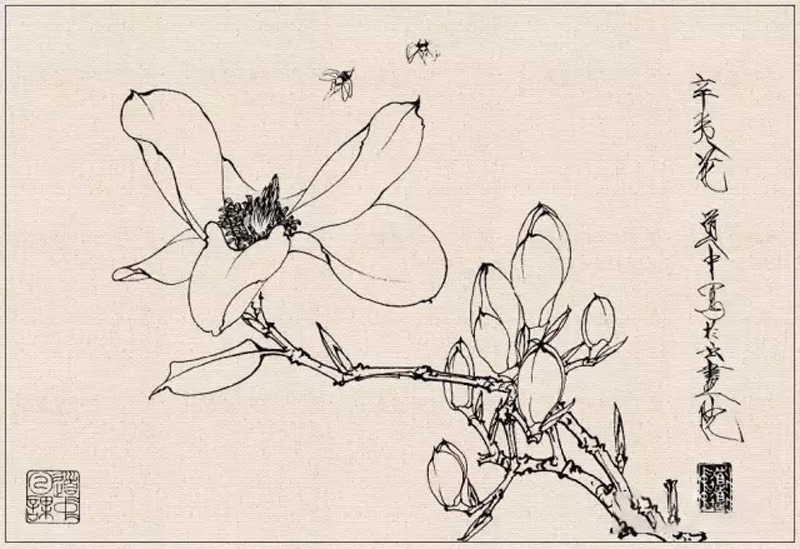
Moxie (默写) integrates observation and technique through recall. Even quick sketches involve memory as artists glance between subject and paper. This method manifests in two forms: recreating adapted versions of copied artworks, or reconstructing scenes using sketch references and imagination. Both approaches synthesize learning into original expression.
Memory drawing transforms nature into heightened reality. The painter’s mind refines subjects into more vivid, emotionally resonant versions than mere sight provides. These mental images blend objective forms with subjective feeling. Such internalization completes the transition from study to creation, allowing artists to paint with visions clearer than life itself. When eyes close, the subject persists; when brush meets paper, it flows unbidden.

4. Composition of Flower-Bird Sketch
Capturing the essence of flowers and birds begins not with the brush, but with the eye. Artists immerse themselves in nature, observing plants and creatures closely, gathering raw material through sketching. This initial stage is crucial. Simply collecting sketches isn't enough; these studies must evolve into complete artworks. This transformation demands more than technical skill. It requires a deep understanding of the subject's growth patterns and natural behaviors. The artist must analyze collected sketches, identifying poses that best represent the subject's unique character and finding angles that offer visual harmony and interest. Only then can thoughtful refinement begin, selecting and enhancing elements to serve the final vision.
4.1 Observing Nature Deeply
Effective contour drawing starts with keen perception. Artists study the physical form, inherent qualities, and dynamic states of their subjects. This understanding guides how they capture a bird’s fleeting posture or the delicate structure of a blossom. Developing this awareness is fundamental. It allows the artist to move from isolated details to grasp the whole scene, and back again. Whether creating a small study of a single branch or preparing for a large, complex work, this observational discipline underpins all approaches.
This practice cultivates a sensitivity to nature’s vitality. It trains the eye to see the inherent beauty and rhythm in living things. Over time, the artist learns to discern the subtle gestures that reveal a plant’s resilience or a bird’s alertness. This deep connection forms the bedrock for artistic expression, enabling genuine portrayal rather than mere imitation. The resulting sketches possess authenticity and life.
4.2 Building the Picture
Composition is where observation transforms into art. It involves organizing gathered sketches into a cohesive, independent image. Chinese painting offers a unique tool: the "scattered perspective." This method liberates the artist from fixed viewpoints and time constraints. Creators can freely shift perspective – looking down from above, gazing into the distance, or focusing up close – selecting and arranging elements solely to serve the picture’s needs. Spatial logic bends to artistic vision.
This freedom allows artists to combine elements witnessed at different moments into a single, harmonious scene. They draw upon their grounded knowledge of the subject’s nature while actively applying compositional principles. Shapes, lines, and negative space are carefully balanced through repeated refinement. The goal is to create an arrangement that feels both true to life and elevated into a compelling artistic statement. It’s a process demanding bold decisions and meticulous attention.
4.3 Lines as Foundation
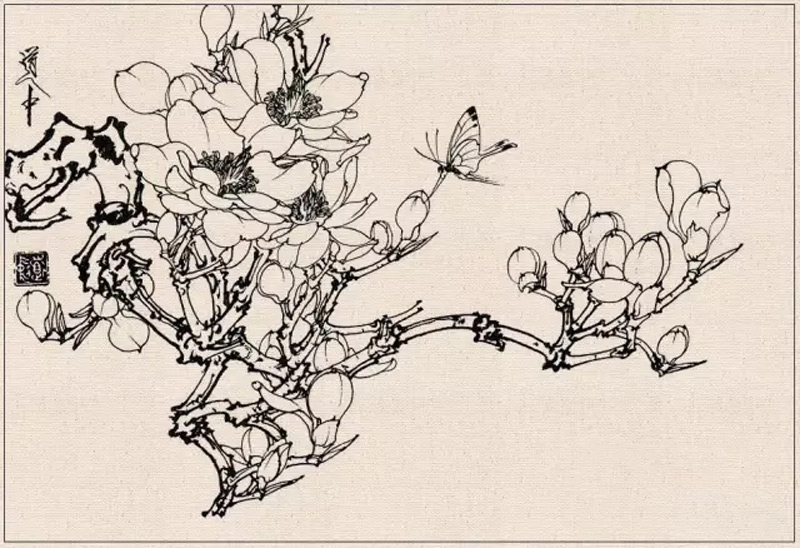
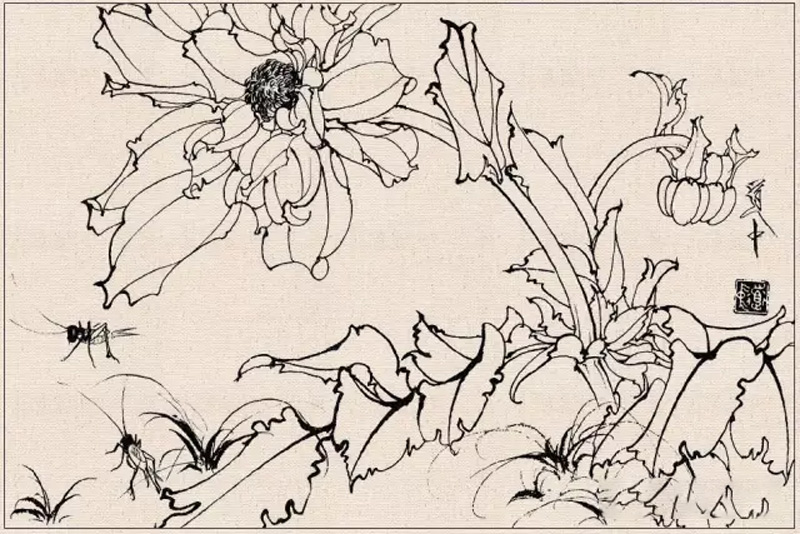
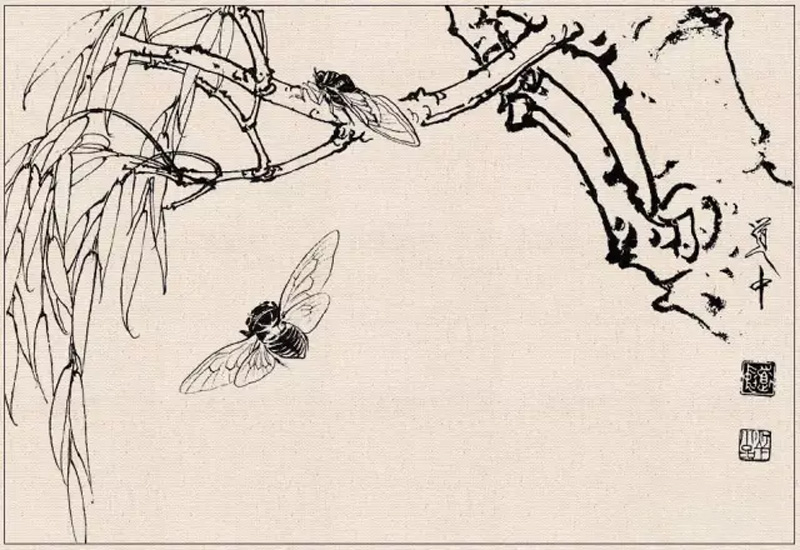
Contour drawing practice, or baimiao (白描), cultivates essential artistic consciousness. It bridges the gap between seeing and creating. This disciplined approach, focusing purely on line to define form, structure, and texture, develops crucial skills. It teaches economy and precision, forcing the artist to convey the essence of a subject through minimal yet deliberate strokes. The line itself carries weight and expression.
Mastering this technique provides the structural "bones" for all styles of flower-and-bird painting, whether meticulously detailed or freely expressive. It fosters an intimate connection with the subject, allowing the artist’s personal response and contemporary sensibility to emerge. This foundational practice remains vital, directly supporting the creation of works that resonate with genuine feeling and artistic integrity. It keeps the art form dynamically connected to both tradition and the pulse of modern life.
Final Words
Ultimately, the art of Chinese flower-and-bird painting is a synthesis of deep observation, technical skill, and profound emotional connection. It moves beyond mere imitation to express a heightened reality, where the artist's inner vision meets the outer form of nature. From the initial discipline of “Xiesheng” and “baimiao” to the creative freedom of composition and memory drawing, the artist learns to distill the essence of life onto paper. This ancient practice, grounded in an understanding of natural patterns, cultural symbolism, and poetic feeling, remains a vibrant and dynamic tradition. It continues to resonate because it captures not just the form, but the very spirit and enduring harmony of the natural world.