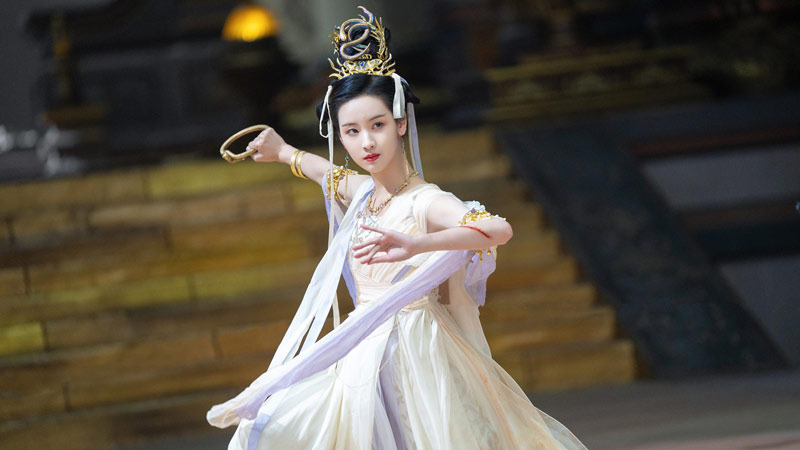
Chen Duling, a former aerospace engineering student at Nanjing University of Aeronautics and Astronautics, has evolved from an internet-famous "campus beauty" into one of China's most versatile actresses. Her delicate features and intellectual aura bring depth to historical and fantasy roles. Here are her essential costume dramas:
 The Legend of the Heroes 金庸武侠世界
 The Legend of the Heroes 金庸武侠世界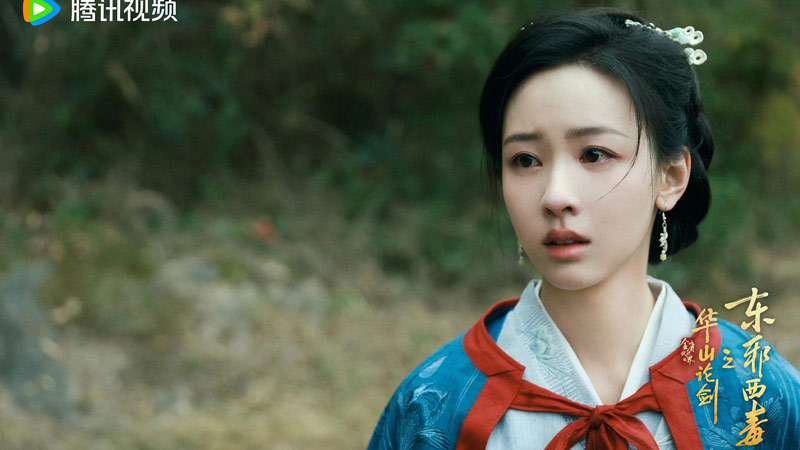
- Aired: Jun 26, 2024 (Tencent Video)
- Period Background: Southern Song Dynasty martial arts world, focusing on rival clans and Peach Blossom Island.
- Genres: Wuxia, tragedy, female empowerment.
- Main Roles: Chen Duling as Feng Heng, Meng Ziyi as Mei Chaofeng.
- Adapted From: Jin Yong's The Legend of the Heroes, expanding Feng Heng and Mei Chaofeng's backstory.
Feng Heng stands apart in Jin Yong's martial universe as a rare non-combatant intellectual. Unlike archetypal wuxia heroines who resolve conflicts through physical prowess, Feng navigates the treacherous Peach Blossom Island and clan rivalries using scholarly insight and psychological acuity. Her pivotal role emerges when she encounters Mei Chaofeng, a martial artist consumed by vengeance after personal betrayals.
Instead of condemning Mei's violent quest, Feng engages her through philosophical dialogues about karma and consequence, subtly comparing revenge to "drinking poison to quench thirst" (饮鸩止渴). Her quiet library becomes a sanctuary where Mei confronts the emotional void beneath her fury.
In a world where women are often reduced to romantic subplots or femme fatales, Feng and Mei forge a bond centered on mutual healing. Feng's preservation of Huang Yaoshi's manuscripts—knowledge traditionally guarded by men—symbolizes her role as a cultural gatekeeper, while Mei's gradual pivot from destruction to protection (e.g., shielding Feng from assassins) redefines strength as collaborative resilience.
The drama reframes the classic "master-apprentice" trope into a sisterhood narrative. Their final act—burning the The Legend of the Heroes to prevent further bloodshed—serves as a metaphor for rejecting patriarchal cycles of violence.
Chen Duling's Transformative Performance
Chen's portrayal transcends visual tropes by embedding emotional storytelling within physical fragility. The much-discussed blood-stained white robe scene—where Feng shields Mei during a clan ambush—became a viral moment not for its spectacle but for its symbolism:
The contrast of blood spreading across her pristine Hanfu mirrors Feng's commitment to "staining" herself morally to preserve another's humanity. Costume designers confirmed the robe's hue shifted from ivory to tea-stained beige post-trauma, reflecting her loss of innocence.
Chen elevates Feng from a supporting role to the series' moral compass through meticulously crafted details:
Her trembling hands while serving tea (episode 8) are not signs of fear but intentional demonstrations of vulnerability-as-strength. Director Cao Dun revealed Chen studied Song Dynasty tea ceremonies to perfect the "controlled shake" conveying emotional suppression.
In episode 12, Feng calms a rampaging Mei by silently placing a handwritten scroll in her lap—an act requiring zero dialogue. Chen's choice to lower her gaze rather than meet Mei's eyes telegraphs respect for the latter's autonomy, transforming a passive moment into active empathy.
Visual Symbolism
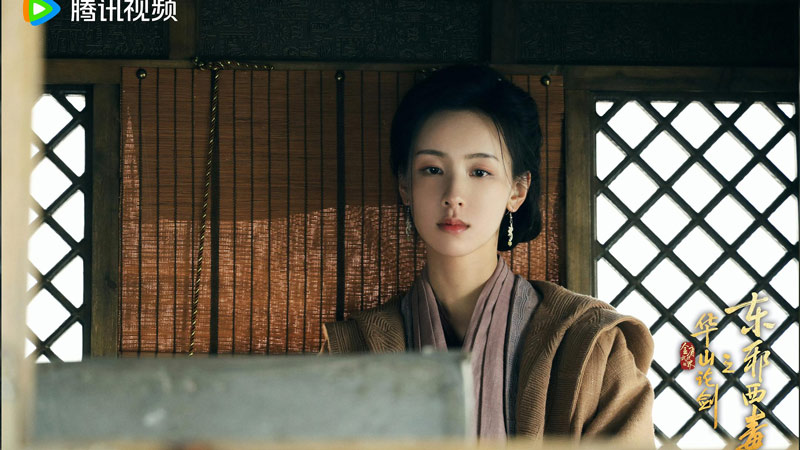
The "crimson-white duality" between Chen (Feng) and Meng (Mei) visualizes the series' core theme:
Color Semiotics: Feng's white/beige hanfu represents Confucian idealism and purity, while Mei's crimson robes signify raw passion and societal rebellion. Their shared screen compositions often frame them as yin-yang halves—opposed yet complementary.
Relevance to Contemporary Storytelling
The Legend of the Heroes resonates beyond wuxia tropes by reframing intellectualism as heroic: Feng challenges the prevalent "martial artist = empowerment" formula. Her victory lies in outthinking opponents—such as exposing a traitor through manipulated calligraphy strokes (episode 15)—proving brain over brawn can anchor mainstream narratives.
Final Frame: Feng's closing whisper to Mei—"The greatest manual was never parchment, but the choices we preserve"—cements Chen's performance as a landmark in redefining feminine power in historical epics.
The Glory 雁回时
 The Glory 雁回时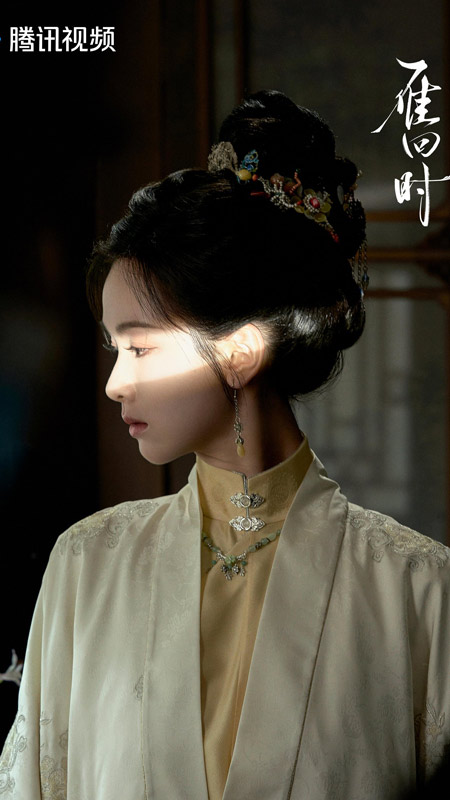
- Aired: March 18, 2025 (Tencent Video)
- Period Background: Fictional dynasty, clan conflicts.
- Genres: Historical romance, revenge.
- Role: Chen Duling as Zhuang Hanyan, a disowned heiress.
Zhuang Hanyan's exile to a drought-stricken rural province frames her not as a victim but a strategist in gestation. The series meticulously deconstructs feudal power dynamics: her disinheritance stems from her father's concubine framing her mother for adultery—a crime punishable by clan execution under Ming-era patriarchal laws (ancestral codes cited in dialogue). Her return to the Zhuang estate is no mere homecoming; it's an infiltration.
Zhuang leverages marginalized groups as chess pieces: She funds impoverished intellectuals' civil service exams, creating indebted allies in future bureaucracy. Her textile trade partnerships (historically accurate Songjiang cotton monopolies) finance intelligence networks. A dismissed wet nurse becomes her spy, exploiting unguarded gossip in inner chambers.
Her half-brother's salt-smuggling operation—a nod to Ming-era corruption—threatens the clan's imperial standing. Zhuang's exposure of his ledger (episode 14) triggers a domino effect: concubines' poison plots, forged inheritance documents, and even a banned guzheng melody used to signal assassinations.
Her climax isn't a wedding or battle, but a literary victory: composing a memorial verse at the Emperor's poetry contest that obliquely references the clan's crimes, forcing a public investigation. This mirrors historical cases like Wanli Emperor's censure of corrupt nobles.
Chen Duling's Paradigm-Shifting Performance
Chen's portrayal dissects the duality of survival in misogynistic systems:
Facade Engineering: Her "innocence" manifests as deliberate social optics—e.g., wearing unadorned silk to contrast concubines' extravagance.
In episode 7, she "gifts" a rival a poisoned hairpin while tearfully declaring sisterhood. Chen's delivery—voice trembling yet eyes steely—reveals trauma weaponized into strategy.
The "Rainy-Night Self-Rescue" Scene: A Masterclass in Symbolic Resistance
This sequence (episode 9) redefines resilience:
Zhuang digs her mother's corpse from a muddy grave during a thunderstorm, dragging it 3 li (1.5km) to the magistrate's office. Chen performed the stunt knee-deep in real sludge, rejecting CGI.
Lightning illuminates her bloodied hands clutching burial cloth—a direct challenge to Confucian "filial piety" performativity. The corpse's jade bracelet (proof of nobility) glints against rot, symbolizing truth amidst decay.
Villainess Nuance
Antagonist Concubine Wang isn't evil but desperate—a merchant's daughter sold to clear debts. Zhuang's final confrontation offers her opium to "forget" rather than kill, critiquing systemic complicity.
Cultural Resonance & Production Innovation
Ming Dynasty Authenticity: The Zhuang estate replicates 16th-century Suzhou gardens, with rockeries hiding secret passages. Clan rituals cite Zhu Family Compact texts, while market scenes feature period-accurate shadow puppetry.
Feminist Revisions: Screenwriters adapted Zhuang from a minor Water Margin bandit, transforming "revenge" into institutional reform—e.g., abolishing foot-binding in her fiefdom (episode 22).
Chen's Method Prep: She studied Ming court archives and trauma psychology, noting: "Zhuang's 'black' side isn't malice—it's the scar tissue of injustice". Zhuang's coronation as clan matriarch shows her burning the ancestral ledger. Smoke curls into the phrase "No Regrets"—Chen's smile, bittersweet yet triumphant, cementing The Glory as a manifesto for structural change.
Fangs of Fortune 大梦归离
 Fangs of Fortune 大梦归离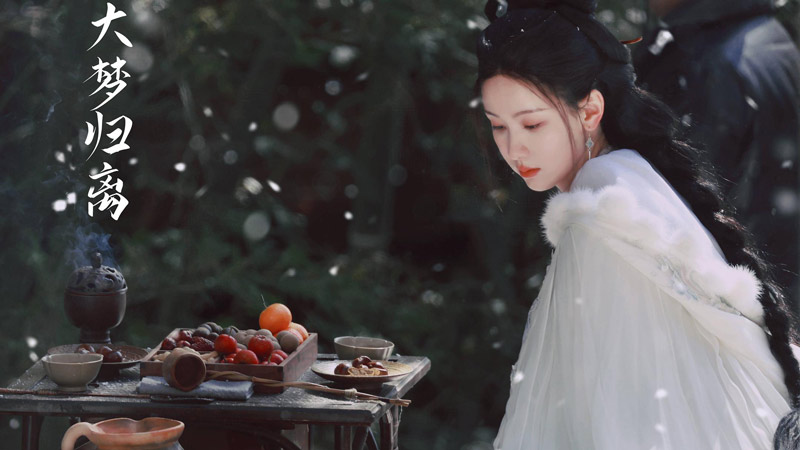
- Aired: Premiered October 26, 2024
- Period Background: Set in the fictional dynasty of Zhenyuan, a realm blending Tang Dynasty aesthetics with mythical jianghu(martial world) elements. The world teems with Yao (shape-shifting beasts, 妖) from Shan Hai Jing(Classic of Mountains and Seas, 山海经), coexisting uneasily with human factions like the monster-hunting Chongwu Battalion and the marginalized Demon Capture Bureau.
- Genres: Fantasy Romance, Wuxia Adventure, Supernatural Suspense.
- Main Roles: Hou Minghao as Zhao Yuanzhou, the immortal demon Zhu Yan, weary of eternity and seeking death. Chen Duling as Wen Xiao, a human scholar with latent spiritual powers, driven by empathy for persecuted demons. Tian Jiarui as Zhuo Yichen, leader of the Demon Capture Bureau, sworn to kill Zhu Yan. Cheng Xiao as Bai Shuang , a snow fox demon navigating human conflicts.
- Adapted From: Loose reinterpretation of Shan Hai Jinglegends, with original characters and arcs by Guo Jingming.
Zhao Yuanzhou, the ancient demon Zhu Yan, has spent centuries longing for death after witnessing endless cycles of human cruelty and demon persecution. His quest to end his immortality leads him to the embattled Demon Capture Bureau, where its idealistic but struggling leader, Zhuo Yichen, sees him as the ultimate trophy to restore the Bureau's reputation. Their clash—Zhuo's righteous fury versus Zhao's nihilistic wit—unravels when Wen Xiao, a compassionate scholar, intervenes to protect a minor demon wrongly targeted by the brutal Chongwu Battalion.
Forced into an uneasy alliance, Zhao offers Zhuo a bargain: he will join the Bureau to dismantle the Chongwu Battalion's corruption, demanding Wen Xiao's assistance in return. As they investigate supernatural cases—vanishing villages, cursed artifacts, and political conspiracies—Wen Xiao's empathy challenges Zhao's despair, while Zhuo grapples with his prejudice against demons. The trio's mission evolves into a battle for coexistence in a world where humans and yaoare pawns in a celestial game.
Why Watch?
Guo Jingming's Mytho-Visual Extravaganza Director Guo Jingming (My Journey to You) amplifies his signature opulence:
Fight sequences mimic anime fluidity, with Zhao manipulating ink-like shadows and Zhuo's sword unleashing calligraphic energy.
Demons draw directly from Shan Hai Jinglore—e.g., the nine-tailed fox Bai Shuang materializes ice crystals; river spirits manifest as watery silhouettes—rendered with CGI that prioritizes stylization over realism.
"Anti-Hero" Core: Zhao's nihilism contrasts sharply with typical xianxiaprotagonists. His sarcastic quips ("I'm not a fraud—just a bored immortal") mask profound grief, making his reluctant redemption compelling.
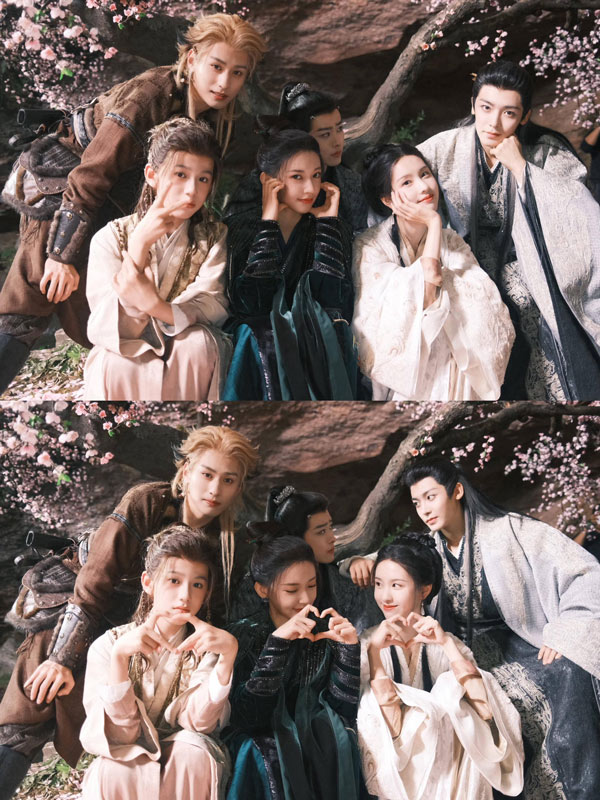
Chen Duling's Quiet Power
As Wen Xiao, Chen transcends the "manic pixie dream girl" archetype:
Intellectual Empathy: Her strength lies in observation and deduction. In Episode 1, she identifies a disguised demon through behavioral tics (e.g., flinching at rain—a vulnerability to holy water), not combat.
Emotional Anchor: Chen's micro-expressions convey trauma—a trembling lip as she buries a slain demon; steely resolve when confronting Zhuo's bias. Her chemistry with Zhao evolves from wariness to melancholic trust, epitomized in a lantern-lit scene where she whispers, "If life has no meaning, why save me?".
Till the End of the Moon 长月烬明
 Till the End of the Moon 长月烬明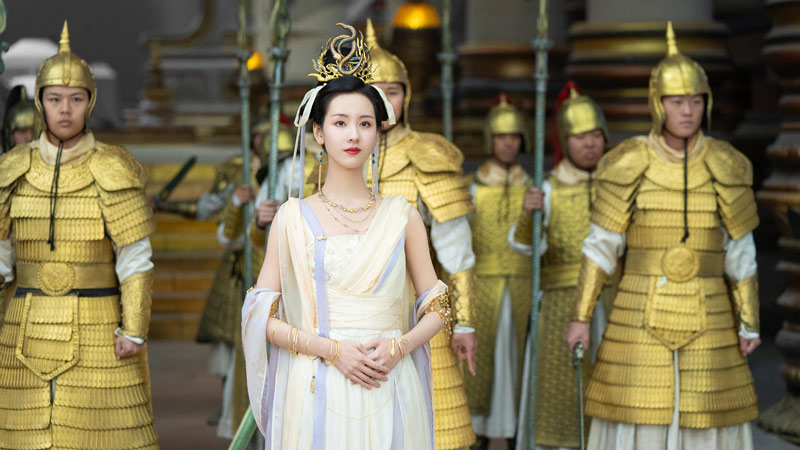
- Aired: April 6, 2023 (Youku)
- Period Background: Xianxia (celestial fantasy) realm.
- Genres: Fantasy, tragedy.
- Role: Chen Duling as triple roles (Ye Bingchang/Tianhuan/Concubine).
Tianhuan is a celestial deity whose obsession with the war god Tantai Jin (Luo Yunxi) drives her to commit atrocities disguised as divine intervention. Her arc subverts xianxia tropes in three key ways:
- As a guardian of cosmic order, Tianhuan abuses her authority to sabotage Tantai Jin's mortal trials, orchestrating plagues and political coups to isolate him—framed as "divine retribution" against his demonic lineage.
- Her "redemption" attempts involve murdering mortals who bond with Tantai Jin, including poisoning the female lead Li Susu (Bai Lu) with Fragmented Soul Jade—a toxin mimicking Buddhist kleshas (afflictions) that induces eternal hallucinations.
- Her final act—tearing open the Demon Abyss to force Tantai Jin's reliance on her—triggers a karmic backlash that erodes her divinity, turning her pearl-white skin into cracked jade (a visual metaphor for corrupted purity).
Chen Duling's Performance: Humanizing Malice
Chen weaponizes Tianhuan's ethereal beauty to amplify her menace:
Her costuming (white hanfu with silver lotus motifs) and posture (floating meditation pose) directly reference Bodhisattva Avalokitesvara's iconography—particularly the "thousand-armed" deity's compassionate gaze and haloed crown. This deliberate mimicry makes her violence more jarring, as when she impales a devotee while chanting a sutra.
Chen's "still-face technique"—maintaining serene poise while her eyes flicker with rage (e.g., tightening pupils when Tantai Jin rejects her)—creates uncanny unease. Director noted this subverts the "illness beauty" trope by fusing elegance with predatory stillness.
Chen avoids cartoonish villainy by grounding Tianhuan's cruelty in trauma:
Flashbacks reveal Tianhuan's fixation stems from Tantai Jin saving her during the Immortal-Demon War. Chen portrays this as a spiral into dependency: her trembling hands when forging cursed artifacts mirror withdrawal symptoms, while euphoric smiles during killings reflect dopamine-fueled relapse.
In Episode 24, Tianhuan shatters her celestial mirror after seeing Tantai Jin embrace Li Susu. Chen's breakdown—collapsing to her knees, then laughing through tears—reveals pathological loneliness.
Tianhuan is no mere obstacle for the leads. Chen's portrayal—a celestial saint choking on her own venom—exposes how systems of power corrupt even the divine. Finale monologue ("Was I evil... or just unloved?") reframes her as a casualty of celestial patriarchy, garnering feminist media praise as "a Madame Bovary of the heavens".
The "blood-tear" scene (Episode 32), where Tianhuan cries rubies while disintegrating, inspired edits on TikTok (1.2M+ creations). Chen won the 2024 Magnolia Award for "Best Supporting Actress" for "redefining villainy through fragile grandeur," with jurors noting her "ability to weaponize stillness".
Mysterious Lotus Casebook 莲花楼
 Mysterious Lotus Casebook 莲花楼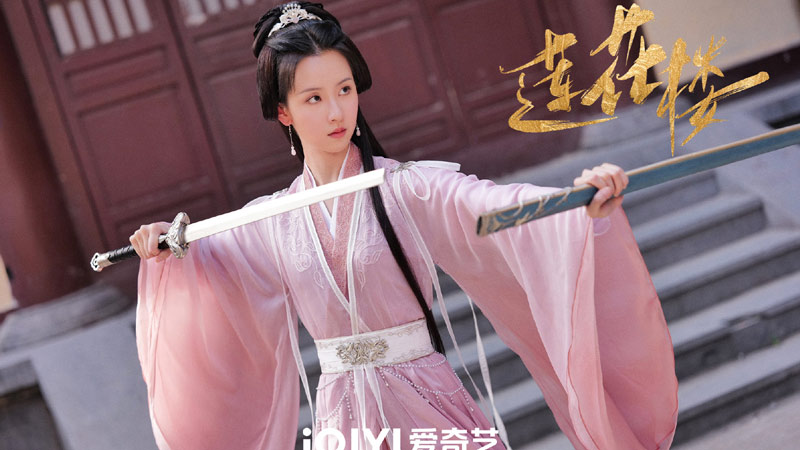
- Aired: July 23, 2023
- Period Background: Set in a jianghu (martial arts world) ten years after a great sect war, merging historical aesthetics with detective intrigue.
- Genres: Wuxia, Suspense, Mystery Investigation.
- Main Roles: Cheng Yi as Li Lianhua/Li Xiangyi (disgraced sect leader turned healer). Zeng Shunxi as Fang Duobing (idealistic young detective). Chen Duling as Qiao Wanmian (Li Xiangyi's former love, the "First Beauty of Martial Arts").
- Adapted From: Teng Ping's novel The Legend of Lucky Lotus.
After vanishing for a decade following a catastrophic battle that shattered his sect, the legendary martial arts leader Li Xiangyi resurfaces as Li Lianhua, a humble traveling physician who roams the countryside in a mobile clinic called the Lotus House. Despite seeking solitude, he is drawn into solving bizarre supernatural cases—such as vanishing corpses, cursed bridal gowns, and royal conspiracies—alongside the idealistic nobleman Fang Duobing and his former rival Di Feisheng. Their investigative journey unravels a sprawling conspiracy tied to Li's past, forcing him to confront the trauma and betrayals that led to his exile. Each case peels back layers of a central mystery involving the fallen Sigu Sectand Jinmeng Alliance, culminating in a battle that challenges Li's resolve to remain detached from the martial world he abandoned.
Why Watch?
Genre-Defying Narrative: Transcending traditional wuxiatropes, the series masterfully blends martial arts with detective fiction and psychological drama. Each episodic case dissects human frailties—grief, moral ambiguity, redemption—while advancing an overarching plot about legacy and identity. The show's structure, adapted from Teng Ping'snovel The Legend of Lucky Lotus, interweaves 10+ intricate cases (e.g., Jade City Conspiracy, Ghost Bridal Gown) into a cohesive saga about atonement.
Unforgettable Ensemble Dynamics: The trio's evolution—from mutual distrust to loyal brotherhood—anchors the series. Li Lianhua's wit and resignation contrast Fang Duobing's fiery idealism, while Di Feisheng's ruthless exterior masks unexpected vulnerability. Their banter provides levity, but their shared sacrifices (e.g., Fang defending Li against sect betrayals) deliver profound emotional depth.
Chen Duling's Resonant Performance: As Qiao Wanmian, Li's former lover and the "First Beauty of Martial Arts", Chen embodies elegance fractured by sorrow. Her portrayal of a woman torn between duty to her sect and lingering love for Li is hauntingly restrained. In key scenes—like her sword ceremony mourning Li's "death" or wordless flashbacks of their past—Chen conveys devastation through subtle glances and poised physicality, eschewing melodrama. Her arc epitomizes the series' theme: even heroes are defined by what they relinquish.
A Journey to Love 一念关山
 A Journey to Love 一念关山
- Aired: November 28, 2023
- Period Background: Set in the fictional rival kingdoms of Wu and An, where espionage agencies dominate court politics.
- Genres: Wuxia, Espionage Thriller, Road Adventure.
- Main Roles: Liu Shishi as Ren Ruyi (exiled assassin). Liu Yuning as Ning Yuanzhou (disgraced intelligence chief). Chen Duling as Empress Xiao Yan (Queen of Wu).
After Wu's emperor is captured in battle, his pregnant empress Xiao Yan faces court chaos: the regent Prince Danyang plots usurpation, while the scheming chancellor Zhang Song manipulates factions. To secure her unborn child's throne, Xiao Yan masterfully stalls Danyang's ambitions—publicly demanding the emperor's rescue while covertly sabotaging the mission. She manipulates the naive princess Yang Ying into leading a perilous diplomatic team to An, hoping they fail so she can rule as regent. Meanwhile, assassin Ren Ruyi and spy master Ning Yuanzhou form an uneasy alliance to protect Yang Ying, navigating battlefield conspiracies and their own moral boundaries.
Xiao Yan's arc redefines "palace scheming". Her every move—from publicly declaring her pregnancy to privately bargaining with Danyang—prioritizes power over sentiment. When confronted by her former lover Danyang, she coldly declares: "I prefer being Empress Dowager. As queen, my glory depends on your favor; as regent, the power is mine alone".
As Xiao Yan, Chen blends regal poise with chilling pragmatism. She humanizes the character's ruthlessness: her tearful confrontation with Danyang reveals buried affection, yet her resolve never wavers. With under 10 scenes, Chen crafts a queen who is neither monstrous nor redeemable—simply a woman weaponizing patriarchy against itself.
The Standout 翘楚
 The Standout 翘楚
 Upcoming (filming began May 2025; air date TBA).
- Period Background: Warring States-era Chu, where noble houses vie for supremacy.
- Genres: Historical Epic, Female-Centric Revenge, Military Strategy.
- Main Roles:Chen Duling as Chu Zhao (general's daughter turned rebel leader). Zhou Yiran as Xie Yanlai (outcast-turned-commander).
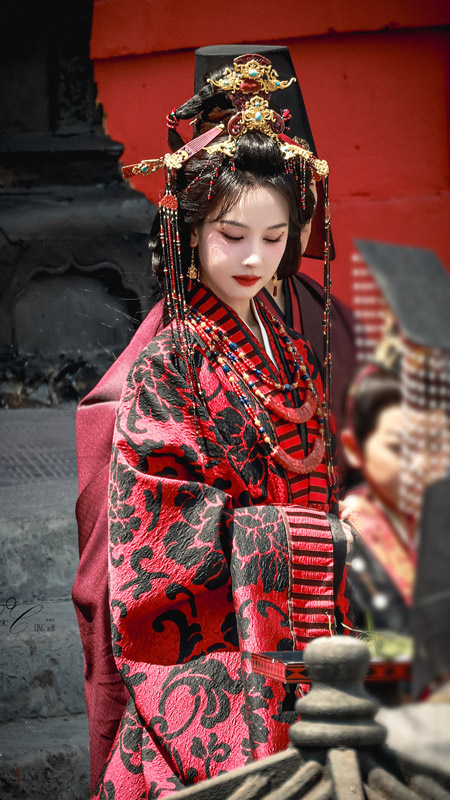 Upcoming (filming began May 2025; air date TBA).
Chu Zhao escapes being sacrificed in prince Xiao Qi's power grab by allying with Xie Yanlai, a disgraced noble's son. Together, they rally peasants and soldiers against Xiao Qi's tyrannical alliance with foreign invaders. After initially fleeing the capital, Zhao witnesses civilians brutalized by war and returns to install a child emperor, governing as regent until his coming-of-age. Her journey evolves from survival to sovereignty—training Xie into a general while outmaneuvering betrayal on and off the battlefield.
Why Watch?
Rebirth Without Reincarnation: Unlike typical "revenge rebirth" tales, Zhao's transformation is psychological, not supernatural. Her resilience stems from trauma, not divine intervention—making her strategic genius (e.g., leveraging Xie's military acumen) feel earned.
Chen Duling's Warrior Physique: Early stills reveal Chen in battle-worn armor, directing troops—a stark contrast to Xiao Yan's silken robes. Per director Yang Long (The Standout's director), Chen trained in horseback archery and spear combat to embody Zhao's "general-in-the-making" grit.
Visual Grandeur: Teasers hint at The Standout's aesthetic—gritty warscapes juxtaposed with opulent court scenes, filmed with Yang Long's signature chiaroscuro lighting.
"Labels are signposts, not shackles," Chen asserts. Her journey—bridging engineering precision and artistic intuition—cements her as the definitive interpreter of China's classical spirit.