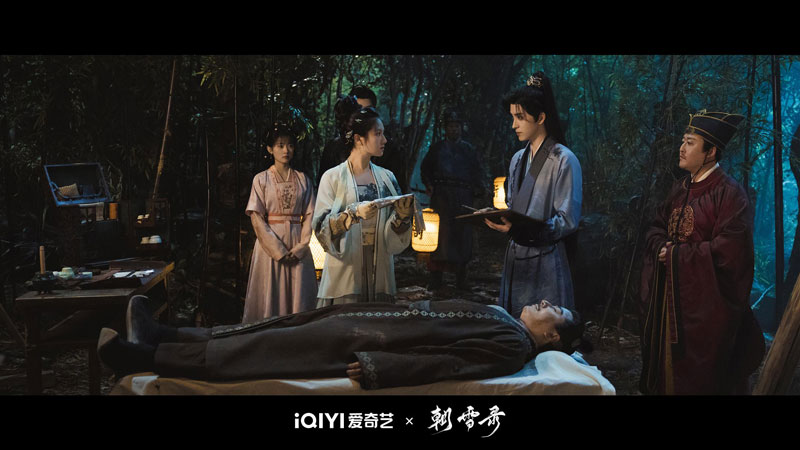
I've been binging Coroner's Diary lately—a historical detective drama starring Li Landi and Ao Ruipeng—and I have to say, I'm obsessed. The cast is ridiculously good-looking, the story blends Chinese horror with level-up-style crime solving, and the whole thing has me equal parts creeped out and glued to the screen. And guess what? Morning Snow is just the beginning. There are six more period mystery dramas lined up for release this year. Let's take a look at what's coming.
 Towards The Truth 朝云散
 Towards The Truth 朝云散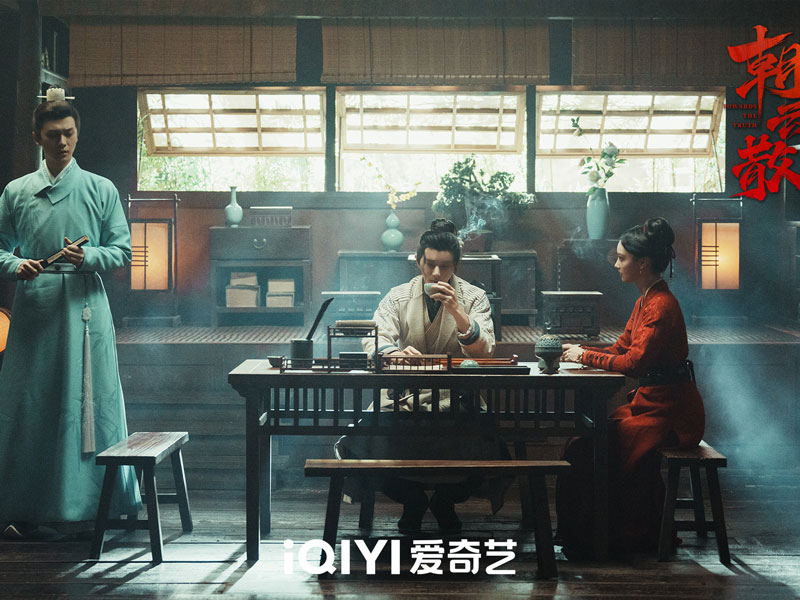
Ten years ago, the entire Shen family was wiped out in a single night. Only one boy survived—Shen Song. Since then, he's been living with one goal: clear his family's name and get justice. He throws himself into his studies, eventually topping the imperial civil exams. But when he petitions the emperor to investigate the massacre, he's cast out of court instead.
Disillusioned by the rot at the heart of the system, Shen Song gives up his political aspirations and starts over as a cook. For a while, it seems like he's let go of the past. But when a fire breaks out at the Huamen Tower during the Empress Dowager's birthday festival—revealing dozens of buried skeletons—he can't stay quiet any longer. With the local magistrate refusing to act, Shen Song defies imperial decree and takes matters into his own hands, officially becoming a wandering investigator by imperial appointment.
From there, the story kicks into high gear. Each new case draws him deeper into the shadows of the empire. Along the way, he teams up with Li Qiner, Gongsun Li, and the badass fighter Zhan Mao'er (yes, she's exactly as cool as she sounds). As they dig, the mystery of the Shen clan's slaughter starts to unravel, revealing a far more dangerous conspiracy involving betrayal, buried truths, and national secrets.
If the setup sounds familiar, that's because it is—it's loosely based on The Legend of Judge Bao, a comic series inspired by the legendary Song Dynasty justice Bao Zheng. The drama leans into this with a detective squad that feels like a remix of classic Judge Bao tales: two male leads, a beautiful sorceress-type, and a warrior woman who can throw hands with the best of them.
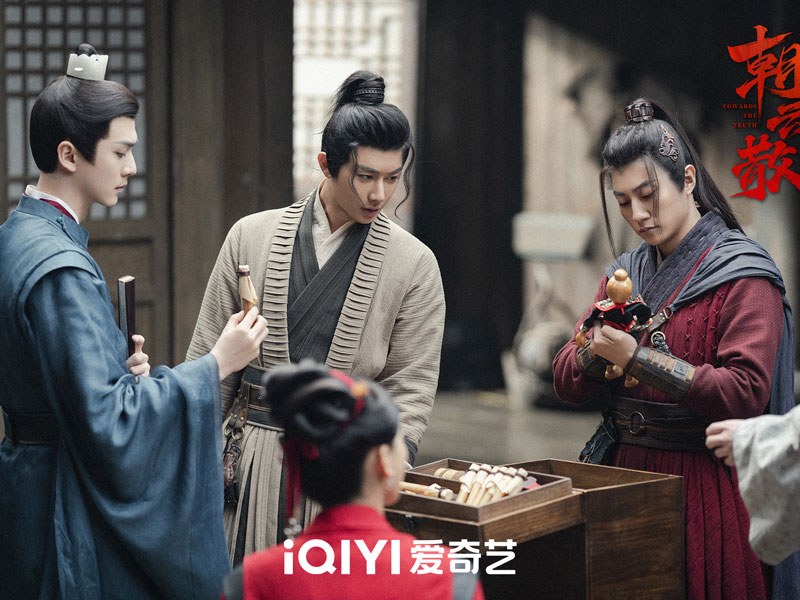
The show follows a semi-episodic format, with a big overarching case—the Shen family massacre—threaded throughout. Four standalone-but-connected cases are tackled along the way: the Huamen Tower Arson, the Mountain Demon Corpse, the Mother and Son at the Earth Temple, and the chilling finale, The Nursery Rhyme of Hell. These cases seem unrelated at first glance, but the show pulls the threads together in a way that's satisfyingly cohesive (草蛇灰线,延绵千里—a phrase meaning seemingly random clues with deep, hidden connections).
What really hits you, though, is the vibe. The opening scene alone had me staring at my screen wide-eyed: a foggy alley, a woman in white dancing alone in the night—until she turns into a skeleton. Then comes a charred corpse, a skeletal hand reaching up from underground, a cursed bell jingling eerily, and a woman in red standing silently on a distant rooftop. Yeah. Director's clearly got a taste for traditional Chinese horror, and it shows. Watching at night? You've been warned.
Story-wise, the pace is tight—each case wraps up in about four episodes. It doesn't overstay its welcome, and it never drags. The mysteries themselves aren't groundbreaking, but they're solid, logical, and land emotionally. You finish each arc with that rare satisfaction of a story that knows what it wants to say and says it well.
And here's where the show digs a little deeper. While the mysteries happen on the streets among common folk, the series never forgets to ask: in an era where lives are worth so little, do these deaths even matter to those in power? In that bloody old world, the lives of the poor were often nothing more than bargaining chips in the games of the rich and powerful. This tension—between justice and reality—is where the show finds its sharpest edge.
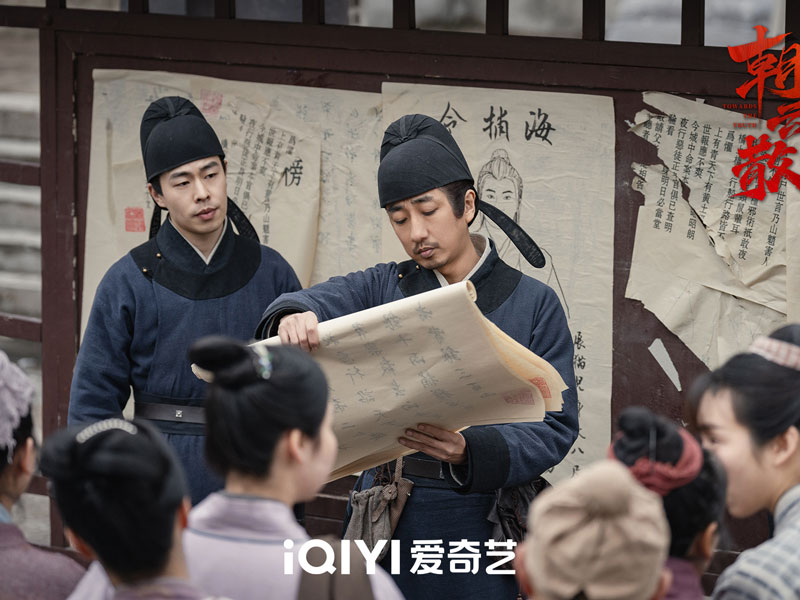
One of the most disturbing arcs in Towards The Truth is the Huamen Tower Arson Case. One man kills 66 innocent people for money—and doesn't show a flicker of regret. It all happens right under the emperor's nose, in the heart of a bustling city that seems prosperous and civilized. But who really knows what filth hides beneath the surface of that glittering capital?
There's a moment where Shen Song says to Gongsun Li, "How can beauty be found beneath a thatched roof weighed down by snow?" (朱颜岂见蓬檐雪 — a poetic way of saying that beauty, or innocence, struggles to survive under harsh, unjust conditions). It's every bit as heavy as "The rich feast behind red doors, while the poor freeze to death on the street"—a line many Chinese viewers might recall.
What we're watching isn't just a collection of whodunits. It's about the darkest sides of human nature—often more terrifying than ghosts. It's a snapshot of a society losing its way, and a dynasty already showing cracks even at its peak.
There's another line from Shen Song that hits hard:
"If you truly want to clear others of false charges, you must first take their suffering upon yourself. Their death becomes your death. Their injustice becomes your injustice."
Every case in this drama isn't just about uncovering facts. It's also a mirror for the investigators themselves, a trial of personal growth, a search for meaning. Only with true sincerity—a real heart, as the drama keeps putting it—can one endure this thorny road and find companions worth walking it with.
Shen Song also says, "People wear two skins—good or evil isn't always obvious at first glance." But with the right guidance, people who go astray can still turn back. Someone who appears cruel might be acting out of fear. Someone who looks righteous might be hiding something far worse. The show doesn't deal in black-and-white judgment, and that ambiguity is something we could all use a little more of in real life.
Towards The Truth doesn't have flashy costumes, big-name celebrities, or massive marketing campaigns. But what it does have is a solid story, characters who feel real, and enough heart to make every case matter.
Under the Moonlight 锦囊妙录
 Under the Moonlight 锦囊妙录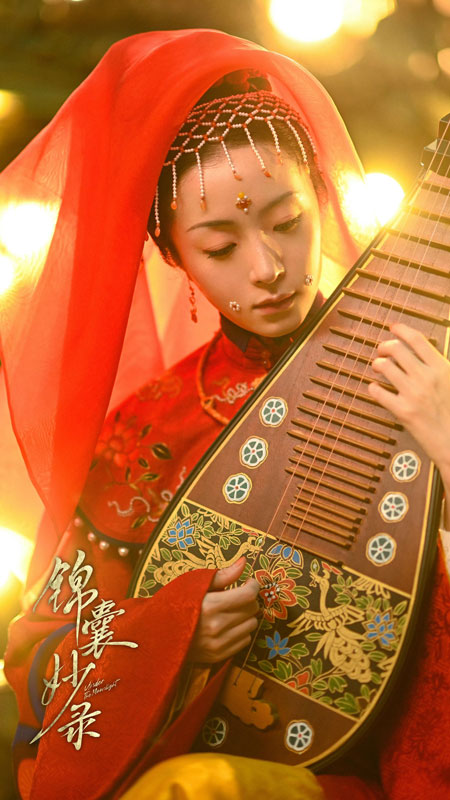
Luo Shu (played by Hu Bingqing) was born into a respected family of scholars, but her world collapses when her clan is executed for involvement in a grain corruption scandal. At the heart of it all is Qin Yi—just 14 at the time—who sets fire to her home to earn the trust of a powerful patriarch, then sells Luo Shu into a brothel called Mingke Fang. From that moment on, she's stripped of her name and status, given the stage name "Jinnang" (Silk Pouch), and made into a courtesan.
But she refuses to accept her fate.
To break free, Luo Shu risks everything to help a newly appointed county magistrate, Han Muzhi, crack the Blessed Child Incense Case—posing as bait to expose a fake priest who's been assaulting women under the guise of spiritual healing. After that, she's allowed to stay at the county office as a constable.
The show builds out ten major cases, all rooted in the struggles of ordinary people. There's the tragedy of Liu Sanniang, murdered by her husband after rumors destroy their trust—showing just how deadly gossip can be. There's Dongmei, a cook who tries to rescue trafficked girls and is brutally killed by miners. Her husband, Wang Mao, disfigures himself to infiltrate the mine and, in the end, sacrifices his life to protect Luo Shu with his own body during a bombing.
These stories may be small in scale, but they hit hard. It's about dignity, justice, and how even the powerless can still choose to fight back.
Along the way, Luo Shu slowly falls for Qi Menglin, a wealthy young noble who dreams of traveling the martial world. But the real enemy never leaves the shadows. Qin Yi, now grown and powerful, manipulates the entire Shanxi political scene—embezzling military grain, burning warehouses, and cornering the Qi family into ruin.
In the final stretch, Luo Shu uses her own cunning and her knowledge of Qin Yi's past to set a trap. Flames consume the old grudges, and she and Qi Menglin marry at the borderlands. She uses her trading income to buy out his military service, and together they carve out a quiet life in the desert.
This drama uses its detective frame to tell a story about women's suffering, and their quiet strength. From the brothel to the mines, from cruel gossip to institutional shame, every case Luo Shu handles reflects some aspect of her own trauma. She and the other women she meets are mirrors to one another—each saving the other in their own way. It's a story about women rescuing women.
Kill My Sins 掌心
 Kill My Sins 掌心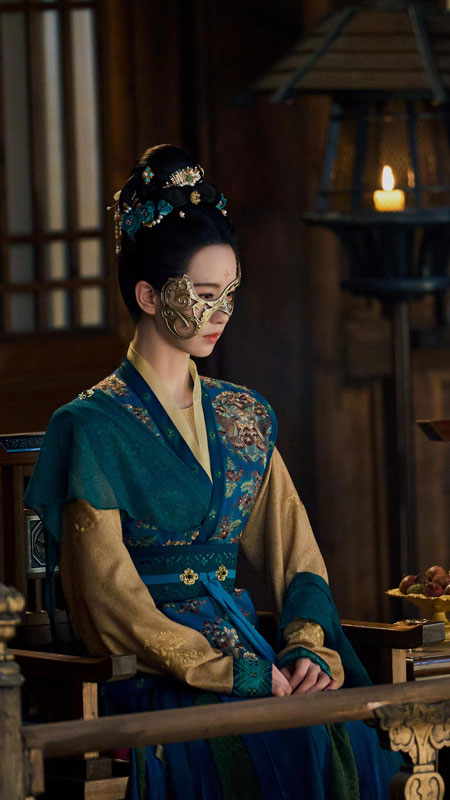
Ye Ping'an (played by Liu Shishi) is a mind doctor—a healer who diagnoses through pulse, emotion, and intuition. She arrives in the capital, Shengdu, chasing the thread of a cold case. But because of her unorthodox methods and sharp insight, people call her a "witch" and steer clear.
Then a high-ranking official is found dead in his home, and Ye Ping'an—who had once treated him for chronic insomnia—is caught at the scene. She becomes the prime suspect. Enter Yuan Shaocheng (played by Dou Xiao), an ambitious officer from the lowest rungs of society. He sees everything as a step toward power, and even though he suspects there's more to this case, he still throws Ye Ping'an under the bus to win favor at court.
What no one realizes? Ye Ping'an had already made her first move long ago. Her so-called "witchcraft" isn't about superstition—it's strategy. And this murder might be part of a bigger revenge game she's been planning all along.
Coroner's Diary 朝雪录
 Coroner's Diary 朝雪录
Adapted from Bu Yue Qian Zhuang's novel Forensic Princess, this one follows Shen Wan (played bu Li Landi), the daughter of Shen Yi—a high-ranking official who gets caught in the political crossfire of a case involving Prince Jin. The result? Her entire family is wiped out.
Shen Wan survives by assuming the identity of Qin Wan, a noble lady from the Qin family. What follows is a total transformation. The once-gentle Qin Wan suddenly becomes a woman who can cure diseases and dissect corpses. She starts cracking cases while also putting arrogant aunts, scheming stepsisters, and abusive maids firmly in their place.
While solving one case after another, she crosses paths with Yan Chi, heir to the Prince Rui household. He's determined to clear Prince Jin's name, which happens to align with Shen Wan's goal of uncovering the truth behind her father's death. They return to the capital together, uncovering a string of strange crimes along the way. When a mysterious skeleton surfaces, it reopens the Prince Jin case, and together they begin to peel back layers of palace secrets that could shake the empire.
The Wanted Detective 定风波
 The Wanted Detective 定风波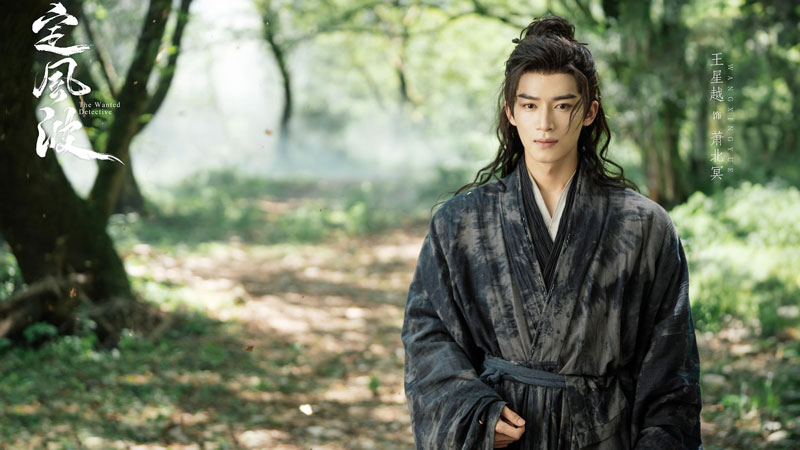
On what was supposed to be the happiest day of his life, Xiao Beiming (played by Wang Xingyue)—renowned detective and pride of the Da Qi Empire—is falsely accused of being the demon Night Fiend. Branded a traitor who killed his master and betrayed his country, he jumps into Wind Lake and disappears.
Three years later, he returns from the shadows.
Older, smarter, and still hunted, he wins back the trust of his former ally, Zhong Xuemang. With a ragtag team of clever misfits, they throw themselves into the line of fire, solving strange cases that bring them closer to the truth about Night Fiend and the plot behind it all. Each case they crack helps unravel the conspiracy that tore Xiao Beiming's life apart.
At the July 28 preview screening, they showed the first two full episodes and a 30-minute extended trailer. It was electric. Pacing? Tight. Twists? Nonstop. Cliffhangers? Sharp as hell. When the credits rolled, the entire crowd shouted, "Two more episodes!" That kind of hype isn't easy to fake—and it says everything.
Visually, the show is cinematic. The opening poem—"Don't mind the storm through the forest, walk your own path singing as you go"—echoes through the whole series, then flows perfectly into the outro rap. The core is clear: one storyline tracks Xiao Beiming's personal journey from reckless youth to weathered warrior; the other follows how his mystery-solving team comes together, case by case.
In the first two episodes, Xiao is headstrong, arrogant, full of fire. But in the extended preview, we see the version of him forged by time and betrayal—steady, thoughtful, but still holding onto that fire. That duality is what makes his arc worth watching.
The entire drama is structured like an intricate puzzle—seven standalone cases, each like a unique piece of a tangram, eventually slotting together with precision to form the final, overarching case. Two key plot threads leave the strongest impression: the "Night Fiend" case that kicks off the series and drives the early tension, and the long-buried "Haiya Orphan Case" that finally surfaces in the finale. Each case is tightly interlinked, packed with twists and turns. Hints that seemed insignificant at first stretch across episodes, reemerging with unexpected weight—classic storytelling in the "hidden dragon in the weeds" tradition.
A major surprise comes in the form of Wang Xingyue, who delivers a powerhouse performance with standout moments throughout the series. His final-act confrontation between Xiao Beiming and Prince Dingnan is especially unforgettable. His explosive delivery and emotional intensity are jaw-dropping—every line hits like a gut punch. Reportedly, the scene took 7–8 hours to shoot, and the effort shows in every frame. Both the producer and director have heaped praise on Wang Xingyue, calling him the "treasured find" of the production. His combination of raw talent, relentless work ethic, and deep commitment made him the perfect fit for the role.
Unveil: Jadewind 唐宫奇案之青雾凤鸣
 Unveil: Jadewind 唐宫奇案之青雾凤鸣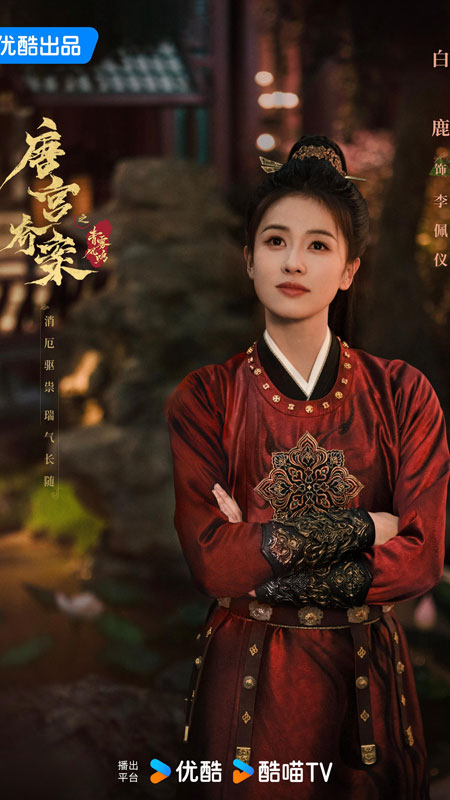
During the dazzling Lantern Festival, Princess Ningyuan dies under mysterious circumstances at a royal night banquet. The investigation falls to Li Peiyi (played by Bai Lu), a sharp-witted enforcer from the Internal Court, and Xiao Huaijin (played by Wang Xingyue), a calm, cerebral deputy from the Court of Astrology.
Li Peiyi is both a top-tier fighter and an expert in reading human behavior. While she appears cold, she's fiercely righteous and sees solving cases not just as a path to truth, but as a battle of minds between her and the killer. Paired with the razor-sharp Xiao Huaijin, they untangle layers of lies involving spoiled noblewomen and secret-laden royal guards, eventually exposing the true culprit behind the princess's death.
But the mystery doesn't stop there.
A series of complex and bizarre cases unravel within the inner courts of the Tang palace—"The Flower on the Wall," "Crimson Birthright," "The Auspicious Hour," and "The Seven-Star Error." Each case touches on the fates of women in the palace, revealing hidden politics and personal tragedies. As Li and Xiao chase down these secrets, they uncover the 15-year-old truth behind the Li family massacre—a case long buried in silence. In the end, the mastermind is brought to light, and Li Peiyi not only clears her father's name but also finds redemption, friendship, and a sense of closure along the way.
This is the third time Bai Lu and Wang Xingyue have worked together after One and Only and Story of Kunning Palace. In both previous roles, they loved but could not be together. This time, fans of the pairing finally get their happy ending.
Treasure At Dawn 天书黎明
 Treasure At Dawn 天书黎明
Hua Fusheng (played by Li Hongyi) is a naive young man with one obsession: medicine. His unconventional methods make him both beloved and feared by the townsfolk. When all the top physicians in the city are mysteriously killed, suspicion falls on Hua. A letter from his late master hints at a hidden truth involving a legendary artifact—the mysterious Heaven's Book.
Enter Wen Jue (played by Su Xiaotong), daughter of the powerful Lord of Liangzhou, and Gu Tian (played by Yu Cheng'en), a charismatic circus performer with a talent for persuasion. The three of them form an unlikely team, heading to Liangzhou to investigate. Wen Jue leverages her family's influence to protect Hua and helps him set up a medical clinic. Gu Tian, with his silver tongue, extracts intel where brute force would fail.
As Hua treats the poor and digs for answers, strange happenings multiply. The deeper they go, the more tangled the web becomes. What Hua doesn't yet realize is that his arrival in Liangzhou has already stirred up hidden forces—people who have been waiting for someone like him, for better or worse…
The 2025 lineup of historical mystery dramas doesn’t rely on flashy effects or big-name hype—it delivers where it counts: solid plots, layered characters, and emotional weight. Coroner's Diary stood out with its blend of forensic intrigue and eerie folklore. The Dispersing Clouds of the Court hit deep by framing justice through the eyes of the forgotten. Secrets of the Brocade Pouch brought female solidarity to the forefront without turning it into a slogan. Both In the Palm and Winds of Justice tracked the cost of personal growth through betrayal and redemption, while Palace Cases: Mist and Phoenix and The Dawn of Heaven’s Book tied complex cases to tangled loyalties and buried truths. These stories aren’t just about solving crimes—they’re about survival, agency, and what it takes to hold onto a sliver of light in the darkest corners of power.