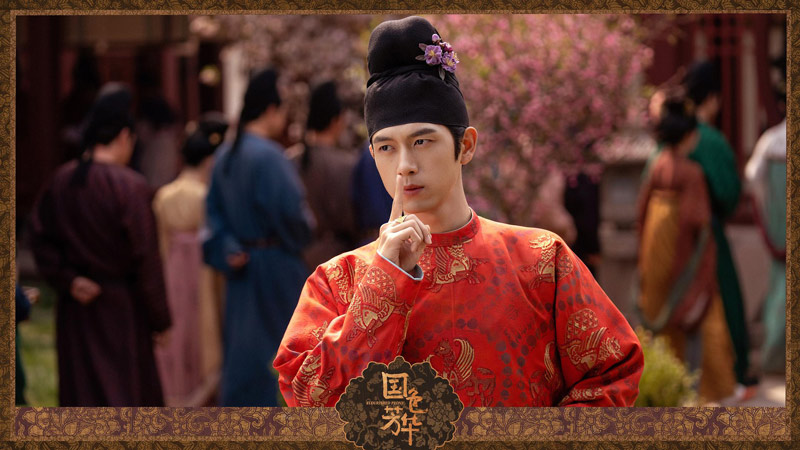
As the dazzling lights of Chang'an illuminate screens worldwide in 2025's blockbuster In the Name of Blossom (锦绣芳华), Li Xian (李现) cements his reign as Chinese historical drama's most magnetic leading man. With his piercing gaze and effortless versatility, Li transforms from a peony-adorned Tang aristocrat to a supernatural detective and vengeful swordsman—each performance radiating intelligence and emotional intensity.
Let's explore every era he has conquered.
 In the Name of Blossom 锦绣芳华
 In the Name of Blossom 锦绣芳华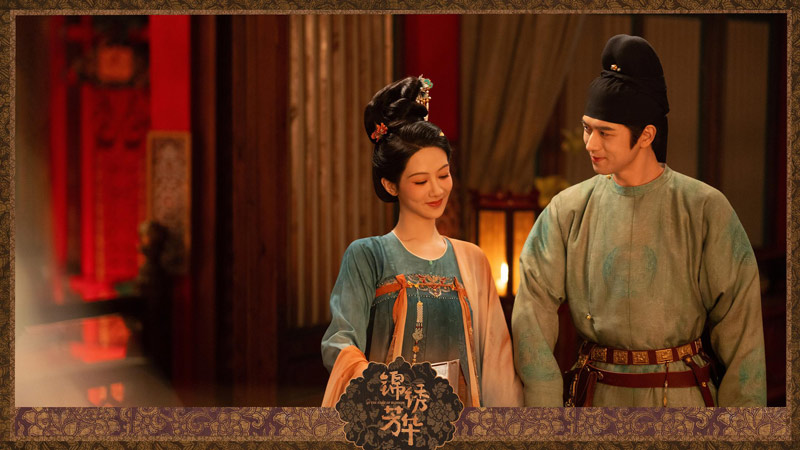
- Aired: June 30, 2025–Present
- Period Background: High Tang Dynasty (circa 713-756 AD), capturing Chang'an's opulent zenith where diplomatic grandeur and luxury masked volcanic political unrest.
- Genres: Political conspiracy, feminist enterprise, war romance.
- Adapted From: Sequel to Yi Qianzhong's acclaimed novel Guo Se Fang Hua.
The narrative ignites when County Princess Li Youzhen, consumed by envy and political malice, burns He Weifang's (Yang Zi) peony garden—a thriving symbol of female economic independence in Tang-era Chang'an. This act of sabotage forces Weifang, a gifted horticulturist, into an unlikely alliance with Jiang Changyang (Li Xian), the enigmatic "Flower Envoy." Publicly, Jiang embodies aristocratic decadence; privately, he orchestrates a dangerous plot to dismantle Prince Ning's treasonous rebellion against Emperor Xuanzong.
Their partnership evolves from transactional necessity to profound loyalty against the backdrop of dynastic collapse. Weifang transforms her apothecary, "Wuyong Hall," into a wartime sanctuary where marginalized women—widows, escaped concubines, and disowned daughters—produce medicine for rebel forces. Meanwhile, Jiang executes a high-risk gambit: faking his death to infiltrate Prince Ning's inner circle. His absence leaves Weifang heartbroken but resolute; she sells ancestral jewelry to fund resistance armies and personally negotiates military alliances with frontier generals.
The convergence of their arcs culminates in two pivotal moments:
The Deadly Banquet: Jiang risks exposure to plant evidence of Prince Ning's collusion with Turkic mercenaries during a royal feast.
The Militia Campaign: Weifang leads an all-female unit to sabotage enemy supply lines, declaring before the imperial court: "Women can overturn empires—never underestimate us."
Their journey intertwines personal sacrifice with national survival, climaxing as they reunite to thwart Ning's coup during the An Lushan Rebellion's early chaos.
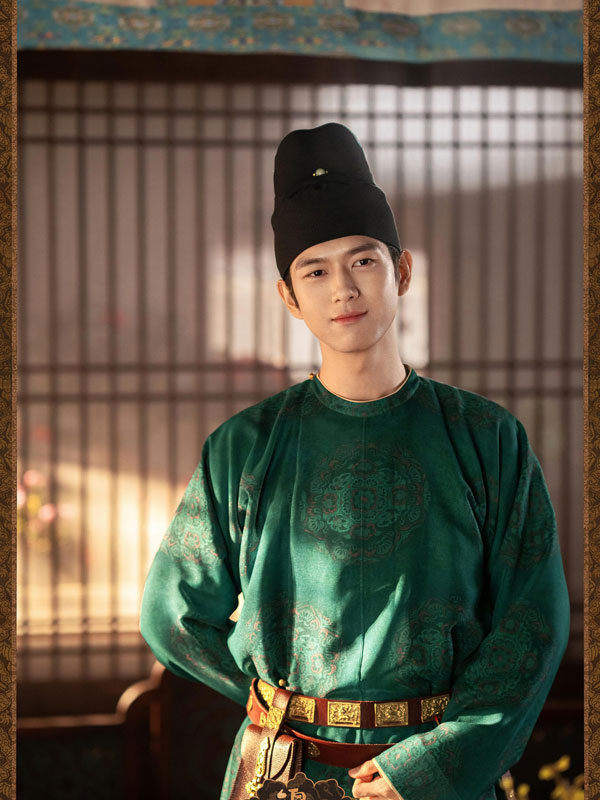
Li Xian delivers a career-defining portrayal of Jiang Changyang, embodying the character's duality with surgical precision. Director Ding Ziguang's vision of an "outwardly unrestrained, inwardly pure" nobleman manifests through three transformative layers:
Li excavates Jiang's buried vulnerability through physical subtleties: a trembling hand while pulling Weifang from her burning garden; averted eyes when suppressing the urge to touch her hair. These micro-expressions shatter his carefully constructed facade of apathy.
Jiang's chronic hoarseness—resulting from smoke inhalation during Weifang's rescue—becomes a metaphor for stifled devotion. Li transforms this limitation into emotional artistry, conveying yearning through gritted whispers where grand declarations would ring hollow. A scene where he rasps "Stay alive… for me" during a midnight siege distills love into raw, breathless urgency.
Li maps Jiang's psychological duality onto Tang political reality. In public, he deploys flippant smirks and theatrical bows; alone, his face hardens into glacial focus. This performance mirrors Tang aristocrats' existential calculus—where a single misstep meant execution. The jarring contrast reveals the toll of maintaining deception in a court drowning in perfume and blood.
The series transcends "girlboss" tropes by anchoring Weifang's leadership in systemic change. Her burned garden parallels modern corporate sabotage, but her response—rebuilding "Wuyong Hall" with fair wages, profit-sharing, and refugee housing—models ethical entrepreneurship. The "ancient female alliance" scenes, where marginalized women debate medical formulas and distribution logistics, critique contemporary wage gaps through Tang socio-economics. This collective resilience culminates in the militia's covert ops, weaponizing dismissed skills like herbology and textiles into wartime strategy.
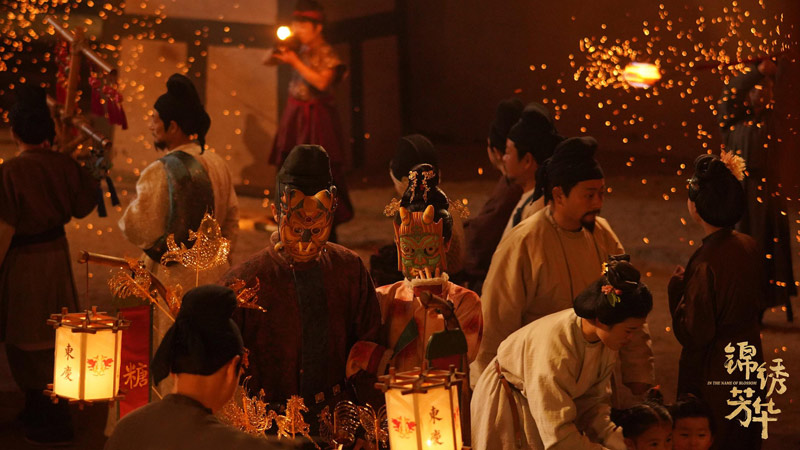
Production designer Lin Mu's team replicated over 1,500 costumes using Dunhuang murals as primary sources, notably resurrecting linglong silk-dyeing techniques banned after the An Lushan Rebellion. Yang Zi's bridal robe required three months of hand-embroidery by Suzhou heritage artisans, its phoenix motifs echoing Princess Taiping's wedding attire. Authenticity extends to sensory details: fresh peonies shipped daily from Luoyang heightened actors' reactions to floral symbolism, while set decorators used 8th-century pharmacy inventories to stock "Wuyong Hall."
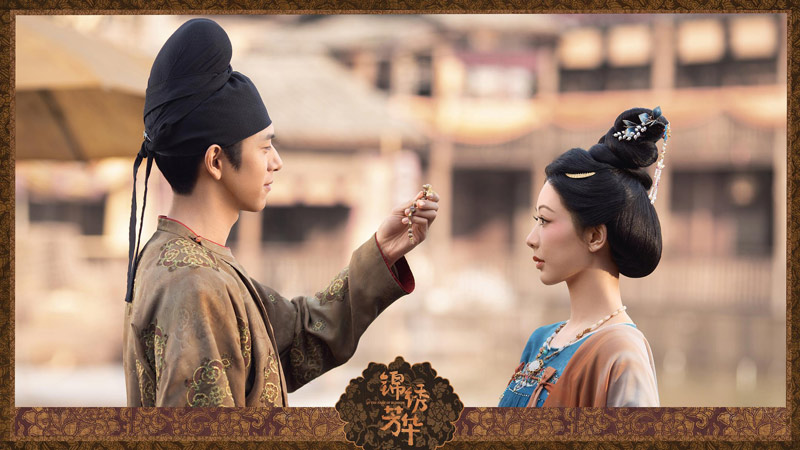
The series redefines historical romance through the "contract-burning" scene. Standing on a battle-scarred tower, Jiang and Weifang tear their marriage document, vowing: "Our vows may shatter, but this nation will not." This act transmutes personal commitment into patriotic defiance, mirroring Tang merchant clans who bankrupted themselves funding Guo Ziyi's resistance armies. Their love thrives not despite sacrifice, but because of it.
In the Name of Blossom reanimates the Tang Dynasty not as a static backdrop but as a living ecosystem. Prince Ning's conspiracy echoes historical princely revolts like Li Ying's, while Weifang's militia reflects Tang peasant armies organized by women during the An Lushan chaos. Even antagonists transcend caricature: Li Youzhen's infertility-driven villainy exposes how patriarchal systems weaponized female bodies, while concubine Lianzhou's fate illustrates the deadliness of beauty in political games.
The series honors its source material by expanding Yi Qianzhong's feminist vision. Minor characters like medic Xiaochun evolve from plot devices to agents of change—her triage protocols during the Luoyang siege showcase unsung female expertise. This narrative alchemy transforms "women can overturn empires" from a slogan into a dramatic engine, proving collective action, not individual heroism, sustains civilizations.
Flourished Peony 国色芳华
 Flourished Peony 国色芳华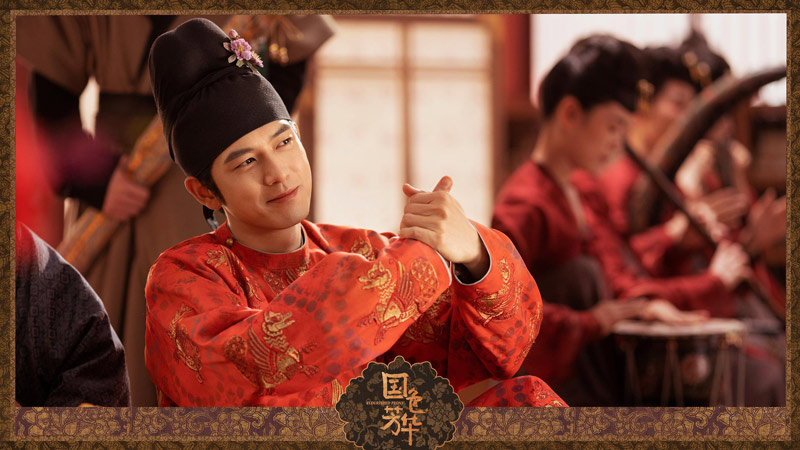
- Aired: January 2025
- Period Background: High Tang Dynasty, focusing on Chang'an's commercial revolution and rigid gender hierarchies.
- Genres: Historical romance, socio-economic drama, palace conspiracy.
Main Roles: - Li Xian as Jiang Changyang, an aristocratic "Flower Envoy" leveraging his status for reform.
- Yang Zi as He Weifang, a merchant's daughter transforming horticulture into political power.
- Adapted From: Yi Qianzhong's critically acclaimed novel Guo Se Fang Hua.
Set against the opulent yet volatile backdrop of the High Tang Dynasty (c. 713–756 AD), Flourished Peony masterfully intertwines Chang'an's commercial revolution with its rigid gender hierarchies. Adapted from Yi Qianzhong's acclaimed novel Guo Se Fang Hua, the series follows merchant's daughter He Weifang (Yang Zi), who escapes an abusive marriage with only peony saplings as her inheritance. Transforming a barren plot into "Fangfei Garden"—China's first documented female-led horticultural enterprise—she challenges patriarchal norms while inadvertently funding a political rebellion led by the aristocratic "Flower Envoy" Jiang Changyang (Li Xian). Their alliance merges commerce and reform: her peony trade bankrolls his fight against corrupt Chancellor Li's mining land grabs, while his political influence shields her business from aristocratic sabotage.
The narrative crescendos at the Imperial Peony Competition, where Weifang's cultivation of the rare "Golden Ru Yi" blossom becomes a symbol of defiance against exploitation. Concurrently, she establishes the "Alliance of Unbound Women"—a collective of widows, divorced scholars, and former courtesans who gain economic autonomy through peony cultivation. This subplot critiques Tang-era gender inequities through nuanced scenes of profit distribution debates, mirroring modern wage-gap struggles810. Meanwhile, Jiang Changyang's covert mission to expose Chancellor Li's corruption forces him to navigate deadly court politics, culminating in a confrontation where Weifang's botanical prowess directly thwarts Li's mining scheme, protecting thousands of displaced farmers.
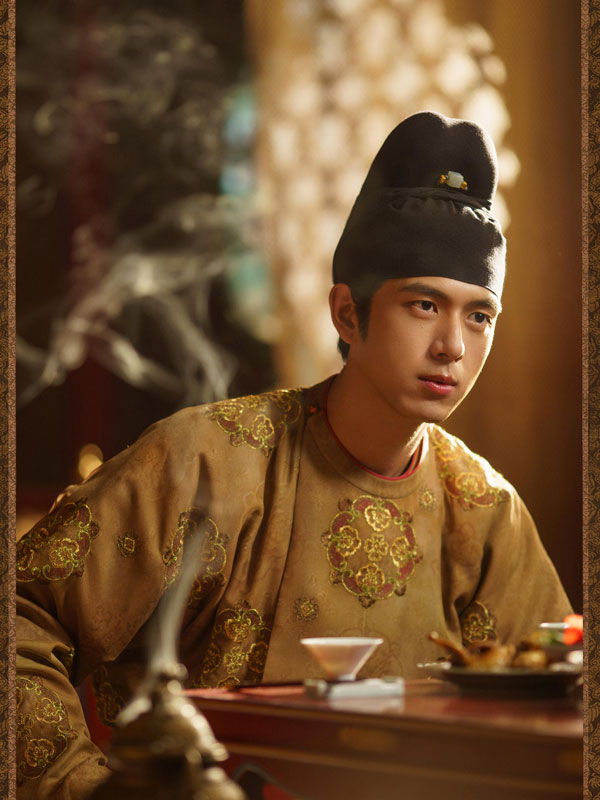
Li Xian's portrayal of Jiang Changyang deconstructs aristocratic tropes through three revolutionary layers:
A tightened jaw when nobles insult Weifang, or a subtle nod endorsing her defiance, conveys subversion within Tang etiquette. His calculated silence makes outbursts—like shattering a teacup upon learning of her past abuse—devastatingly impactful.
Li studied Tang aristocratic gait and fan rituals, then deliberately subverted them. Jiang slouches during court ceremonies but stands arrow-straight when defending Weifang's property rights, visually manifesting his ideological rebellion.
In the "mirror scene," Jiang practices smiling while whispering, "I'll burn their world to ash." Li's delivery transforms charm into a lethal tool, exposing the aristocracy's duplicity.
The series meticulously blends historical accuracy with feminist commentary:
Weifang's garden employs over 300 marginalized women, implementing Tang China's first female shareholder system. Scenes depicting their debates on profit allocation directly challenge modern labor inequities.
Cultivars serve strategic purposes—"Black Jade" bribes palace eunuchs, while "Warrior Red" strengthens military alliances. Botanists revived 37 peony species using Tang-era grafting techniques from historical manuscripts.
Costumes feature eight Dunhuang-inspired floral motifs historically forbidden to commoners. The production collaborated with intangible heritage artisans to replicate textiles, including Yang Zi's robe embroidered over three months.
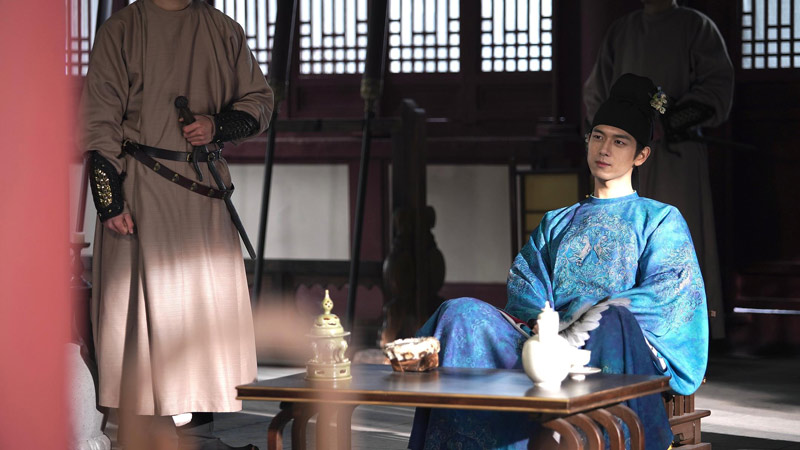
Yang Zi and Li Xian's reunion after Go Go Squid!(亲爱的,热爱的) generated organic spontaneity:
In the improvised "Rain Shelter" scene (Episode 14), Jiang bandages Weifang's blistered hands while debating land rights—their lingering fingers and rain-soaked silk robes blur personal and political tensions.
During the "Incense Garden Confrontation," Yang Zi ad-libbed slapping Li Xian; his genuine shock remained in the final cut, intensifying their power-struggle-to-partnership arc.
Flourished Peony transcended entertainment to become a cultural ambassador:
Its Netflix release topped charts in 80+ countries, while VIKI platform rated it 9.8/10—a record for historical dramas. The theme song "Liu Fang" (流芳) inspired global flash mobs, from London streets to Sydney's Tang cultural exchanges.
Real-World Influence: Depictions of peony cultivation spurred tourism in Sichuan's Danjing Mountain, where "Guose Fanghua"-themed festivals drew 300,000+ visitors. Academics praised its revival of Tang economic history, sparking university seminars on feminist enterprises in ancient China.
Flourished Peony excels by anchoring romance in socio-political rigor. Unlike typical palace melodramas, it exposes systemic oppression through antagonists like County Princess Li Youzhen—whose infertility-driven villainy reflects Tang patriarchy's weaponization of female bodies48—and contrasts her with Weifang's collective resilience. The series honors its source material by expanding minor characters (e.g., medic Xiaochun) into agents of change, proving "women can overturn empires" is no slogan but a narrative engine. By intertwining peony symbolism with revolutions both personal and political, it reveals how beauty can be the deadliest weapon in a society on the brink of transformation.
Sword Dynasty 剑王朝
 Sword Dynasty 剑王朝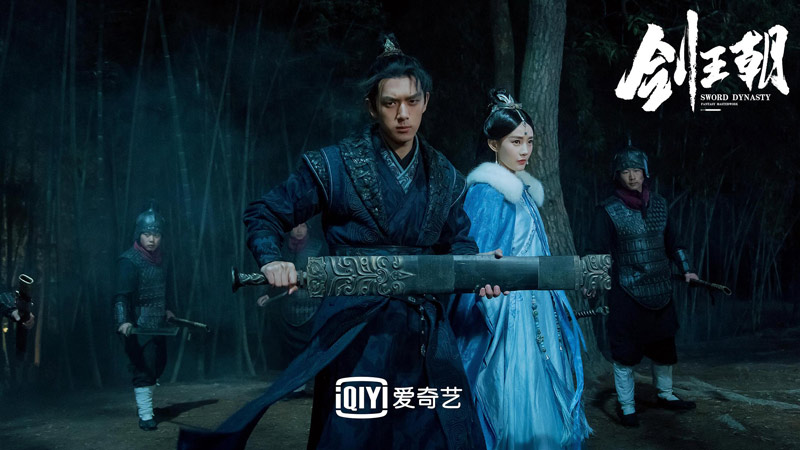
- Aired: 2019
- Period Background: Set in the fictional Warring States-inspired dynasty Heng, the series merges historical elements of China's unification wars with wuxia fantasy. Here, seven rival kingdoms clash through martial prowess and political treachery, while cultivation realms dictate social hierarchy and national power—echoing Qin Shi Huang's suppression of dissent through controlled knowledge.
- Genres: Wuxia, revenge tragedy, cultivation fantasy.
- Adapted From: Wu Zui's web novel Sword Dynasty, a seminal work in the xianxia genre.
Ding Ning (Li Xian), a terminally ill wine-shop apprentice, harbors the soul of Liang Jingmeng—a legendary swordsman betrayed by King Yuanwu and Queen Ye Zhen during the massacre at Bashan Sword Field. To accelerate his quest for vengeance, Ding Ning masters the forbidden "Nine Death Silkworm" technique, trading his lifespan for exponential power growth. His ally Changsun Qianxue (Li Yitong), posing as his aunt, conceals her own vendetta: her clan was slaughtered by Yuanwu, not Liang Jingmeng—a revelation that intertwines their fates in shared tragedy.
The narrative unfolds through three meticulously crafted arcs:
Infiltration: Joining the White Goat Cave sect, Ding Ning exploits mentorship from elder Xue Wangxu. His unnatural cultivation speed—"half-day to Tongxuan Realm, ten days to breakthrough"—fuels paranoia among rivals like Sun Xing, who senses his dangerous potential.
Political Warfare: At the Minshan Sword Conference, Ding Ning manipulates royal factions (notably crown prince Yuan Zichu) to expose Yuanwu's hoarding of eighth-realm secrets. This monopoly mirrors Qin's historical suppression of dissent, weaponizing knowledge to control the nobility.
Sacrificial Climax: In the Lushan Summit finale, Ding Ning severs Yuanwu's meridians by sacrificing his cultivation—a visceral renunciation of power. His subsequent orchestration of Prince Fusu's ascension, followed by self-imposed exile with Changsun Qianxue, reframes vengeance as a path to spiritual liberation.
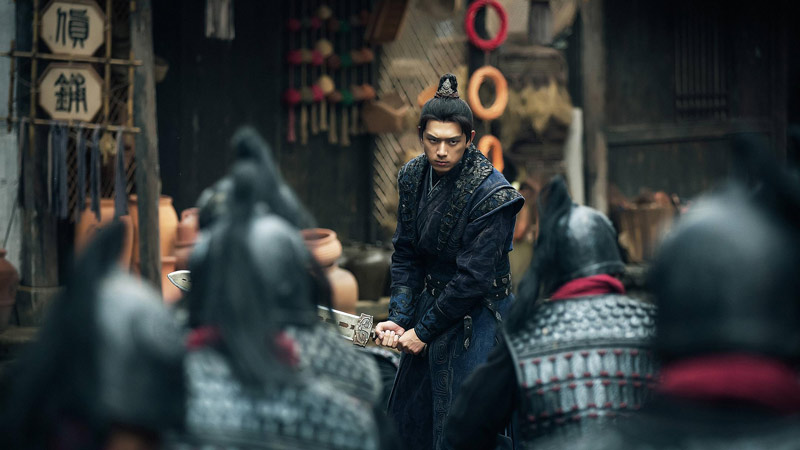
Li Xian deconstructed wuxia heroism through three revolutionary dimensions:
Despite Ding Ning's "sun-vein" illness (阳亢之躯), Li trained relentlessly in swordplay and wirework. His combat sequences fused kinetic grace with bodily collapse—vomiting blood mid-duel—to physicalize vengeance's corporeal toll. Director Ma Huagan described his movement as "a silk thread vibrating before snapping".
Ding Ning weaponized charisma to manipulate allies, such as swindling the merchant guild Two Layers Tower. Li's micro-expressions—a smirk flashing when exploiting greed—revealed the character's Machiavellian pragmatism.
While downplaying the novel's reincarnation plot, Li conveyed Liang Jingmeng's buried agony through wordless moments: a prolonged stare at a sword scar, or a hesitation before killing. These pauses suggested centuries of unresolved pain.
The series elevated wuxia tropes through systems rooted in Warring States history:
The nine realms (Tongxuan to Changsheng) mirrored real political hierarchies. Sects like Cloud Water Palace traded relics for influence, critiquing institutional corruption, while Yuanwu's hoarding of eighth-realm secrets paralleled Qin's brutal knowledge suppression.
Costumes visually coded loyalties—Ding Ning's hemp robes symbolized outsider defiance against Yuanwu's obsidian armor. Sets like the ink-wash "Fish Market" merged minimalism with foreboding scale, while knife-shaped coins and the River Worship Ceremony rejected anachronistic tropes (e.g., characters tossing silver ingots).
The finale dismantled wuxia's obsession with immortality. Ding Ning's abandonment of power—declaring "Living isn't about duration, but depth"—framed revenge as a hollow pursuit, advocating spiritual peace over physical dominance.

Despite a modest 6.6 Douban debut, the series achieved cult status through:
Characters like Bai Shanshui (leader of Cloud Water Palace) and assassin Ye Cengleng defied genre tropes. Bai's disbanding of her sect after avenging her comrade—declaring "The world needs no more swords, only peace"—offered a feminist critique of cyclical violence.
Fight scenes blended "blood-romanticized" aesthetics (e.g., duels amidst silk curtains) with shuoshu (storyteller) narration during "smoke vision" sequences. This revived oral traditions while visualizing internal energy clashes.
The controversial finale—where Changsun Qianxue's apparent death contradicts her final line "Ding Ning, we're going home"—sparked academic debates on unresolved trauma, echoing Hamlet's exploration of vengeance's futility.

Sword Dynasty redefined wuxia by grounding fantasy in political realism. Its intricate systems—where a character's cultivation level dictated their societal worth—mirrored historical class oppression. The series proved "sword justice" and "imperial order" were symbiotic forces: both relied on betrayal, sacrifice, and the fragile hope that redemption might outlast destruction. Ding Ning's journey remains a testament to the genre's potential when it dares to ask: Can vengeance ever heal, or does it only breed new wounds?
Li Xian's historical roles pulse with modern relevance: Jiang Changyang's quiet patriotism in In the Name of Blossom mirrors today's socially conscious youth; Guo Deyou's street-smart integrity makes Tang dynasty bureaucrats feel like neighbors. He masters physical languages—swordplay, Tang etiquette, fox-like agility—while exposing his characters' psychological fractures. Director Ding Ziguang observed: "Li Xian embodies 'outwardly unrestrained, inwardly pure'. This tension makes his heroes unforgettable."
From the peony wars of Tang to Tianjin's haunted rivers, Li Xian proves historical drama is never mere escapism—it's a mirror for our struggles and dreams. As In the Name of Blossom unfolds nightly on Mango TV, join millions witnessing a star redefine an era. Which Li Xian saga will you dive into tonight?