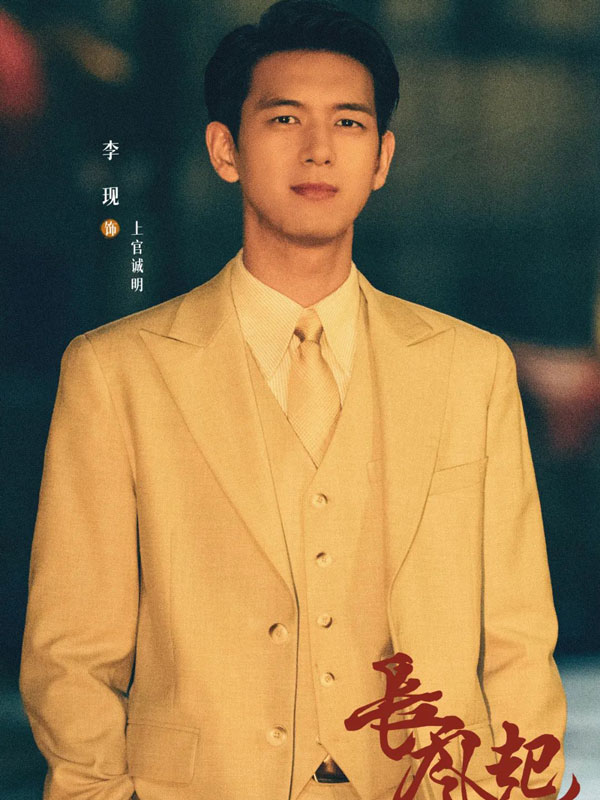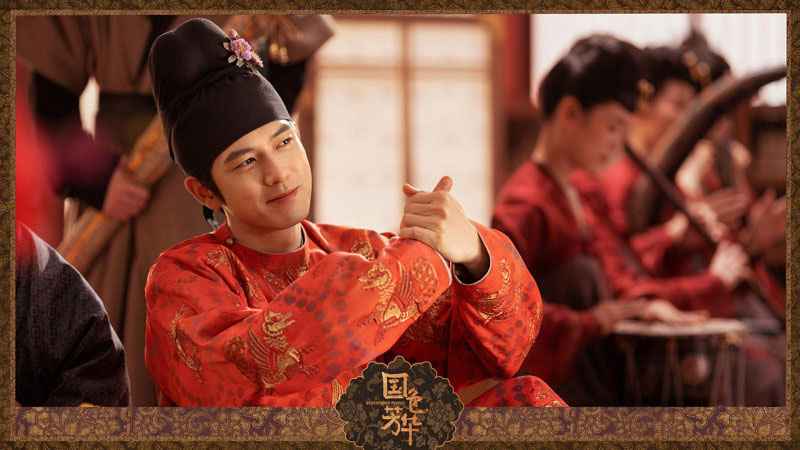
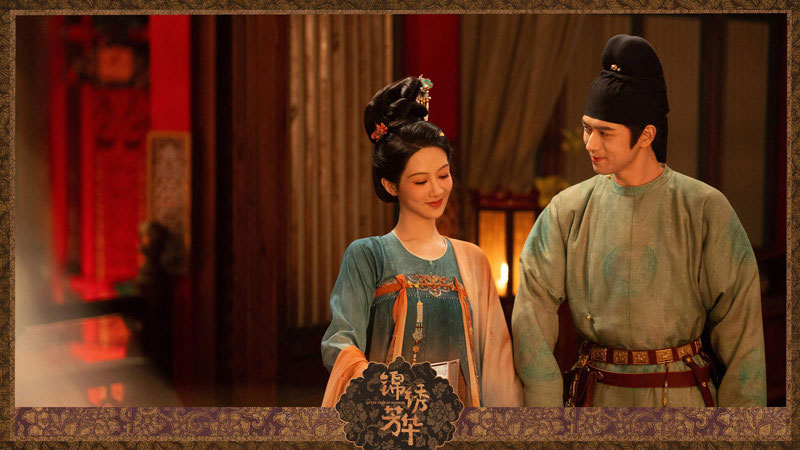
The currently airing costume drama In the Name of Blossom (锦绣芳华) has once again brought Li Xian back into the mainstream spotlight. With its intricate storyline of power struggles and merchant wars, plus Li's upgraded "Jiang Changyang 2.0" performance—what fans call a "heart-hunting" (meaning he subtly manipulates or reads others emotionally and psychologically) acting masterclass—the series has earned strong visibility in this year's summer lineup.
Through a performance that fits the role like a glove, Li Xian successfully carries over the popularity from Season 1, continuing to draw in viewers. Over his years in the industry, Li has become something of a "stabilizing presence" at the frontline of a fast-changing entertainment landscape. He relies on professional conviction to counter the wear-and-tear of mass production, and uses a broad spectrum of roles to reshape what an actor's lifespan can look like. Without rushing or overreaching, he's become a living example of what long-termism in acting really means.
 Role Interpretation: Jiang Changyang
 Role Interpretation: Jiang Changyang
In the Name of Blossom, a sequel that leans into differentiated genre competition, had already surpassed 6.45 million combined pre-release reservations on Mango TV and Weibo, with an additional 1.5 million on Migu Video, setting a new record for the fastest 1-million-reservation milestone on that platform.
This season delivers a clear upgrade in plot complexity, character construction, and thematic depth. It gives viewers a look at how different individuals navigate survival and maintain integrity amid national chaos. The premiere episode alone carried 14 ad placements, breaking the previous record held by Flourished Peony (国色芳华) for both the platform and the industry in terms of single-episode ad volume.
After its debut, the show's heat index started high and stayed stable, consistently placing it at the top of the summer drama charts. As the central plot gained momentum, it also topped weekly costume drama index.
Simultaneously broadcast on both TV and online platforms, the show repeatedly ranked #1 on CVB's satellite prime-time slots, and also dominated both the "Drama Overall" and "Hot Content" charts on Mango TV.
Li Xian, as the male lead Jiang Changyang, earned widespread praise for his detailed and precise performance. During the broadcast period, the character "Jiang Changyang" contributed an average of over 39% to the show's traction, peaking above 41%, and with a 13.55% contribution share, he ranked in the Top 3 of costume drama character performance, #1 among male roles.
Jiang Changyang appears on the surface to be a pleasure-seeking dandy, holding titles like Bird-and-Flower Envoy of the Tang court and Vice Minister of the Court of Imperial Banquets, responsible for royal meals and banquets). In truth, he's a trusted confidant of the emperor, using his role as a connoisseur and socialite as cover while secretly gathering evidence of Prince Ning's rebellion.
What makes Jiang Changyang compelling is his "chameleon-like" duality. Across both seasons, he begins as a calculating, aloof figure who keeps to himself. He boldly accepts bribes from various officials, indulges openly in brothels and gambling dens, and even collaborates with the emperor in a staged "foolish emperor and corrupt minister" routine to lower the guard of court adversaries like Prince Ning.
His encounter with He Weifang becomes the turning point where his buried humanity starts to surface. As he continues to outmaneuver traitors and rebels, his internal value system begins to shift. When everything is revealed and the "corrupt official" mask finally comes off, it turns out he had always been silently protecting the greater good. This built-in contrast between outward corruption and inner loyalty leaves a strong impression on viewers.
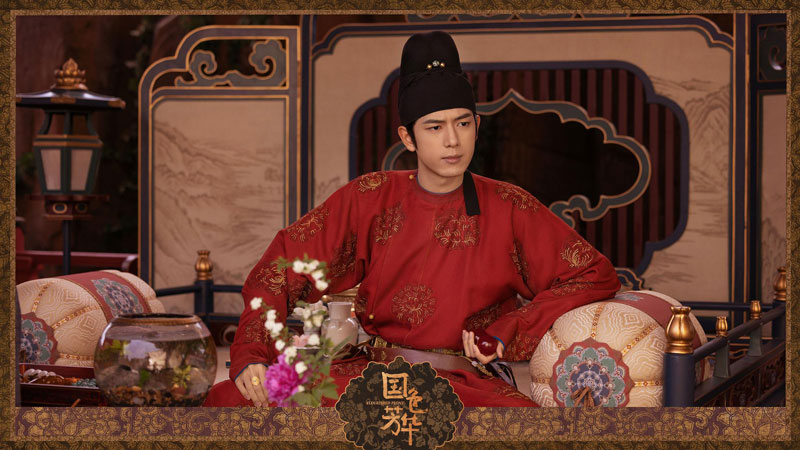
Judging from how audiences have responded during the broadcast—commonly describing the character with keywords like outwardly carefree but inwardly sincere, deeply affectionate and gentle, respectful of female independence, righteous, witty and free-spirited, and decisive and sharp—it's clear that portraying Jiang Changyang's blend of flamboyance and restraint, of charm and strategy, is no easy task for any actor. Balancing such contrasting traits—the illusion of a flirtatious courtier with the substance of a disciplined strategist—adds significant complexity to Li Xian's performance.
One standout moment is the "hero descends from the heavens" scene, where Jiang Changyang attempts to rescue He Weifang trapped in a poison-sealed chamber. Failing to break down the door, his fingers begin to tremble, eyes reddening with tears he barely holds back. The pain of being unable to protect the woman he loves is just one breath away from breaking through. What follows is a burst of rage where guilt transforms into momentum—driving him to take action and force change.
In a later scene, he strikes with thunderous precision: confronting Prince Ning's henchman Pei Zhong, Jiang delivers a series of moves—slapping, restraining, drawing his sword—all in one fluid sequence. The martial choreography is both forceful and agile, and when paired with his growled line—"This sword was granted by His Majesty. You tell me, do I dare or not?"—the result is a satisfying release of pent-up tension, a violent but just retaliation. Li Xian's performance here is layered and deliberate, and many viewers have praised it as "peak catharsis with a dose of emotional redemption."
Another strength of Li Xian's performance lies in his ability to shift emotion through his eyes alone. In everyday exchanges with Prince Ning, he maintains a teasing, joking demeanor, yet his gaze always hides a blade. His sharp, ironic persona is conveyed through small, deliberate gestures—raised eyebrows, narrowed eyes, the slight curl of a lip—all of which work in sync to deliver a sense of cunning.
But whenever he looks at He Weifang, the woman he loves, his gaze instantly softens into what fans call "glistening tenderness." Smiles come naturally, full of unspoken affection and care. The contrast between his fierce intensity toward enemies and his quiet warmth toward his love interest gives the character emotional depth and realism.
Then there's the subplot involving two so-called "green teas" (slang for manipulative women who feign innocence) resolved within three episodes. With Lianzhou, he adopts a strategy of retreating to advance—supporting his wife's lead in the counterattack, showing full trust and respect. Against Qin Liulang, he chooses a cultural takedown: painting a satirical artwork titled "Qin Liulang Admires His Sister and Brother-in-Law's Affection", which disarms the opponent with humor and precision.
On top of that, his running "brother-in-law addiction" gag (referring to how much he enjoys being called "brother-in-law") adds comedic flavor—he lights up every time someone uses the title. Li Xian seamlessly merges the rhythms of comedy with the poise of courtly scheming, managing a tricky balance: roguish but never greasy, cheeky but never crude.
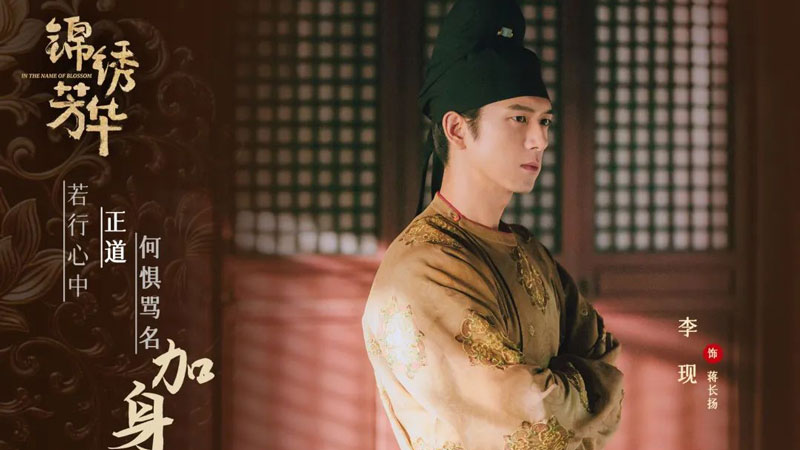
These performances match well with how audiences perceive his acting in In the Name of Blossom:
Subtle emotion, precise micro-expressions, and solid line delivery (20%)
Layered emotional structure (16%)
Strong contrast and duality (14%)
High-intensity emotional impact (10%)
This blend of solid acting technique and powerful dramatic scenes shows how Li Xian uses his entire body to measure the soul of the character. It's that depth—and care—that gives viewers a consistently immersive and satisfying watching experience.
 Clear-Headed Risk-Taking Across Diverse Drama Genres
 Clear-Headed Risk-Taking Across Diverse Drama Genres
The script is the foundation of any drama, and strong character design is a powerful weapon that boosts both recognition and market competitiveness. Since his debut, Li Xian has consistently chosen roles that feel rich with story and rarely repeat themselves.
Take, for instance, the six standout titles he's appeared in over the past three years—Meet Yourself (去有风的地方), Shooting Stars (群星闪耀时), Love Endures (春色寄情人), Flourished Peony (国色芳华), A Love Never Lost (人生若如初见), and In the Name of Blossom (锦绣芳华). All have delivered strong performance both in heat index and Douban ratings. Notably, Flourished Peony and In the Name of Blossom ranked #1 and #3 respectively for premiere heat index among all 2025 costume dramas.
In the realm of modern dramas
In Meet Yourself, Li Xian plays Xie Zhiyao, a countryside healing-type character that helped broaden his acting range. His down-to-earth performance even boosted tourism to Fengyangyi, Yunnan, where the show was filmed.
In Love Endures, he plays Chen Maidong, a mortuary cosmetologist—a rarely depicted profession—using restrained acting to convey warmth in themes of life and death, once again reshaping public perception of him as an actor.
In period dramas
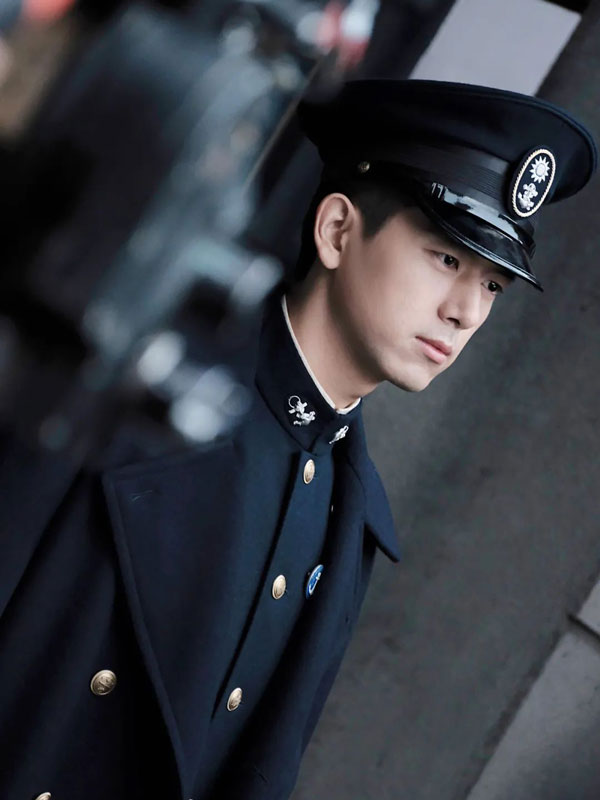
In Twinkling Stars, he takes on a dual role—Xiang Yuansheng/Hua Zhen—playing a revolutionary youth with two identities. It's a balancing act between pushing his own boundaries and meeting audience expectations.
In A Love Never Lost, he portrays Liang Xiang, a disillusioned young nobleman from the late Qing dynasty. The character offers viewers a fresh perspective on a complex and often misunderstood period of Chinese history.
In historical dramas
As Jiang Changyang in Flourished Peony and In the Name of Blossom, Li Xian completely breaks away from the standard male archetypes seen in costume series. His character plays the fool outwardly while hiding deep loyalty beneath the surface—a contrast built through expressive eyes and precise body language.
These works span costume, urban, and historical genres, demonstrating Li Xian's adaptability across a wide range of roles. They also reflect his calculated "risk-taking" when it comes to character selection. After the explosive success of Go Go Squid! (亲爱的,热爱的), instead of continuing to chase traffic at its peak, he made a conscious decision to pivot—to operate at the edge of his comfort zone.
Looking at it more deeply, characters that are grounded in reality and break away from formula often offer actors the most expansive performance opportunities. They allow for creative breakthroughs. This is exactly what defines Li Xian's casting strategy: rejecting market pigeonholing, hiding behind the role rather than standing in front of it, and treating every character as a site of experimentation.

Take, for example, two different "confession scenes":
In Meet Yourself, the seaside confession lands emotionally because of its simplicity—"You're just the type I happen to like." With subtle, subtractive acting, Li Xian slowly unfolds Xie Zhiyao's inner tenderness and quiet resolve.
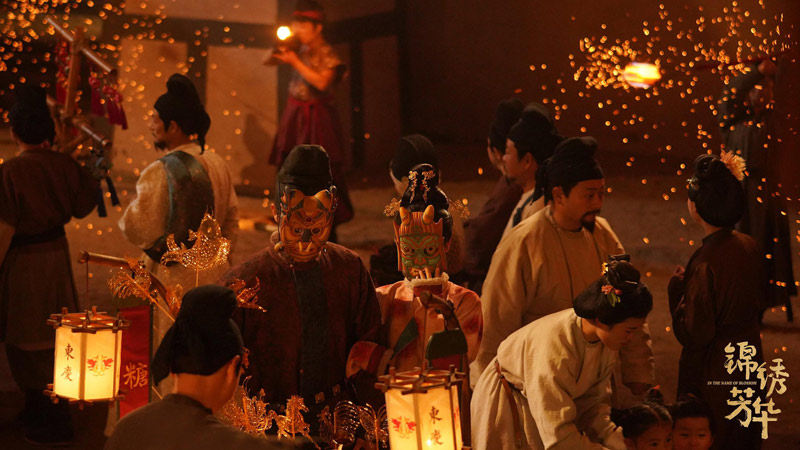
In In the Name of Blossom, the Lantern Festival confession scene is far more restrained in action but emotionally intense. The way Jiang Changyang uses small physical cues to signal his soon-to-be-revealed feelings adds a bittersweet tension. This stands in stark contrast to his usual roguish charm earlier in the series.
The emotional core of each character is distinct, so even in similar narrative situations, the effect is entirely different.
In A Love Never Lost, the character Liang Xiang abandons the all-knowing, omniscient narrative lens. As Li Xian himself put it:
"He's not a perfect character. He has flaws and darkness, shaped by his personality and past experiences. Playing such a layered person is a real challenge, and I hope I can bring out all facets of who he is—so audiences can understand him from multiple angles."
Viewers who watched the show highlighted key aspects of his performance—a breakthrough transformation, emotional depth, expressive eyes, precise detail work, and a sense of realism. These qualities helped overturn previous assumptions about Li Xian and proved he's capable of portraying morally ambiguous figures caught in the tides of history.
Following the broadcast of In the Name of Blossom, online buzz around Li Xian surged. Terms like "acting skills," "Jiang Changyang," "brave and strategic," "In the Name of Blossom," "detailed," "visually appealing," and "high quality" appeared frequently in trending topic analyses. High-profile searches like:
#LiXianReturnsWithJiangChangyangBGM,
#LiXianHadFunActingAndIHadFunWatching,
#LiXianIsThisEvenLegalForMeToWatch (all originally in Chinese hashtags)
repeatedly made it onto trending lists in sync with key plot developments. The popularity of both the role and his emotionally resonant performance made Li Xian a topic of nationwide discussion during the drama's airing—paving the way for strong commercial crossover potential.
During Flourished Peony's run, Li Xian partnered in a major campaign with the brand Changqing, and by the time In the Name of Blossom launched, he had already secured a new endorsement from Taobao Flash Sale, which even issued a special acknowledgment in the drama's credits. The official hashtag announcing the collaboration attracted over 870 million reads across platforms. He also lent his influence to cultural and tourism initiatives: one tracking shot from the show unexpectedly sparked a wave of interest in ecological protection, boosting the series' cultural reach and, in turn, feeding back into the longevity of his acting career.
In terms of audience demographics, Li Xian has recently gained significant traction among female viewers aged 24–30. He holds a particularly high favorability score in this age group. Geographically, while he remains popular in major metropolitan areas thanks to his looks and solid reputation, his appeal has also grown steadily in emerging markets and smaller cities.
Why does this matter? Because women in the 24–30 demographic—many of whom are already working or starting families—tend to have more mature tastes. They're less interested in empty fantasy or overly sweet "factory-made romance," and more drawn to emotional authenticity, personal charisma, and real-world resonance. Li Xian's role selection happens to align precisely with these viewing preferences.
He's gained impressive attention in wealthier urban regions, but his TGI (Target Group Index) scores in tier-3 and tier-4 cities aren't low either. In other words, Li Xian's fanbase spans both the upper and lower ends of the market, forming a broad and high-quality national recognition network.
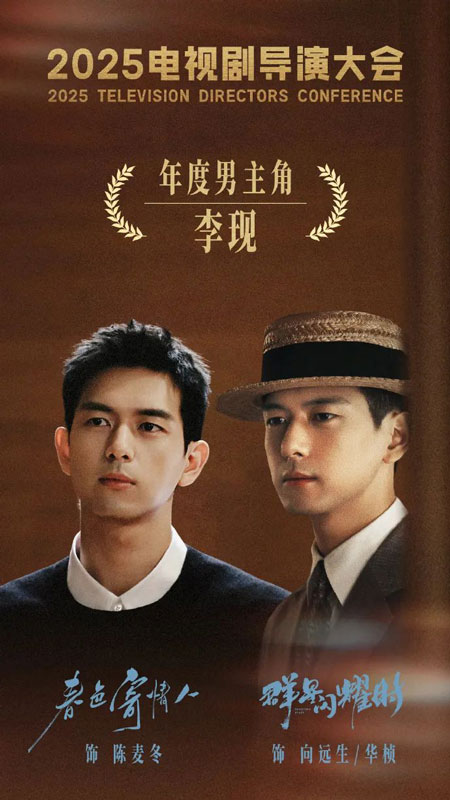
His respect for the craft of acting and sharp instinct for what resonates in today's cultural climate have propelled him into a steady rise. For example, Meet Yourself earned him a Best Actor nomination at the 32nd Golden Eagle Awards, and he was recognized as the "National Favorite Actor" by Weibo in 2024 and "Actor of the Year" at the 2025 TV Directors Conference for Shooting Stars and Love Endures.
His upcoming period drama The Wind Rises Long (长风起), directed by Yang Lei—best known for helming the hit sci-fi series The Three-Body Problem—features Li Xian in a role that transforms from spoiled young master to calculating avenger. The project boasts a high-profile creative team and is expected to add major freshness to his screen persona, while further expanding his performance range.
 Li Xian, as one of the most prominent actors born in the 1990s, is a clear-headed practitioner of long-termism. His career trajectory offers a textbook case of how an actor can evolve from early traffic-driven popularity to solid, reputation-based staying power. His acting style combines the adaptability of a "drama-chameleon" with a consistent thread of personal nuance, striking a rare balance between commercial appeal and artistic integrity. For younger actors looking to navigate today's volatile entertainment world, Li Xian's path is one worth studying.