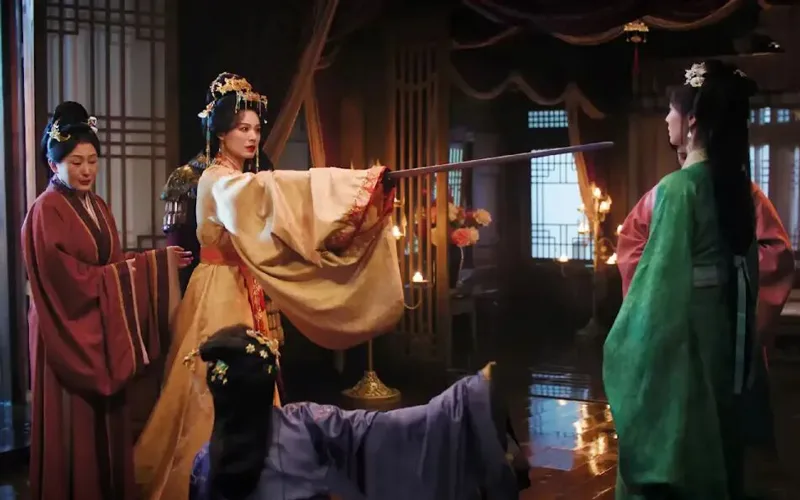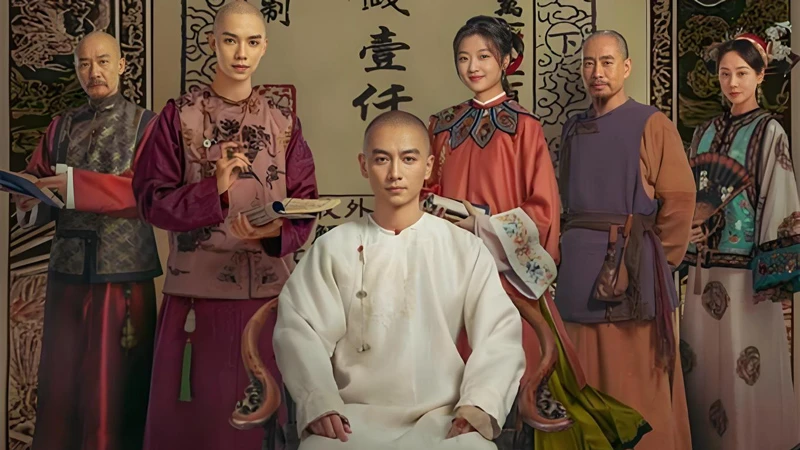
In the frozen wastes of the Northeast, a business war turns lethally personal. The recent episodes of the historical drama Legend of the Magnate (大生意人) have left audiences breathless, not with boardroom deals, but with a literal fight for survival in the snow. The shocking death of a key character has peeled back the layers of a vendetta, revealing a plot far more sinister than a simple rivalry. It turns a tale of commerce into a chilling story of revenge, exposing how deep one woman’s hatred truly runs.
A Frozen Trap
The remote penal colony of Ningguta (宁古塔) is more than a setting; it is a character of brutal indifference. It is here that the accomplished merchant Gu Pingyuan (古平原) finds himself imprisoned once more, delivered into the vengeful hands of Xu Guandai (徐管带). Their history is bitter. Xu, a former warden disgraced and exiled himself, sees Gu not as a prisoner, but as the living embodiment of his own downfall. His “interrogation” methods are designed for prolonged torment, alternating between freezing exposure and fleeting warmth.
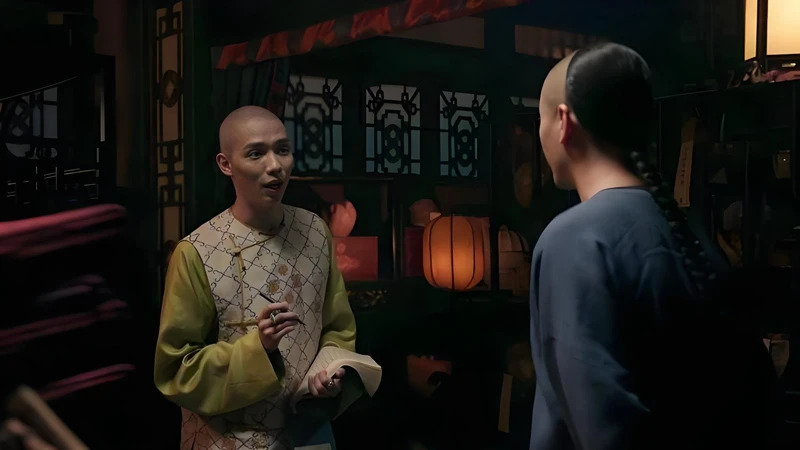
Gu, ever the strategist, attempts to negotiate his way out. He offers Xu a path to regain wealth and status through an arms deal, a proposition the desperate man seemingly accepts. They travel together, and a fragile, transactional partnership forms. The audience is led to believe Xu’s greed has temporarily overridden his malice. This makes the subsequent betrayal all the more brutal. Their return to the remote outpost was never about completing a deal for Xu; it was about setting a final, fatal stage.
Xu’s premeditated madness unfolds. Before their journey, he had declared war on the wild by displaying a wolf’s head. Upon return, he uses animal calls and the blood of a slaughtered horse to summon a starving pack. He disables Gu’s weapon, leaving them both as prey. In a twisted, poetic justice, the very wolves Xu summoned turn on him first. His gruesome death, however, is not his final act. With his dying breath, he delivers a revelation that shifts the entire axis of Gu’s suffering, pointing the finger not at himself, but at a puppeteer in the shadows.
The Mastermind’s Grudge
Xu’s last words unveil the architect of this ordeal: Su Zixuan (苏紫轩). He reveals it was she who provided him with the resources to stay alive, not out of compassion, but to ensure he would be there to “welcome” Gu Pingyuan. She is the “living bodhisattva” who calculated this moment of despair. This confession reframes every hardship Gu has endured in Ningguta not as random cruelty, but as a deliberate, extended punishment orchestrated by Su.
Their relationship began with mutual respect. Su, a formidable business mind in her own right, initially saw Gu as a potential ally and tried to recruit him. His refusal was the first slight. The conflict escalated over the Shanxi banking affairs, where Gu thwarted her plans to consolidate financial power and talent. Each of Gu’s successes, even those not directly aimed at her, inadvertently blocked her path, transforming professional respect into seething resentment.
The final straw was a political assassination attempt. Su’s carefully laid plot to kill the Empress Dowager Cixi was foiled by Gu’s actions. This was more than business; it was personal vengeance for Su, years of waiting destroyed. Her hatred crystallized. Merely killing Gu would not suffice. She needed him broken, to experience the ultimate fall from grace she felt he had caused others. Her scheme to return him to the hell of Ningguta, into the hands of a man like Xu, showcases a ruthlessness that surpasses even the show’s acknowledged business villains. For Su Zixuan, if talent cannot be controlled, it must be destroyed.
Uneasy Alliances
This revelation forces Gu Pingyuan to confront a new reality. His greatest threat is not a rival firm or a corrupt official, but a brilliant individual whose motives are now purely personal. The chessboard has been upended. Survival and future endeavors will require navigating the minefield of Su Zixuan’s wrath. Yet, the world of high-stakes commerce rarely allows for absolute, permanent enmity.
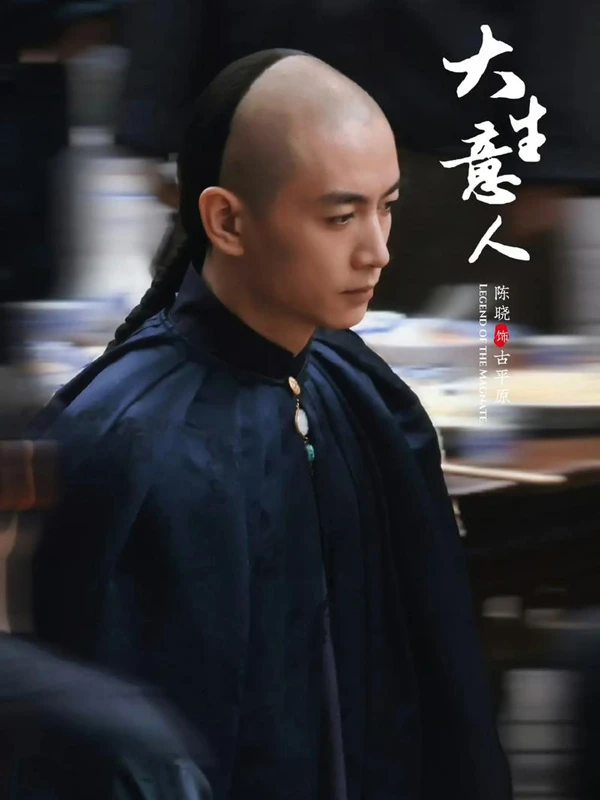
In a dramatic turn, the narrative thrusts them into an uneasy collaboration. To rescue his friends Li Cheng (李成) and Bai Yimei (白依梅) from a separate crisis, Gu finds he must seek an accord with Su. This potential partnership is fraught with peril. Can either of them set aside profound personal animosity for a shared goal? Trust is impossible, but a temporary alignment of interests might be negotiated. This sets the stage for psychological warfare conducted under the guise of cooperation.
Their forced teamwork becomes the new frontier of their conflict. Every discussion, every shared plan will be a duel in disguise. Gu must beware of being manipulated or betrayed anew, while Su must calculate if his utility outweighs her desire for revenge. This dynamic promises to test both their intellectual prowess and their capacity for pragmatic compromise. For the audience, the question shifts from “Who will win?” to “Can they work together without destroying each other in the process?” Their first joint effort will be a crucial test, not just of their ability to rescue friends, but of whether two opposing forces can channel their power toward a common, constructive end, however temporarily.