

The short drama boom has sparked a wave of new platforms, birthed standout mini-series brands, and brought many once-hidden creators into the spotlight.
But where is this format headed next? What's the secret recipe behind viral hits? And with internet giants entering the arena, how will the short drama landscape shift?
As one of the first Chinese companies to tap into the overseas short drama market, Crazy Maple Studio didn't just stumble into global success. As VP Nanya Peng puts it, "We're not newcomers to the international game."
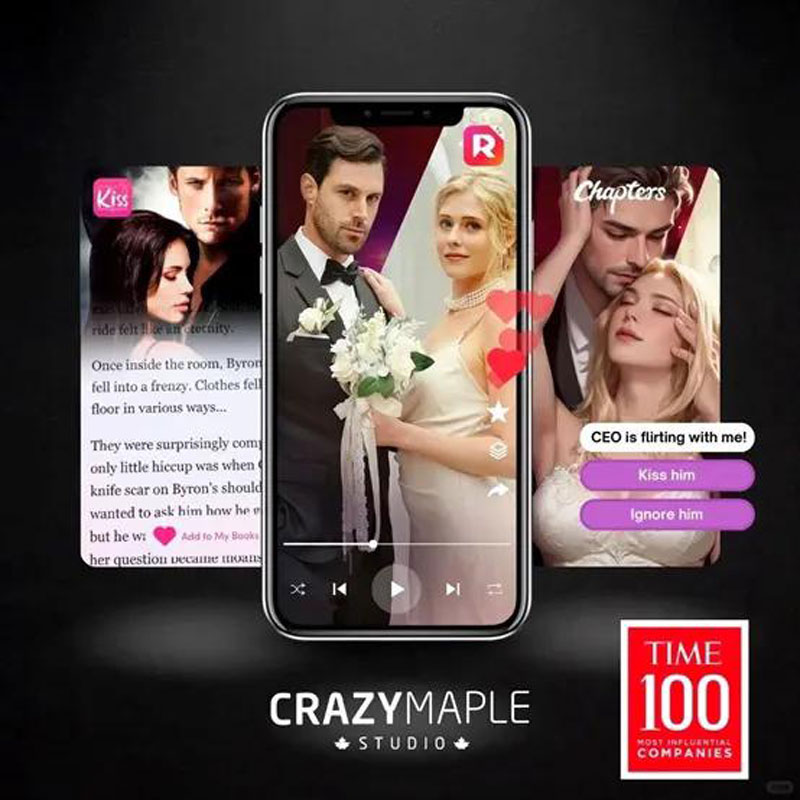
Back in 2017, Crazy Maple Studio entered the North American market through interactive storytelling games—specifically visual novel platform Chapters. That gave them years to get a feel for overseas user preferences before they ever shot a single drama.
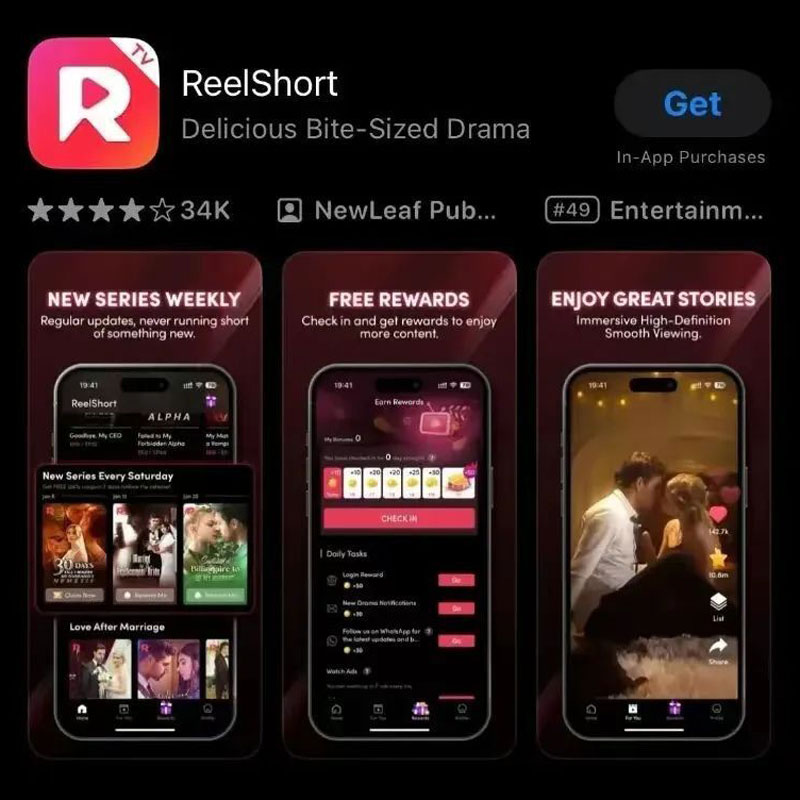
By August 2022, the company had launched ReelShort, a vertical-screen short drama platform built for audiences abroad. It was the first of its kind in North America. But from the beginning, their focus wasn't just on exporting Chinese stories—it was about striking a delicate balance between localization and globalization.
And that balance? It's trickier than it sounds.
In China, short dramas are all about plot-heavy storytelling and breakneck pacing. That kind of content exploded on mobile. But when it came to the global market, things weren't so straightforward.
"There was a lot of skepticism," Nanya recalls. "Hollywood professionals saw vertical short dramas as unserious, low-effort content. And even though we had production experience, we didn't know how non-Chinese audiences would react to this style of storytelling."
Not to mention the challenges of cross-cultural adaptation—what counts as emotionally satisfying or "over the top" varies widely between cultures.
From the start, ReelShort faced a hard truth: even if the format worked in China, it wasn't guaranteed to click abroad. They had to build everything from scratch: audience trust, production know-how, even the talent pool.
 Learning the Hard Way: No Shortcuts in a New Market
 Learning the Hard Way: No Shortcuts in a New Market
"In early 2022, we noticed the momentum building around vertical short dramas back home," says Nanya. "Given our background with visual novels and online fiction, we figured it might be a perfect opportunity."
At that point, long-form content overseas had hit a plateau. Films and shows were losing audience attention to short videos—but no one had yet cracked the code of turning that vertical attention span into actual storytelling.
So the team jumped in. But first problem? Who was actually going to make these dramas?
"Finding collaborators was really tough at the beginning," Nanya admits. "So our core team members ended up producing the earliest shows themselves."
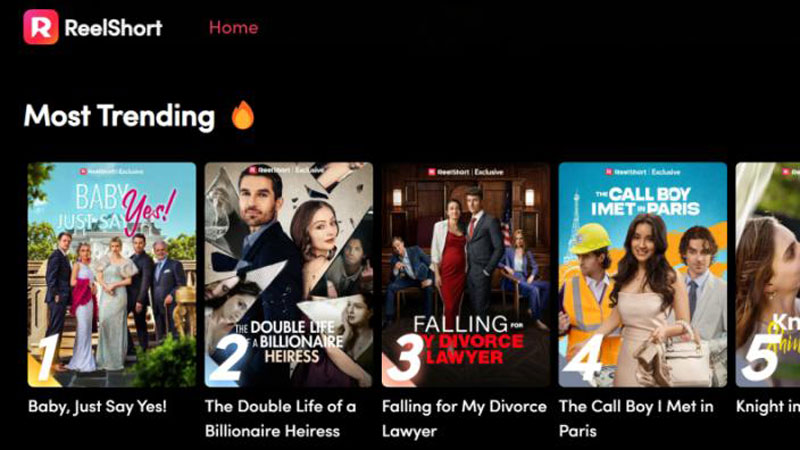
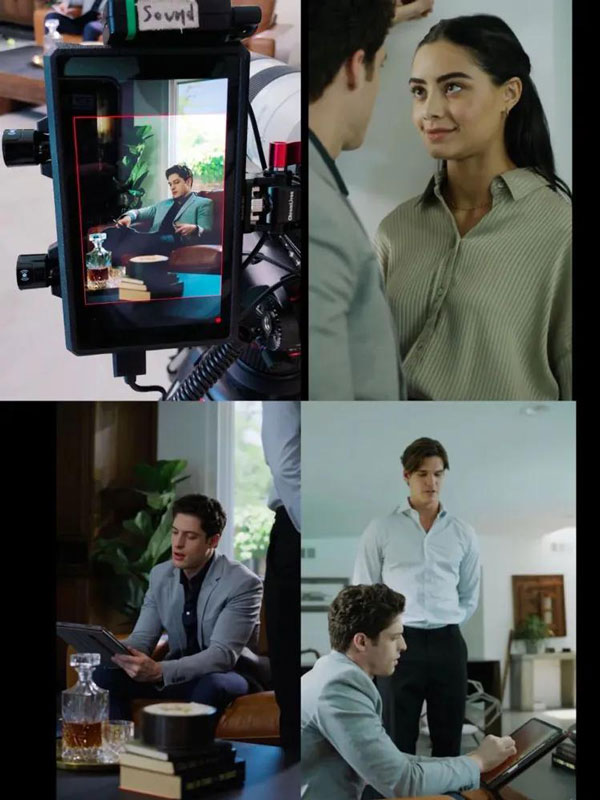
They had to learn it all: how to write in the rhythm of Chinese short dramas, but shape it for Western tastes. They had to rethink shot composition for vertical screens, make stories more emotionally punchy, and—maybe most importantly—cast actors who clicked with local ideals of "romance," "revenge," and "wish fulfillment."
And for the first 10 months after launch, none of it worked.
Despite their efforts, the platform didn't bring in significant users or revenue. "It was a tough time," Nanya admits. "We started to seriously question whether international audiences wanted vertical short dramas at all."
What eventually turned things around? Relentless testing—and a few surprising hits.
They began to understand that telling a story through short dramas in Western markets meant reinventing the entire approach. More immersive visuals. More emotional stakes. More genre tropes that matched local tastes.
One key insight: users overseas loved two specific types of stories—werewolf romances and CEO fantasy dramas. Think supernatural drama mixed with steamy workplace power plays.
"We finally cracked the formula in 2023," Nanya says. "Once we leaned into those genres, the numbers started to make sense."
By taking production into their own hands, Crazy Maple Studio built end-to-end experience—from localizing scripts to actual filming—which laid the groundwork for scaling up. "It wasn't until we had a few breakout hits on the platform that overseas production teams started reaching out to us for collaboration," says Nanya.
Looking at the global short drama market as a whole, breakthroughs in new content formats often start with someone willing to get their hands dirty. In the absence of an established talent pool, Crazy Maple Studio chose to replace "industry maturity" with "hands-on experience." Their early experiments proved one thing: international audiences do crave fast-paced, high-stakes storytelling—what matters is how it's told in a culturally relevant way.
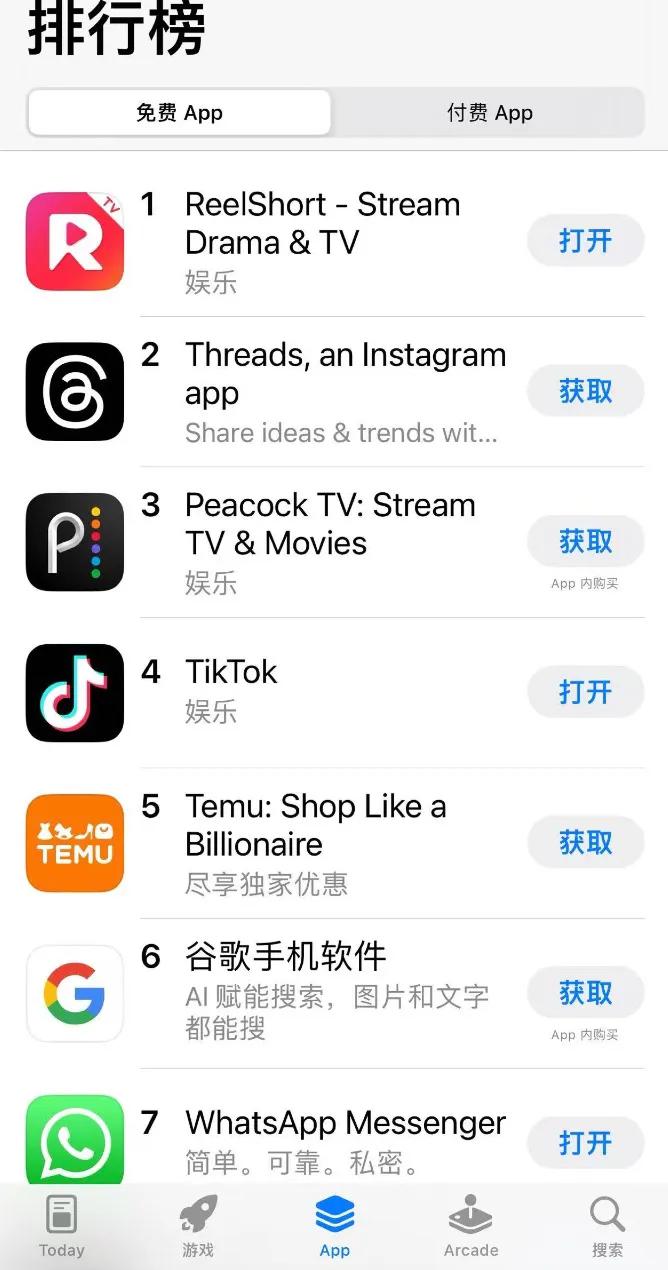
Take the werewolf series Fated to My Forbidden Alpha, for example. It reimagined the familiar "CEO + fantasy romance" formula into a North American-style werewolf clan drama. The core theme became the clash between tribal rules and forbidden love, featuring full-moon rituals and other fantasy lore familiar to Western viewers. The result? It shot to the top of North America's app store download rankings.
Or look at Money, Gun, and a Merry Christmas. Inspired by China's "underdog son-in-law" revenge dramas, this one features a seemingly low-status auto mechanic who's secretly heir to a weapons empire. With layers of family betrayal, private jets, and high-stakes conflict, the show racked up over a million paying users in just three months.
The early setbacks around content development, team formation, and production timelines were inevitable growing pains. But these very challenges made it clear: localizing short dramas isn't about translating scripts—it's about rebuilding the entire storytelling pipeline from scratch.
After Localization Comes Premiumization and Differentiation
 After Localization Comes Premiumization and Differentiation
"We tried translating Chinese viral hits directly in the beginning," Nanya admits. "But it didn't work as well as we hoped." So once the platform had a handle on basic localization, the next big question was: how do we level up?
The answer: quality and differentiation.
Even with a familiar genre like the "underdog comeback," ReelShort now makes sure the characters' struggles actually reflect real North American social contexts. In Money, Gun, and a Merry Christmas, for instance, the male lead is dismissed by his girlfriend's family as a freeloading loser—when in fact he's a secretly powerful heir. It's a relatable tension point for viewers. But this isn't just a surface-level character swap. It requires rewriting the story logic to reflect local values and social dynamics.

In North America, for instance, class tensions often show up not as "rich vs. poor" in the blunt terms common in Chinese dramas, but as subtler forms of bias—like career snobbery or family pride. And what audiences want from an "underdog rise" story isn't necessarily wealth and revenge—it's respect, autonomy, and competence.
This kind of cultural unpacking is what moves localization from "just making it readable" to "making it resonate."
The core of localization isn't transplanting a culture—it's adapting to one. A successful short drama abroad doesn't just preserve high-stakes conflict—it tells the story using the language, settings, and values of the target market. And this isn't just about being "relatable." It's about building emotional trust and audience connection, which is exactly how Crazy Maple Studio managed to surpass tens of millions of monthly active users in North America.
By 2024, the international short drama market had officially hit the fast lane. The sheer scale of the opportunity drew in a flood of Chinese platforms, eager to go global. Most of them started with a lightweight strategy—simply translating content and shipping it overseas. But it didn't take long for them to realize: language alone doesn't win hearts. And so, more and more newcomers began following in Crazy Maple Studio 's footsteps.
This shift reflects a growing consensus: the real competition overseas isn't about speed—it's about who can dig deeper into localization. Whoever manages to break through cultural surface-level differences and tap into real user desires will gain the edge in this expanding market.
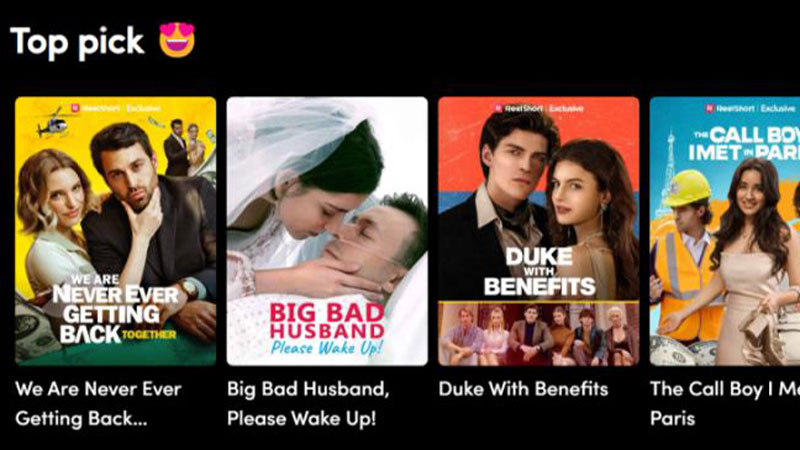
After battling through the early localization challenges, Crazy Maple Studio realized that the next stage for short dramas abroad hinges on two words: quality and differentiation. First, because audiences are getting more selective—sloppy production will be quickly discarded. Second, because regional markets are opening doors for niche genres to break out.
For the team at Crazy Maple Studio , their standards haven't changed. The story can be fast-paced, but the logic has to hold. Production can be lightweight, but the quality must never dip. "At the end of the day, users only pay for good content," Nanya says. "The future of competition comes down to who can tell better stories, with smarter execution, sharper visuals, and more bold experimentation with genre."
Different Regions, Different Priorities
 Different Regions, Different Priorities
"Users in North America and Europe exhibit a more stable and stronger willingness to pay," observes Nanya Peng, "while Southeast Asia's undeniable strength is its massive, highly engaged user base." This fundamental contrast isn't just an observation; it's the cornerstone of Crazy Maple Studio 's deliberate global expansion playbook, demanding radically different operational blueprints for each region.
In North America and Europe, audiences possess a well-established habit of paying for premium digital content—provided it meets high production standards and resonates culturally. Consequently, the average revenue per user (ARPU) here significantly outpaces figures seen in Southeast Asia. Crazy Maple Studio 's response in these mature markets is unapologetic premiumization coupled with surgical precision. This means heavy investment in top-tier productions that mirror local values, aesthetics, and narrative preferences.
Simultaneously, they deploy sophisticated, data-driven ad targeting to efficiently reach high-intent user segments. A prime example: North American campaigns meticulously push emotionally resonant romantic dramas to women aged 25–40, while serving gritty, triumph-over-adversity stories to men aged 30–50. The objective is clear: forge a sustainable, high-value loop of "instant conversion + enduring retention" by consistently delivering exceptional quality that justifies the price point.
Southeast Asia demands an entirely different calculus. Here, users typically display greater price sensitivity, favoring accessibility and often gravitating towards small, frequent micro-payments—sometimes mere cents per episode—over hefty subscriptions. Recognizing this, Crazy Maple Studio 's entry strategy prioritizes mass adoption and deep engagement. When expanding into markets like Indonesia or Thailand, the focus shifts to removing barriers to trial. This involves tactics like aggressive freemium tiers supported by ads, ultra-low-cost introductory bundles, or token systems enabling piecemeal consumption. The goal is to cultivate habitual viewing within this unique payment ecosystem, building a vast, loyal audience where revenue scales with volume and long-term user lifetime value (LTV).
This starkly region-specific approach underscores a sophisticated understanding of aligning strategy with market maturity. In high-ARPU, established markets, the equation is clear: exceptional quality commands premium value. In high-growth, volume-centric markets like SEA, the imperative is scale: rapidly amassing a broad user base, fostering daily engagement, and optimizing monetization gradually through frequency and retention. As Nanya Peng emphasizes, "There's no universal template. Authentic success demands deep, localized user insight to find the right unlock for each unique audience."
Looking ahead, Nanya identifies two powerful engines for international short dramas: deepening regional market penetration and innovative cross-sector integration. He highlights the "significant untapped potential" in blending short-form narratives with e-commerce or branded content overseas. Crazy Maple Studioisn't just theorizing; it's actively experimenting. Partnerships with major North American e-commerce platforms are testing seamless "watch-and-shop" features, where in-show props link directly to real-time purchase options, transforming viewer curiosity into immediate sales.
Critically, these forward-looking initiatives aren't speculative dreams. They stem from Crazy Maple Studio's unwavering, demand-driven core philosophy. Every phase—from initial localized trial-and-error, to building competitive moats through distinctive quality, to segmenting global strategy by region—is fundamentally responsive to audience signals. Whether it's weaving beloved fantasy tropes into North American werewolf lore, fine-tuning militarized vengeance plots to resonate with male viewers' expectations, or pioneering shoppable drama formats, every decision originates from empirical understanding of what viewers want.
As Nanya Peng concludes, the future of global short dramas lies not in chasing ephemeral "innovation" for its own sake, but in respecting diverse user behaviors and relentlessly honing the craft of storytelling. Because ultimately, what transcends all borders isn't a specific format or gimmick—it's genuine human emotion. A powerful story, told authentically and well, will always find its pathway to the heart.