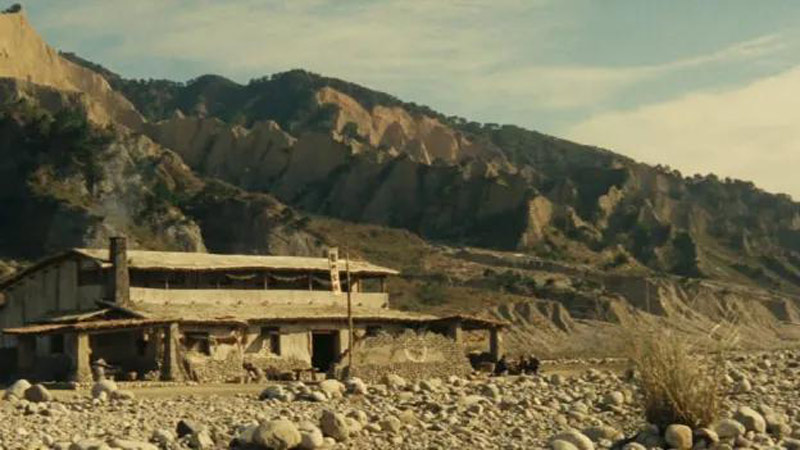
Dragon Inn sits in the middle of a desolate desert, looking like just another pit stop for weary travelers. Its thatched roof and mud-brick walls blend into the dry, rocky landscape that stretches for miles. A few strings of chili peppers and bundles of husks hanging on the walls are the only splashes of color. Inside, the layout is bare but orderly: a few wooden tables, and a staircase that leads up to some narrow rooms on the second floor. The place is set somewhere on the northern frontier of China, remote and anonymous—meant to be a quiet, forgettable location.
 A Standoff Under One Roof
 A Standoff Under One Roof
But when it first appeared on screen in King Hu's (胡金铨) Dragon Inn (1967), a group of mysterious men were already walking toward its door. You just knew trouble was about to walk in. Like the saloons in Westerns or the empty suburban houses in horror films, the humble setting becomes the perfect arena for a showdown. The flimsy walls and paper windows won't keep anything out.
If A Touch of Zen—the three-hour epic Hu made four years later—is considered his most imaginative work, then Dragon Inn is where his visual language becomes the most precise and recognizable. The title was shortened for its release outside of Asia, but that didn't stop it from becoming a huge box-office hit among Chinese communities overseas. It was also Hu's first project after leaving Hong Kong for Taiwan, where he hoped to gain more creative freedom with Union Film.
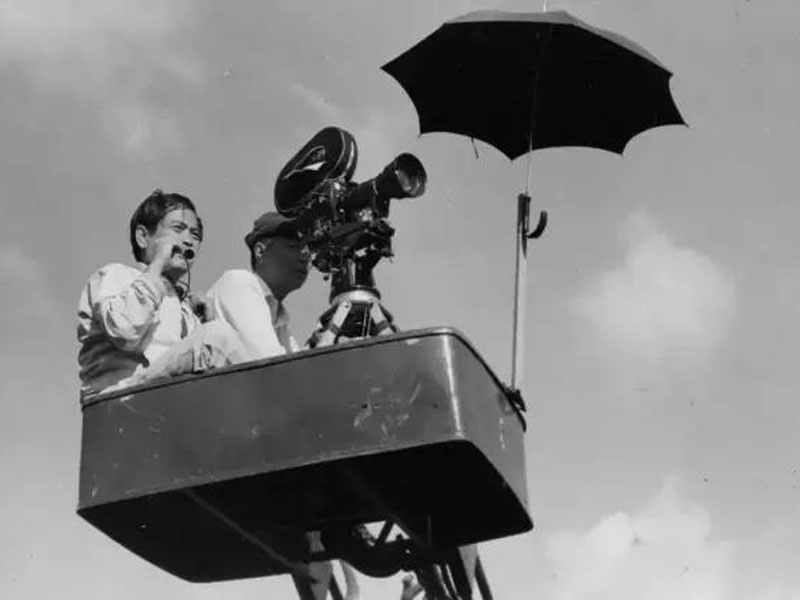
Watching Dragon Inn, you can feel how determined Hu was to take control of every detail. To do that, he stripped away anything that might distract from the action—keeping both the plot and the setting as minimal as possible. By the time he moved to Taiwan, he had already spent nearly a decade at the famed Shaw Brothers studio, working as an actor, screenwriter, and set designer. It was during this period that he started to be seen not just as a craftsman, but as an artist.
He started out by assisting Li Han-hsiang, one of Shaw Brothers' most influential directors. Together they made several films, including The Love Eterne, a Huangmei opera-style musical based on the legend of Liang Shanbo and Zhu Yingtai (sometimes called the Chinese "Butterfly Lovers")—a genre beloved by audiences across the Mandarin-speaking world. Then in 1965, Hu made his solo directing debut with Sons of the Good Earth, and followed it up in 1966 with Come Drink with Me, which was both a critical and commercial success.
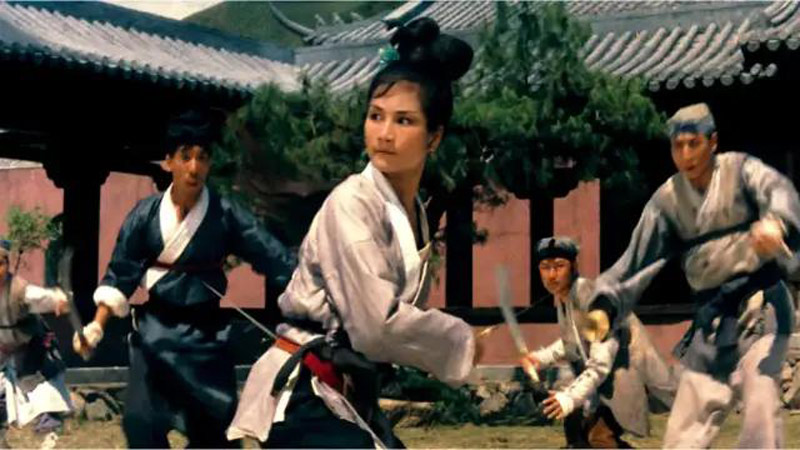
Hu and fellow Shaw Brothers director Chang Cheh—known for violent, hypermasculine films like One-Armed Swordsman (1967)—were both instrumental in reshaping the wuxia genre. These were stories about swordsmen and wandering fighters, rooted in old Chinese notions of honor and heroism. But under their hands, wuxia shifted from tales of superstition and fantasy into something more grounded, more physical—something you could almost believe.
That said, Hu never gave up on moments of stylized magic. Unlike Chang's blood-soaked realism, Hu always found space for the unexpected. Take Come Drink with Me, where the female lead catches a flying coin between two chopsticks—an image that's hard to forget.
He Stepped Out from Behind the Curtain
 He Stepped Out from Behind the Curtain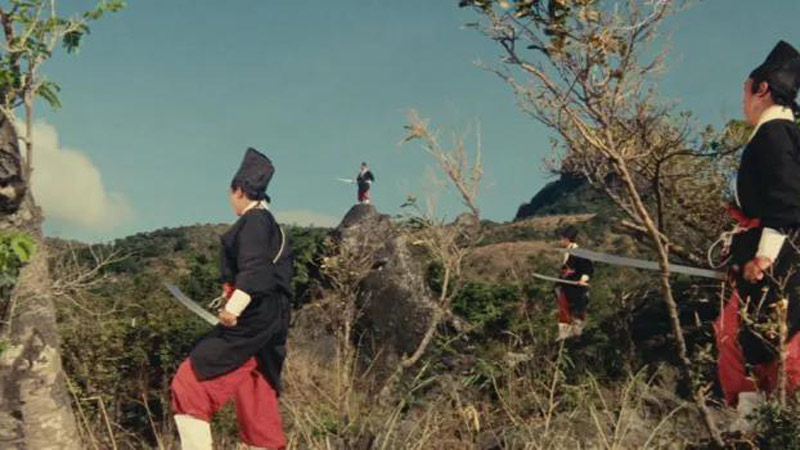
Though Dragon Inn is largely grounded in realism, King Hu still manages to surprise you at every turn. Even in the calm, early scenes, he shows how to turn a barren landscape into something close to a stage. The camera pans across a patch of high ground; men holding blades drift into the frame one by one. The moment they stop, the score slams in—sharp, percussive, and alerting.
Compared to his peers, Hu had a rare instinct: he could extract moments of pure visual pleasure from the barest ingredients. In Dragon Inn, he keeps the narrative so clean-cut that he's free to play with subtleties—between inside and outside, silence and noise, tension and release. The inn becomes a pressure cooker for these opposites to clash.
And while the inn may look plain, it comes loaded with meaning for a Chinese audience. It instantly calls up the world of Peking opera and classic fiction. Think of Water Margin (水浒传, a famous 14th-century Chinese novel), where inns are chaotic crossroads where outlaws, scholars, soldiers, and spies all collide. Then there's the idea of jianghu—not just a physical space but a shadow society outside the law. This isn't just where martial artists fight—it's where all rules bend.
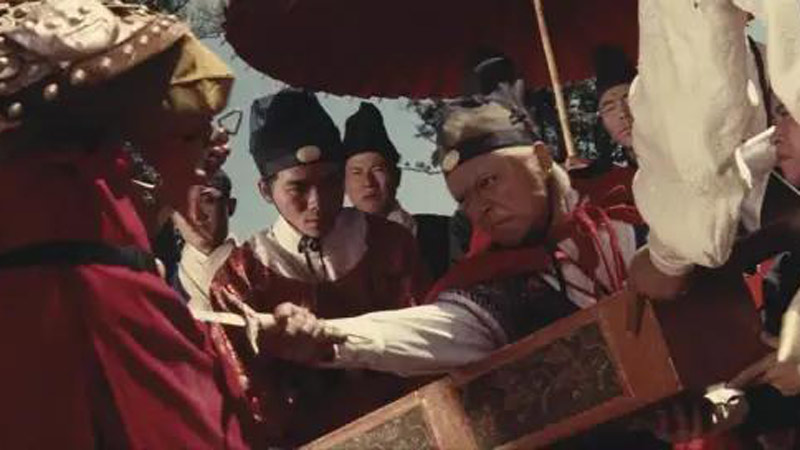
Before the main story gets going, the film lays out a tangled backstory in a few brisk scenes. A voiceover introduces a political plot that's easy to miss if you're not paying attention. Cao Shaoqin (played by Pai Ying) is a ruthless white-haired eunuch who travels in a lavish sedan chair, ordering executions with barely a shrug. He has the Minister of War, Yu Qian, put to death for allegedly plotting against the emperor. A group of officials marches across a dusty plain toward a makeshift execution platform. Yu kneels, silent and composed, accepting his fate.
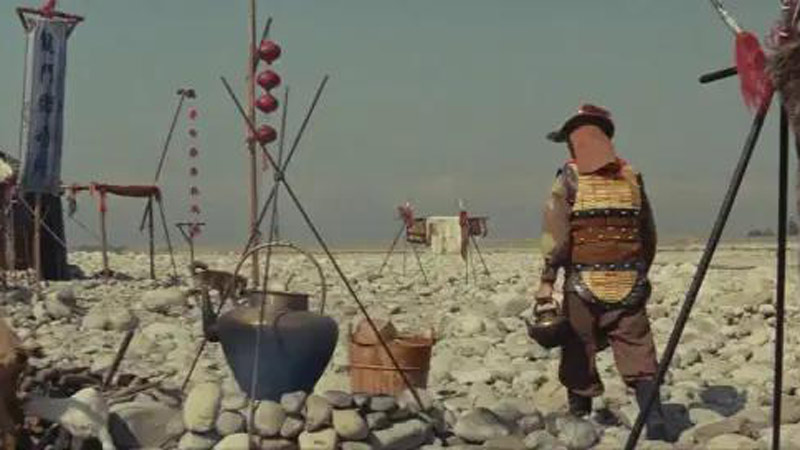
The execution happens off-screen, which says a lot about the world the film inhabits. In this chaotic slice of the Ming Dynasty, brutal purges are so common they barely warrant a close-up. Right after the beheading, Cao sends assassins after Yu's three children, who've already been captured and are being transported toward—yes—the Dragon Inn. The killers are waiting, and so are a group of loyalists trying to protect the kids.
In just a few minutes, Hu sketches out the entire conflict. Unlike modern wuxia directors like Tsui Hark (The Blade), Wong Kar-Wai (Ashes of Time), or Hou Hsiao-Hsien (The Assassin), Hu doesn't drag things out. The characters' motivations aren't deep, and they don't need to be.
Many of the faces on screen are new, but they're all playing familiar types—broad, stage-ready archetypes. Their entrance music practically spells out who's good and who's not. The villains, in particular, are portrayed with a kind of deadpan absurdity. Early on, a servant is stabbed to death for the simple act of asking for a tip. There's no drama to it—it's just routine cruelty.
As for the heroes, Hu makes an interesting choice. He deliberately keeps the three children off-screen for most of the film. It's not about them. Instead of lingering on the danger faced by innocents, Hu shifts the focus to the warriors themselves. These swordsmen—honor-bound and quietly obsessive—aren't driven by personal emotion as much as by a professional code. They take one fight at a time. Not because they must, but because it's who they are. They move from duel to duel with grim calm, as if following a path they never chose but never stray from.
Slow-Mo with a Blade Tucked Inside
 Slow-Mo with a Blade Tucked Inside
We've all seen our share of low-budget action films set in a single location with a barebones plot. It's a format that can easily fall into monotony—unless there's a real artist behind the camera. King Hu could have made things easier for himself by focusing on a single charismatic lead, the kind of star who naturally holds attention and drives momentum.
But Dragon Inn takes the opposite route. Unlike Come Drink with Me, A Touch of Zen, or Raining in the Mountain—three films where Hu built entire narratives around strong, lone-wolf women—this one is a full ensemble piece. There's no central hero with unbeatable skills or irresistible charm. And because the story is built this way, it becomes one of Hu's most complex group efforts, held together by a kind of airy, almost meditative energy.
Like many action directors, Hu wasn't particularly known for his work with actors. But he had an eye for casting, pulling together some of the most electric character performers in Chinese cinema. He didn't need big speeches. He let each actor's posture, rhythm, and physical choices carry the weight—balancing perfectly with the elegance of his style. That's what grounded his fight scenes. No matter how abstract the choreography looked, it always felt anchored by real people.
Still, one moment in the film does revolve around a single actor—and it's one of its best. Hu's longtime collaborator Shih Chun, who would go on to play the Confucian scholar in A Touch of Zen, appears here as the mysterious swordsman Xiao Shaoyun.
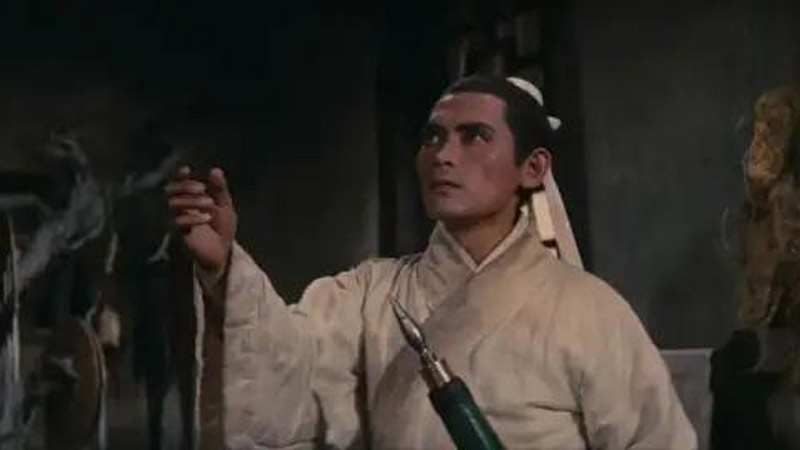
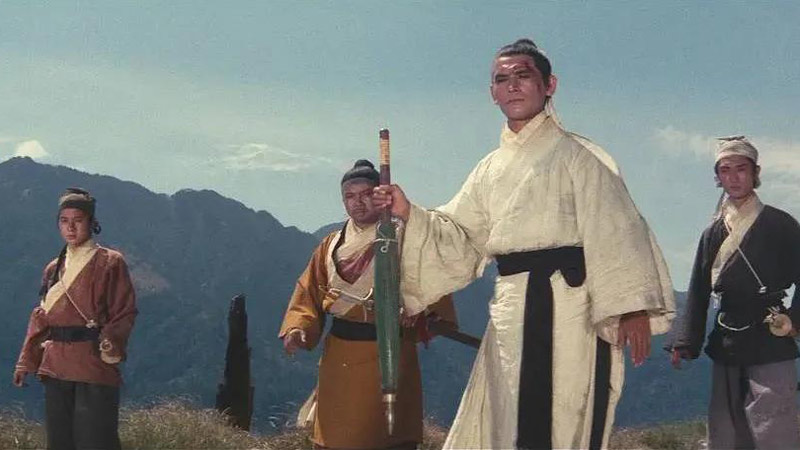
The whole movie is about dramatic entrances, but Xiao's is unforgettable. Dressed in white, a green parasol resting on his shoulder, he steps across a shallow creek like something out of a dream. When he finally sits down for lunch at the inn, the real performance begins: he shows his short temper in tiny, calculated gestures.
As the next action sequence unfolds, we see more fighters arrive, and Xiao gradually realizes he's surrounded. But he doesn't rush—he holds back, concealing his identity and delaying the inevitable showdown. This kind of standoff is where the film really starts to have fun.
There's a string of quiet, hilarious moments. One assassin demands he hand over his noodle soup. Xiao casually tosses the bowl across the room, and it lands on the table without spilling a drop. Later, when someone poisons his food, he pretends to die for a suspiciously long time, only to vomit in the assassin's face and go back to drinking between fights.
This entire sequence, which lasts nearly 20 minutes, plays out inside the inn—offering a kind of mini-stage for Hu to stretch his visual language. Without ever losing control, he shifts gears constantly: lazy camera pans, sudden bursts of chaos, wide shots that build unease, close-ups that let glances speak volumes.
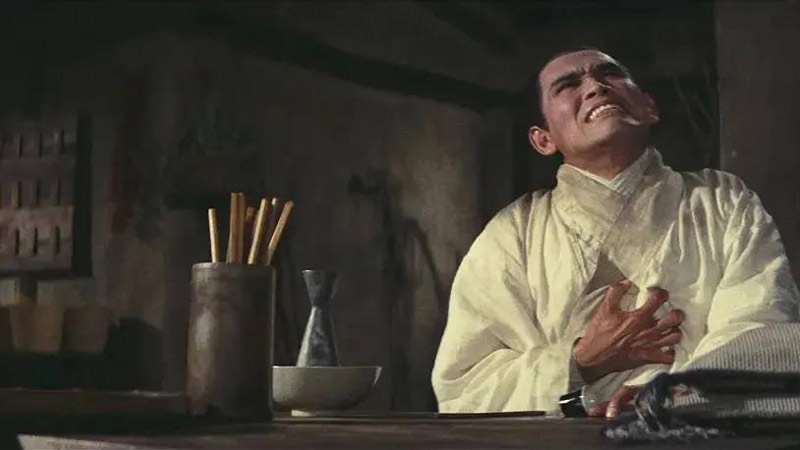
And at the center of it all are Shih Chun's eyes. Wide, unreadable, a little scary. They give the scene its pulse. His calm is unnerving—like a blank page that anything could be written on. That's what lets the tone swing so effortlessly between humor and dread. His character is almost faultless, not in a superhero way, but in a formal, constructed sense. He becomes a vessel for what Hu was trying to shape through his cinematic grammar: precise surface control, masking constant internal tension.
When the Wind Pushes the Story Out the Door
 When the Wind Pushes the Story Out the Door
Dragon Inn was the first time King Hu truly perfected the interplay between widescreen composition, fluid camera movement, and rhythmic editing. This combination turned him into one of the most innovative stylists of his generation—a signature auteur at a time when few Chinese filmmakers were recognized that way. His early work as a set designer at Shaw Brothers clearly left a lasting impression. Every frame in his films feels like a storyboard drawn from real life, a visual order carved out of chaos with obsessive precision.
He had a thing for cleanliness—literally. The running joke in Dragon Inn is that his main character is just as compulsive: in the middle of a bloody fight, Xiao Shaoyun takes the time to straighten objects, wipe the blood off his parasol, or tear a clean strip from his clothing. For Hu, the world of martial arts wasn't some rugged frontier—it was a structure he knew by heart, a familiar frame that gave him the freedom to explore more daring, abstract challenges. His camera, his sets, his characters—they all worked like parts of the same machine, each rhyming subtly with the other.
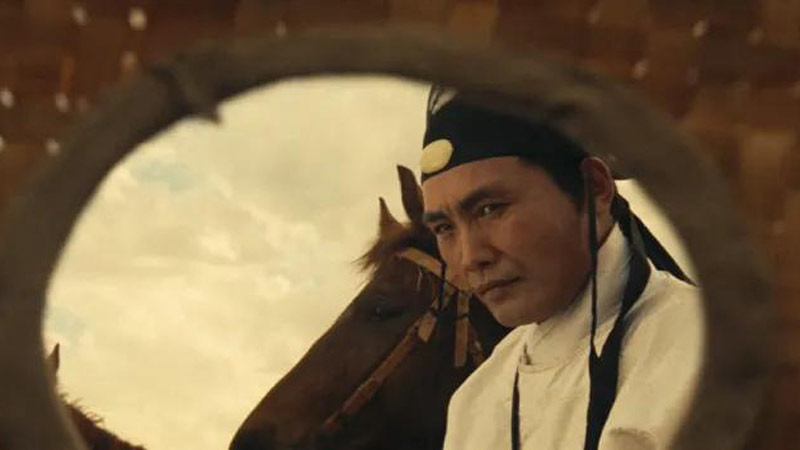
People often compare wuxia to Westerns, but in Dragon Inn, the action feels nothing like a shootout. It's choreographed like a stage performance—no surprise, since Hu had no background in martial arts. What he did have was a childhood full of Peking opera, dance, and acrobatics. His action scenes are visual spectacles first, grounded more in rhythm and showmanship than combat realism. That's where his longtime collaborator Han Yingjie (who also plays a villain in the film) comes in as the action choreographer. His fight scenes weren't just about plot advancement—they were visual elements in a grand design, musical in their own right.
There's a great moment of synergy between movement and music early on—Xiao Shaoyun's dazzling table-side performance—but things really change once the film begins to move beyond the confines of the inn. The choreography, the energy, the scope—it all expands outward.
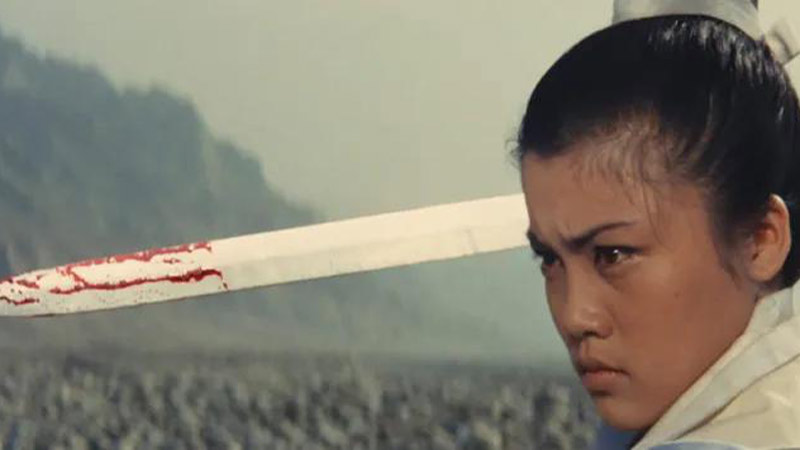
That shift begins with the film's only female swordsman, played by Shangguan Lingfeng. Disguised as a man, she crouches behind a wall, flips over obstacles, and begins eliminating enemies one by one as assassins close in from all directions. In one tracking shot, she stands under the wide-open sky, framed against the horizon. The score rises into something that almost feels physical—clattering footsteps, clashing metal, sudden drops into silence, and bursts of tension driven by pounding drums. It's not just sound design—it's percussive storytelling.
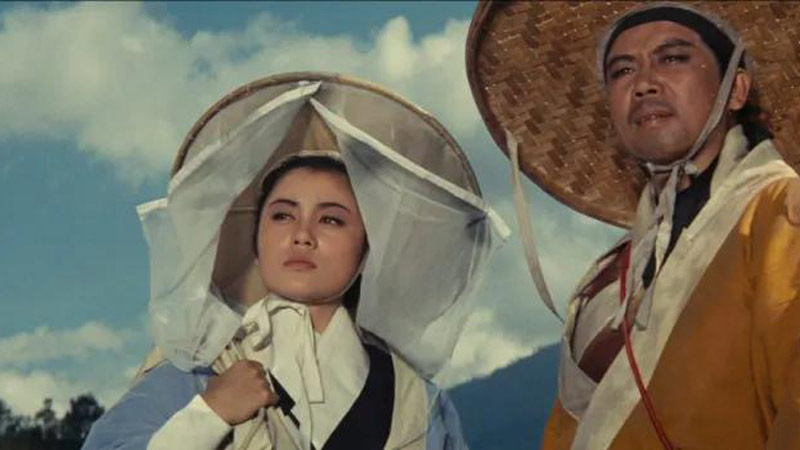
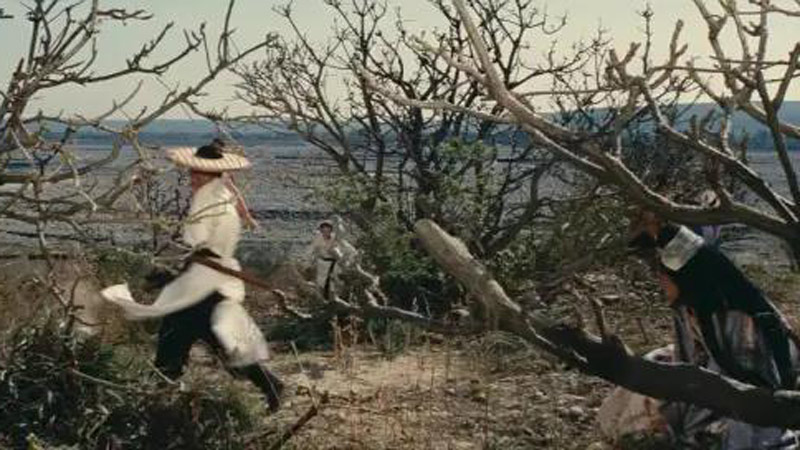
For much of the film, Hu keeps us indoors, inside the inn's tight geometry. But when the action spills outside, it's like he finally lets the whole thing breathe. The sunlit openness of the desert, the wind ripping through fabric, the fighters claiming space—it's exhilarating. The camera starts to revel in the chaos. Craggy hills, gnarled trees, jagged cliffs—they're not just backgrounds anymore, they're part of the choreography.
And for the first time, Hu gives up his usual sense of formal distance. He zooms, pans, cuts more freely. You feel like the camera can barely keep up. The fight scenes no longer read like meticulously staged tableaux; they become fractured, kinetic moments you have to piece together as they happen. The edges of the screen feel unstable, wild. It's messy, but never careless.
Hiding Home Inside a Wuxia Film
 Hiding Home Inside a Wuxia Film
It's only at the very end—when the villainous eunuch Cao Shaoqin makes a dramatic return—that Dragon Inn erupts into a full-blown showdown, ending in a swirl of stylized mayhem. But even in its most explosive moments, the film never loses its sense of control or elegance. King Hu always had the curiosity of a scholar and the eye of a craftsman. He was known for the meticulous research that underpinned his historical dramas—so much so that during the long, complicated production of A Touch of Zen, a single mistake could have pushed Union Film (his production company) into financial ruin.
This obsession with period accuracy—and his nostalgic gaze toward dynastic China—put him at odds with the dominant ideology of the time. To the Cultural Revolution's campaign against the "Four Olds" (old ideas, customs, culture, and habits), Hu's attention to detail was seen as counterrevolutionary, even dangerous.
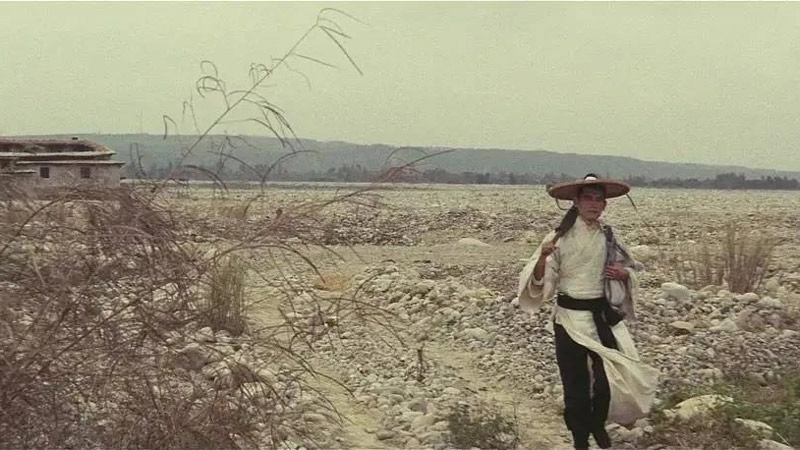
That tension was personal. Hu was a native Beijinger whose career took him far from the mainland. After leaving China, he ended up in the southern cities of Hong Kong and then Taiwan, where his memories of northern culture—its architecture, its dress, its codes—could only be kept alive through the medium of cinema.
Maybe it was this very sense of exile that allowed him to achieve something rare and almost paradoxical: turning commercial Chinese cinema into a space for contemplation. At a time when mainland audiences were being force-fed Cultural Revolution propaganda, Hu wasn't just entertaining them with swordplay and intrigue—he was reminding them that beauty could still exist, even in a world trying to erase it.
As Dragon Inn draws to a close, the villains lie dead. The heroes—quietly, without fanfare—fade into the sunset. They come back into frame for one last beat, only to vanish again into anonymity. It's the kind of ending that lands like a final blow: not flashy, but precise. A gesture that only a filmmaker truly devoted to balancing chaos and grace could pull off—equal parts pride and humility, resolve and stillness.