A quiet revolution echoes across continents. Not through amplifiers or digital streams, but through the breath moving across clay, the fingers dancing on silk strings, the vibrations resonating from bamboo. From America to Iran, France to China, individuals far removed from these instruments' origins are dedicating years to mastering their complexities.
What draws them to the soulful cry of the xun, the contemplative whisper of the xiao, the philosophical depth of the guqin, or the bright clarity of the dizi? Their journeys reveal more than musical curiosity; they uncover pathways to cultural understanding, personal discipline, and unexpected creative dialogues spanning centuries and civilizations.
Earth's Voice
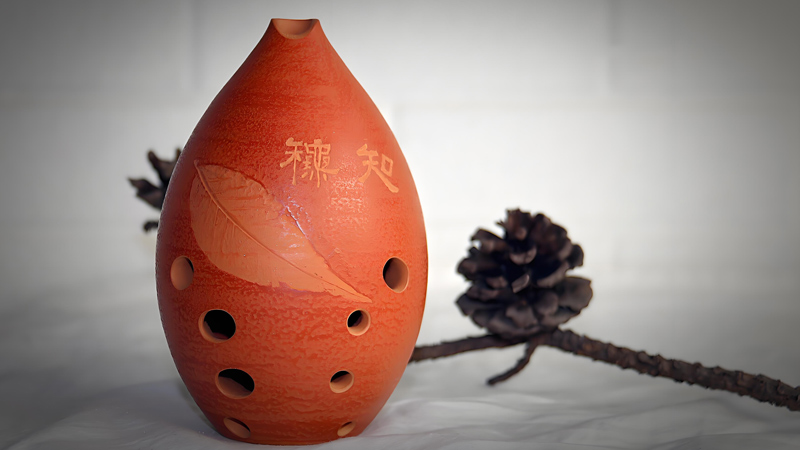
Lucas, an American content creator, holds an ancient xun, its bulbous clay form etched with subtle patterns. He doesn't merely play it; he dissects its physics for a global TikTok audience. Demonstrating airflow techniques, contrasting its haunting, hollow tones with the brighter timbre of a dizi, he plays a fluid melody. His fascination is palpable. Viewers resonate, sharing their own encounters with the enigmatic vessel – one likened its sound to blowing across a glass bottle's rim, another admired its tactile artistry.
Lucas transforms an obscure artifact into something tangible and intriguing, proving the instrument’s raw, earthy voice transcends language barriers. Its resonance feels primal, a direct line to humanity's earliest musical expressions.
Discipline Forged in Mountains
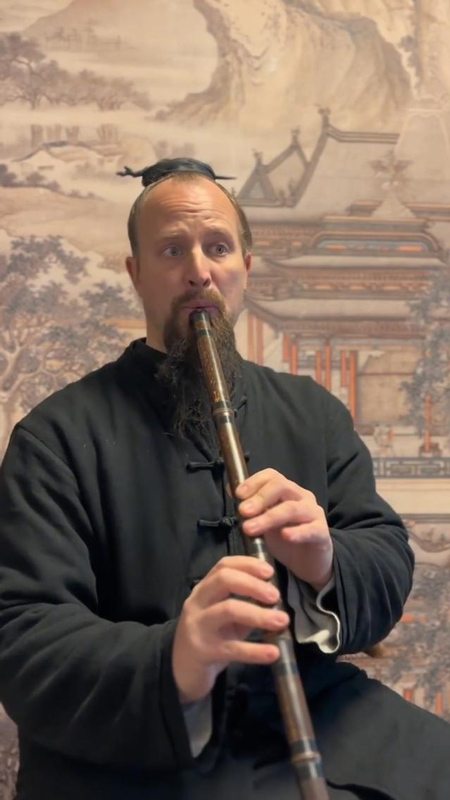
For American expatriate Jack, the bamboo xiao is inseparable from his life at China's sacred Wudang Mountains. Arriving in 2010 to study martial arts under Master Yuan Shimao (袁师懋), Jack became the sole foreign disciple who remained. His daily rhythm mirrors monastic discipline: predawn Tai Chi, teaching Kung Fu at the historic Yuxu Palace, then evenings dedicated to the xiao.
Frustrated by the lack of English resources, Jack painstakingly translated Chinese materials, compiling his own comprehensive tutorial. This self-made guide now aids his international students. His reverence extends to the music itself, finding deep kinship between playing melodies like Three Variations of the Plum Blossom Tune (梅花三弄) and the mindful flow of Tai Chi. For Jack, the xiao isn't just sound; it’s breath control, focus, and a profound meditative practice shared digitally to inspire others.
Reimagining Ancient Lamentations
John Thompson, an American musician, approaches the seven-string guqin not just as a performer, but as a scholar and innovator. His deep dive into its millennia-old repertoire led him to a bold reinterpretation of the Jin dynasty classic Potomania (酒狂).
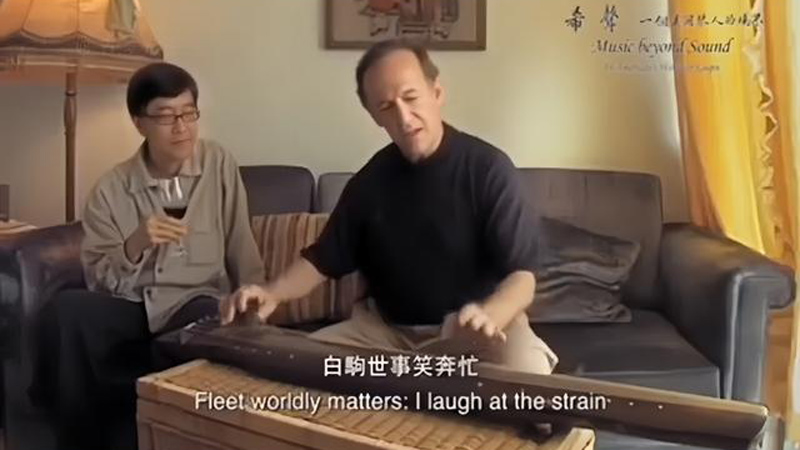
Traditionally rendered in triple meter, Thompson sensed a different narrative pulse. He rearranged it in quadruple time, seeking to amplify the composer Ruan Ji’s inner turmoil – the frantic energy beneath the surface of drunken despair. His performances, shared online, showcase this thoughtful departure. Thompson doesn't replicate tradition blindly; he engages in a creative dialogue with it, using the guqin’s nuanced language to explore timeless human emotions through a fresh structural lens, demonstrating the instrument’s capacity for contemporary relevance.
Curiosity Sparking Connection
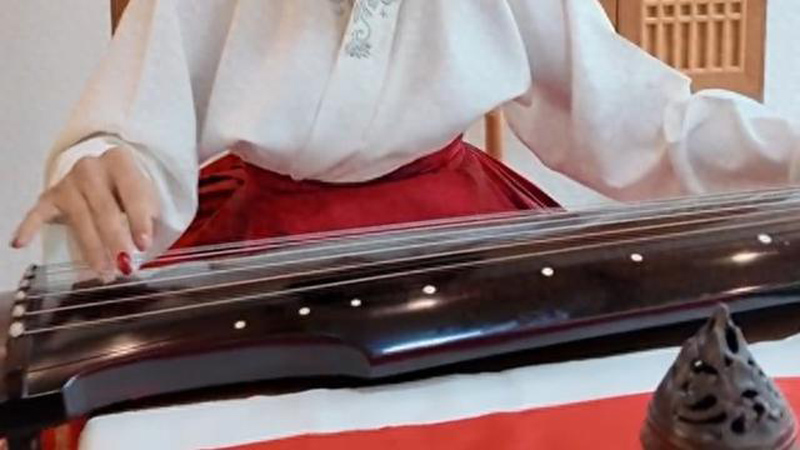
Eli, an Iranian student arriving in Shanghai in late 2024, embraced her Chinese adventure by donning hanfu and placing her hands on a guqin. Guided by a patient teacher, she began with fundamental techniques and the accessible, evocative melody of Laughter In The Sea (沧海一声笑). For Eli, the instrument became a key unlocking deeper cultural insights. "It helps me truly understand China," she shares. Her journey, documented on social media, transforms her learning process into a bridge. Similarly, Sam, a Frenchman, received a dizi as a gift.
Spurred by curiosity, he turned to online tutorials and tips from helpful Chinese netizens, quickly mastering simple tunes like "Twinkle, Twinkle Little Star." These interactions highlight a vibrant digital ecosystem where novices find encouragement and expertise, proving the initial spark of interest can ignite meaningful cross-cultural exchanges through shared sonic exploration.
A Resonance Beyond Borders
The distinct voices of these instruments weave a compelling narrative. The xun’s melancholic sigh evokes ancient rituals, the xiao’s ethereal flow mirrors mountain mists, the guqin’s intricate plucking speaks of scholarly contemplation, and the dizi’s lively trill captures everyday joy. What unites Lucas, Jack, Thompson, Eli, Sam, and countless others is a search for authenticity, connection, and artistic expression found uniquely within these traditions.
Their dedication – mastering complex techniques, creating learning resources, reinterpreting classics, or simply sharing their first notes – breathes new life into ancient practices. This global embrace isn't mere appropriation; it’s a testament to the instruments' enduring power to move the human spirit. The sound of clay, bamboo, and silk, carried on breath and fingertips, continues to find new listeners, proving that true cultural resonance knows no boundaries.