
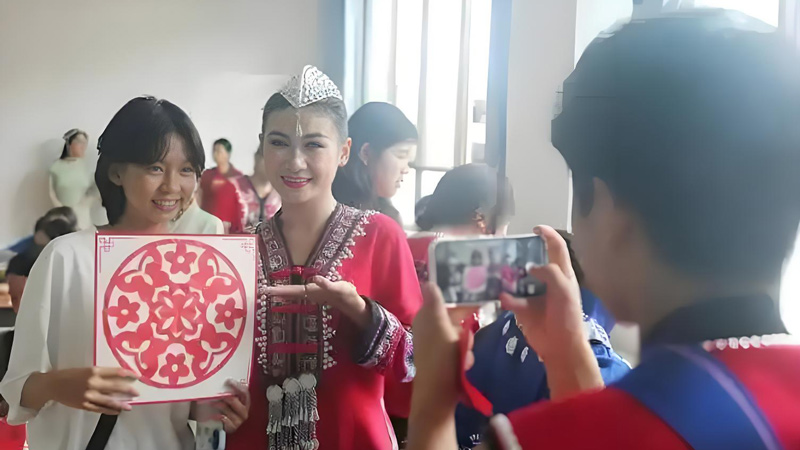
The recent conclusion of the second "Study in Pu'er" program marked another successful chapter in cultural diplomacy between China and Laos. Over six immersive days, 44 young ethnic Chinese students and teachers from Laos explored Pu'er's unique identity where ancient tea traditions meet vibrant coffee culture. Hosted in Yunnan's southwestern city bordering Laos, Vietnam, and Myanmar, the initiative builds on last year's inaugural program.
Participants engaged deeply with Chinese heritage while discovering shared roots along the historic Tea Horse Road. Their experiences—from hands-on tea processing to collaborative art projects—forged personal connections that transcend borders. As one student noted, the taste of Pu'er tea lingered far longer than the beverage itself, symbolizing the program's enduring impact on cross-cultural understanding and friendship.
Cultural Immersion Experiences
Pu'er's dual identity as a global tea source and China's coffee capital provided rich learning grounds. Students explored specialized workshops where they witnessed traditional Pu'er tea production techniques. Song Fanghu (宋方浒), whose family works in Laos' tea sector, discovered distinct processing methods enhancing the tea's fragrance and aftertaste. "The depth of flavor here is remarkable," he observed, planning to share these techniques back home.
Parallel coffee workshops revealed surprising versatility. Song Yuping (宋雨平) marveled at cascara—coffee cherry tea—exclaiming, "Every part of the bean tells a story!" Participants roasted beans alongside local experts, discovering how terroir influences profiles from earthy to floral. These sessions highlighted sustainable practices utilizing coffee byproducts.
Traditional arts fostered collaboration. At Pu'er Ethnic Middle School, Lao students practiced calligraphy strokes for "peace and friendship" under patient guidance. Zhang Kang described the meditative process: "Each character flows like music." At communal tables, students from both countries created intricate paper cuttings—delicate snowflakes evolving into collaborative murals.
The culinary exchange proved equally impactful. During zongzi-making sessions, Lao participants learned bamboo-leaf wrapping techniques while sharing stories of similar sticky-rice treats in their culture. These shared kitchens became spaces where language barriers dissolved into laughter over imperfectly folded dumplings.
Historical Echoes, Modern Pathways
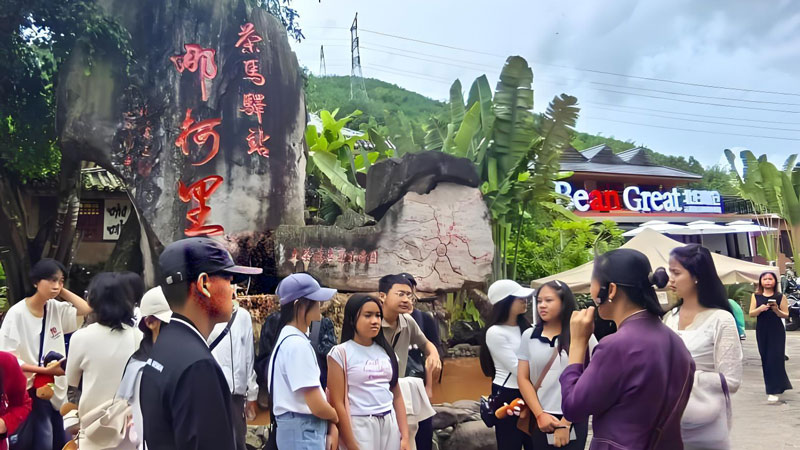
The journey to Ning'er County's Na Keli village resonated deeply with Lao-Chinese heritage. Walking the Tea Horse Road's weathered flagstones, teacher Gong Haishu (龚海书) traced her ancestral journey. "My forebears walked this route southward centuries ago," she reflected, noting how railways now bridge distances that once took months.
Gong's family embodies this evolution. Her father established Lao Gong Chinese School in 2006 with 36 pupils; today it serves over 1,000 students as Chinese proficiency becomes increasingly valuable in Laos. Similar schools now operate across Laos, creating linguistic bridges between nations.
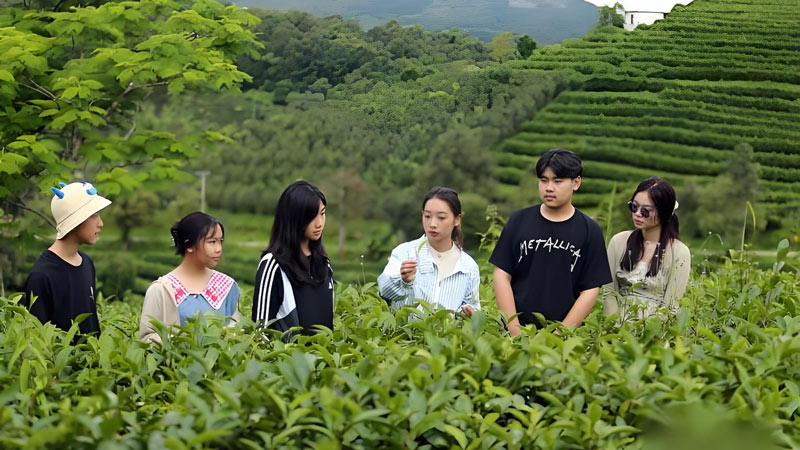
The program strategically connected past and present industries. Visiting tea plantations, students compared traditional picking methods with modern organic certification processes. Discussions revealed how Pu'er's tea cooperatives empower small farmers—a model relevant to Laos' developing agricultural sector.
At the China-Laos Folk Economic and Cultural Exchange Center, exhibits showcased cross-border trade evolution. From caravan artifacts to current e-commerce platforms, displays highlighted how tea and coffee remain central to bilateral commerce despite changing transport methods.
Emerging Partnerships
Economic threads intertwined with cultural learning. Huang Rui, a Lao accounting student at Pu'er University, shared his entrepreneurial journey sourcing Chinese fashion via e-commerce. "Laos' youth crave these styles," he explained, having built a thriving cross-border business between studies. His story illustrated how digital platforms enable micro-enterprises.
Trade statistics presented compelling context: Pu'er-Laos commerce reached $2.2 billion in 2024, with 25% year-on-year growth in early 2025. Workshops explored how specialty teas and single-origin coffees command premium prices internationally—knowledge applicable to Laos' own highland harvests.
Educational partnerships formed another key focus. Li Chunzhong (李春忠), dean of Pu'er University's ASEAN studies faculty, noted most international students come from Laos. "They become cultural ambassadors," he stated, citing graduates who facilitate business deals and tourism.
Student Wa Ladi, returning for her second program, embodied this trajectory. "Each visit reveals new opportunities," she said, now planning university studies in China. Her progression from visitor to prospective scholar reflects the program's long-term vision for human capital development.
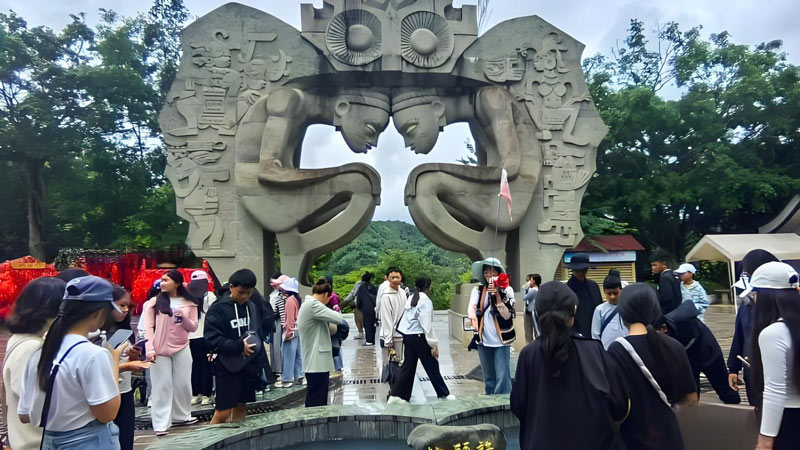
The itinerary's modern elements—from solar-powered tea factories to the Astronomical Museum at the Tropic of Cancer Park—balanced heritage with innovation. These visits sparked discussions about sustainable technologies applicable in Laos' developing communities, showing how environmental solutions transcend borders.