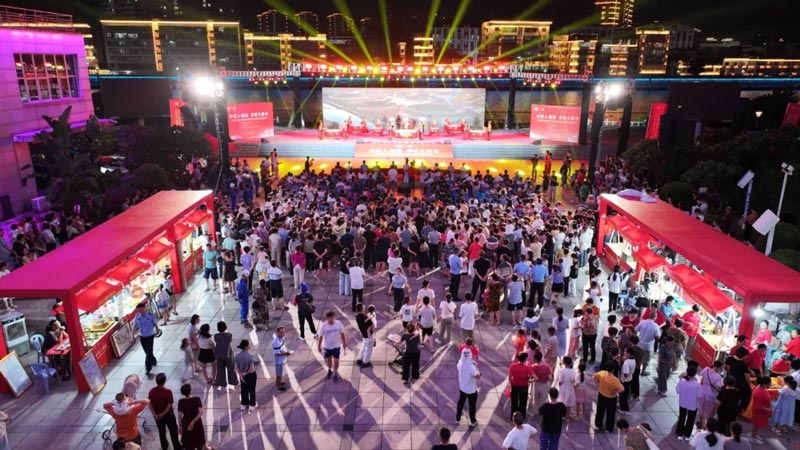
Summer in Fujian's misty mountains ignites with living traditions. Nanjing County, guardian of UNESCO-listed earthen Tulou fortresses, recently launched its inaugural Intangible Cultural Heritage Carnival alongside a vibrant summer tourism season. This fusion of ancient craftsmanship and contemporary celebration transforms historical sites into dynamic cultural hubs, where drumbeats resonate through centuries-old walls and artisanship breaks world records. The carnival isn't merely a festival; it's a testament to a community breathing new life into ancestral wisdom while forging global connections.
Igniting the Cultural Flame
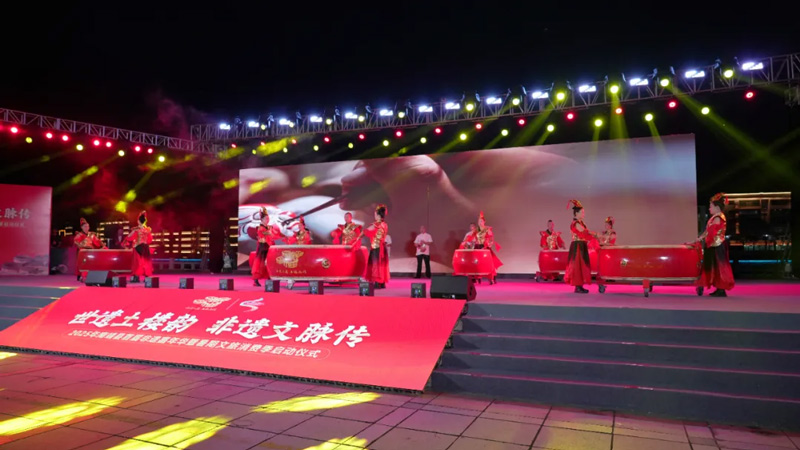
The carnival commenced on July 4th at Nanjing Cultural Center, illuminated by projections showcasing the region’s emerald landscapes and intricate Tulou architecture. Provincial leaders, heritage scholars like Dr. Han Jie from Xiamen University, and guardians of fading crafts gathered as thunderous drum performances in Tulou Gu Yun: Welcoming Guests (土楼鼓韵▪迎客来) shook the auditorium. The rhythmic pulse embodied both reverence for the past and excitement for new beginnings.
A highlight emerged with the unveiling of The Art of Tulou Construction (土楼营造技艺), a seminal book preserving vernacular building techniques nearly lost to time. Its release, alongside a documentary chronicling 100 Tulou structures, marked a milestone in scholarly preservation. When officials activated the carnival by pushing ceremonial rods, they symbolically connected archival efforts with public celebration—ensuring heritage transcends academia to thrive in communal spaces.
The stage then erupted in a kaleidoscope of living heritage. Schoolchildren revived the bamboo-horse theatrics of Jinzhai Bamboo Horse Opera, their playful steps echoing Ming Dynasty courtyards. Artisans demonstrated ethereal bamboo weaving through shadow dance Bamboo Rhythm (竹韵), while the poignant strings of South Xiao flutes whispered ancient ballads. Each act, from Vietnamese bamboo dances to Minnan operatic duets, wove a tapestry of regional diversity.
Dragon Craft Soars Global
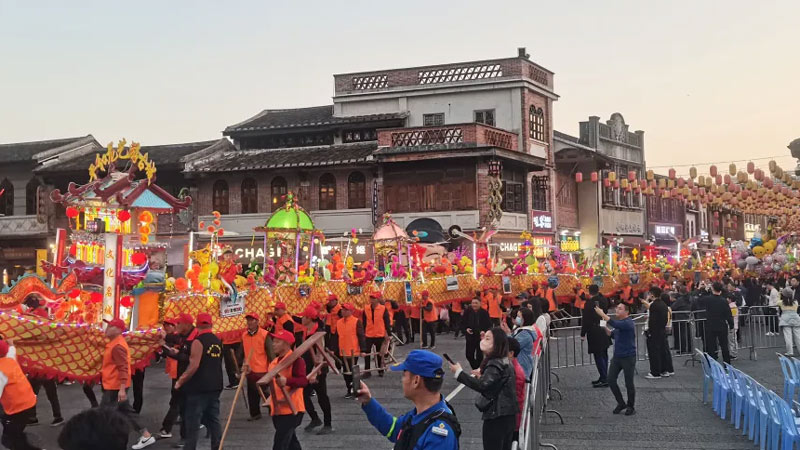
Simultaneously, Pinghe County—Fujian’s "Hometown of Dragon Art"—made history. A 337.881-meter dragon crafted from bamboo, silk, and lanterns coiled through the streets, earning the Guinness World Record for "Longest Dragon Art." Under the scrutiny of international validators, every bamboo segment and embroidered scale attested to four centuries of meticulous artistry.
This dragon, born in the Ming Dynasty, symbolizes more than folklore. As a protected provincial intangible heritage, its sinuous form carries prayers for prosperity across generations. The record-breaking feat, celebrated with lion dances and gongs, showcased how tradition fuels modern ambition. Measured not just in length but in cultural resilience, the dragon now draws global eyes to Pinghe’s hillside villages.
Beyond spectacle, the achievement anchors Pinghe’s cultural economy. Integrating dragon motifs into tourism—through workshops, processions, and artisan trails—transforms ancestral skill into sustainable livelihood. Visitors no longer merely observe; they engage with the hands shaping bamboo into myth, ensuring "Journey the World, Belong in Pinghe" evolves from slogan to lived experience.
Harmony within Heritage Walls
Nanjing’s carnival extended beyond its county borders through innovative collaborations. At the Tulou clusters, American students from MIT exchanged folk songs like Apple of My Eye with Chinese peers, their voices harmonizing under the vaulted ceilings of Rongchang Tower. Shared laughter over Minnan banquet tables dissolved borders, embodying the Chinese ideal of "family harmony brings prosperity."
Music became a universal dialect. At the "Harmonious Movement: Tuloo Resonance" concert in Tianzhongfu, Nanjing-born pianist Ruan Yangyang bridged classical Western compositions like Friendship Forever with Chinese ballads such as Blue and White Porcelain. His curation, performed alongside Curtis Institute graduates, revealed shared emotional landscapes beneath distinct musical traditions. "Playing within earthen walls," Ruan reflected, "infuses music with history’s weight and warmth."
The Tulou themselves starred as evolving monuments. Exhibits at sites like Cui Mei Lou demonstrated adaptive reuse—where heritage architecture hosts photography galleries or eco-lodges. UNESCO-endorsed conservation projects, utilizing 3D scans from Xiamen University, ensure structural integrity while welcoming new functions. These ancient fortresses, once defensive strongholds, now foster cross-cultural dialogue through every revitalized beam and courtyard.
Nanjing’s vision crystallizes in its "520 Cultural Tourism Circle"—a 52-kilometer corridor linking 20 heritage sites from the "Four Dishes and Soup" Tulou cluster to Yunshuiyao’s banyan-shaded streams. Here, artisans demonstrate clay figurine molding and Hakka tea ceremonies, inviting visitors to knead history between their fingers. Every interaction, whether crafting bamboo baskets or savoring fermented rice soup, becomes an intimate dialogue with enduring wisdom.