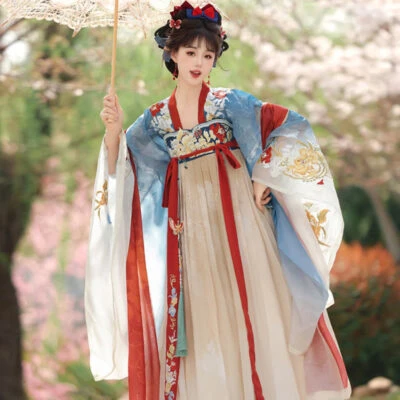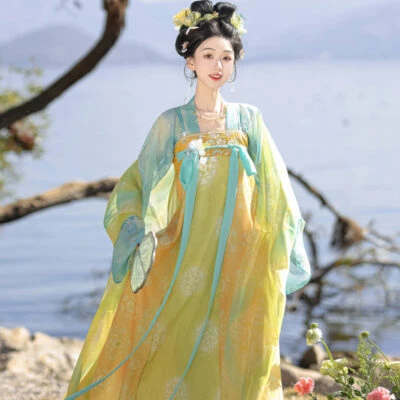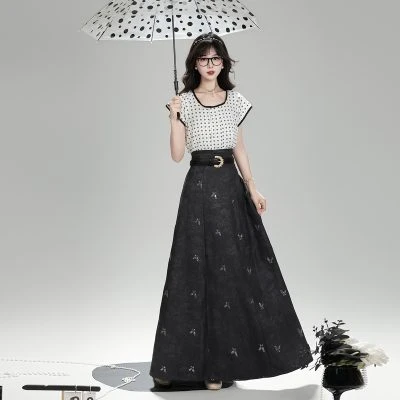
Ask people why Hanfu counts as a tradition and the replies often drift toward photos, dynasty labels, or influencer polls. That is like judging Chinese characters only by handwriting. A Cursive Script stroke may curl; a Bird-Insect Seal Script may look bizarre; yet both still obey a deeper grammar. Clothing works the same way. The point is not to memorize every robe. The point is to find the rules that let a robe be discussed, tested, and passed on without turning the discussion into a costume quiz.
Structure, Not Style
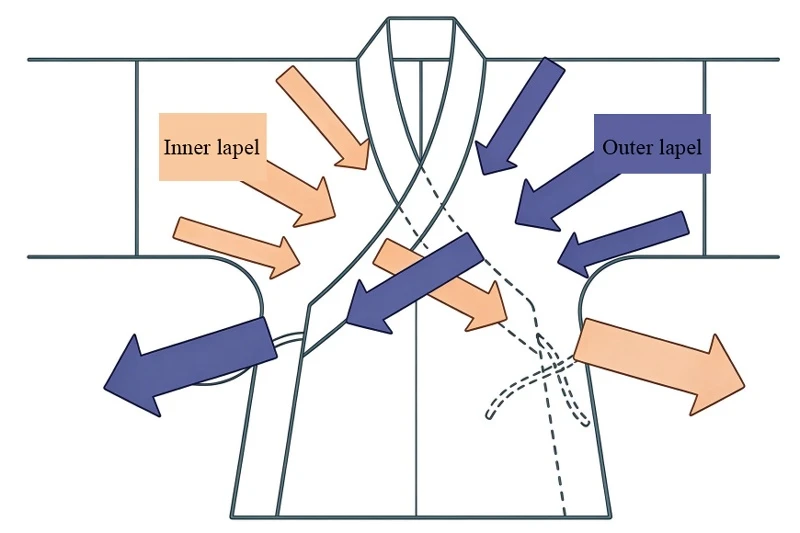
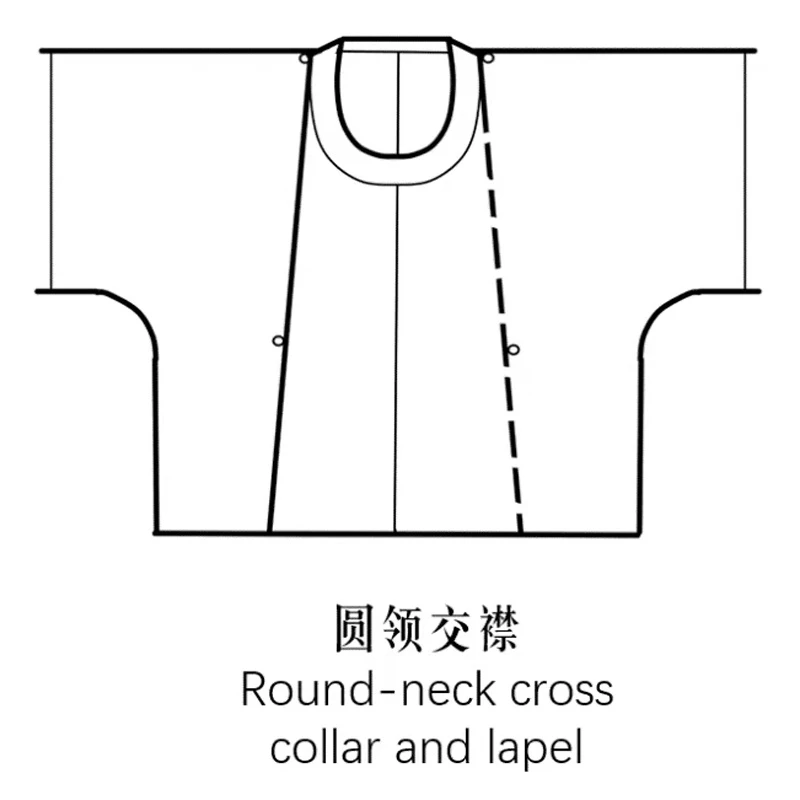
The Jiaojin (交襟) theory starts with a simple move: compare cut to cut, closure to closure, not front photo to front photo. A Yuanling Pao (圆领袍) from the Sui-Tang period may borrow outside elements, yet its inner and outer lapels still cross left and right, and the inner lapel links to the left side. Force stays balanced. That is local re-creation on a shared frame, not a foreign object smuggled into the closet.
This frame also handles awkward edges. A Quling (曲领) wraps the neck with an arc while the outer lapel slants down; the cut looks reversed, but the two lapels still overlap and tie. A Shuling (竖领) is not automatically outside or inside. A standing collar with crossing lapels belongs to an innovative branch. A standing collar with Zimu Kou (子母扣) needs a closer look at closure. Edges get criteria, not slogans.
The same logic sorts labels that confuse beginners. Feiyu Fu (飞鱼服) and Mamian Qun (马面裙) look far apart, but they are not random tiles. They sit inside a system with cutting methods, closing order, load balance, and collar-lapel order. Comparing them with Oracle Bone Script, Bronze Inscriptions, Small Seal Script, and Regular Script is useful: surfaces shift, underlying construction persists.
Hard Cases, Clear Tests
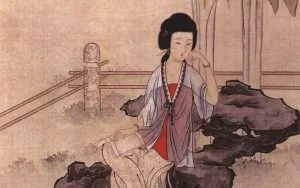
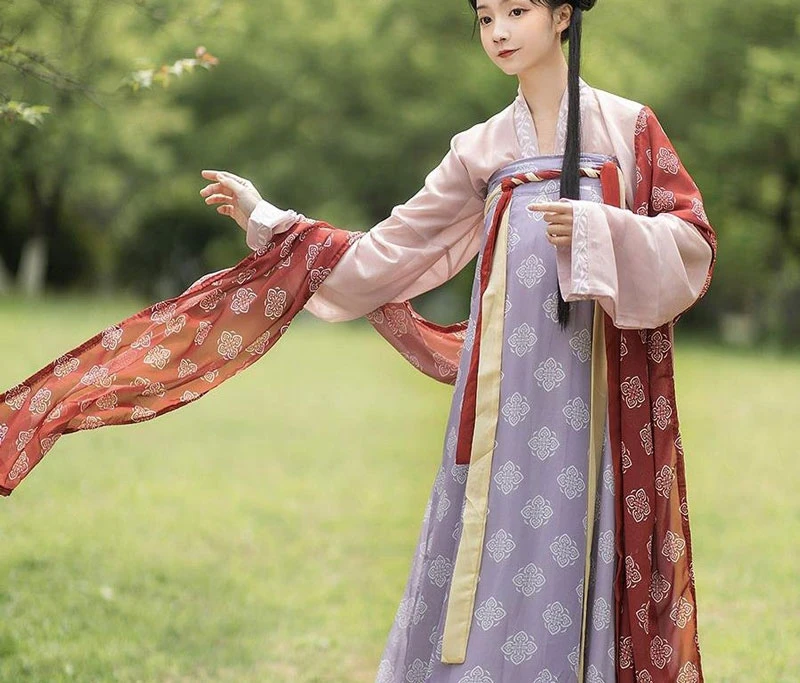
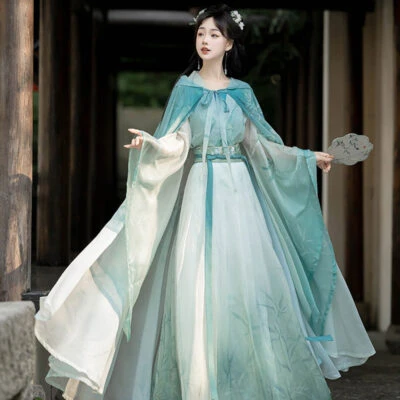
Labels such as “Tang style” or “Ming style” are easy to remember, but they freeze clothing into antiques and slice one system into a tasting menu. Two stubborn assumptions need work. First, ancient does not mean obsolete; a national dress is not a retro trend. Second, one dynasty does not equal one outfit. A tradition can change its surface across centuries and still keep a family resemblance that careful readers can describe.
Hanfu does not need to beat a T-shirt or a suit. It is not trying to replace modern clothes. It is also not a down jacket contest; warmth is not the main test. As a national dress, its first jobs are identity and ceremony. It works more like Heluo (河洛), Mount Tai (泰山), or the Great Wall: a historical sign people can read together. The theory aims at that public common sense, not at a fashion war.
The method has limits, and that is a strength. It separates pre-sewing pieces from finished forms, states mechanical claims that artifacts can test, and writes down borderline cases for challenge. Researchers may catalog relics, explain images, or build frameworks; each job matters. The framework does not ask for blind belief. It asks for a cleaner argument: show the cut, show the closure, show the evidence, then revise. That is how a costume debate turns into knowledge.