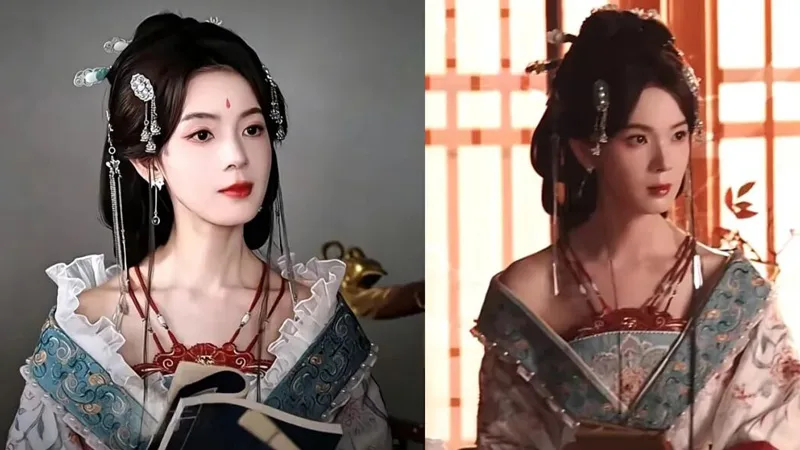
When photos from Bei Ju Tou De Shi Jie (被剧透的世界) appeared online, viewers noticed something unusual about Chen Yao (陈瑶). Her historical costume used thin straps under a wide outer robe, leaving her shoulders and neckline visible. Many comments called the look too modern. They argued that women in ancient China, bound by strict etiquette, would never wear clothes that exposed the shoulder.
That reaction is understandable, but it treats “ancient China” as one single period. Chinese dress changed across dynasties, regions, and social groups. The off-shoulder shape in Chen Yao’s drama is not a random invention. It borrows from older necklines, then adjusts them for camera and character. The real question is not whether the costume is “accurate,” but why this mix of history and television styling feels odd to some viewers while still working on screen.
Old Necklines
Off-shoulder wide collars are not modern. During the Wei, Jin, Southern and Northern Dynasties, women’s robe collars often dropped lower than the neck. They opened outward, showing part of the shoulder. A Western Jin celadon figurine has a collar that folds outward, with both shoulders half exposed. Northern Wei pottery figures and gilded bronze statues also use deep cross-collars. In a tomb mural of Xu Xianxiu (徐显秀), his wife wears a cross-collar robe with a broad opening. These objects do not prove that every woman dressed this way. They do show that exposed shoulders existed in elite and funerary art. Chen Yao’s costume echoes that old silhouette, even if the details differ.
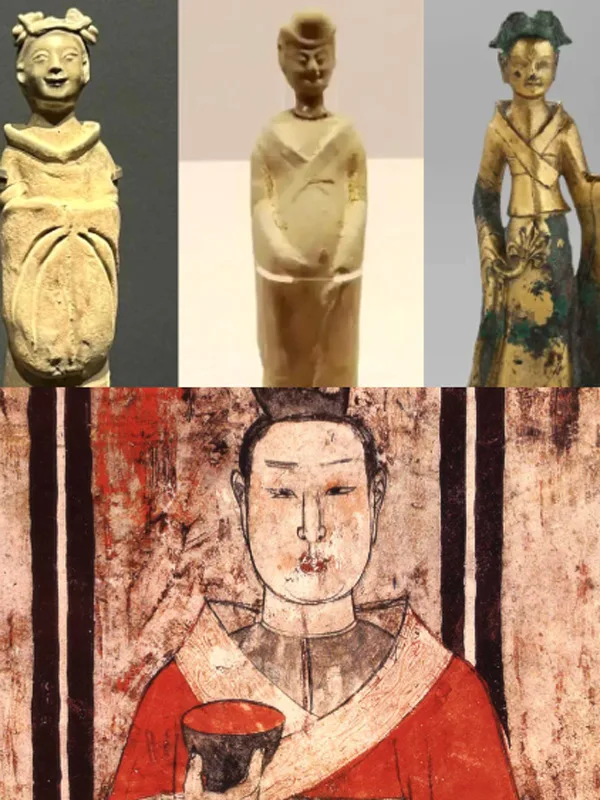
The Tang dynasty pushed open necklines further. Court and common women liked relaxed collars that let the body breathe. New shapes appeared, such as open collars and heart-shaped necklines. Women paired them with necklaces and long silk scarves. Murals in Dunhuang (敦煌) and Tang figurines show this style clearly. Then taste shifted. In the Song, Ming, and Qing periods, collars narrowed. Modest, enclosed necklines became more common. The broad exposure of earlier centuries faded from daily fashion. When modern viewers see an off-shoulder historical look, they may be remembering the later, more covered image. That memory is real, but it is not the whole past.
Modern fashion has returned to the off-shoulder shape. The visual effect is similar: bare shoulders, a long neck, a lighter silhouette. Today’s fabrics and cuts offer more variety. Lace, elastic straps, ruffles, and layered sleeves create new versions. This cycle does not mean designers simply copy the past. It means the body line keeps attracting attention. A wide collar can signal elegance, freedom, or youth. A thin strap can make the same shape feel contemporary. In a historical drama, that tension can be useful. It reminds viewers that costume is not a museum label. It is a visual language that changes with the story being told.
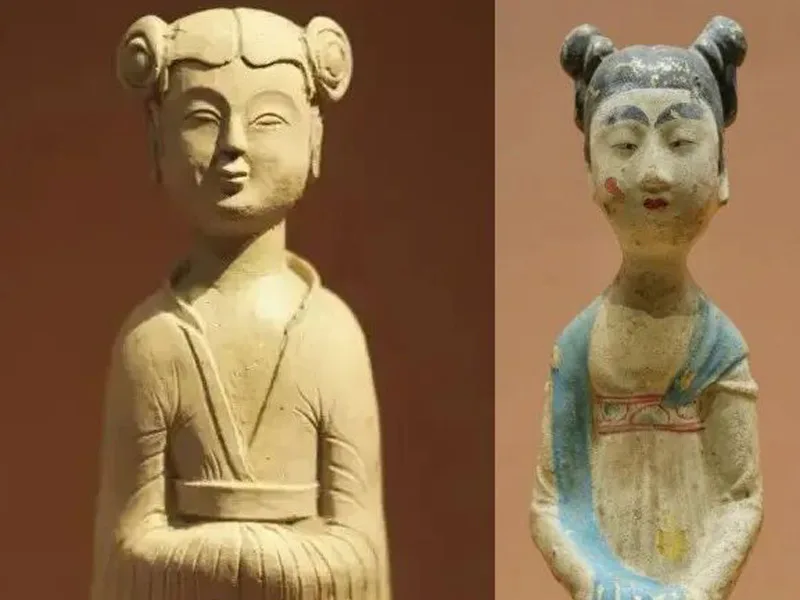
Why did open shoulders appear in earlier periods? One reason is aesthetic mood. Dress follows social taste. In the Wei and Jin eras, people admired flowing movement. A woman’s shoulder and neck line could be seen as graceful, not shameful. Designers let robes fall open. In the Tang period, strong trade and contact with other cultures loosened some rules for women. Different styles could be tried. An open collar showed physical beauty and confidence. Etiquette still mattered, but it did not control every choice. When a drama uses an off-shoulder shape, it draws on this older confidence. It also ignores the later preference for covered collars. Both choices exist in history.
Screen Choices
Why would a production team give Chen Yao this design? First, it flatters the body. An off-shoulder cut stretches the neck and improves shoulder-to-neck balance. It reveals the collarbone and shoulder line. The whole figure looks more relaxed and light. The actress has a slim build. This style highlights that strength instead of hiding it under heavy layers. Historical accuracy is not the only goal. Television costumes must work for an actor’s body and for the character’s image. A cut that makes the performer look stiff can weaken a scene. A cut that makes her look at ease can help the audience believe her. Practical image-making matters.
Second, the look gives the character a memory point. Viewers today do not judge a historical drama only by how closely it copies old clothes. They also ask whether a costume is beautiful and distinctive. If every character wears a tightly wrapped robe, the cast can blur together. An off-shoulder detail separates this role from others. It creates a visual hook. Audiences may forget a plot point, but they remember a silhouette. That recognition helps fan discussion, press photos, and short videos. A costume becomes part of the drama’s identity. The choice may annoy some history fans, yet it gives the show a clearer face. In a crowded market, that clarity has value.
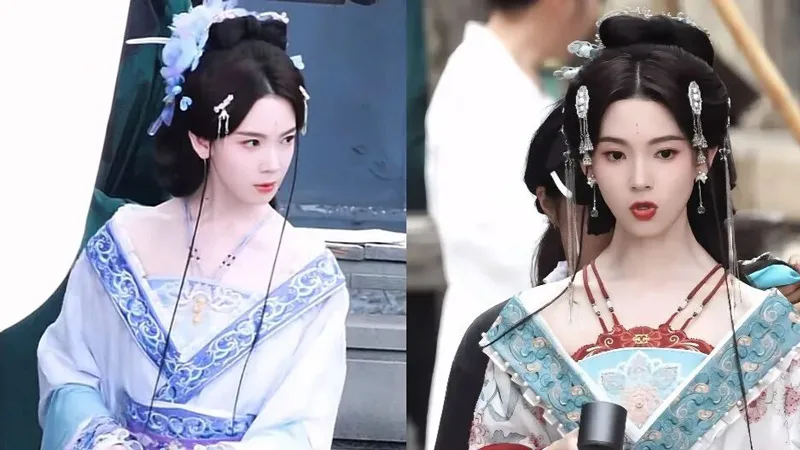
Third, the design improves camera work. Shoulders and neck create natural lines. When a performer turns, those lines move. Hairpins, earrings, and collars add detail around the face. In a close-up, the open neckline frames the expression. In a wide shot, it keeps the upper body from looking like a solid block. The camera can find layers without extra props. This matters in historical drama, where heavy robes can flatten the image. A small opening can bring light and rhythm. The costume team is not only dressing a person. It is building a surface that the lens can read. Off-shoulder styling gives the lens more to work with.
The show does not fully copy an ancient collar. It makes film adjustments. Thin straps sit under wide-sleeved outer robes. Some edges carry ruffled trim. The exposed shoulder area is larger than most historical examples. These choices push the effect further. They make the look clearly televised, not archaeological. Is that a problem? It depends on what a viewer wants. Those seeking a strict reconstruction may reject it. Those seeking a strong character image may accept it. The debate over Chen Yao’s costume is really a debate about purpose. Historical dress can inform a drama, but it rarely controls every stitch. Television selects, exaggerates, and simplifies. The result can feel strange and still be effective.