A Suzhou mill that has shown at the China International Import Expo for seven years used this edition to argue a production case rather than a heritage one. Its jacquard looms now finish 16 meters of Song brocade in a working day, where a handloom turns out roughly 6 centimeters.
What the Jacquard Changed
Shangjiukai, based in Shengze outside Suzhou, rebuilt the shedding and weft-selection mechanism rather than the weave itself. The cloth takes its name from the Song dynasty clothing workshops of Suzhou, so every change on the machine is judged against what those workshops left behind. Warp and weft density, the way patterns are formed and the structure of the cloth are unchanged, so the output figure rises without the fabric losing the hand and the figure precision that let a buyer identify it as Song brocade at all. That constraint is not optional for a designated inheriting unit of the national craft list.
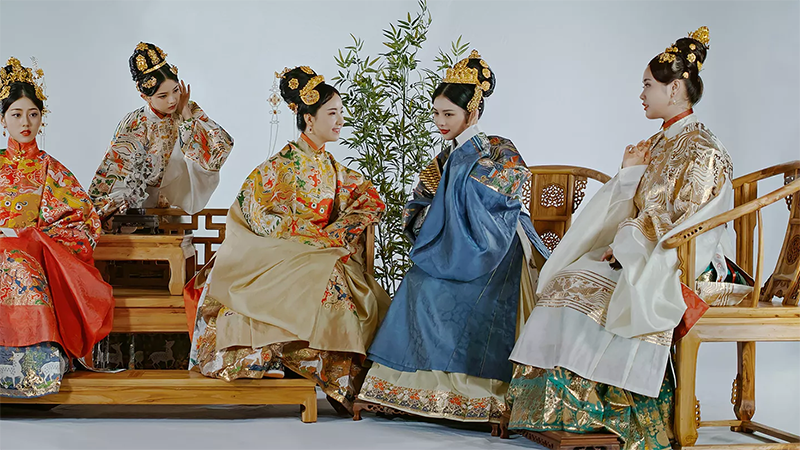
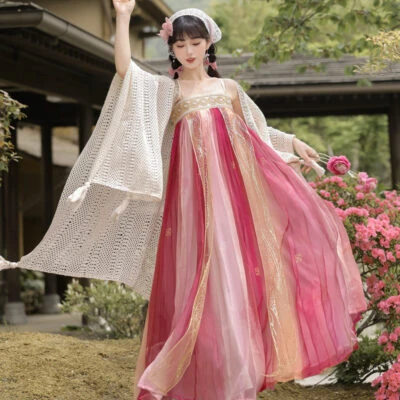
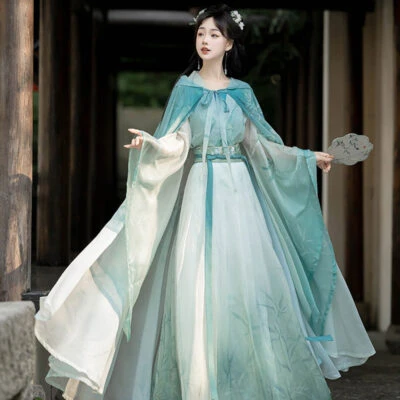
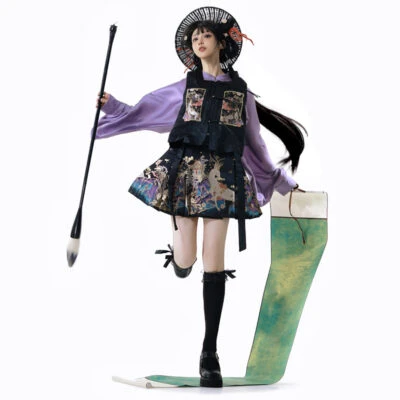
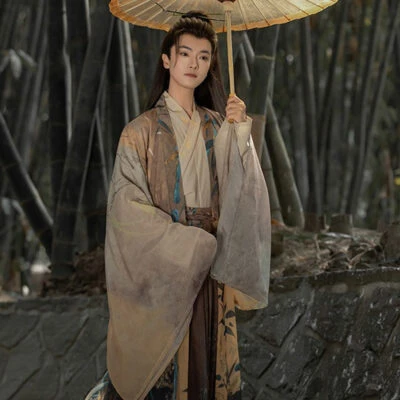
With volume available, the line splits by use. A costumed piece made for the Spring Festival gala sits at the ceremonial end, followed by a couture gown built on an autumn-night palace theme with sparse patterning and muted colour. Two runs sit closer to daily wear: a couture line named Youchao and a range of collectible handbags. This year’s premiere, a jacket called Suying Qizhu, sets a bamboo study by the Yuan painter Ni Zan against a bird-and-bamboo composition by the Ming court painter Lü Ji, printed on a plain ground and cut to a modern block.
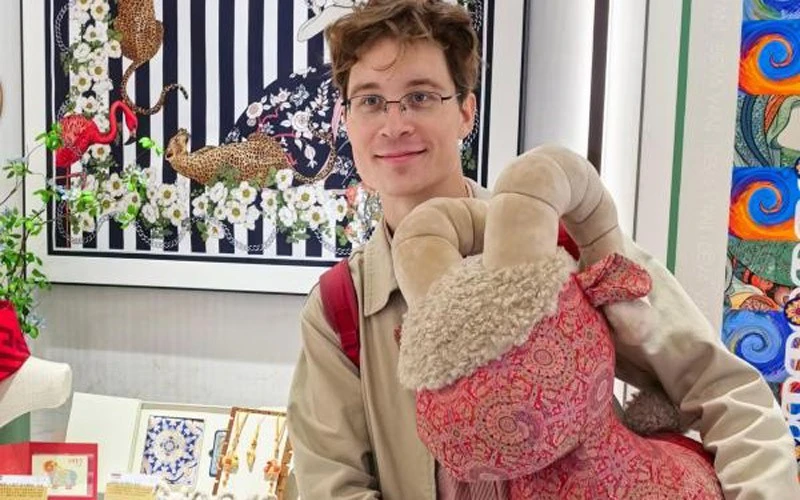
Motifs follow the calendar rather than a mood board. A May pomegranate appears as paired birds inside a lozenge in pomegranate red; an October hibiscus is worked into a regular repeating figure and a cloud pattern for a cloak. Plush goat charms and four smaller series sit beside the garments, which is how a two-thousand-year-old weave gets sold as something to wear, carry and give away.
Copyrights Behind the Patterns
More consequential than any single piece is the paperwork behind the label. The company has registered copyright on more than 2,700 patterns and has taken part in drafting the national standard for Song brocade, alongside an authentication system. Both address the same two holes in heritage weaving: patterns copied at low cost so the original design never earns back its development, and products sold under one name at wildly different quality with no way for a shopper to tell them apart.
Protocol work built the reputation those rights now protect. The mill supplied the main fabric for the new-style garments worn at the 2014 APEC meeting, made designated souvenirs for the 2022 Beijing Winter Olympics, and produced gift sets and ceremonial items for the Hangzhou G20 summit, a German G20 meeting and the Boao forum. Its own line runs back to a Suzhou silk shop opened in 1889, a span the booth reduced to a single sentence about two thousand years of weaving and 130 years of trade.
Chairman Wu Jianhua, who also serves as a vice president of the China Silk Association, described the expo as a window onto China and a bridge for the craft. Read against the order book, the bridge is doing commercial work: ceremonial fabric, standard-setting and copyright registration are what turn a regional weave into a category a store can stock and price.
Renting Space in Jing’an
One agreement signed during the show points further than any exhibit. The company is taking space in Shanghai’s Jing’an district, in the Nanjing West Road and Suzhou Creek commercial zone, for a flagship store and a craft experience area. That shifts its role from a six-day exhibitor to a long-term tenant, and it is a harder test than a booth.
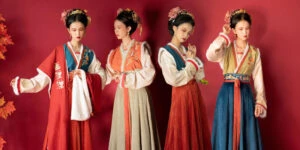
Weaving and retail run on different arithmetic. A mill invests in looms and waits years for a return, while a storefront answers to rent, display and footfall every month. Putting a flagship on a central shopping street means the fabric has to hold a shopper who has no label to read and no guide explaining the pattern, which is exactly the moment a price set well above ordinary silk, and above most traditional chinese clothing, either makes sense in the hand or does not.
For the trade, the useful question is whether that model travels. A craft that needs a case, a caption and a curator to be understood has a ceiling; one that can be touched on a shop floor in a mall does not, and the Suzhou mill is now testing which of the two it has.