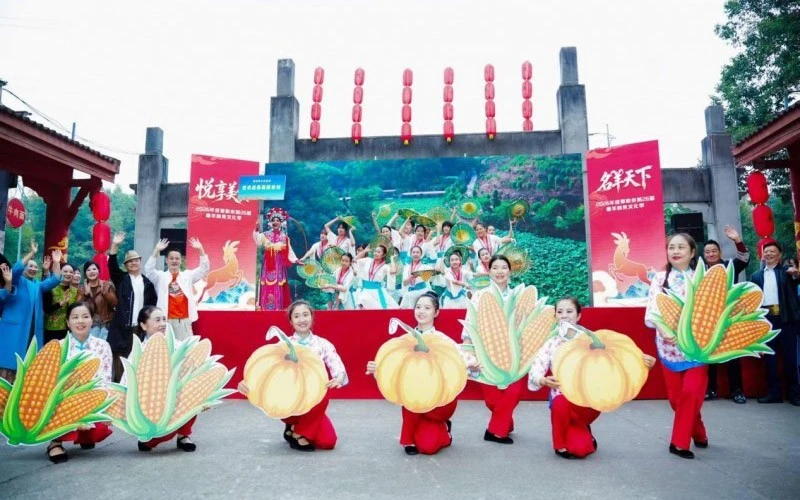
Yuelai, a market town in Dayi County west of Chengdu, opened its 26th Ma goat food season on Nov 7. Crowds gathered along the Heling Bridge before 8 a.m. to watch the first parade of goats driven down the main street toward the stage.
| Dates | Nov 7 to Dec 22, 2026 |
| Venue | Yuelai Town, Dayi County, Chengdu, Sichuan; main venue around Heling Bridge |
| What it is | Annual food season built on the county’s Ma goat, with markets, breeding displays and industry signings |
| Organisers | Dayi County government, with the city’s commerce and culture-tourism bureaus as supporting units |
| Highlights | Goat parade, goat judging, a shared soup pot, long-table banquets and molten-iron flower throwing from Dec 19 |
Inside the Goat Breeding Farm
Eight bloodlines are held at the county’s Ma goat breeding station, run by Chengdu Xilingxue Agricultural Development, which carries national-level status for the breed. Staff there run training on breeding, disease control and stock improvement, and the station supplies replacement animals to more than 150 farming households around the town.
That stock count is the part of the fair that does not photograph well. A herd built on eight separate lines can take selection pressure without closing in on itself, so carcass weight, resistance and meat texture stay steadier across generations. Keeping the lines open is the station’s actual output, and it matters more to farmers than any display pen.
Sales channels are being wired up in parallel. In September the town signed a supply agreement with the Dayi catering association to move goats from farm to table and to place cuts in supermarkets and on e-commerce platforms. The product list has also stretched past the fresh carcass into sausages, cured mutton, sauce-braised cuts, braised offal and gift boxes, which is where the margin sits once the season closes.
Why the Dates Follow the Slaughter Season
Winter in the Chengdu plain is cold and damp, and mutton soup is the local answer to it. The weeks between the Start of Winter and the solstice are also when households slaughter, salt and stuff casings, so a fair that opens on the first of those dates and closes on the second sits on top of work already under way.
Opening day mixed the judging ring with the stage. Judges scored goats on weight, coat gloss and stance before naming the year’s best animal, and soup pots were lined up along the street for a shared tasting. Local troupe Jiajia Arts performed a clapper-talk piece titled My Hometown Is Yuelai as the twelfth stop of a national tour, alongside skits, face-changing and opera excerpts. Director Yao Li said the performers work in village halls and fields rather than in theatres.
Turning Day Trips Into Overnight Stays
Organisers have widened the list of things to do. Ginkgo walks, bonfire-roasted lamb, a county basketball tournament, photography and painting shows, open-air film screenings and open-mic music are spread across the run, and walking routes now link the food stalls with the old street, the county’s heritage displays and the hills outside town.
The arithmetic behind that spread is familiar to any county running a food festival. Opening-day crowds arrive and leave within hours, and what stays behind depends on beds and on second visits. Splitting the programme across weekends gives each one its own draw, and 25 previous editions with roughly 300,000 visitors a year give Yuelai a base to plan against instead of a single weekend to bet on.
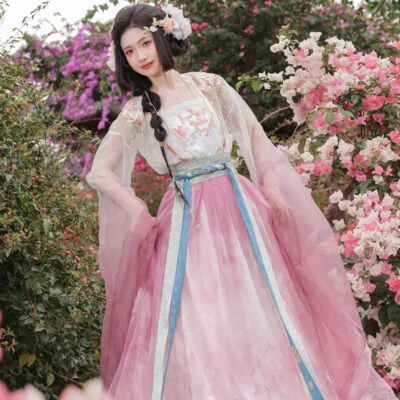
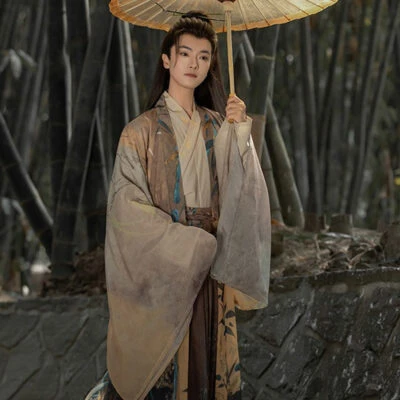
Close to the end of the run, the winter solstice brings the industry side into the open: the county’s Ma goat association is due to be inaugurated, investment projects signed and a regional brand name released, with a winter shopping campaign covering dining, lodging and retail. Weekend trips of this kind now compete with the portrait sessions that have spread through old towns across Sichuan, where visitors book a sitting in traditional chinese clothing and eat afterwards, so the stalls are not selling soup alone.