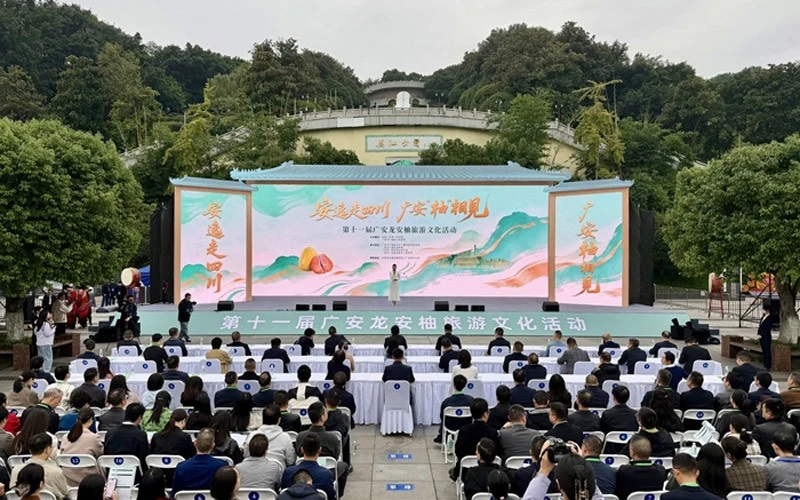
The eleventh Guang’an Longan Pomelo Tourism and Culture Festival ran for two days in Guang’an District, Sichuan, from 7 to 8 November. Its daytime programme was built on orchards, a rural race and a pomelo contest; its evening programme put 25 families in Hanfu into a Song-style market with lanterns, and closed with molten iron thrown against the dark.
| Dates | 7-8 November 2026, opening at 9 a.m. on 7 November |
|---|---|
| Venue | Main stage at Guang’an Never-Night City; sub-venue in Longan Township, both in Guang’an District |
| What it was | Annual pomelo harvest festival combining a stage show, a heritage market, a rural run and a night market |
| Scale | 1,100 registered runners, 25 Hanfu families, a 1,000-seat courtyard banquet |
| Entry | Open to the public, no gate ticket; the run required separate registration |
| Also on | Orchard picking, a food and speciality products fair, a 15-minute molten-iron display |
Opening Morning at the Never-Night City
Drums started at nine. Three touring routes were released at the same time, and between them they map what the district wants visitors to do with a weekend. The red-memory route links Deng Xiaoping’s former residence, the Hanlin courtyard and the statue square. A countryside route runs by season: rapeseed at Huaqiao in spring, bayberry and peach around Shisun and Dalong in summer, the Longan groves in autumn, a bowl of mutton soup in winter. An old-town walking route joins Baita Park, the Never-Night City, Shenlong Mountain and the city museum.
A pomelo contest is the fixture locals argue about. This year’s winner, Feng Liang, gave his case in numbers: sweetness 14.8 degrees, a single fruit of 1.5 kilograms, clean skin and an even shape. District head Zhang Tang handed over the award. A stage programme followed, running through a women’s dance named for the local pomelo, a scene song-and-dance about rapeseed fields, a comic sketch, a solo and a closing number about Guang’an itself.
Runners in the Grove, Banquets on the Yard
Eleven hundred runners set off from the viewing platform above the old pomelo mother trees at Longan Township, where the sub-venue opened with a 7-kilometre rural race. The course linked Dayun Mountain, Gexin new village and orchard land. Entrants ranged from seven to 65 years old and travelled in from Guizhou and Henan as well as neighbouring Chongqing. Four checkpoint tasks along the way, including tossing pomelos into baskets and a word game built on classical couplets, turned the course into a moving fairground.
Eating ran on its own schedule. Visitors picked their own fruit, a courtyard banquet laid out a thousand seats of eastern Sichuan home cooking, and a speciality products fair, open-air karaoke and folk performances filled the gaps between. The opening day happened to fall on the start of winter by the traditional calendar, so mutton soup was on. Zhu Ying, a farming blogger from Jiangsu, bought a box of fruit at the site and said she would wait for the sugar to build before selling any of it on camera.
That banquet is worth a line of explanation, because it is not the same thing as a restaurant’s farmhouse menu. A baba banquet is a courtyard meal in rural eastern Sichuan, set out on borrowed tables for a wedding, a funeral or a birth, with dishes that follow the season and whatever the hosting household can put together. Moving one into a festival itinerary turns a private way of feeding guests into a public exhibit, which is a different transaction from booking a table.
After Dark, Molten Iron and Lanterns
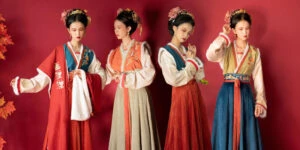
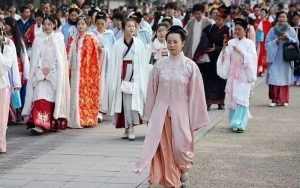
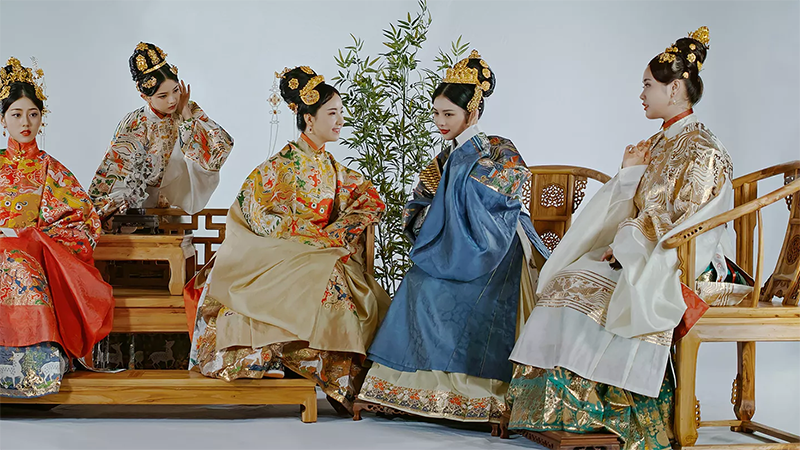
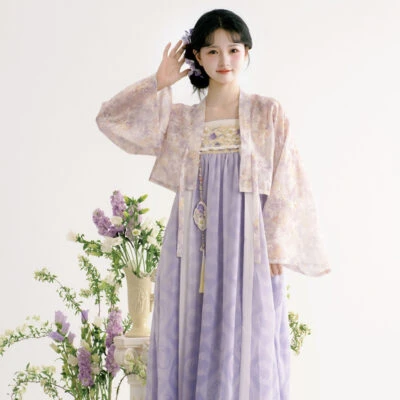
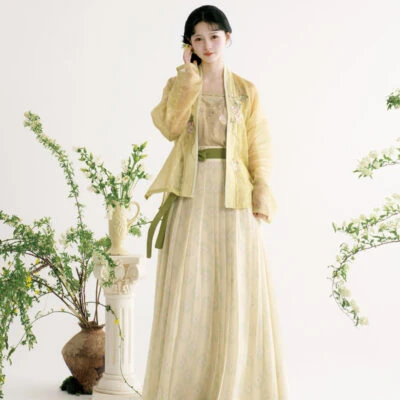
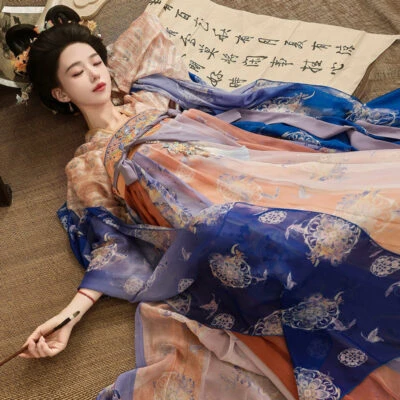
Lights came on at half past six. Three screening areas took over the street, one for animation, one for science fiction, one for older films, and the Hanfu check-in began in the same hour. Twenty-five families walked a Song-style market in the traditional Chinese clothing known as Hanfu, carrying lanterns, stopping for photographs and joining craft tables. Interactive posts along the route handed out small games: tossing chopsticks into a jar, rolling dice, drawing a fortune slip, driving a nail with one blow.
Molten iron closed the night. A team working at the No. 1 gate flung heated iron into the air for fifteen minutes, the metal breaking into a shower of sparks above the crowd, a technique that began with foundry workers and now travels the country as festival spectacle. At eight, a treasure-hunt format took over the street, with costumed hosts trading riddles and poems for stamped cards that could be exchanged for pomelo-themed souvenirs.
What the Crop Carries Into the Rest of the Year
Behind the two-day programme sits an established agricultural economy. Longan pomelo covers more than 200,000 mu in the district and yields about 225,000 tonnes a year, with orders above 500 million yuan and downstream work in packaging, logistics and hospitality. The township has built eight leisure agriculture parks around the mother-tree garden, laid out six agri-tourism routes, and receives more than 200,000 visitors annually. Its core base of 11,200 mu of standardised planting was rated a five-star provincial modern agriculture park in 2020.
Fresh fruit is no longer the only outlet: flowers go into tea, juice is pressed from the fruit, peel goes into cooking. Turning a production area into a scenic one and an orchard into a park lets a geographical indication product work as both an agricultural brand and a gateway for visitors. On the opening day, farm restaurants and picking orchards along the route reported double their usual traffic, and one grower selling at a roadside stall took more than 500 yuan before noon.
Why a Hanfu walk belongs at a pomelo festival is the question the programme answers without stating. Costume has become the cheapest way to give a night market something to photograph: a family can rent a set and a hairpiece rather than buy one, which is why parents with children are now the largest group at these events. Lanterns, market stalls and Hanfu are also a ready-made visual package, far cheaper than building a set. And a place with a long written history needs a symbol people can wear, since an abstract reference to an ancient settlement is easier to put on a body than to print on a board.