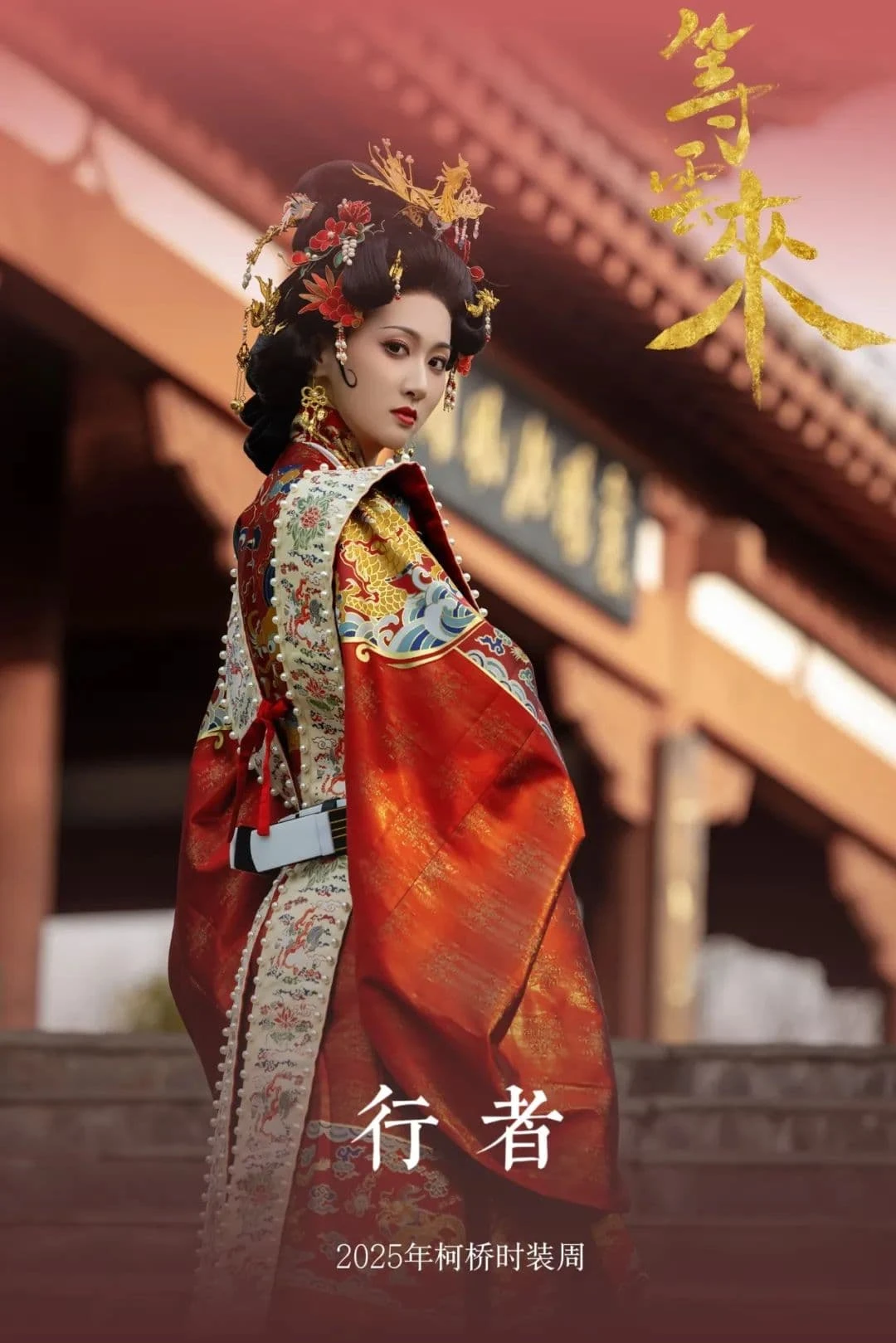
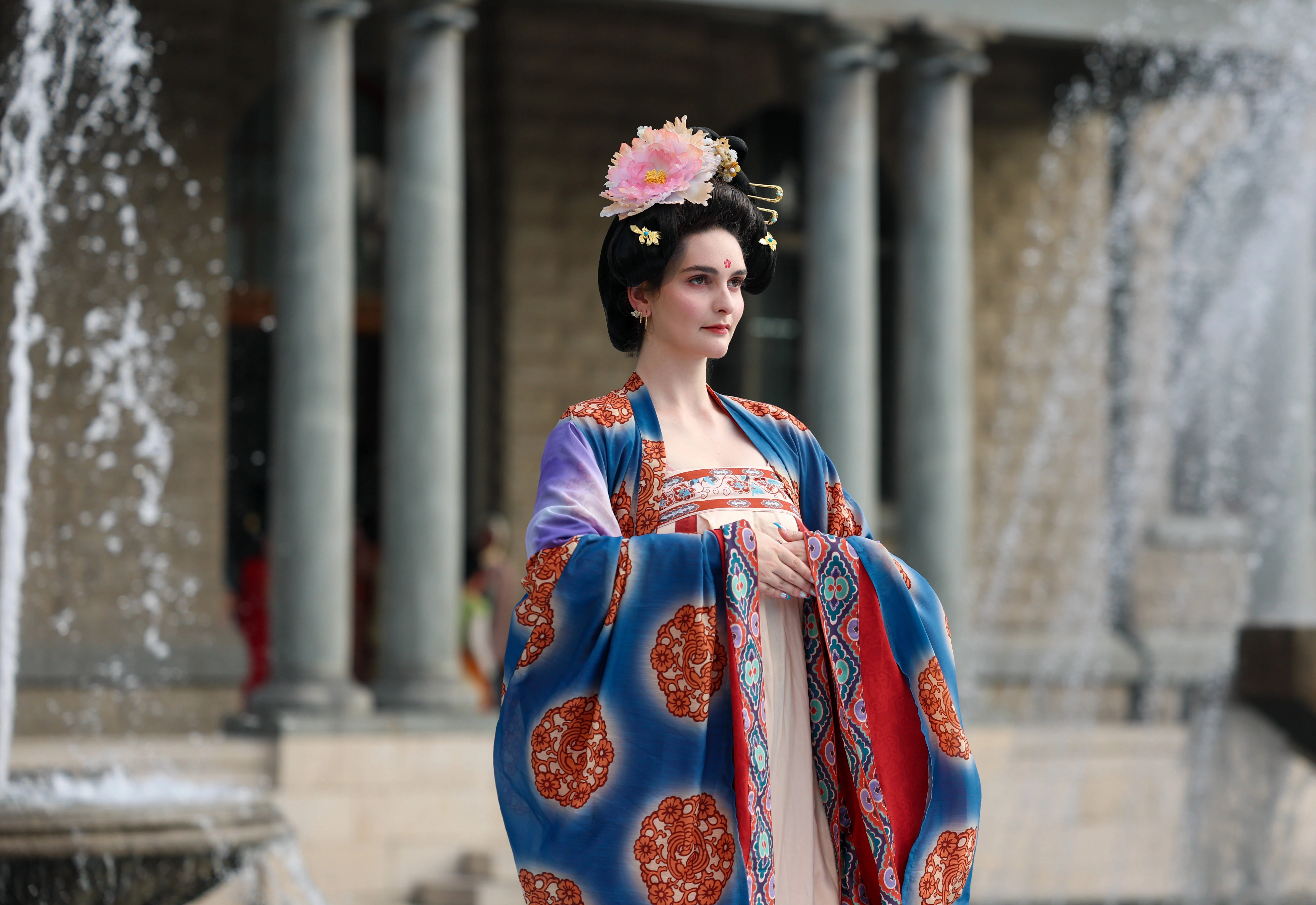
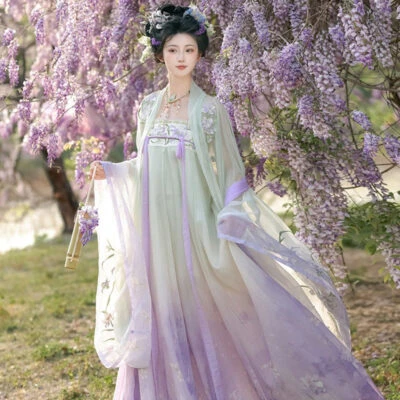
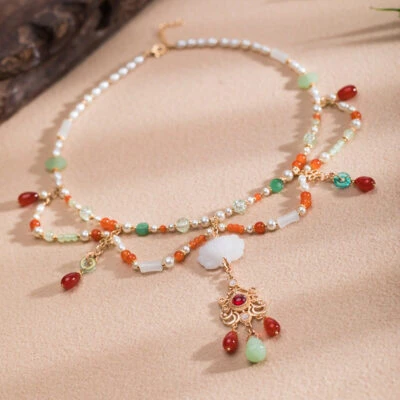
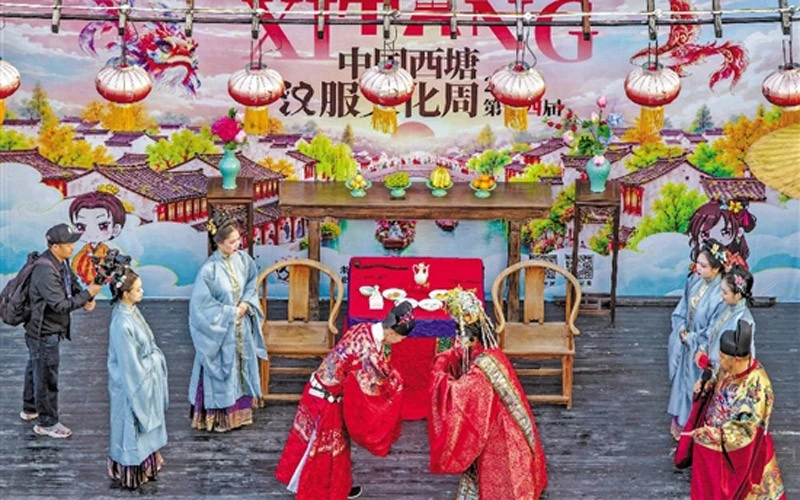
The fourteenth Xitang Hanfu Culture Week closed in Xitang, an ancient water town in Jiashan, Zhejiang, after a main programme that opened on 31 October and three relayed theme days running from 2 to 5 November under the theme Fourteen Years of Rhythm, a Return to Xitang. The figures published around the event describe a festival that has stopped being a gathering and started being an industry: over one million visits accumulated across fourteen editions, and a merchant base inside the town that now numbers more than 110 shops.
| Dates | 31 October to 5 November 2026 |
| Venue | Xitang Ancient Town, Jiashan, Zhejiang |
| What it is | Fourteenth edition of the annual Hanfu festival, first run on a one-plus-three programme |
| Theme | Fourteen Years of Rhythm, a Return to Xitang |
| Scale | Over one million cumulative visits across fourteen editions; delegations from eleven countries |
| Merchant base | More than 110 Hanfu shops in the town; Hanfu-category revenue above 25 million yuan in 2025 |
| Reach | Close to 400,000 views on the Chaoxinwen client topic, at the time of reporting |
The Merchant Base Behind the Festival
Twenty-five million yuan across 110 shops works out at roughly 227,000 yuan a year for an average Hanfu business in the town, which is the number that matters more than any attendance figure. It is enough to keep a shopfront open for twelve months and not enough to make a seasonal pop-up worthwhile, which is the difference between a festival that leaves a trade behind and one that leaves a photograph.
Set that against the town’s total visitor economy and the ratio is small and specific. Hanfu-category revenue of 25 million yuan against tourism revenue of 1.614 billion is about 1.6 percent of the whole, or roughly 2.5 yuan per visit across the first nine months of 2026. A trade that small cannot carry a town. It can carry 110 households, which is what a merchant base of that size amounts to, and it explains why the county treats the festival as infrastructure rather than as marketing.
Town figures for the rest of the year explain the scale it is working with. From January to September 2026 the Xitang scenic area received 10.01 million visits, up 2.24 percent year on year, and generated 1.614 billion yuan in tourism revenue, up 1.35 percent. Those are modest growth rates on a large base, and they are the reason a costume festival matters here: it is a way of adding a second reason to visit to a destination that already has one.
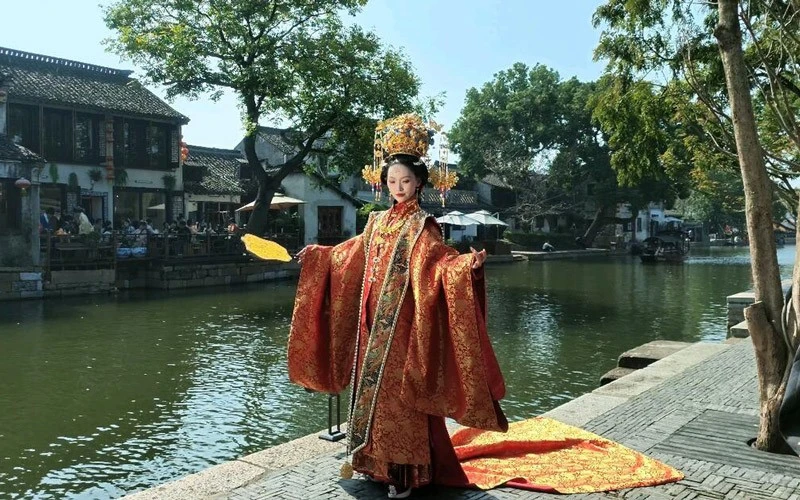
What the Relayed Programme Buys
This edition ran for the first time on a one-plus-three structure: one main programme, then Huanshang, Fuyan and Shangyue on consecutive days from 2 to 5 November. Read as scheduling rather than as programming, the change spreads demand across a week instead of concentrating it on an opening weekend, which is what a merchant with rent due every month actually needs.
Reach and footfall are separate ledgers, and the published figures keep them apart. Close to 400,000 views on the Chaoxinwen client topic is what the organisers can point to for attention; a million cumulative visits over fourteen editions is what the town can point to for bodies. Neither number predicts the other, and a festival that confuses them ends up buying cameras instead of customers.
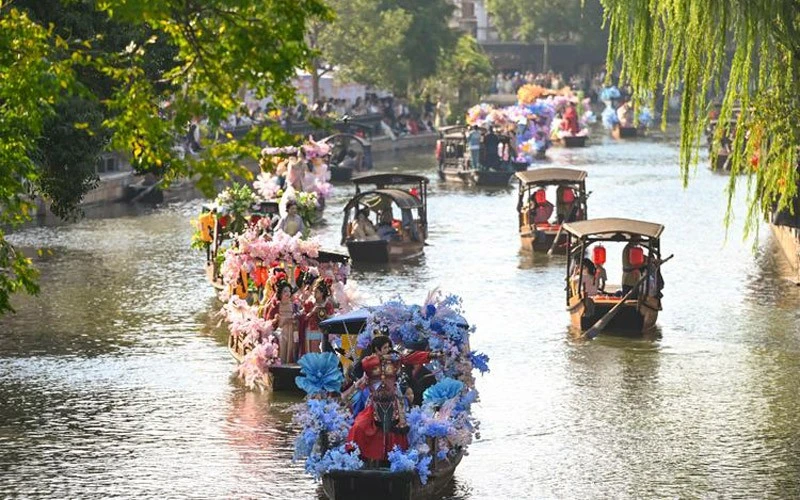
Four days of programming instead of two changes what a visitor can justify. Someone who travels for a single day buys a ticket, a costume rental and a photograph; someone who stays two nights buys a room, two dinners, a studio booking and a shop appointment, and the town keeps the difference. That is the arithmetic behind relaying three theme days rather than stacking everything into one weekend.
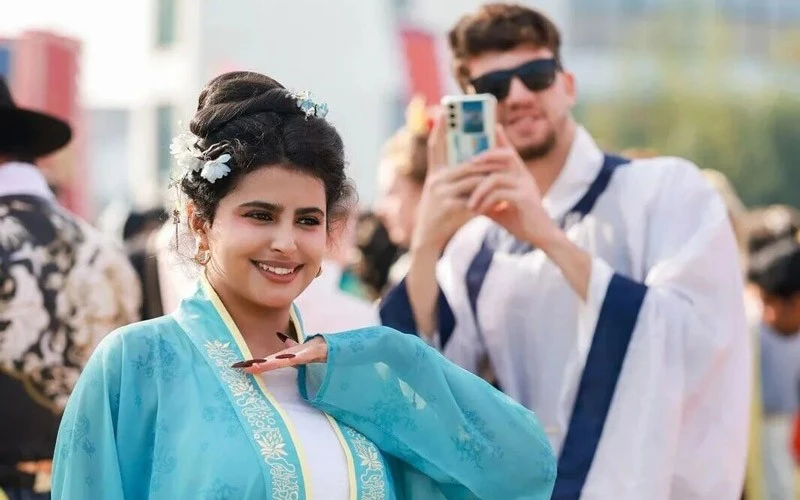
The international component has a similar function. Eleven countries sent delegations, and the cumulative figure of more than a million visits across fourteen editions has been built partly on that outward-facing framing. A Hanfu festival that only attracts domestic enthusiasts competes with every other domestic festival; one that can be described in eleven languages by people wearing traditional chinese clothing is a different proposition to a tourism bureau.
What the Town Earns Outside the Week
What the week cannot do is create demand for the rest of the year, which is why the county’s answer has been to extend the costume into other bookings. That is a slower business than a festival and a more durable one.

Signs of that spread sit outside the old town. A route called Wearing Hanfu to Tour Shan City sends visitors out of the old town to a village and to a resort archery range, and a marriage registration office at Wuguniang Park has become a high-traffic stop, where couples register and then walk into the town to see the wedding customs performed. Both convert a costume into a reason to stay another night.
That is the evergreen argument for this kind of event, and it is arithmetic rather than sentiment. A festival that produces one million cumulative visits over fourteen editions is producing roughly 70,000 a year if spread evenly, which it is not, and the town receives ten million visits a year from other causes. The festival’s job is not to move that total. It is to change the mix inside it: to convert a share of ordinary sightseeing into a booking at a Hanfu shop, a photo session, a registry appointment. The Hanfu movement supplied the costume; the town supplied the shelf it hangs on, and the shelf is what the next fourteen editions will be judged by.