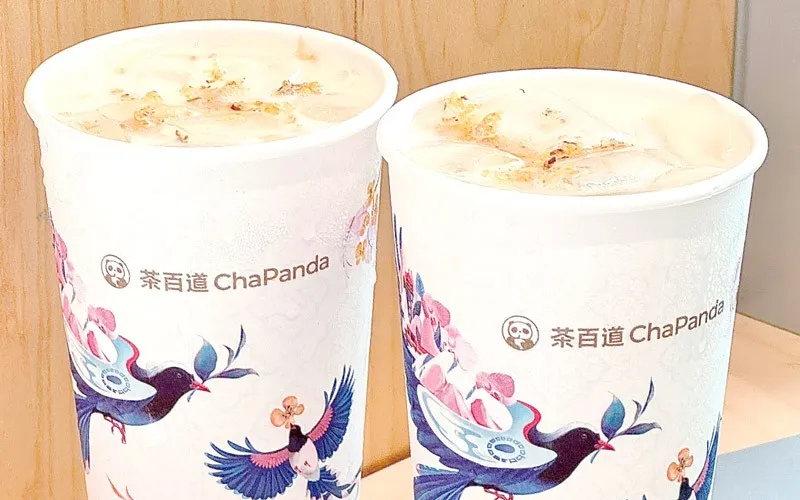
Forbes Korea named the Chinese tea chain Chapanda the only beverage brand in its 2026 customer-trust awards on 2 November, an award decided by a consumer panel and an expert jury and run jointly with the JoongAng Ilbo for the sixth year. The citation was unusually specific about why: not the product, but the localisation.
A Local Menu Carried the Entry
Chapanda entered Korea in 2024 with its first shops in Hongdae, Myeongdong and Gangnam, and has since added Busan, Daegu, Jeju and Gwangju. The jury’s evidence was a Korea-only menu, including a drink built on Hallabong, the Jeju citrus, whose name plays on the idiom about sweetness arriving after bitterness. Swap a domestic ingredient into the base and a Chinese brand starts reading as a local flavour rather than an import, which is the cheapest form of translation a food business has.
Store data went into the citation as well. When the first Busan shop opened in April, the queue ran several hundred metres and waits reached four to five hours. The chain now has 60 signed stores in Korea across six metropolitan areas, which it describes as the largest footprint of any Chinese restaurant chain in the country, with several shops clearing more than one million yuan in monthly gross merchandise value. Wang Huan, the company’s overseas chief executive, puts the local-customer share above 90% and reads the award as confirmation of that operating model rather than of the menu alone.
What 60 Stores Sit Inside
The single-market number matters only against the wider count. A 2026 white paper on China’s fresh tea supply chain puts at least 40 Chinese tea brands trading abroad as of the first half of the year, with 9,805 stores between them across Southeast Asia, North America, the Middle East and Oceania. Economic Daily framed the wave on 4 November as brands pushing for new volume outside a saturated home market, naming Heytea, Mixue Bingcheng and Chagee alongside Chapanda.
The spread inside that total is wide. Mixue Bingcheng reported 4,378 overseas stores at 30 June and overseas revenue of about 1.28 billion yuan for the half year, up 18.2%. Chagee posted overseas GMV of 504 million yuan in the second quarter, up 114.3%, its fourth consecutive quarter of sequential growth. Auntea Jenny has 61 shops abroad against one a year earlier. Chapanda’s 72 open stores and more than 100 signed worldwide are a global figure; the 60 in Korea is the subset that won the award, and the two numbers are not in conflict.
There is a second-order effect the Economic Daily report raises and rarely gets repeated. Chinese tea exporters have few own brands reaching overseas consumers directly, and the sector has lived with rising volume and falling prices for years. A milk tea sold in Seoul introduces the leaf to a customer who would never buy a box of it, which is a marketing channel the export trade did not have before.
The Bill Behind a Single Shop
Opening abroad is not the same as opening well. Southeast Asia remains the first stop for most brands: tropical weather, a young population and an established tea-drinking habit make the product easy to place, and proximity keeps equipment, materials and packaging on domestic supply lines. The competition has thickened anyway, with a single Bangkok commercial street carrying more than a dozen tea shops next to convenience stores and night-market stalls selling Thai tea.
North America attracts on ticket size, with mainstream drinks priced at five to seven dollars, roughly 33 to 47 yuan. The cost side eats the difference: a small shop of a few dozen square metres needs about 500,000 dollars in equipment, fit-out, rent and stock before it opens, a large one approaches a million, and a server’s wage starts at 4,000 dollars a month.
Korea is a different fight. Gong Cha built a network of up to 900 stores there over many years, and coffee is the default adult drink, so a Chinese brand is competing for a slot between coffee and traditional tea rather than filling a gap. What Korea does offer is consumers who treat a shop visit as social content. Early in 2026 a livestream clip of Jang Wonyoung of IVE trying Chagee circulated widely, and the brand collected attention before it had opened.
Two operating models are now visible. One is Mixue’s: density and supply chain, with thin margins carried by store count. The other is the Chapanda and Chagee route: fewer, better-placed shops, a localised menu and an experience worth photographing, in exchange for higher ticket and brand premium. Both run into the same ceiling, which is whether raw materials, equipment and packaging can be supplied reliably to each overseas store, since that determines how fast a chain can actually open.